Le Stagioni di Campania
Foods that Nature Gives Us, Recipes that Tell Our Story
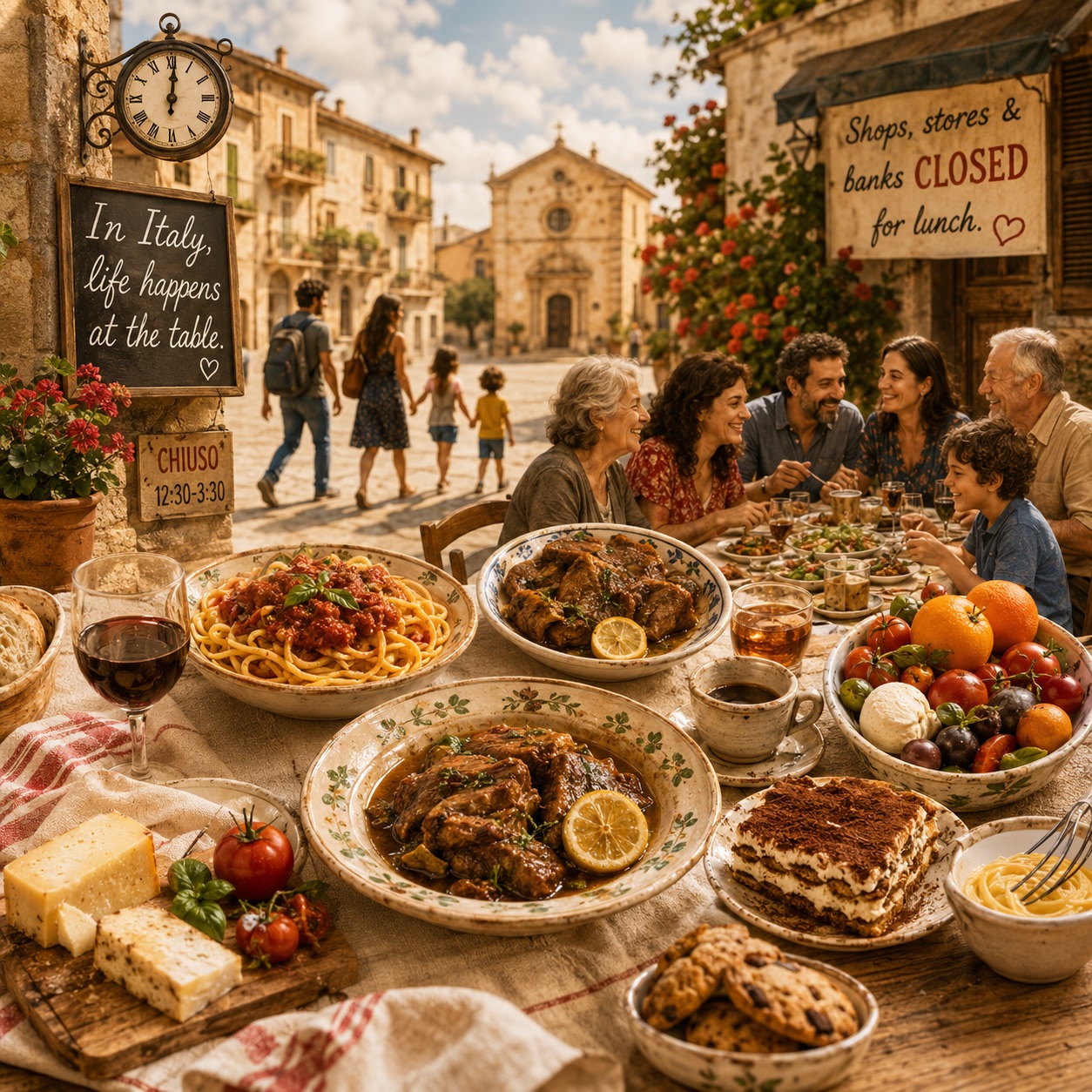
Growing up in Caserta in the 1980s, there was no Chinese restaurant around the corner. No McDonald's. No ethnic cuisine of any kind within reasonable distance — if you wanted something outside the local tradition you took a train to Rome. We ate what the season produced and we learned the year through what appeared on the table.
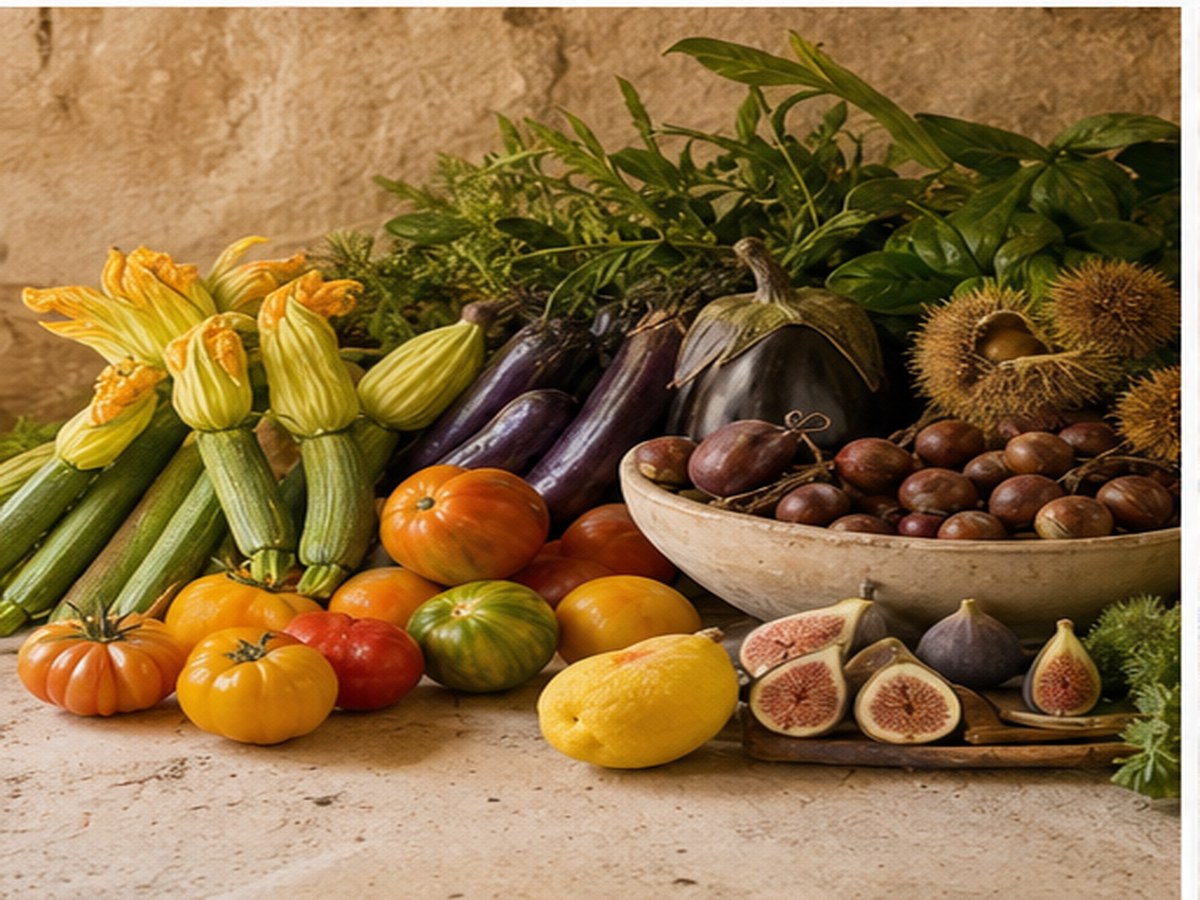
I say this without nostalgia or complaint, because it was genuinely fine. The choice was not felt as a restriction. You did not notice the absence of Thai food or Japanese food or American fast food the way you notice the absence of something you already know. What you knew was what the market had, which was what the season produced, which in Campania is a very generous thing across all four seasons. The lack of global options was simply the condition of life in a small-to-medium southern Italian city in the 1980s, before the economic changes of the following decade and before the internet and before globalization reshaped even the most provincial Italian food landscape.
What we had instead was a kind of seasonal literacy that I have never fully replicated in Massachusetts, despite farmers markets and good grocery stores. When artichokes appeared at the market in spring — and they appeared suddenly, in quantity, and then disappeared — you cooked artichokes in every form: grilled on the balcony coals, braised with potatoes, in pasta with sausage, stuffed and baked. For a few weeks artichokes were everywhere. Then they were gone and something else took their place. The season taught you to cook with what was there and to look forward to what was coming.
I joke now about the McDonald's situation — that you had to take a train to Rome to find one. This is slightly exaggerated but not entirely. The first McDonald's in Italy opened in Rome in 1986. By the time one appeared anywhere near Caserta it was already the late 1980s, and by then I had grown up enough that the novelty of it was primarily sociological rather than culinary. What I actually wanted, when I thought about food, was what was being made at home — which was seasonal, local, and in retrospect extraordinary in ways I was not fully equipped to appreciate at the time.
The seasonal rhythm also structured memory in a way that global availability cannot. When I think about a specific dish from childhood, I think about a specific season — the carciofi arrostuti are spring, the peperonata is summer evenings, the pasta e fagioli is autumn, the pizza di scarola is Christmas Eve in winter. These associations are not arbitrary. They are the result of eating these things only when they were in season, which meant you ate them with anticipation and ate enough of them to form a strong impression before they disappeared for another year. The scarcity was not a deprivation. It was what gave the arrival its significance.
Spring is the artichoke season — the one that I waited for most consciously, knowing it would not last. The charcoal-grilled artichokes on the balcony were the first signal that the year had shifted. Then the seppie e piselli appeared, the pasta with artichokes and sausage, the frittatas with wild greens that my mother made from whatever was at the market. The pastiera and the Easter preparations — pizza rustica, casatiello — belong to the end of spring and to the Lenten fast that precedes them.
Summer was the tomato. The San Marzano in full season — and the days when the family made tomato sauce for the whole year, jars and jars of it sealed and stored. The peperonata sitting on the kitchen counter in the hot afternoon, the bruschetta before the pizza on Saturday evenings, the mozzarella eaten warm in the car on the way back from the caseificio. The fiori di zucca fried in batter. The granita al limone on hot afternoons. The peperonata that disappeared by the next morning.
Autumn meant mushrooms — the champignon in the scaloppine and in cream sauces for pasta, and on good years the porcini that arrived from the market briefly and were treated with corresponding seriousness. Chestnut season produced the caldarroste sold on the street and the occasional pasta e castagne. Squash made it into soups and into pasta — pasta e zucca, one of the most underrated preparations of the Campanian cucina povera. The grape harvest in October meant new wine and the specific kind of festivity that accompanies something made once a year.
Winter was the richest season for the slow preparations — the Sunday sauces, the braises, the legume soups. The sugo con salsiccia and the ragù became more frequent as the weather cooled and the desire for something on the stove all morning was easier to justify. Friarielli — the bitter Neapolitan greens that appear from autumn through winter — went with sausages and with the cotoletta. The pizza di scarola was Christmas Eve. The pasta e patate — dense, warming, nothing else required — was winter by definition.
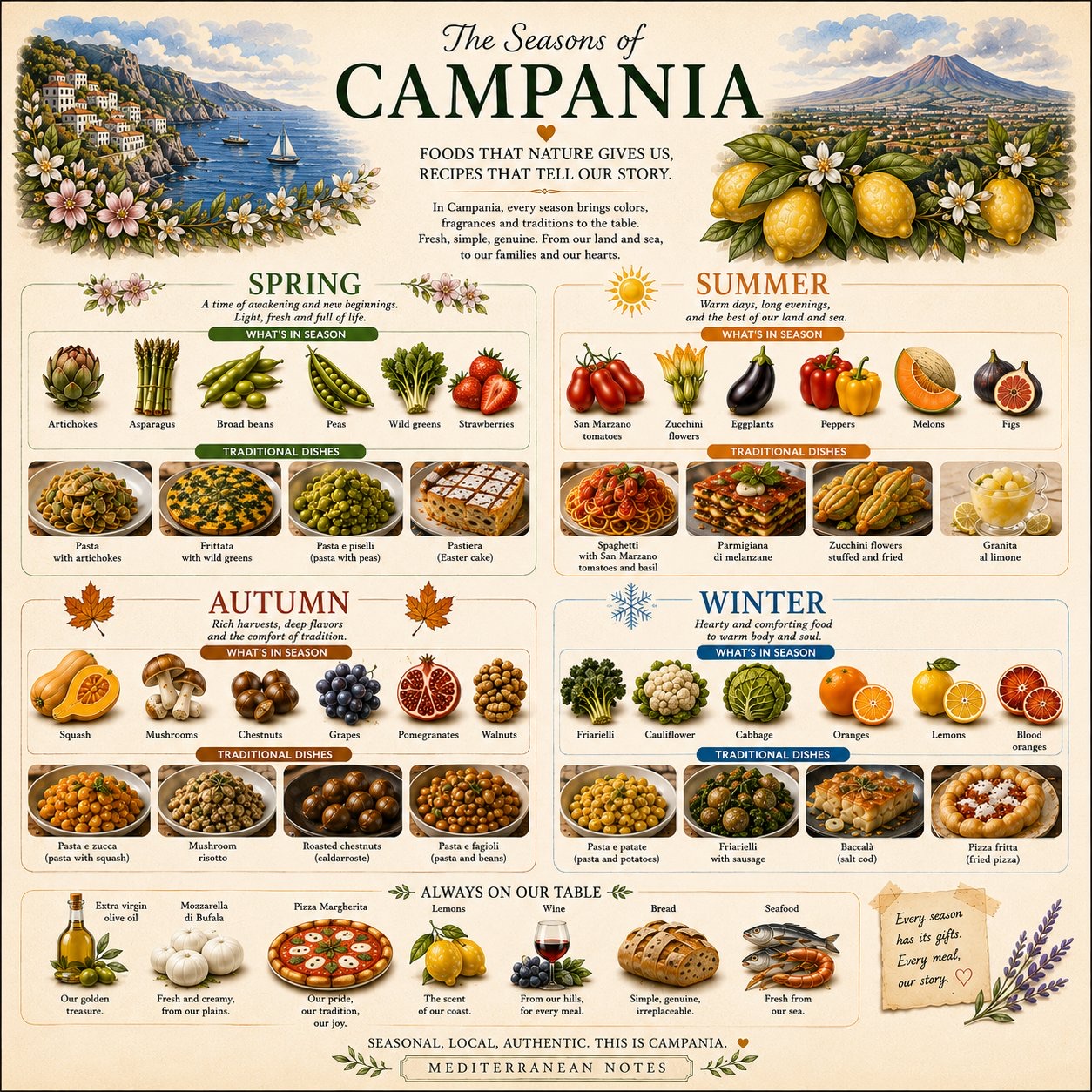
Always on our table — year-round, season-independent
I live in Massachusetts now, where you can buy San Marzano tomatoes in January and strawberries in February and everything is available at all times regardless of where it came from or what it cost to ship it. This is convenient and I use it. But the experience of eating a dish out of season is genuinely different from the experience of eating it when the ingredient has just arrived from the field — not because nostalgia makes it taste better, but because the anticipation is gone. The artichoke in April in Caserta, when the market fills with them suddenly after months of winter root vegetables, tastes of the wait as much as of itself. The tomato in August in the sun is not the same object as the tomato in January under a grow light in a greenhouse in Spain.
The seasonality of Campanian cooking was not a philosophy or a choice in the 1980s. It was simply the condition. Every cuisine cooked this way before refrigeration and global supply chains made it optional. What is interesting is that Campanian cooking still carries the traces of this seasonality in its structure — certain dishes belong to certain times of year not because of religious tradition (though the Easter and Christmas associations are real) but because the ingredients they require are only at their best in those seasons. The pastiera with its orange blossom belongs to spring. The peperonata belongs to summer. The pizza di scarola belongs to Christmas Eve. These associations are not arbitrary. They are the memory of a time when the season and the table were the same thing.
Ogni stagione i suoi doni — ogni pasto la sua storia.