CoursesBasicsFirst CoursesSecond CoursesSides & VegetablesSoupsSaucesEggs & FrittatePizza & BreadBreakfastSnacksStreet FoodDesserts
DietVegetarianVegan
SeasonSpringSummerAutumnWinter
MainSeafoodMeatEggs
MoreCulture & TraditionsGlossaryAbout

Carciofi Arrostuti
Grilled Artichokes on the Coals

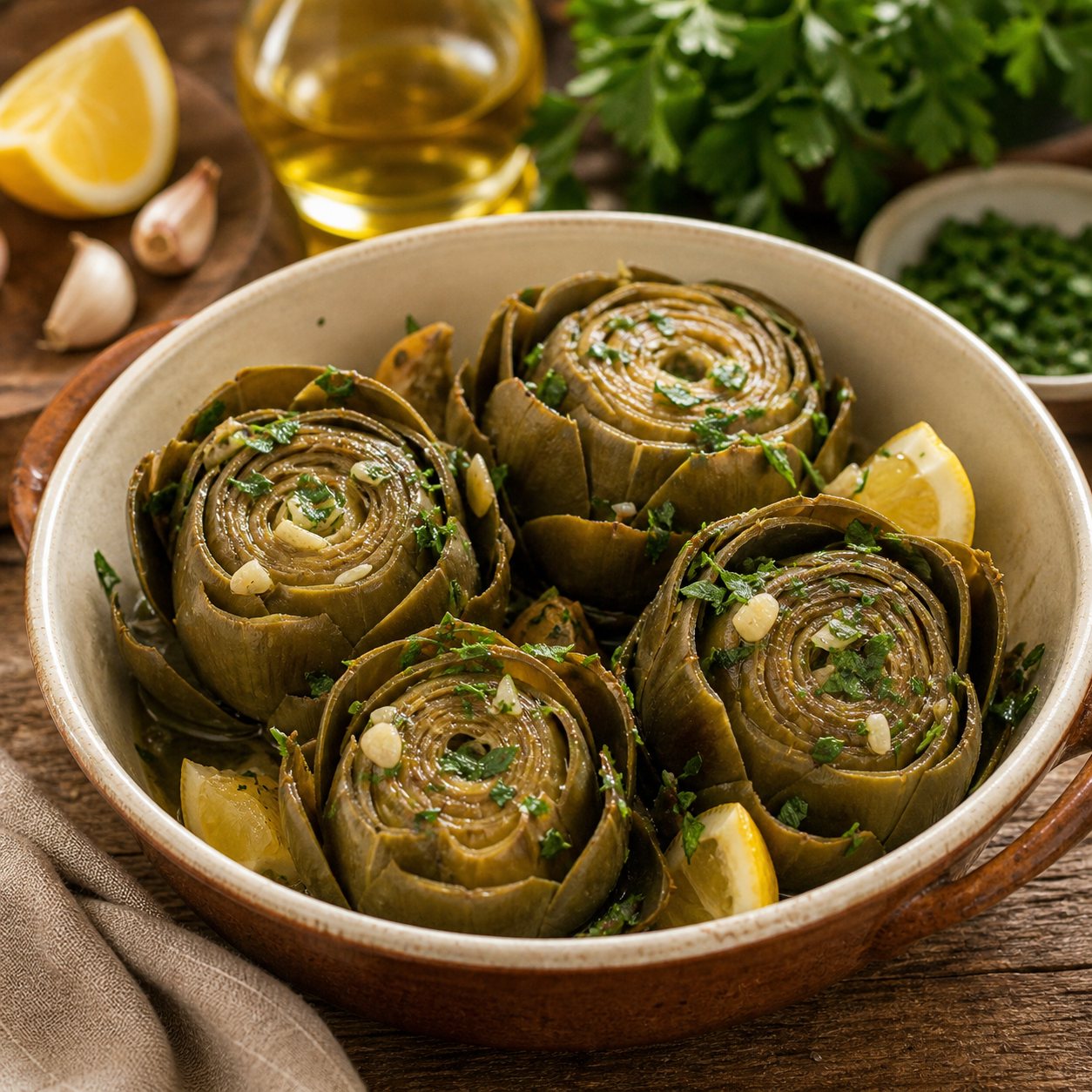
A spring memory from a Caserta balcony: charcoal-grilled artichokes stuffed with parsley, garlic, and olive oil, covered with a cloth and left to roast until the outer leaves char and the heart steams through.
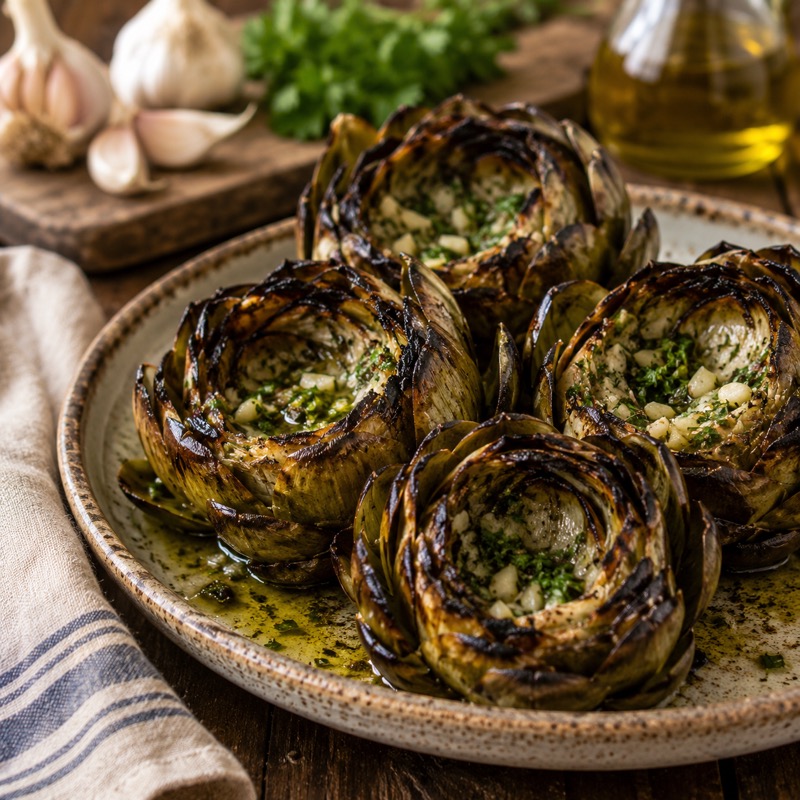
Grilled Artichokes

We had a small balcony outside the kitchen, facing toward the courtyard. It was not much — a few chairs, a railing, the smell of the stairwell below and whatever the neighbors were cooking above. But in spring my father would bring out a small grill, the kind that sits directly on charcoal, and that balcony would briefly become something else. I was small enough that helping to light the coals felt significant. I remember blowing on the starter paper, the first grey wisps, then the glow spreading underneath. My father was patient about coals. He would not rush them.

The artichokes came next, and they were my mother's part. She had a particular way with them — you can see it described in the penne con salsiccia e carciofi post as well, where she cleaned them for parties without ever appearing to hurry. Here too: she would smack each artichoke against the cutting board, stem side up, to spread the leaves open, then work parsley and garlic and salt and olive oil down into the gaps with her fingers. Some versions call for pancetta or lard, and our family made it both ways depending on what was at hand. The stuffed artichokes went onto the coals stem up, surrounded by each other so they held their shape, and then she covered them with a damp cloth — not foil, a cloth — which trapped the steam as the hearts cooked through from the bottom.

The smell was very particular. The outer leaves would char on the coals, giving off something bitter and woody, while the filling — parsley, garlic, olive oil — steamed upward and became something sweeter and softer. The two smells happened at the same time. You could tell from the smell alone when they were nearly done.

You pull off the charred outer leaves and drop them. Then you get to the inner ones, which are tender and soaked in the oil and parsley from the filling. And then the heart. That part you do not rush.

I have been back to Caserta many times since then, and for the last several years around Easter there are vendors selling carciofi arrostuti in the street — near the market, near the centro, sometimes right outside the station. They use larger grills and cook them in quantity, but the technique is the same: coals, cloth or foil, stems pointing up, the outer leaves black when they come off. They sell them wrapped in paper and you eat them standing up, leaf by leaf, the way you always should. I still stop every time.

My father liked artichokes very much, which mattered in our house because he was selective in what he would eat — he would have pasta al pomodoro on fish nights rather than touch a clam. But artichokes were never a problem. He liked them in almost any form: braised with potatoes, in pasta, as a contorno, on the coals. Spring meant artichokes, and artichokes meant he was happy at the table.


Why the charcoal works — a note on the chemistry

Artichokes are particularly well suited to slow charcoal cooking, and the reason has to do with their main carbohydrate: inulin. Inulin is a chain of fructose molecules that the plant stores in its heart and base. Unlike starch, inulin does not break down easily at low temperatures — but sustained heat converts it into shorter fructose chains that taste noticeably sweeter. This is why an artichoke cooked slowly over coals, where the heat is moderate and the cooking time is long, develops a sweetness that a quickly blanched artichoke does not have.

The charring of the outer leaves serves a real purpose beyond tradition. The blackened leaves form an insulating shell that holds moisture inside as the heart steams in its own liquid. The damp cloth adds to this effect: it keeps the ambient humidity high enough that the inner leaves cook by steam from above while the base receives direct heat from below. The garlic and parsley in the filling lose their sharpest volatile compounds early in the cooking — this is why garlic cooked inside an artichoke tastes mild and almost nutty rather than raw — and the olive oil carries those flavors into the leaf tissue as it softens. Cynarin, the bitter compound responsible for artichoke's distinctive aftertaste, is most concentrated in the outer leaves. The more those leaves char and are discarded, the milder the heart becomes. Tradition got this right a long time before anyone named the molecule.


The recipe
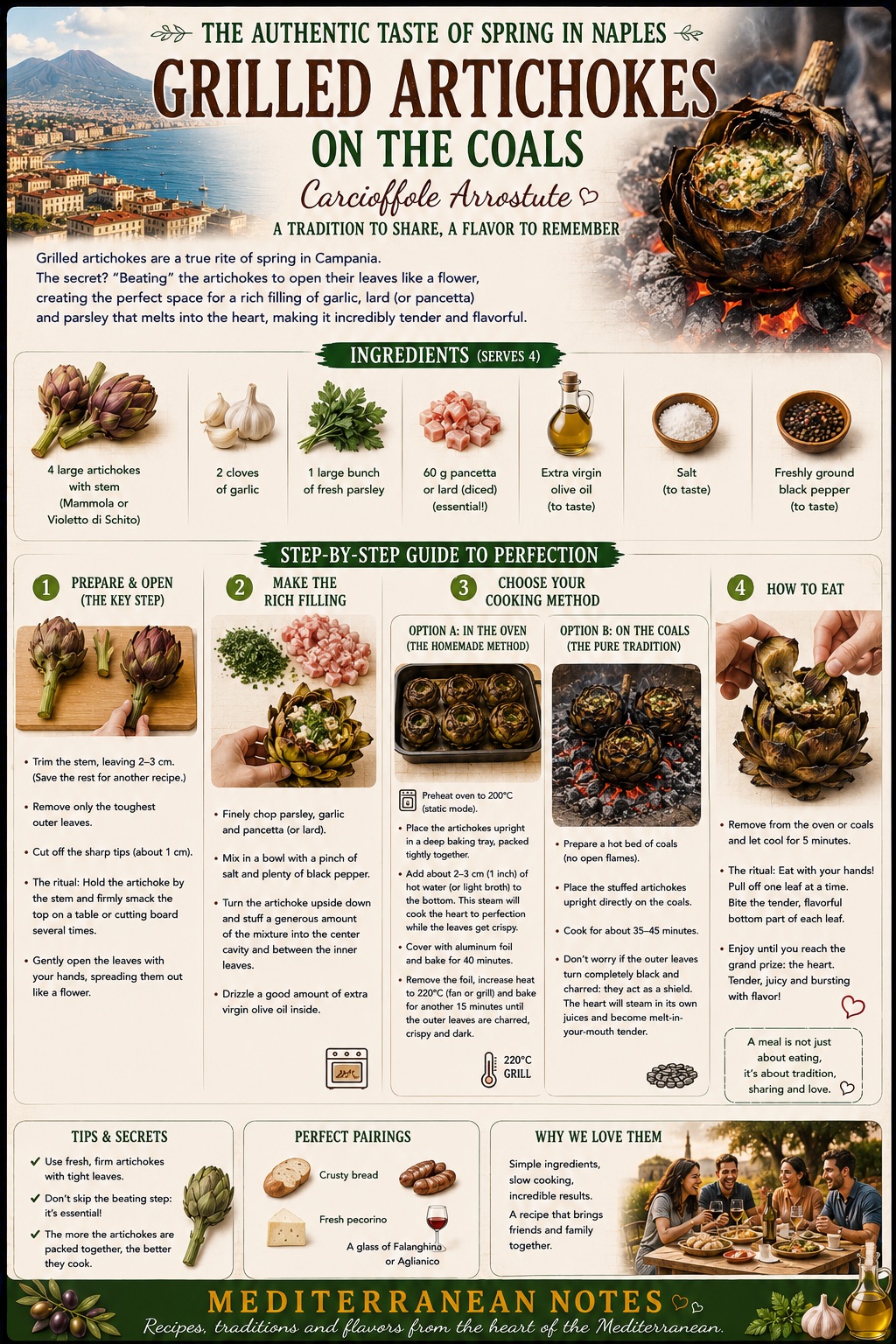
Grilled Artichokes on the Coals — step-by-step infographic
Carciofi arrostiti sul carbone — the full method. Click to enlarge.
4 large Artichokes with stem (Mammola or Violetto di Schito)
2 cloves Garlic, finely sliced or chopped
1 large bunch Flat-leaf parsley, roughly chopped
60 g — optional Pancetta or lard, finely diced
to taste Extra-virgin olive oil
to taste Salt and freshly ground black pepper
1
Trim the stem to 2–3 cm, removing only the woody outer layer with a knife but keeping the rest — the stem is edible and cooks well. Cut off the sharp tips of the outermost leaves with scissors, and remove any leaves that are dry or damaged. Do not remove too many — the charred outer leaves are the insulating shell.
The Mammola or Violetto di Schito are the Campanian varieties, round and without a pronounced choke. If you can find them, use them. Otherwise any large fleshy artichoke works, though you may need to trim the inner choke after cooking.
2
Open the artichoke: hold it by the stem and smack the top firmly against a hard surface — cutting board, table — several times. The leaves will spread outward. Then use your fingers to open them further, working from the center outward. You want enough space to push filling in between the inner leaves and into the central cavity.
Do not skip this step. An artichoke that has not been opened will not absorb the filling and will take much longer to cook.
3
Mix the parsley, garlic, salt, pepper, and pancetta or lard (if using) in a bowl. Turn each artichoke upside down and push generous amounts of the mixture into the center and between the inner leaves. Drizzle olive oil generously inside — more than you think is necessary.
4
Prepare a bed of hot coals — no open flames, just glowing embers with a layer of white ash. Place the artichokes directly on the coals, stem pointing upward, packed together so they support each other. Cover with a damp cloth or kitchen towel.
Packing them together matters: the artichokes hold each other upright and the steam trapped between them helps them cook more evenly. If you only have one or two, lean them against a piece of foil or a brick.
5
Cook for 35–45 minutes. The outer leaves will turn black and char — this is correct. You can check progress by pulling at one of the outer leaves: if it comes away easily, the artichoke is done. The stem should feel tender when pierced.
6
Remove from the coals and let rest for 5 minutes. Eat with your hands. Pull off the charred outer leaves and discard them. The inner leaves come next — bite the tender base of each one, where the filling has soaked in. The heart is last. Eat it whole.
On the cloth
My mother used a cloth, not foil. I am not sure exactly why, except that it was what she had and what she knew, and it works: a damp cloth breathes slightly and lets some steam escape while keeping the heat in. Foil also works and is probably what most people will use. The result is close enough. But if you have a cloth you do not mind getting smoke-stained, try it once.

Variations and occasions

The street version
Around Easter in Caserta, vendors sell them wrapped in paper from large charcoal grills. The technique is identical but the scale is different — twenty or thirty artichokes packed together, all steaming at once. The ones near the center cook differently from the ones on the edge. Buy one from the outside and one from the center if you can; they are not the same artichoke.
With pancetta or lard
The richer version. The fat melts into the leaves as the artichoke cooks, making the inner leaves more unctuous and the heart significantly more flavorful. My mother made it this way when she had pancetta to use. The vegetarian version with just parsley, garlic and oil is not lesser — it is cleaner, and the artichoke flavor comes through more clearly.
On a home grill or oven
If you do not have a charcoal setup, a very hot oven works — 200°C static, then 220°C fan for the last 15 minutes, covered tightly with foil for the first 40 minutes. The smoke flavor is absent, but the inulin conversion and the herb infusion still happen. It is a different dish, but not a wrong one. See the infographic above for the oven method in full.
The next day
Cold leftover carciofi arrostuti are genuinely good the next morning, drizzled with fresh olive oil and eaten with bread. The hearts in particular have absorbed everything overnight. Nobody in Campania throws these away.

Artichoke season in Campania runs roughly from February through May, with the peak around Easter, which is also when the street vendors appear. If you are in Caserta or anywhere in the province in that window and you see someone selling them from a grill — stop. They will be good, and they will be gone by June.

Buon appetito — e buona brace.
More from Secondi
Artichokes in the pressure cooker
Carciofi in Pentola a Pressione
Tender artichokes in minutes with garlic, parsley, lemon, olive oil, and broth.
The Friday fish
The Friday fish
Neapolitan seafood dishes and the sea that was always close.
Neapolitan seafood dishes
Authentic Neapolitan Seafood Dishes
A visual guide to the fish, shellfish, soups, and pastas of Naples.