Mozzarella di Bufala da Caserta
The Pride of Campania
Eaten still warm from the caseificio, with rughetta or entirely by itself. The kind of thing you only really understand when you are there — in Caserta, where nearly all of Italy's buffalo live, and where the milk is something else entirely.
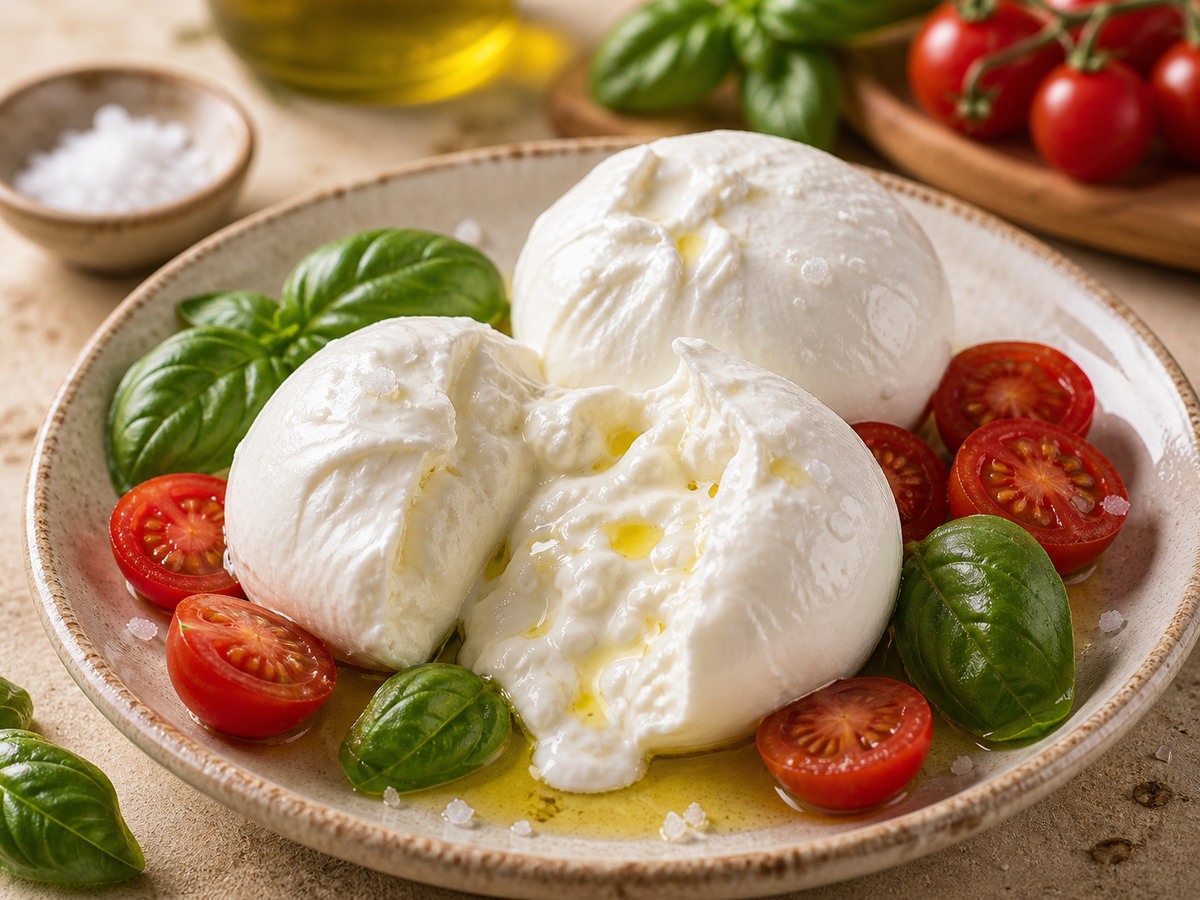
There is a question that comes up when you describe mozzarella di bufala to people who have never had it fresh in Campania: is it really that different? The answer is yes, and it is not a close comparison. What gets sold outside the region — even good imported mozzarella, even the DOP-certified balls that travel to specialty shops in the United States or northern Europe — is already a day or two old by the time it reaches you. Mozzarella di bufala is a fresh cheese that changes every hour after it is made. At the caseificio, still warm, it is one thing. The next morning it is another. Three days later it is a third. All three can be good. Only one is what the cheese actually is.
I grew up in Caserta, which is the center of buffalo mozzarella production in a way that is not just geographic. About 95% of all water buffalo in Italy are in Campania, and a very large proportion of those are in the Caserta and Salerno provinces. The Volturno plain just south of the city has been buffalo country for centuries — the animals were already here in the medieval period, probably brought earlier, and the land suits them: wet, fertile, the water clean from the river. You could smell the caseificio from a distance on warm mornings. It was not an unpleasant smell. It was the smell of something being made.
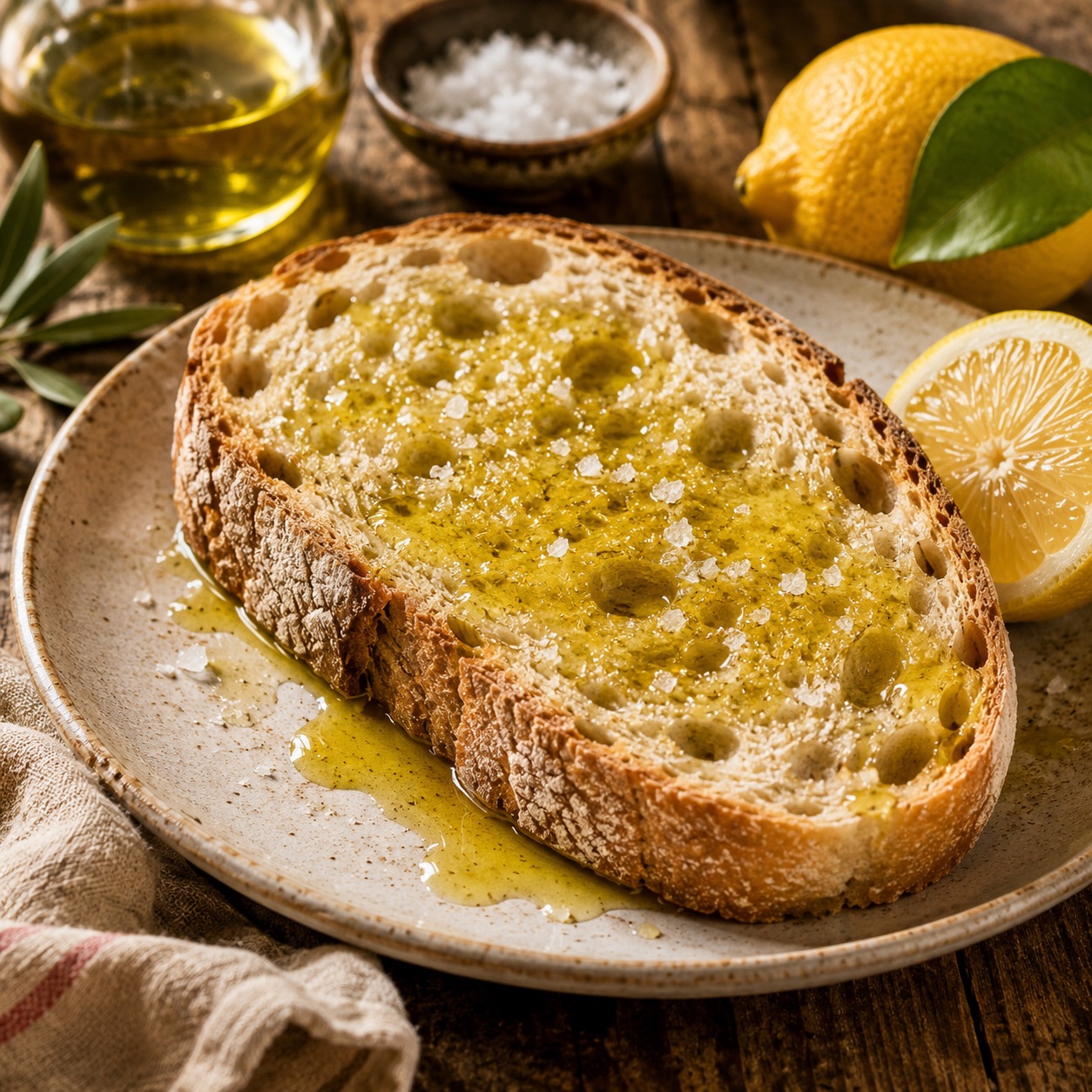
At home, mozzarella was a second course, not an appetizer in the way it tends to appear on restaurant menus elsewhere. It arrived at the table after the pasta, sometimes with rughetta — wild rocket, which has a bitterness and a peppery edge that cuts through the fat of the buffalo milk — sometimes with just a little olive oil and nothing else. My father ate it that way most often: the mozzarella, the oil, bread. He was not someone who needed the dish to be more complicated than it was. When the ingredient is that good, the instinct to add things to it is actually a problem.
The version that most people outside Campania know — firm, cold, refrigerated in brine, sliced into neat rounds for a caprese — is a reasonable approximation of something that is genuinely difficult to approximate. The fat content of buffalo milk is roughly double that of cow milk, and that fat is what gives the cheese its weight, its creaminess, its particular way of pulling apart in layers when you tear it by hand. Fior di latte — cow's milk mozzarella — is a good cheese. It is not a substitute for buffalo mozzarella. The texture is different, the flavor is different, the way it melts is different. They happen to share a production method and a name. That is about where the resemblance ends.
Every time I go back to Caserta I stop at a caseificio. It is not negotiable. There are several in the area that have been operating for generations, and the quality among the serious ones is consistent in the way that things made with real attention to a single product tend to be consistent. You buy what you will eat that day. You do not refrigerate it if you can avoid it — cold changes the texture and mutes the flavor. You eat it at room temperature, within hours, and you understand immediately why 95% of the buffalo are still there and not somewhere else.
Buffalo milk contains roughly 7–8% fat compared to 3.5–4% in typical cow milk — nearly double the concentration. This matters for mozzarella in several ways. Higher fat content means more fat globules distributed through the curd, which creates a softer, creamier texture and a richer mouthfeel that cow's milk mozzarella cannot replicate simply by adding cream. Buffalo milk fat also has a different fatty acid composition: it is higher in short- and medium-chain fatty acids, which are more volatile and contribute more directly to the aroma you notice when the cheese is fresh and warm. This is a large part of what distinguishes the smell of a freshly made buffalo mozzarella from anything that has been refrigerated and shipped.
The pasta filata process — stretching the curd in hot water, then forming it by hand — aligns the casein protein strands into the characteristic layered structure that gives mozzarella its elasticity and its way of pulling apart in sheets. In buffalo mozzarella, the higher fat content lubricates this protein network, which is why a fresh buffalo mozzarella tears more softly and releases whey more readily than a fior di latte. The whey it releases when cut is not a sign of poor quality — it is the natural liquid still held in the protein matrix, and it carries flavor. Aging and refrigeration drive that liquid out and compact the protein structure, which is why a day-old mozzarella slices cleanly and a fresh warm one does not. Both are correct. Only one is what the cheese was made to be.
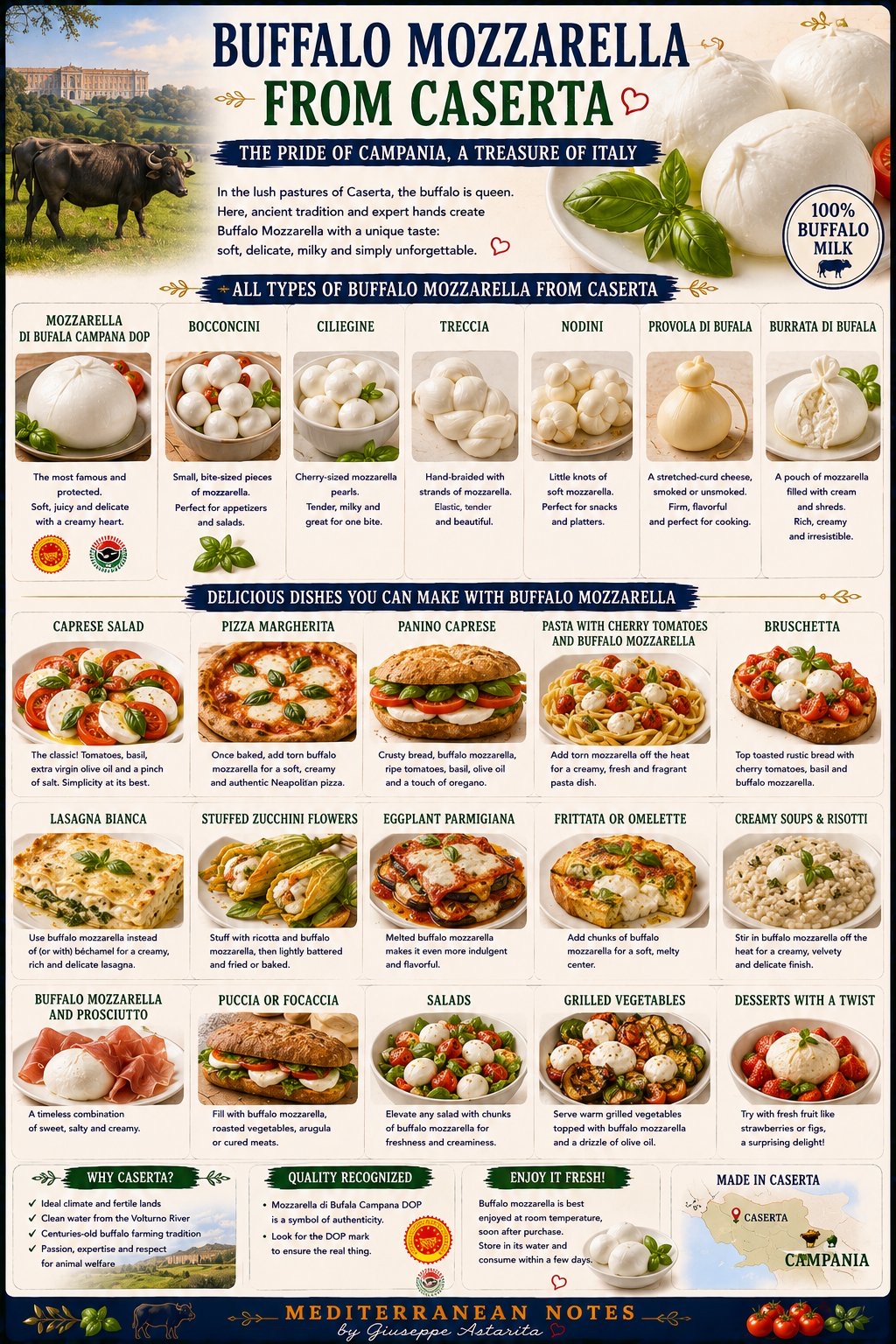
The formats — what you will find at the caseificio
How to eat it — and what to put with it
If you travel to Campania — to Naples, to Caserta, anywhere in the province — finding the mozzarella is not difficult. The harder thing is not eating it immediately in the car on the way back. I have never fully managed this. I am not sure it is worth managing.
Buon appetito — e mangiatela ancora calda.