Bruschetta Napoletana
The Classic
Before the pizza arrived, there was bruschetta. Warm bread, a garlic clove rubbed directly on the crust, the best olive oil you had, and tomatoes — the Saturday ritual in a town where pizza was never something you made at home.
Growing up in Caserta you did not make pizza at home. There was no reason to: there was a pizzeria at every corner of the neighborhood, with a wood-burning oven and a proper pizzaiolo who had been doing it for thirty years. Pizza was something you went out for, and going out for pizza was one of the few restaurant meals we had regularly as a family. Saturday evenings, almost always. It was not expensive then — it was the affordable thing to do, which is now somewhat changed, but that is a different story for a different post.
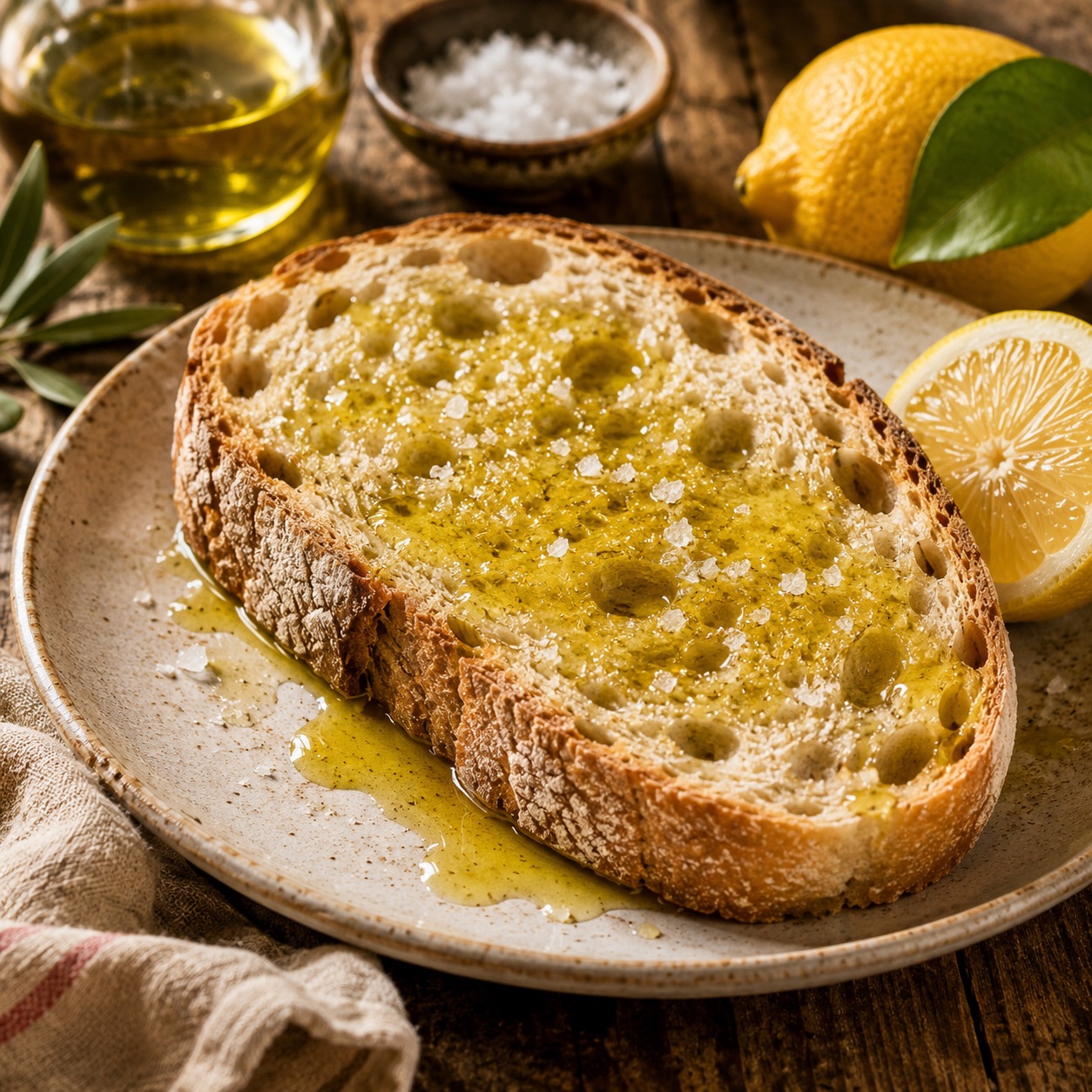
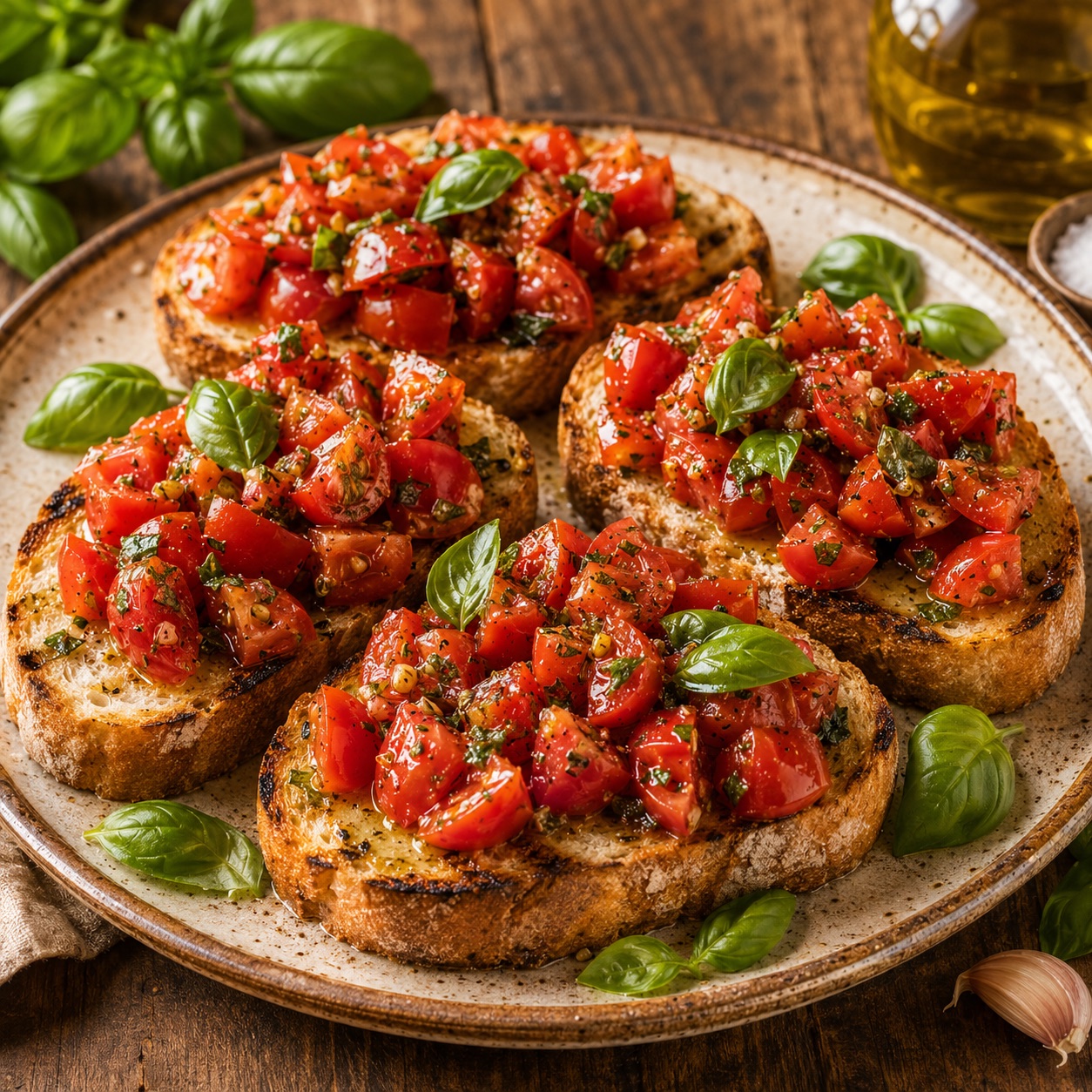
Before the pizza came, there was bruschetta. It arrived quickly, while you were still settling in and the oven was working on your order. The bread was the local cafone — a dense, rustic loaf with a thick crust that toasts hard and holds its shape under tomatoes without going soft immediately. My father would take the garlic clove the server left on the plate and rub it directly onto the warm bread. Not a quick pass — he pressed it in, working it into the surface while the bread was still hot enough to make the garlic almost melt into the crust. Then olive oil, generously, and the tomatoes. That was it. Basil if it was there, oregano if it was not, or sometimes both.
It is a dish where the quality of two ingredients determines everything: the bread and the olive oil. The tomatoes matter too, but a mediocre tomato in July is still a good tomato. Mediocre olive oil on bruschetta is just mediocre olive oil — there is nowhere for it to hide. My father understood this without needing to articulate it. He knew which olive oil was worth using on bread and which was not, the way people who grew up around good ingredients tend to know these things without having been taught them formally.
The bruschetta I make now is the same thing. I do not complicate it. If I have good cherry tomatoes or datterini I will use those, chopped roughly and left to sit for fifteen minutes with salt and olive oil so they release some juice. If I have San Marzano I use those. In summer in Massachusetts I use whatever is ripe and red from the garden or the market, and it is fine. What I am careful about is the olive oil — I use the best I have, not the everyday bottle. Bruschetta is one of those preparations that exists specifically to showcase olive oil, in the same way that a good crostino exists to showcase what you put on it. If the olive oil is not worth tasting on its own, the bruschetta will tell you immediately.
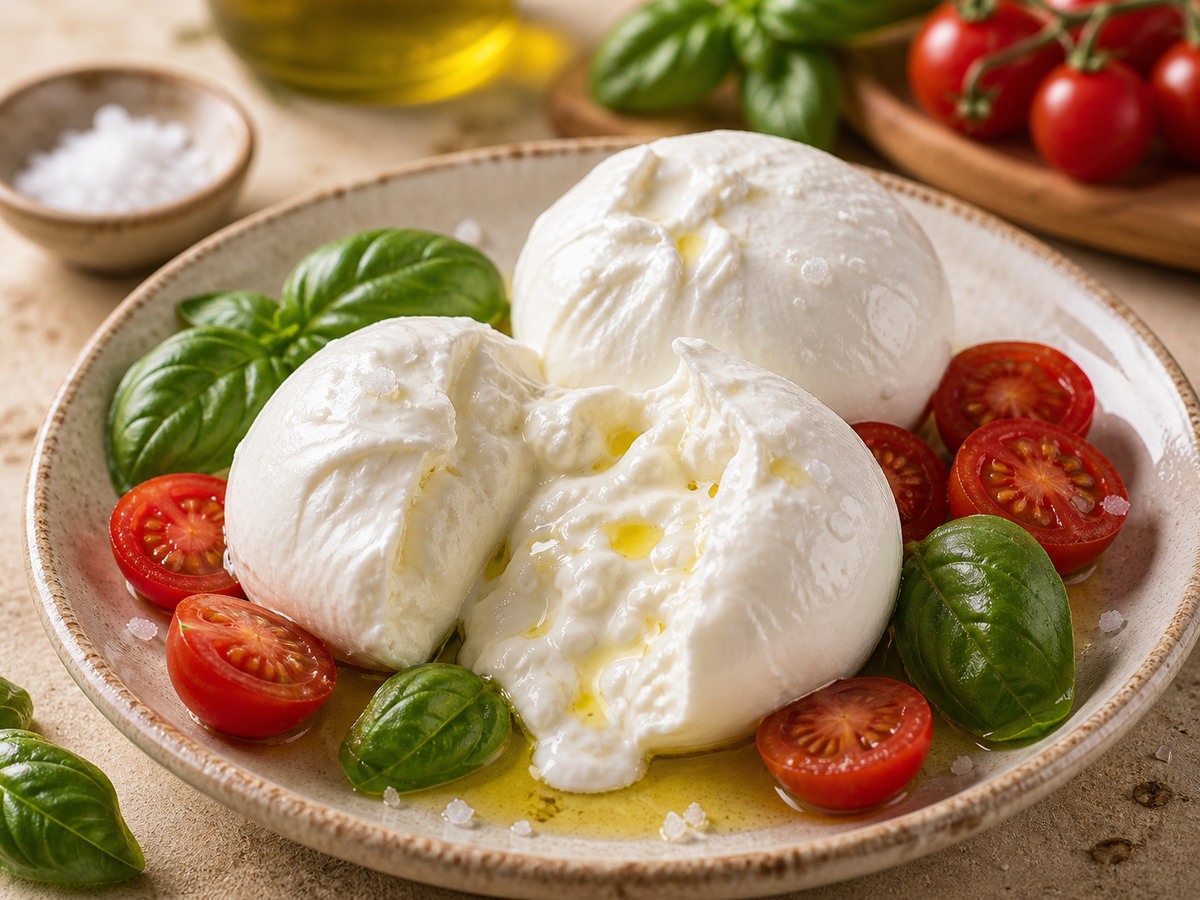
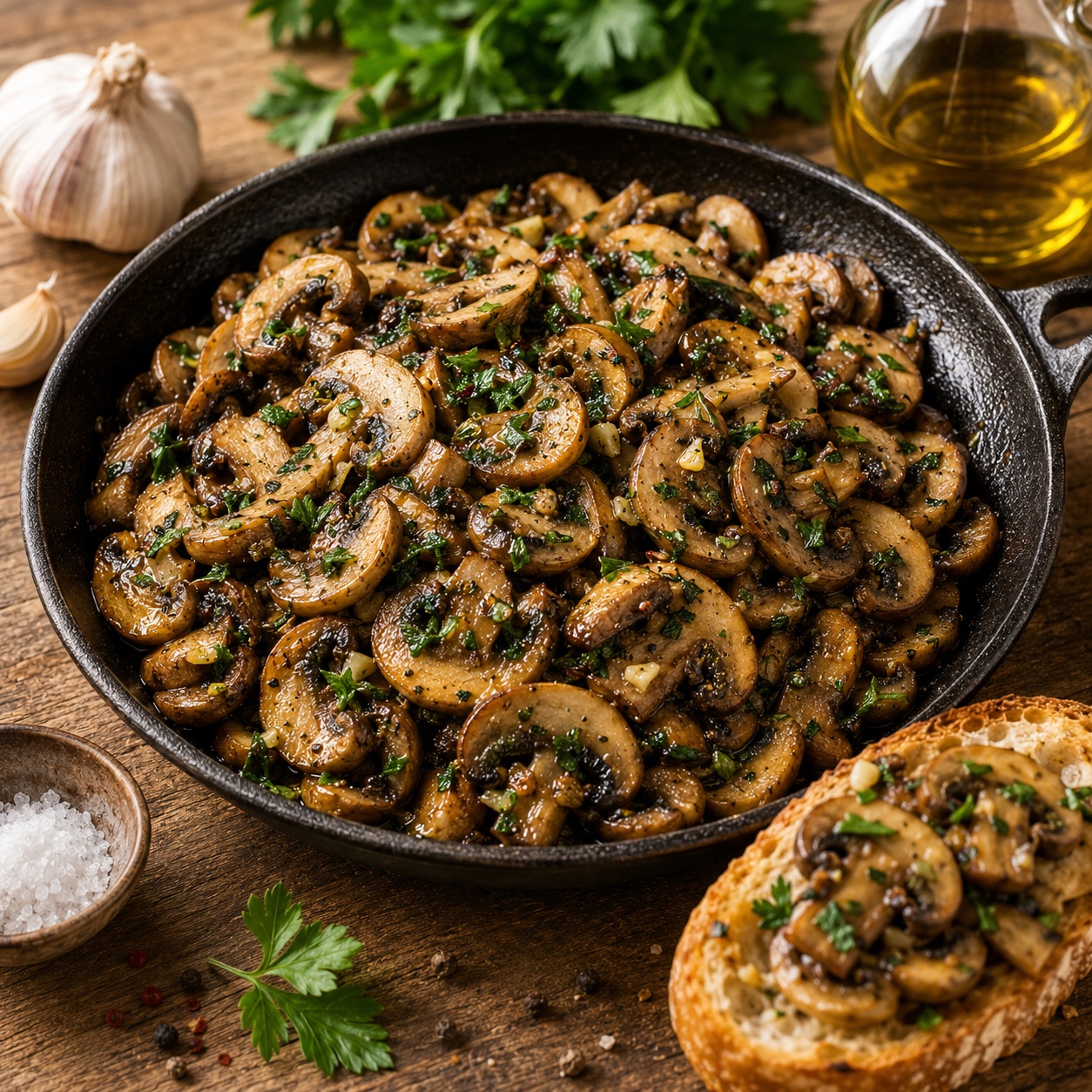
Beyond the classic version there is really no limit. Bruschetta with aged cheese, with mushrooms sautéed in garlic, with a few anchovy fillets laid over the tomatoes, with burrata and a little black pepper. All of these work because the base — warm garlicky bread and good olive oil — is solid enough to carry almost anything. The classic exists not because the other versions are wrong but because when the tomatoes are good and the olive oil is right, you do not particularly need anything else.
Garlic's pungency comes from allicin, a sulfur compound that forms when the cell walls of the clove are broken — by cutting, crushing, or in this case abrading against a rough surface. When you rub a raw garlic clove on toasted bread, the friction ruptures the cells and releases allicin directly into the bread's surface, where the heat from the toast accelerates its diffusion into the crumb. This is more efficient than sliced garlic laid on top: the mechanical action distributes the flavor evenly across the surface in a way that simply placing garlic there does not.
The olive oil matters for a related reason. Allicin and the other aromatic compounds in garlic are fat-soluble, not water-soluble — they dissolve into oil and are carried by it across the bread and into the tomatoes above. A generous pour of olive oil after the garlic rub is not just flavor; it is the medium that integrates the garlic with everything else on the slice. This is also why the quality of the olive oil registers so directly: extra-virgin olive oil contains hundreds of polyphenols with their own flavor — bitter, peppery, grassy depending on the variety and harvest — that contribute to what you taste. Refined or low-quality oil has had most of those compounds removed. On bruschetta, that absence is obvious.
The recipe
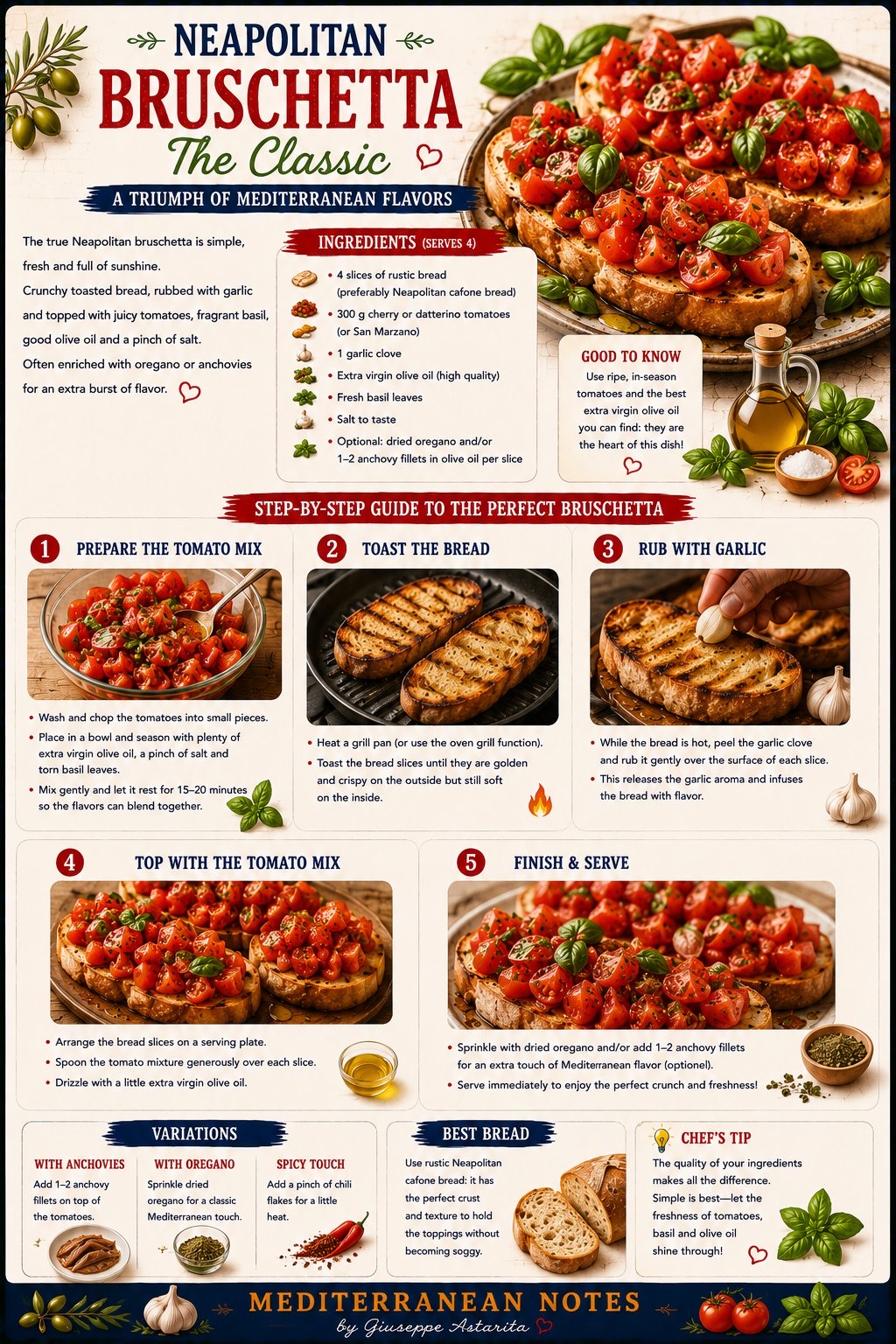
Variations — be creative
The bruschetta at those Saturday pizzerias was always the same and it was always good, which is what you can say about dishes that have been made correctly for a long time. I have not found a version I like better than the one my father made at the table — bread still warm, garlic pressed in hard, the olive oil pooling around the tomatoes. Simple dishes tend to be the ones you end up coming back to.
Buon appetito — e aspetta la pizza.