Scaloppine al Limone
Tender Cutlets in Lemon Sauce
Very typical of my mother's weeknight table — usually with mushrooms, quite delicious, and very popular in the 1980s. I wonder if memories will be preserved as recipes. Which is, of course, exactly what this collection is for.
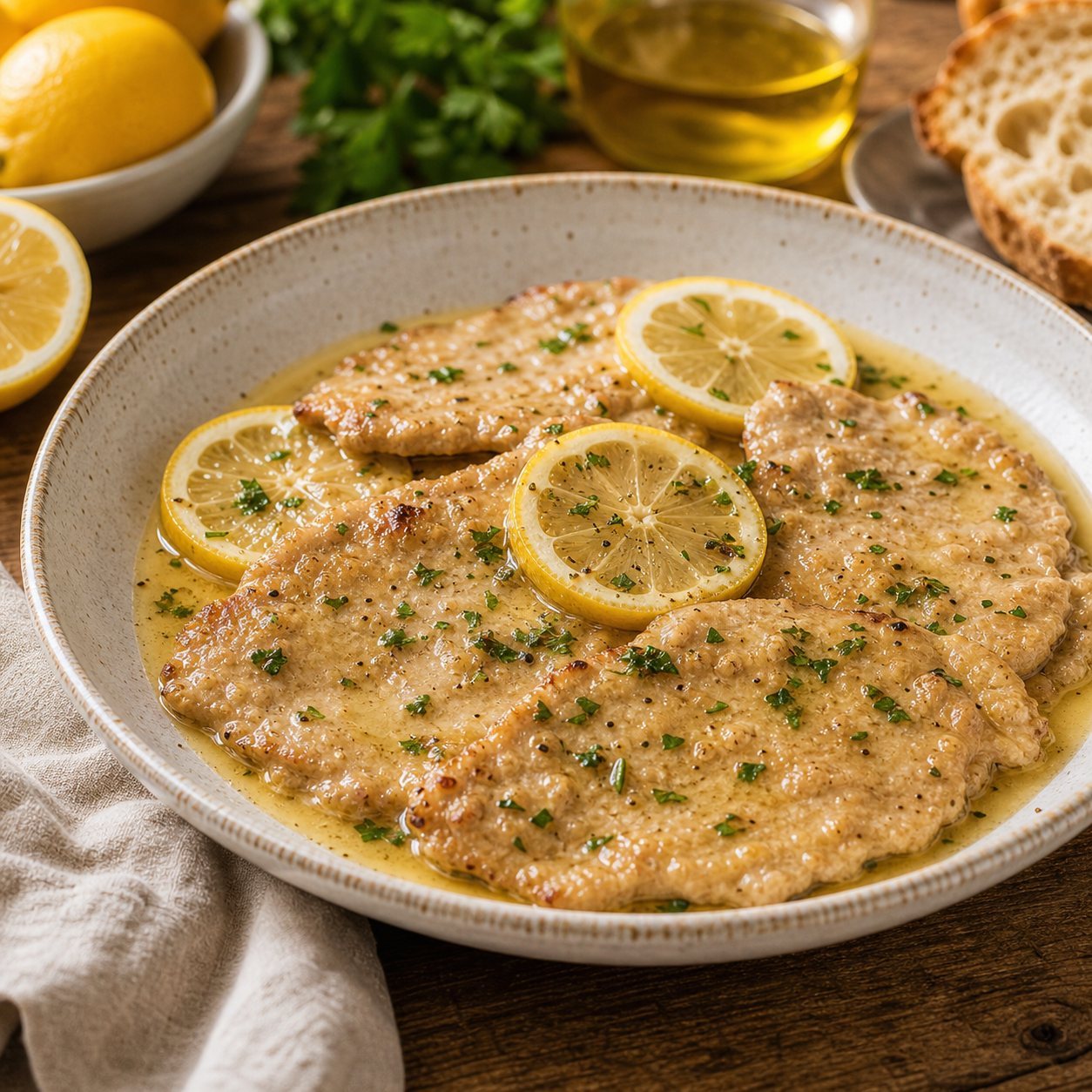
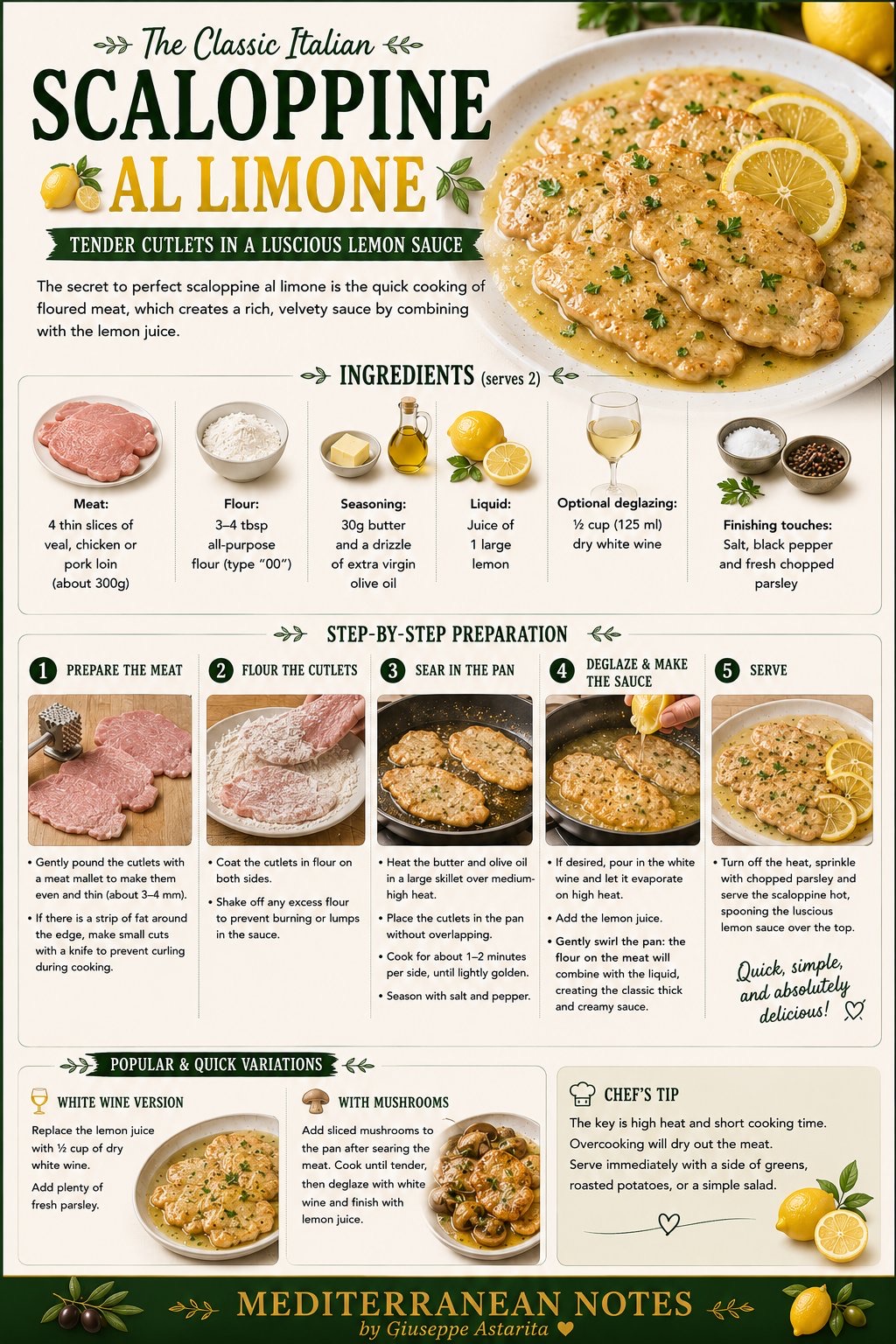
The scaloppine al limone is closely related to the petto di pollo alla napoletana described in the previous post — same base technique, flour the meat, sear in fat, deglaze with lemon — but with two differences that make it a distinct dish. First, butter is part of the fat alongside the olive oil, which gives the pan sauce a richness and a silkiness that olive oil alone does not produce. Second, the flour washed from the meat's surface during cooking dissolves into the lemon and wine and creates the luscious, slightly thickened sauce that is the whole point of the scaloppine and that requires no additional thickening agent. The sauce makes itself.
In our house this was made most often with mushrooms — champignon or whatever was available — added to the pan after the meat was seared and before the deglazing. The mushrooms soaked up the butter and the meat juices and softened into the lemon sauce, and the combination of mushroom and lemon and the slightly creamy pan sauce was what I associate with this dish. The plain lemon version is elegant and correct; the mushroom version is what my mother made and what I remember.
The 1980s were a particular moment in Italian home cooking. Restaurant-style preparations — dishes that had been the domain of trattorie and ristoranti — were finding their way into family kitchens through the food magazines and cookbooks of the decade. The scaloppine is one of those dishes: technically simple enough for a home cook, visually attractive with its glossy lemon sauce, and perceived as slightly more sophisticated than the rustic braised and fried preparations that dominated Campanian weekday tables. It was popular in the sense that it appeared regularly, was always received well, and required nothing that was not already in the kitchen.
I still make this, in Massachusetts, with both veal and chicken depending on what is available. The veal version is closer to what my mother made — thinner, more delicate, the sauce lighter. The chicken version is more forgiving and just as satisfying. The mushroom addition is now standard for me: a handful of sliced champignon in the pan after the meat comes out, cooked briefly in the remaining butter until they release their liquid, then the wine and lemon go in and everything reduces together. It takes twenty minutes and produces a second course that is genuinely difficult to improve on.
The self-thickening sauce of the scaloppine relies on a simple process: when floured meat is seared in a pan, some of the flour on the surface absorbs fat and browns (contributing Maillard flavor), but some also migrates into the pan liquid during the sear. When lemon juice and wine are added and the pan is deglazed, this dissolved flour gelatinizes in the hot liquid and thickens it slightly without producing lumps — the key is that the heat is high enough that the liquid boils rapidly and the starch distributes evenly rather than settling in one place. The result is a sauce with a velvety consistency that neither roux nor cornstarch could produce in such a short time.
The combination of butter and olive oil is standard in Italian pan-sauce preparations and has a specific technical rationale. Butter alone has a relatively low smoke point (around 150°C) due to its milk solids, which burn before the fat reaches the temperature needed for good Maillard browning. Olive oil has a higher smoke point and delays burning. The combination raises the effective smoke point enough to sear the meat properly while retaining the flavor and emulsifying properties of the butter — particularly the milk proteins, which help the final sauce hold together as an emulsion rather than separating into fat and liquid. This is also why the butter is added off the heat at the end in some preparations: cold butter swirled into a hot sauce emulsifies it and gives it a glossy finish without breaking.
The recipe — serves 2–3
It still works because the technique is sound and the combination of lemon, butter, and meat is one of those pairings that does not become dated. It is faster than a braise, more satisfying than a plain sear, and produces a proper sauce from nothing. The mushroom version adds a decade of specificity — this is the dish as it was made in Caserta in the 1980s, not the version in the cookbook — and that specificity is what makes it worth writing down.
Variations
Memories are preserved as recipes when someone writes them down. This one is now written down: the scaloppine with mushrooms, made on weeknights in Caserta in the 1980s, by a mother who cooked quickly and well for children who ate without fully understanding what they were eating. The dish is good. The memory is better. Both are here now.
Buon appetito — e buoni ricordi.