CoursesBasicsFirst CoursesSecond CoursesSides & VegetablesSoupsSaucesEggs & FrittatePizza & BreadBreakfastSnacksStreet FoodDesserts
DietVegetarianVegan
SeasonSpringSummerAutumnWinter
MainSeafoodMeatEggs
MoreCulture & TraditionsGlossaryAbout

Pizza di Scarola
The Neapolitan Escarole Pie

A recipe I almost forgot to write down, which is how I know it belongs here. Christmas Eve, light lunch — this alongside pizzette fritte and whatever else the occasion called for. Simple, fulfilling, and good for several days after, if it lasts that long.
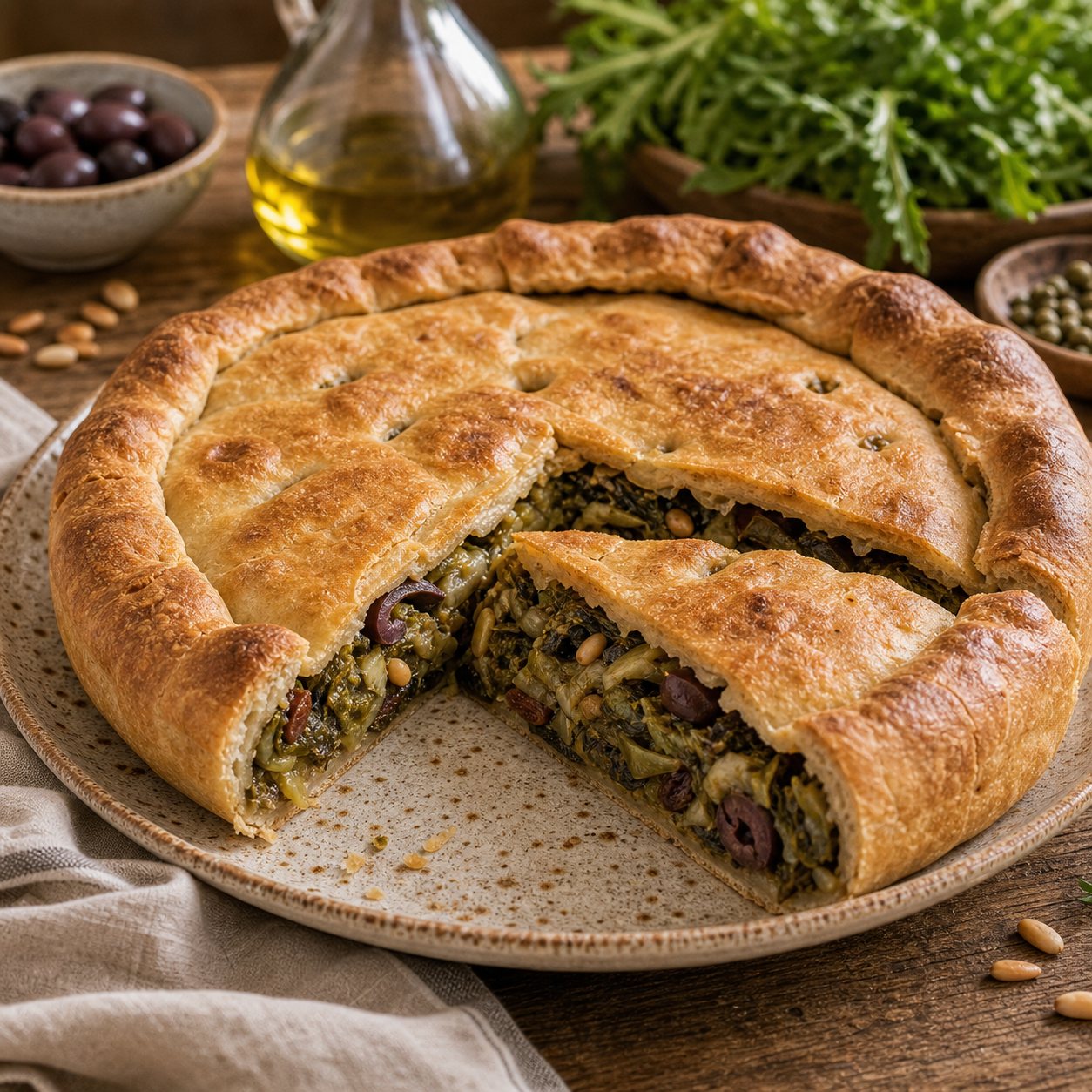
Pizza Di Scarola

The pizza di scarola almost slipped past this collection entirely — not because it is unimportant but because it belongs so specifically to one day of the year that it sits in memory in a separate compartment from the everyday dishes. Christmas Eve in the Neapolitan tradition is a day of lean eating — the vigilia, the eve before the feast, when the table is lighter and fish and vegetables take precedence over meat. The pizza di scarola is the lunch dish of that day: a savory leavened pie with a golden crust and a filling of bitter escarole cooked down with olives, pine nuts, and raisins, the contrast between all these elements making something that is more than the sum of its parts.

The filling is built on a very particular flavor logic: the bitterness of the escarole against the sweetness of the raisins, the brininess of the olives and capers against the soft richness of the toasted pine nuts, all of it unified by garlic and olive oil. This sweet-bitter-salty combination is ancient in the Neapolitan kitchen — it appears in the agrodolce preparations, in the peperonata with raisins, in various Lenten dishes — and it is not subtle. Each element is present as itself, not dissolved into a background. When you bite into the pie you encounter them in sequence.

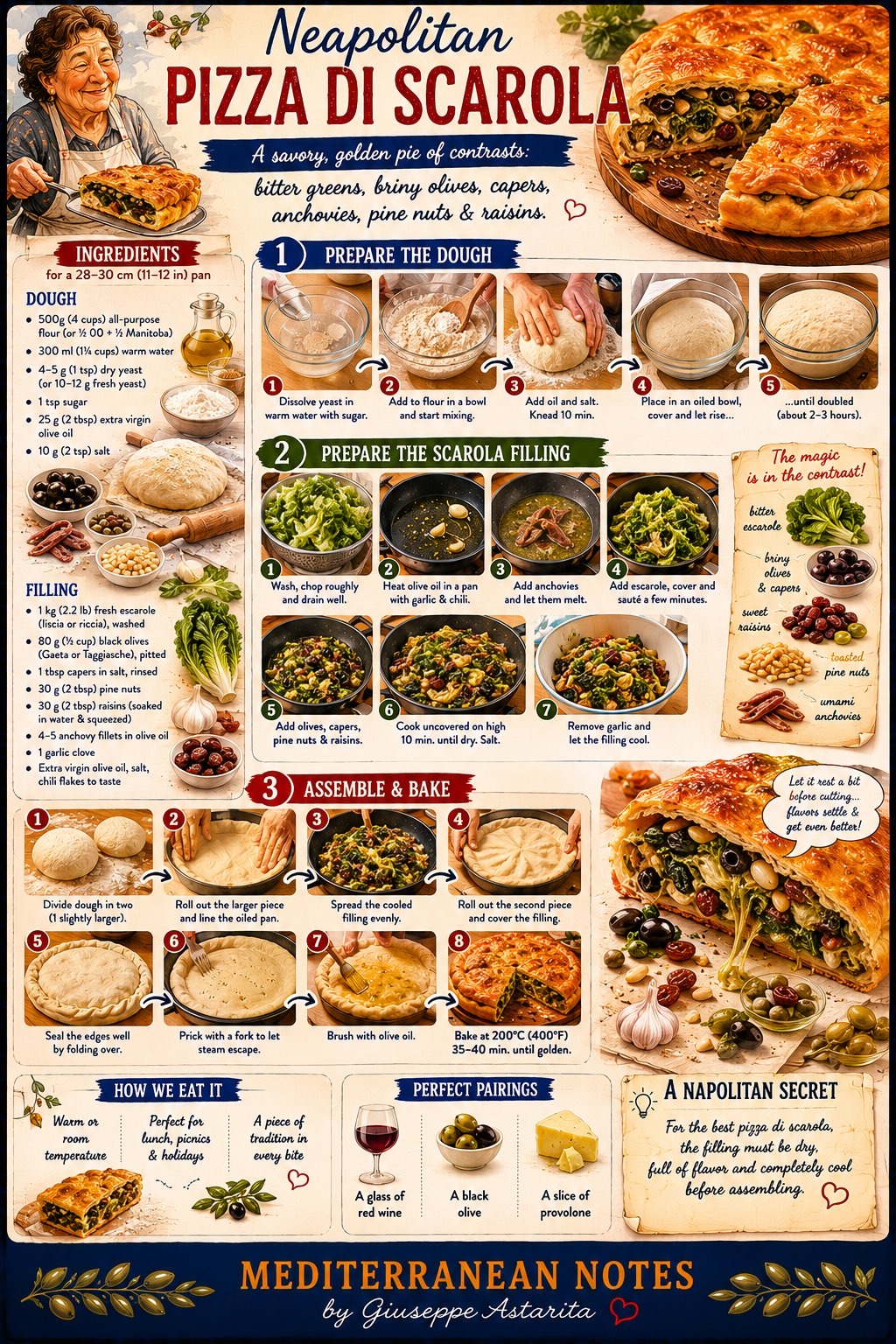
Anchovies appear in the traditional recipe and in the infographic. They were not part of our version. My father's position on fish and seafood was consistent and well-established throughout his life, and anchovies in any preparation were not something he would eat. My mother made the pizza di scarola without them, and the filling is complete without them — the olives and capers provide the necessary salinity and the escarole provides the depth. I still make it without anchovies and I have never felt the absence as a lack. If you eat them and want to add three or four fillets dissolved in the oil at the garlic stage, it is a reasonable thing to do. But it is not required.

It is simple and fulfilling in the way that only a few dishes are — the kind where you look at the ingredients and are not sure they add up to something special, and then you taste it and understand that they do. The crust alone, golden and oily, is worth making.

The pie keeps very well — two or three days at room temperature, longer in the refrigerator. This matters on Christmas Eve because you are not eating it in isolation: it is alongside fried things, alongside other preparations, part of a spread rather than a meal with courses. A slice warm from the oven, a slice at room temperature two hours later, another cold from the refrigerator the following morning — it changes across these encounters and it is good at all of them. The crust is slightly more yielding cold, the filling denser. Warm, the crust crackles and the filling is looser. Both versions are correct.


The five contrasting flavors inside the filling — the magic the infographic identifies:

Bitter
Escarole
Briny
Olives + capers
Sweet
Raisins
Toasty
Pine nuts
Aromatic
Garlic + chili
Why escarole works in a savory pie — and what the raisins are doing there

Escarole (scarola) belongs to the chicory family and contains lactucin and lactucopicrin — bitter sesquiterpene lactones responsible for its characteristic bitterness, which concentrates in the outer leaves and mellows significantly during cooking. Sautéing escarole in olive oil with garlic not only reduces the moisture content (essential — a wet filling makes a soggy pie) but also partially hydrolyzes the bitter compounds, converting the raw sharpness into a milder, more complex bitterness that the other filling elements can balance against rather than fight. This is why raw escarole tastes harsh while cooked escarole in this filling tastes pleasantly bitter — the heat transforms the compounds into less intense forms.

The raisins are doing specific chemical work rather than simply adding sweetness. They contain fructose, glucose, and tartaric acid, as well as phenolic compounds including resveratrol and quercetin. In the context of a hot pan with garlic and olive oil, the sugars in the raisins begin to caramelize slightly at the edges, adding a depth that raw raisins do not have. More importantly, the acidity from the tartaric acid interacts with the bitter compounds of the escarole in the same way that lemon juice interacts with bitterness in other preparations — it moderates the intensity without eliminating the character. The sweet-bitter-acid balance in this filling is not accidental; it is a traditional solution to a flavor engineering problem that Neapolitan cooks solved empirically centuries ago.


The recipe — pan 28–30 cm
For the dough
Pizza di Scarola Napoletana — step-by-step infographic
Pizza di scarola napoletana — la ricetta completa. Click to enlarge.
500 gAll-purpose flour (½ 00 + ½ Manitoba, or all 00)
300 ml, warmWater
4–5 g dry / 10–12 g freshYeast
1 tspSugar
25 gExtra-virgin olive oil
10 gSalt
For the filling
1 kgFresh escarole (liscia or riccia), washed
80 gBlack olives (Gaeta or Taggiasca), pitted
1 tbsp, rinsedCapers in salt
30 gPine nuts
30 g, soaked and squeezedRaisins
1 cloveGarlic
to tasteExtra-virgin olive oil, salt, chili flakes
optional — not in our family's version4–5 anchovy fillets in oil
Make the dough
1
Dissolve the yeast and sugar in the warm water. Add to the flour and begin mixing. Add the olive oil and salt. Knead for 10 minutes until smooth and slightly elastic. Place in an oiled bowl, cover with a damp cloth, and leave to rise in a warm place for 2–3 hours until doubled.
This is a simple leavened dough — no complexity required. The crust should be soft and pliable, not dense. If it springs back strongly when you press it, it needs more time to rise.
Make the filling
2
Wash the escarole thoroughly, chop roughly, and drain well. Blanch briefly in boiling salted water for 2 minutes, then drain and squeeze out as much water as possible. The filling must be dry — a wet filling makes a soggy pie. This cannot be overstated.
Squeeze the escarole in handfuls, pressing firmly. Then spread it on a clean cloth and press again. Moisture is the enemy of a crisp bottom crust.
3
Heat a generous drizzle of olive oil in a wide pan over medium heat. Add the garlic clove (and anchovies if using — let them melt completely into the oil). Add the drained escarole and sauté for a few minutes. Add the olives, capers, pine nuts, and the raisins squeezed dry. Season with salt and a pinch of chili. Cook uncovered over high heat for 10 minutes, stirring, until the filling is dry and fragrant. Remove the garlic. Let it cool completely before assembling.
Completely cool. If the filling is warm when it goes into the pie, it will create steam during baking and make the crust soft. Cool it on a wide plate if you are in a hurry — spreading it out speeds the cooling.
Assemble and bake
4
Preheat the oven to 200°C (400°F). Divide the risen dough into two pieces — one slightly larger. Roll the larger piece to about 4–5 mm thickness and line an oiled 28–30 cm pan, letting the dough hang over the edges. Spread the cooled filling evenly, leaving a 1 cm border.
5
Roll out the second piece of dough and lay it over the filling. Fold the overhanging bottom dough over the top edge and press firmly to seal all around. Prick the surface with a fork in several places to let steam escape. Brush generously with olive oil.
6
Bake for 35–40 minutes until the crust is deep golden and the bottom sounds hollow when tapped. Let it rest for at least 15–20 minutes before cutting. Serve warm or at room temperature. It is better the next day.
On Christmas Eve — and on the anchovies question
The pizza di scarola is a Christmas Eve dish in Naples and much of Campania — part of the vigilia tradition of eating fish and vegetables rather than meat on the eve of the feast. Alongside it: pizzette fritte, baccalà in various preparations, fried things, a table that is abundant despite being meatless. The pizza di scarola sits in this context as the savory pie, the thing that has substance and fills the stomach without being heavy in the way that meat is heavy.

Anchovies appear in the traditional recipe because Christmas Eve was a fish day and anchovies are deeply embedded in Neapolitan cuisine. In our house they were omitted because my father would not eat them — his position on anything from the sea was absolute and did not bend for tradition. The pie without anchovies is not a compromise. The olives and capers carry the necessary salinity and depth. If you want to add anchovies, dissolve three or four fillets into the oil before the garlic at step 3. If you don't, proceed without a second thought.

Notes and variations

Why it keeps so well
The filling, once properly dried before baking, does not produce moisture during storage. The leavened crust stays soft for two to three days at room temperature if wrapped in a cloth. Cold from the refrigerator the following morning with a coffee — one of the best accidental breakfasts of the Christmas holiday. Reheat briefly in the oven if you prefer it warm; the crust revives well.
For picnics and transport
The pizza di scarola travels exceptionally well — the sealed crust keeps the filling contained, it does not need to be served hot, and it can be sliced and wrapped in paper. This makes it a natural candidate for the same picnic logic as the pizza rustica at Easter — a self-contained food that improves slightly with time and requires nothing alongside it.
The scarola — which variety
Both the flat-leaf (liscia) and the curly-leaf (riccia) escarole work well. The curly variety holds slightly more water and requires more thorough squeezing. In the US, escarole is available at Italian markets and good produce sections. Belgian endive is not a substitute — too small and too uniformly bitter. Frisée comes closer but is also not ideal. Search out the real thing if you can.
Healthy and genuinely so
Escarole is rich in vitamins A, K, and folate, and the bitter compounds — the same lactucin and lactucopicrin that give it its flavor — have documented effects on bile production and liver function. The pine nuts add vitamin E and monounsaturated fat. The olive oil is olive oil. This is a pie that is genuinely good for you, which is a rarer quality in a Christmas Eve dish than you might hope. The raisins add natural sugar, but the portion is small enough to be irrelevant.

I am glad I remembered this one before the collection was finished. It almost did not make it. Some dishes sit so specifically in one day of the year that they do not come to mind when you are thinking about the kitchen in general — they only appear when you think about that particular day and work backward to what was on the table. Christmas Eve, the light lunch, the vigilia before the feast: that is where the pizza di scarola lives. Now it is here too.

Buon Natale — e buona scarola.
More from Pizza e pane
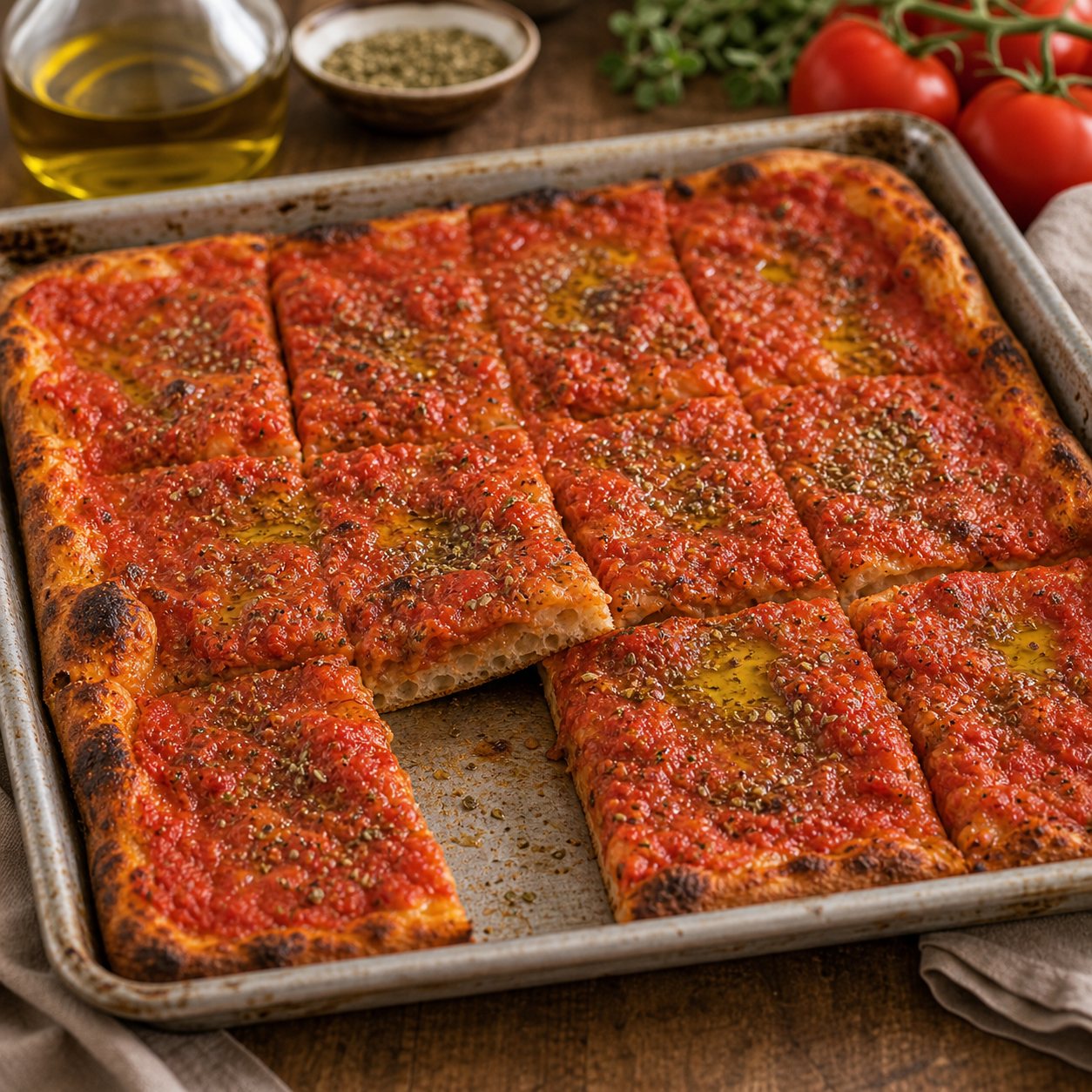
Pizza rossa in teglia
Sheet-pan pizza — tomato, sometimes mozzarella.
The pizzas of Naples
The Most Typical Pizzas of Naples
Margherita, Marinara, ripieno, salsiccia e friarielli, and the city that made pizza itself.
Pizzette fritte
Pizzette fritte
The Christmas Eve snack, the party food, the thing you can't stop eating.