CoursesBasicsFirst CoursesSecond CoursesSides & VegetablesSoupsSaucesEggs & FrittatePizza & BreadBreakfastSnacksStreet FoodDesserts
DietVegetarianVegan
SeasonSpringSummerAutumnWinter
MainSeafoodMeatEggs
MoreCulture & TraditionsGlossaryAbout

Carciofi in Pentola a Pressione
Artichokes in the Pressure Cooker

Five minutes at pressure and the cooker does the rest. Stuffed with parsley, garlic, and olive oil, surrounded by potatoes that absorb everything — eaten petal by petal, dipped in the broth.
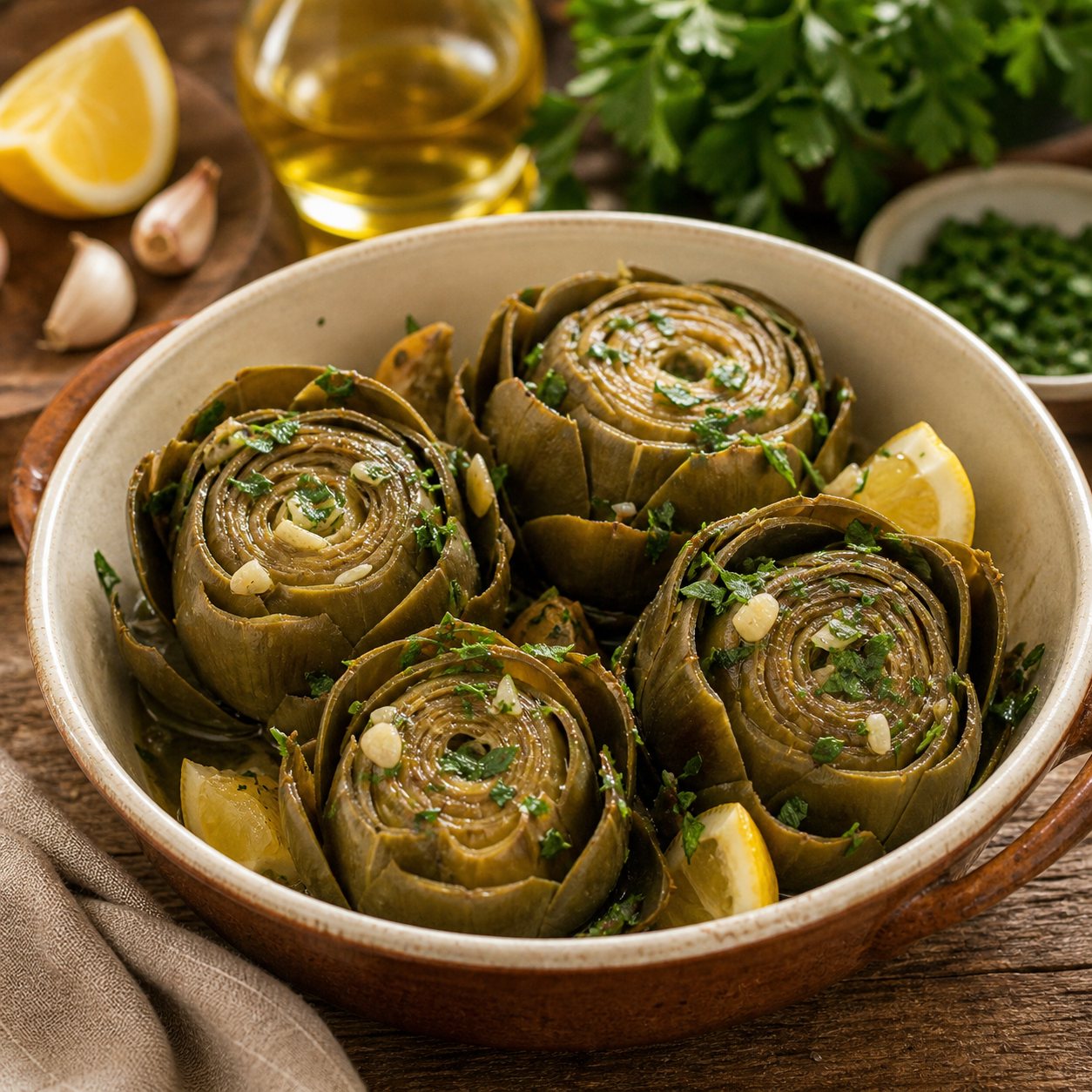
Artichokes Pressure Cooker

There is a version of artichokes that takes forty minutes over charcoal and fills the whole street with smoke — I wrote about that one separately, the carciofi arrostuti from the Caserta balcony. This is not that version. This is the one I make on a Tuesday evening in Massachusetts when I have artichokes that need to be cooked and not much else to think about. It takes about five minutes of work and then the pressure cooker closes and you stop thinking about it.

The pressure cooker was a fixture in Campanian kitchens — it still is. My mother used one regularly, and the sound of the valve releasing steam was part of the background noise of the house in the evenings. There is something satisfying about that sound: it means the thing is done. The artichokes come out tender all the way through, not just on the outside, and they hold their shape in a way that braised artichokes sometimes do not.

The stuffing matters more than people expect. Most pressure cooker recipes skip it — just water, lemon, done. That works, but it produces a plain artichoke. If you take two minutes to open the leaves and push in some chopped parsley and garlic and a little salt and olive oil, the filling steams directly into the heart during cooking and you get something much better. The technique is exactly the same as for the roasted version: smack the artichoke against the board stem-up to open the leaves, then work the filling in with your fingers. The pressure cooker just replaces the coals.

The potatoes are the part I always look forward to. They sit in the cooking liquid the whole time and come out completely different from any other potato you can make — they have absorbed the artichoke broth and the garlic and the olive oil, and they are soft and a little sweet.

The potato idea is simple and worth emphasizing: cut them in quarters, put them in the bottom of the pressure cooker around the artichokes. They cook in the same time — twelve to fifteen minutes from the first whistle — and they absorb the liquid that the artichokes release during cooking. That liquid is part parsley and garlic and olive oil and part the artichoke's own juice, which has a particular flavor, slightly bitter and slightly sweet at once. The potatoes soak it up entirely. They are not a side dish in the ordinary sense. They are the reason to use a pressure cooker for this.

My daughters both like this, which is not always the case with artichokes among children. Part of it is the eating ritual — you pull off one leaf at a time and dip the tender base in the broth that has pooled in the bottom of the bowl. You work your way inward through progressively softer leaves until you reach the heart. It takes time, and for children that is half the point. The eating slows down, which is useful. Anna in particular is methodical about it — she lines up the spent leaves on the side of the plate in order of size, which is something I never taught her.


Why pressure cooking suits artichokes particularly well

Artichokes are dense vegetables with a cell structure that resists ordinary boiling — the outer leaves stay tough long after the heart is cooked, which is why slow methods like braising or charcoal roasting traditionally worked better than quick ones. The pressure cooker changes this by raising the boiling point of water from 100°C to around 120°C, which means more heat penetrates the vegetable in less time and the tough fibrous tissue in the outer leaves breaks down before the heart overcooks.

The main carbohydrate in artichokes is inulin, a fructose polymer that converts to shorter, sweeter fructose chains under sustained heat. Pressure cooking accelerates this conversion without the extended cooking times that slow braising requires, which is why the pressure-cooked artichoke tastes genuinely sweet at the heart even though the total cooking time is short. Cynarin — the compound responsible for the artichoke's characteristic bitter aftertaste, and the reason artichokes can make wine taste slightly metallic — concentrates in the cooking liquid. The broth you dip the leaves into contains it, which is part of what gives the dipping liquid its distinctive flavor. The potatoes, sitting in that same liquid, absorb cynarin along with everything else. It is a small amount and harmless; it is also precisely what makes those potatoes taste the way they do and nothing else.


The recipe
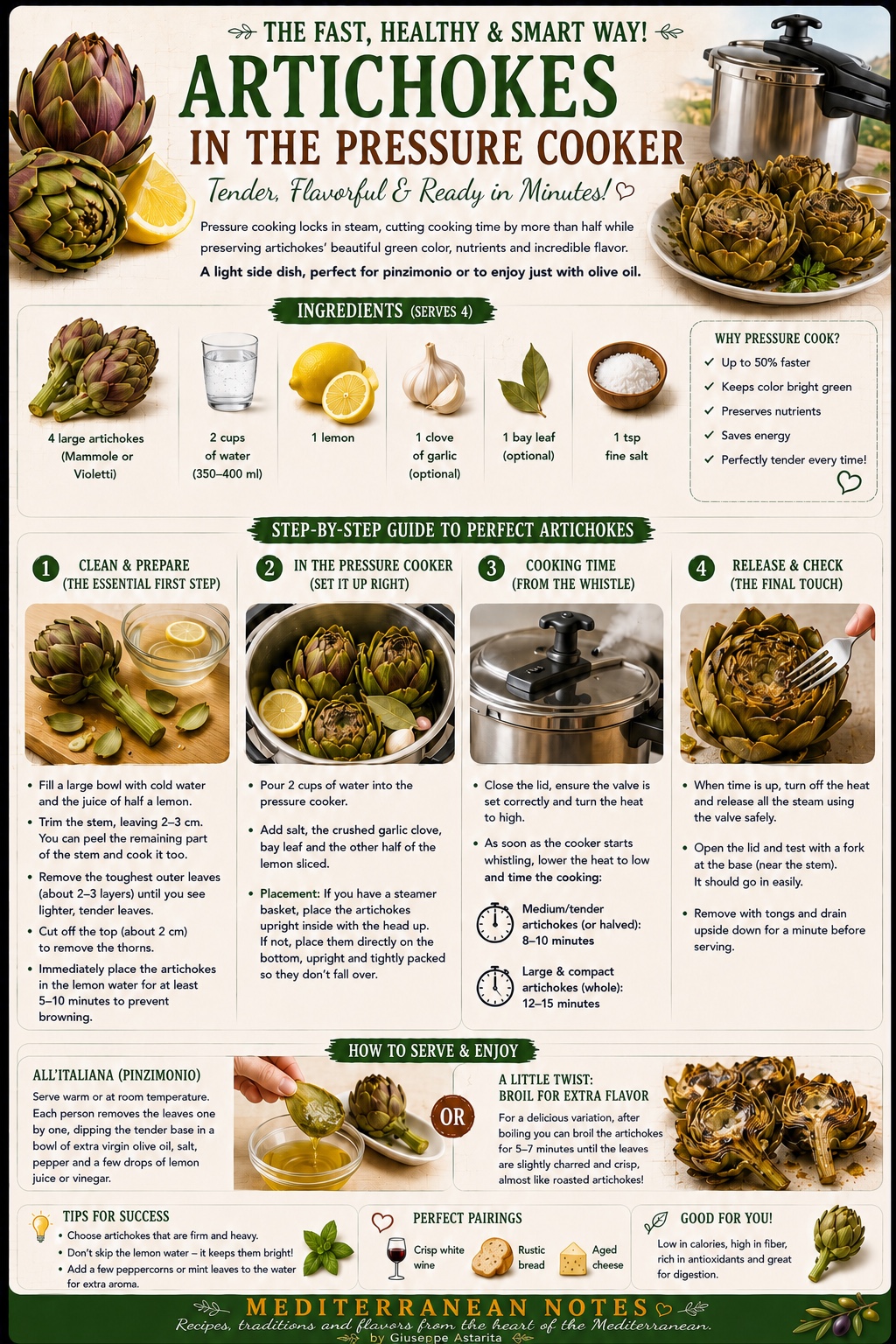
Artichokes in the Pressure Cooker — step-by-step infographic
Carciofi in pentola a pressione — the full method. Click to enlarge.
4 large Artichokes with stem (Mammola or Violetto)
2–3 medium Potatoes, peeled and quartered
2 cloves Garlic, finely chopped
1 large bunch Flat-leaf parsley, roughly chopped
generously Extra-virgin olive oil
½ Lemon, juiced (plus more for soaking)
1 Bay leaf (optional)
to taste Salt and black pepper
1
Fill a large bowl with cold water and the juice of half a lemon. Trim the stem of each artichoke to 2–3 cm, removing the tough outer layer with a knife but keeping the rest — the stem is edible and cooks in the same time as the heart. Pull away the outermost two or three layers of leaves until you reach ones that are lighter and more tender. Cut off the top 2 cm to remove the thorn tips. Place each trimmed artichoke immediately in the lemon water.
The lemon water prevents browning while you work through the rest. Five to ten minutes is enough.
2
Mix the chopped parsley, garlic, a pinch of salt, black pepper, and a generous drizzle of olive oil in a small bowl. Take each artichoke from the water and smack it firmly against the cutting board — stem up — several times until the leaves spread open. Then use your fingers to open them further from the center. Push the parsley and garlic mixture into the gaps between leaves and into the central cavity. Do not be shy with the filling.
This is the same technique as for the carciofi arrostuti. The pressure cooker replaces the coals; the stuffing logic is identical.
3
Pour about 350–400 ml of water into the pressure cooker, along with the lemon juice, a pinch of salt, and the bay leaf if using. Place the quartered potatoes on the bottom. Stand the artichokes upright on top of the potatoes, stem up, packed together so they hold each other in place. Drizzle a little more olive oil over everything.
Quarter the potatoes, not smaller — you want them to cook in exactly the same time as the artichokes, 12–15 minutes from the first whistle. Smaller pieces will disintegrate.
4
Close the lid, set the valve, and bring to pressure over high heat. As soon as the cooker starts to whistle, lower the heat and start timing: 8–10 minutes for medium artichokes, 12–15 for large compact ones. Turn off the heat and release the steam through the valve carefully before opening.
5
Test doneness by inserting a fork near the base of the stem — it should go in without resistance. Remove the artichokes upside down for a moment to drain any liquid trapped inside, then place in bowls with the potatoes and a ladle of the cooking broth.
Serve each artichoke in a bowl deep enough to hold the broth. This is the dipping liquid — it should be there in quantity, not just a smear at the bottom.
On how to eat this
One leaf at a time, pulled from the outside inward. Dip the base of each leaf in the broth at the bottom of the bowl. Bite and pull — only the soft lower part of the leaf is edible; the tougher upper part you put aside. Work your way through all the leaves until you reach the heart. The heart you eat whole, with the potatoes and whatever broth remains. No knife needed for most of it. This is the correct way to eat an artichoke at the table, and it takes the time it takes.

Variations

Without potatoes
The potatoes are the best part of this version, but the artichokes alone are of course fine. Use just enough water to create steam — 250 ml is sufficient — and serve with bread to mop up the broth. The liquid is too good to leave in the cooker.
With a pinch of mint
Some Campanian households add a few fresh mint leaves to the parsley and garlic filling, or to the cooking water. Mint with artichokes is a combination that appears in several Roman preparations as well. It does not overpower — it just adds a slight freshness to the broth.
The pinzimonio version
Skip the broth-dipping entirely: serve the cooked artichokes at room temperature with a small bowl of olive oil, salt, pepper, and a few drops of lemon on the side. Each person mixes their own dip. Lighter, and good for a meal where the artichokes are a shared antipasto rather than the main event.
Finished under the grill
After pressure cooking, run the artichokes under a hot grill for 5–7 minutes until the outer leaves char slightly. You get some of the smoky quality of the carciofi arrostuti with much less setup. The potatoes go back into the oven at the same time to crisp at the edges.

This is the kind of dish that works on a weeknight because almost nothing about it requires attention. You stuff the artichokes in a few minutes, you close the lid, and twelve minutes later dinner is done. The ritual of eating — leaf by leaf, slowly, dipping as you go — is the longer part, and that part is not a problem.

Buon appetito — foglia per foglia.
More from Secondi
The Friday fish
The Friday fish
Neapolitan seafood dishes and the sea that was always close.
Neapolitan seafood dishes
Authentic Neapolitan Seafood Dishes
A visual guide to the fish, shellfish, soups, and pastas of Naples.
Seppie e piselli
Seppie e piselli
My mother's cuttlefish and peas.