Pasta e Fagioli Bianchi
Every Italian region has its version. The Campanian one is thicker than you expect, simpler than you hope, and better than it has any right to be.
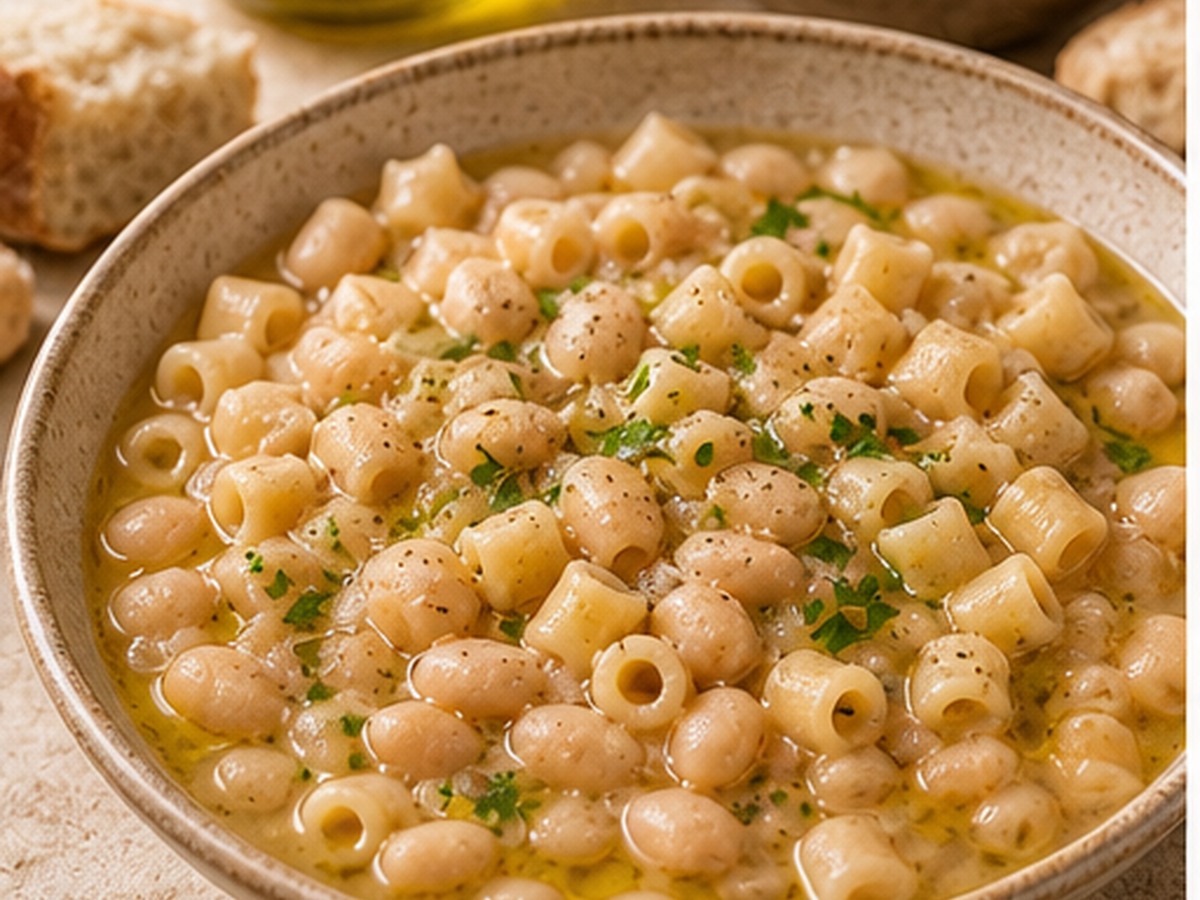
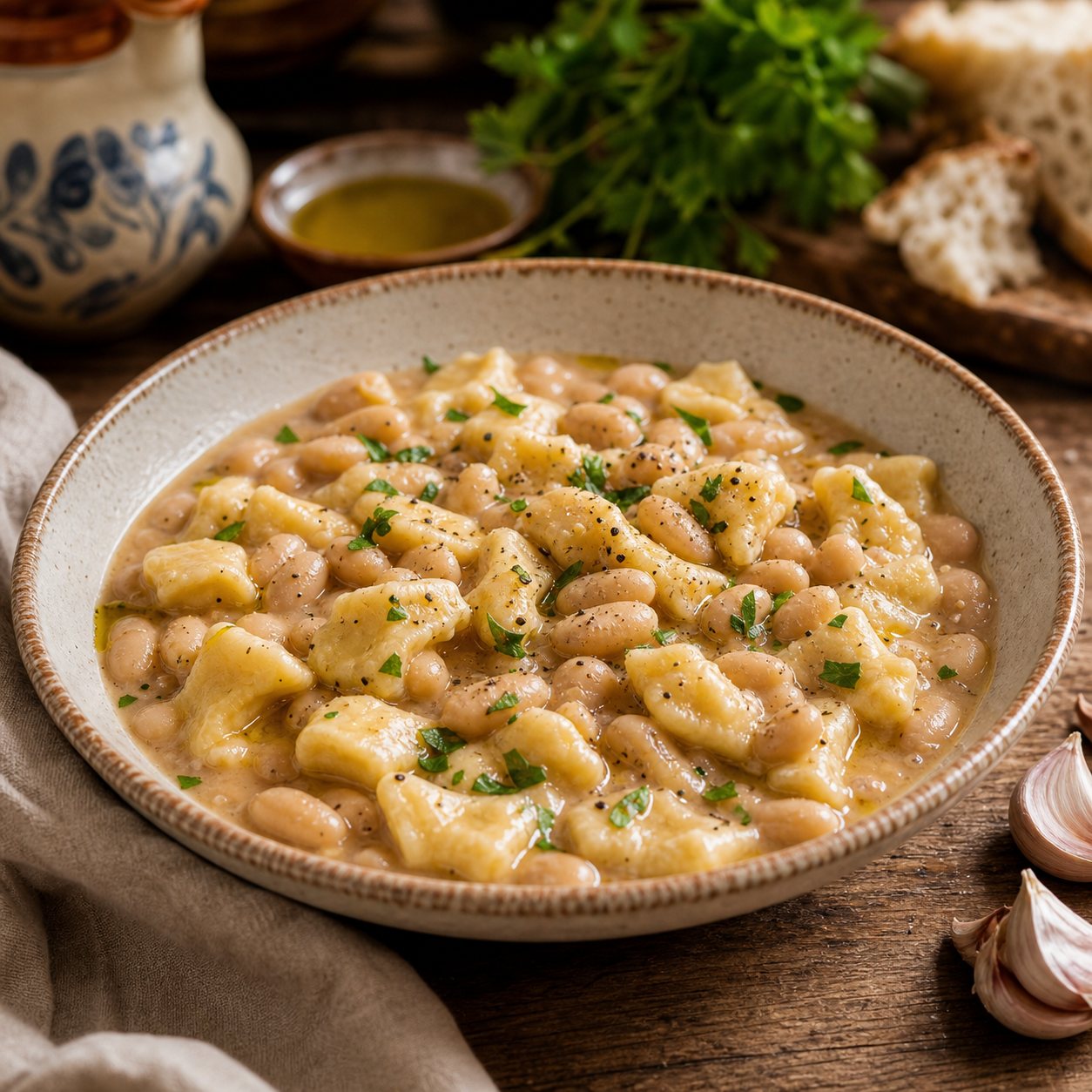
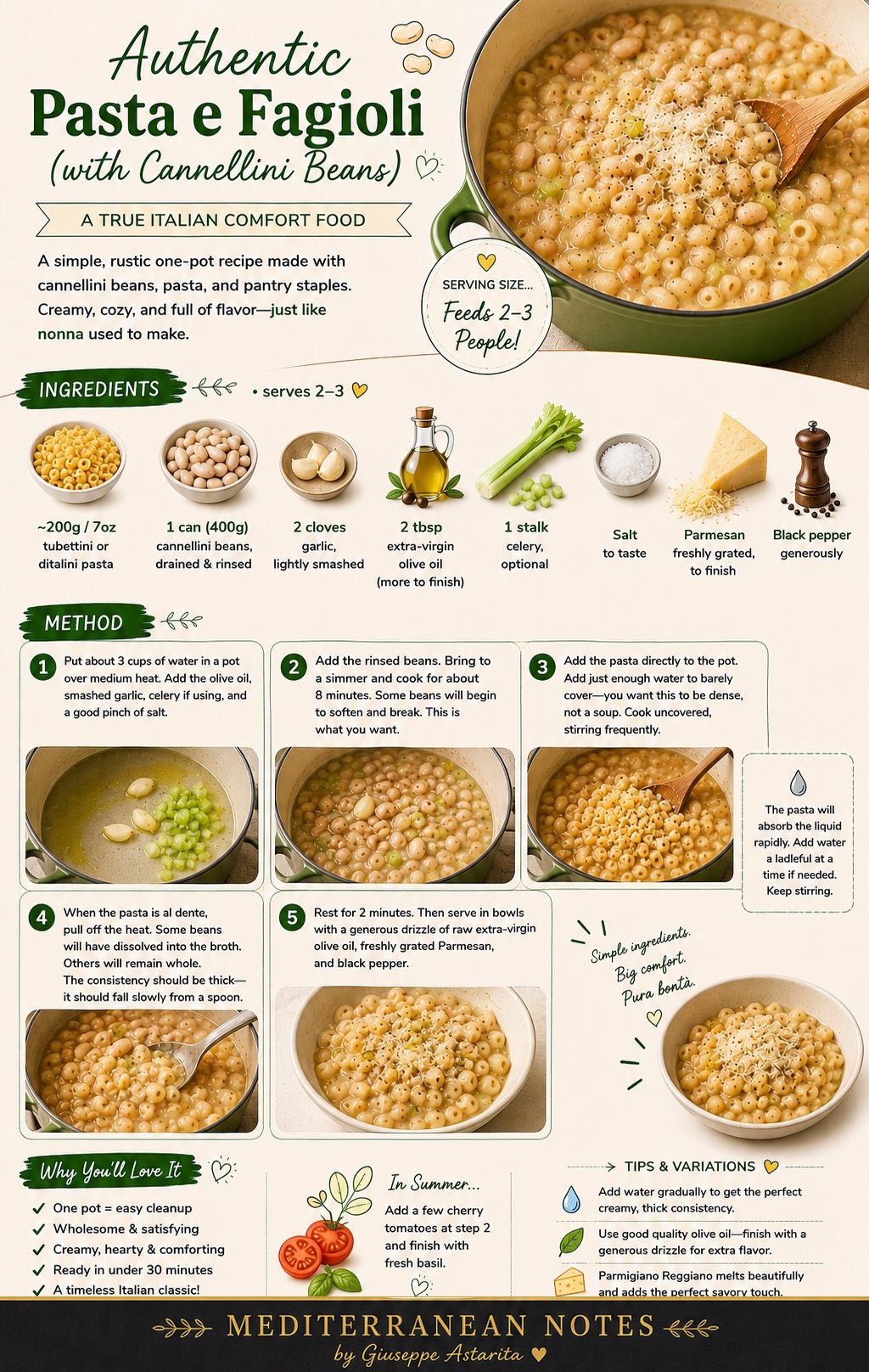
Outside Italy, pasta e fagioli is sometimes made into a soup — diluted, too much broth, the beans intact and floating. In Campania, that is not what this is. It is dense. The beans soften into the cooking water until some of them dissolve entirely, thickening the broth into something close to a cream. The pasta finishes cooking directly in that liquid and absorbs it. You serve it in a bowl and eat it with a spoon, but not much of a spoon — it holds its shape.
My mother made this on Tuesdays. In the South of Italy there used to be a tradition of eating legumes on Tuesdays and Fridays — dietary rhythms built around the Catholic calendar and the practical reality that beans were cheap, filling, and kept well. The science has since caught up to this rhythm and found that it was nutritionally excellent.
The recipe is almost insultingly simple. Garlic, olive oil, cannellini beans, water, tubettini. Salt. Time. That is all.
On the pasta: tubettini or ditalini are traditional — the small tubes fill with the thick bean broth as they cook. But pasta mista (the mix of leftover short pasta shapes from the cabinet) is equally authentic and arguably more Campanian. Even broken spaghetti in thirds works. What does not work is long pasta — it needs to cook submerged in the dense bean liquid.
A few notes before you start: use canned cannellini if you like, but rinse them well. The tubettini or ditalini shape is not negotiable — the small tubes trap the thick bean broth in a way that long pasta cannot.
Cannellini beans, resistant starch, and how legumes feed gut bacteria
White beans — cannellini in particular — are one of the best sources of resistant starch in the human diet. Resistant starch reaches the colon intact, where gut bacteria ferment it into short-chain fatty acids, primarily butyrate. Butyrate is the preferred energy source for colonocytes, supports the gut barrier, and has anti-inflammatory effects that extend systemically. The beans also provide soluble fiber in the form of pectin, which slows gastric emptying and attenuates the glycemic response of the pasta. The olive oil you add at the end delivers oleic acid and polyphenols — bioavailable precisely because fat-soluble compounds need dietary fat. This dish, assembled in 15 minutes from pantry ingredients, is doing a great deal of nutritional work.
The red version
There is also a red version — borlotti beans and tomato passata, denser and earthier, traditional elsewhere in Italy. See pasta e fagioli rosso →
Martedì, sempre — bianco o rosso.