CoursesBasicsFirst CoursesSecond CoursesSides & VegetablesSoupsSaucesEggs & FrittatePizza & BreadBreakfastSnacksStreet FoodDesserts
DietVegetarianVegan
SeasonSpringSummerAutumnWinter
MainSeafoodMeatEggs
MoreCulture & TraditionsGlossaryAbout

Campanian kitchen · Tradition · Immigration · Identity · For Anna and Carolina

La valigia

Anna, Carolina — for more than twenty years, every time I came back from Italy I brought food in the luggage. Sometimes I checked a bag just for the food. This is the inventory, and the reason behind it, and what I think it means that the cabinet in our kitchen still has four packs of paccheri in it.
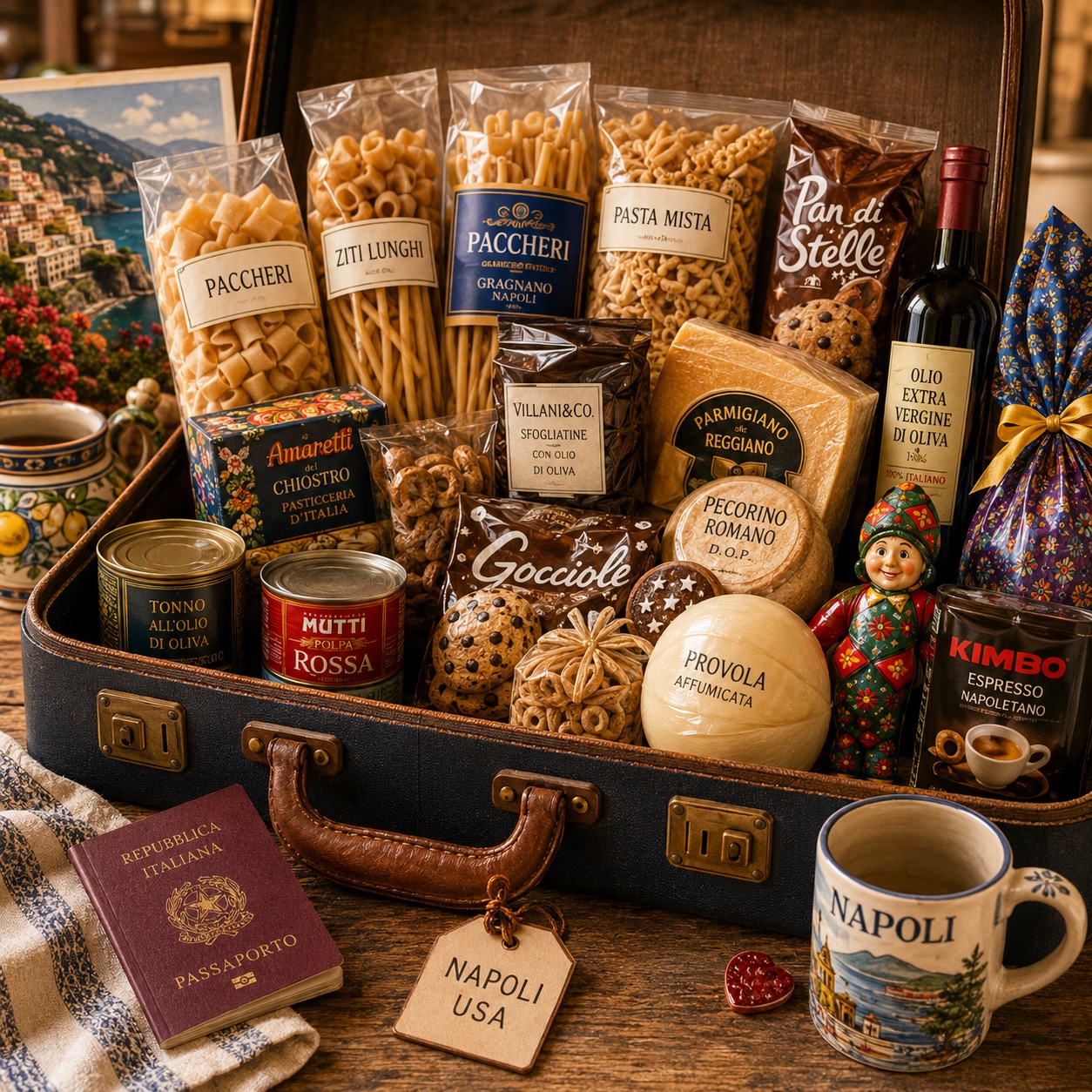
La valigia — food from Campania traveling to the US

The process begins before I leave Italy. There is a mental list that forms in the last few days — what is running low at home, what you cannot find in the US at a reasonable price, what I have promised myself I would bring back and have not yet brought. The paccheri are always on the list. The freselle. The biscotti, because you both react to a new pack of abbracci with a sincerity that I have never seen directed at any American biscuit. The Parmigiano and the Pecorino. The semolina and the pizza flour. The peperoncini. The caffè. And then the things that require a separate decision — the wine, the olive oil, the torrone — because they are heavy and the luggage has limits and customs declarations have to be made. You learn, over twenty years, how to pack a suitcase with the efficiency of a person who has done this before.

I am not unusual in this. Every Italian who lives abroad does some version of this. The scale varies — I have heard of people from the south who fill a box with cured meats and cheeses and ship it to relatives in Bologna, because the same logic applies inside Italy: you cannot find Campanian mozzarella of the same quality anywhere outside Campania, and if you are a Neapolitan living in Milan or Turin you have cousins who travel and you make arrangements. Tutto il mondo è paese — the whole world is a village — which means the village food problem is universal. Someone from Calabria in New York, someone from Puglia in London, someone from Sicily in Paris: the same suitcase, the same calculation about weight limits, the same satisfaction when the customs officer waves you through.

What changes over time is the inventory. Twenty years ago there was almost nothing Italian in the supermarkets here — not the right Italian, not the specific Italian. Pasta was pasta, meaning imported industrial spaghetti from a brand that had no connection to how pasta is made in Campania. Now there is more — Neapolitan pizzerias have opened across American cities, Italian imports have expanded into specialty stores, and some things I used to carry across the Atlantic are occasionally findable within thirty minutes of where we live. But the prices remain absurd for certain things, and the specific regional items — the pasta mista, the long ziti, the farfalline, the stelline for a brodo, the pastina all'uovo — these are still largely absent. And the mozzarella is still not right. It will never be exactly right this far from the dairy. This is a fact I have accepted and stopped being annoyed by.

Everything I wrote about as an ingredient in this blog — I packed it in a suitcase at some point and carried it back. Every recipe in this collection has, at one time or another, depended on something that came across the Atlantic in checked luggage.

Your grandparents brought food too, when they visited. It is what Italian families do when they travel to each other — you do not arrive empty-handed at a kitchen that is missing things. My mother would come with her own quaresimali, which are hard cookies made with almonds and sometimes chocolate, regional to Campania, made in her kitchen and not findable anywhere here. She would bring her homemade bread — which does not survive the journey intact but which arrives as something still worth eating, dense and slightly stale in a way that good bread is when it is a few days old. She brought spices. She brought things I had not asked for but that she decided I needed, which is also part of the tradition.

Anna, Carolina — by the time you are grown, the food aisles here will have more Italian items than they do now. More regional ones, probably. There is a pattern: what starts as specialty import becomes common availability within a generation. Thirty years ago good olive oil was hard to find in the United States; now it is everywhere. The same will happen with other things. I wonder sometimes which specific items will have crossed over by the time you are old enough to do your own grocery shopping — whether the long ziti will be there, whether the pastina all'uovo for a proper brodo will be findable without importing it, whether someone will have finally figured out how to make a fresh mozzarella that is actually fresh. Perhaps. But there will always be something that is not there. There will always be a reason to pack the suitcase.

We also preserve here what we brought back. The melanzane sottolio — the eggplant preserved in olive oil — is a good example: we make it here from summer eggplant, the same way my mother made it in Caserta, and we put it in jars in our kitchen. The tradition does not require the original geography. It requires the intention and the recipe and the people who care enough to do it. That is what this entire blog is — a record of the intention, carried forward in a kitchen in the US, sometimes with ingredients from a suitcase, sometimes with what we can find here, always with the same recipes.
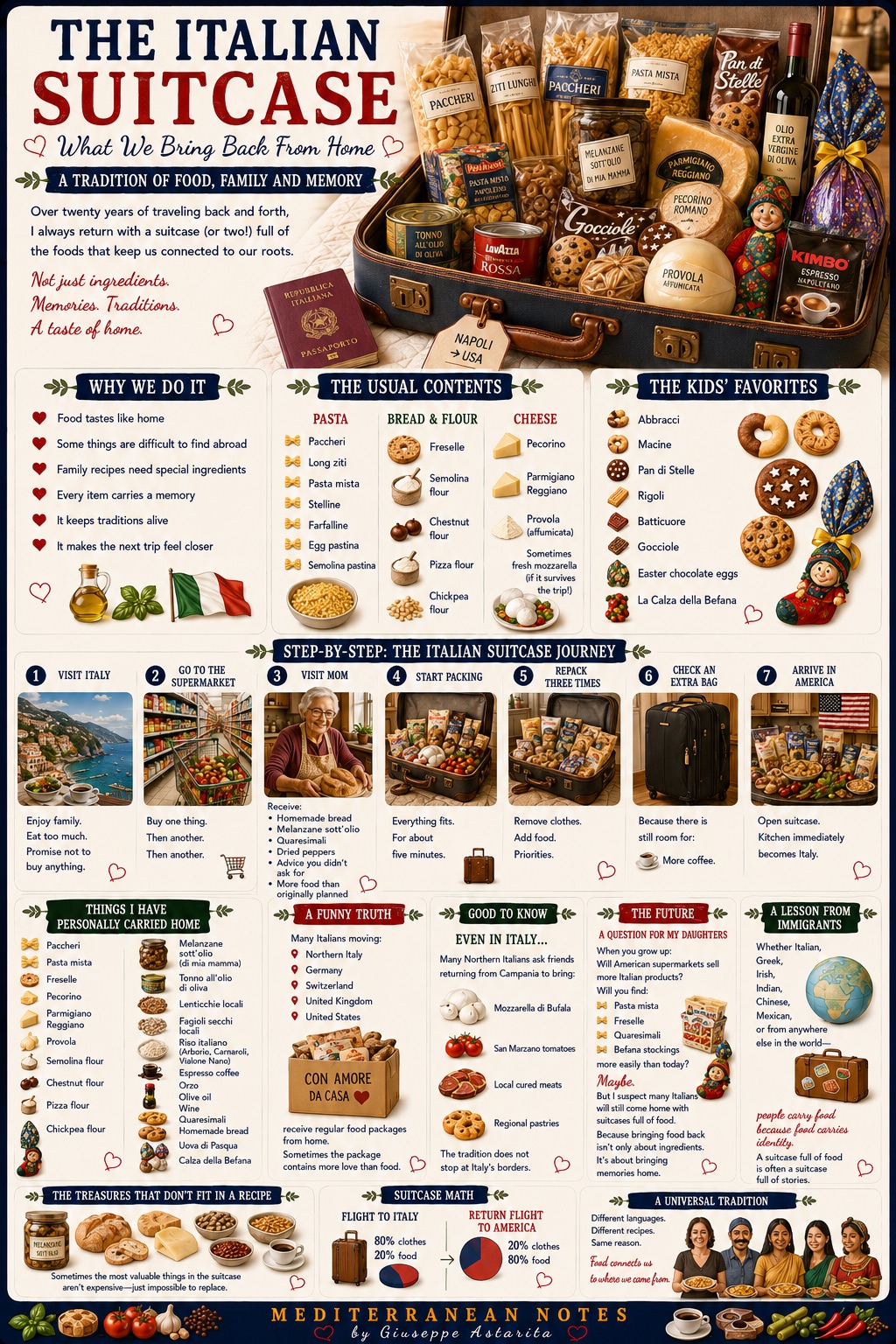

The Italian suitcase — what we bring back from home
The Italian suitcase — a tradition of food, family and memory. Click to enlarge.

I wonder, Anna and Carolina, how many of these items you will find easily available here by the time you are doing your own cooking. The trajectory is toward more, not less — Italian food is the most recognized and most replicated cuisine in the world, and the American market for authentic regional Italian ingredients has been growing for years. Some things that I carried across the Atlantic as the only way to have them are already findable here now, at a price. But I also know that there will always be something missing — some specific thing that is made in a particular place by a particular person and does not travel well and cannot be replicated elsewhere. My mother's quaresimali. Fresh mozzarella from the dairy near Caserta the morning you buy it. The bread she baked on Thursday that arrived on Sunday still edible but already something else.

Those things do not go in the suitcase. They go in memory, and then in a blog post, and then perhaps one day in a book. Which is also a kind of luggage.

Buon viaggio — e non dimenticare la valigia del cibo.
The inventory — what has been in the suitcase over twenty years

Not a complete list. An honest one. Items marked with a border are the ones that appear most in this blog — the ingredients that became recipes.

Pasta

PaccheriAlways. Multiple packs. The cabinet in the US has had paccheri in it for twenty years.
Long zitiThe Neapolitan pasta shape — not the cut ziti, the full long ones for the ragù.
Pasta mistaThe mixed pasta for minestrone and zuppe. Hard to find here.
FarfallineSmall pasta for broths. The kind you need for certain soups and find nowhere here.
StellineThe tiny star-shaped pasta for brodo di carne. A childhood staple.
Pastina all'uovoEgg pasta shapes for broths. The ones that dissolve slightly into the broth and thicken it.

Bread and crackers

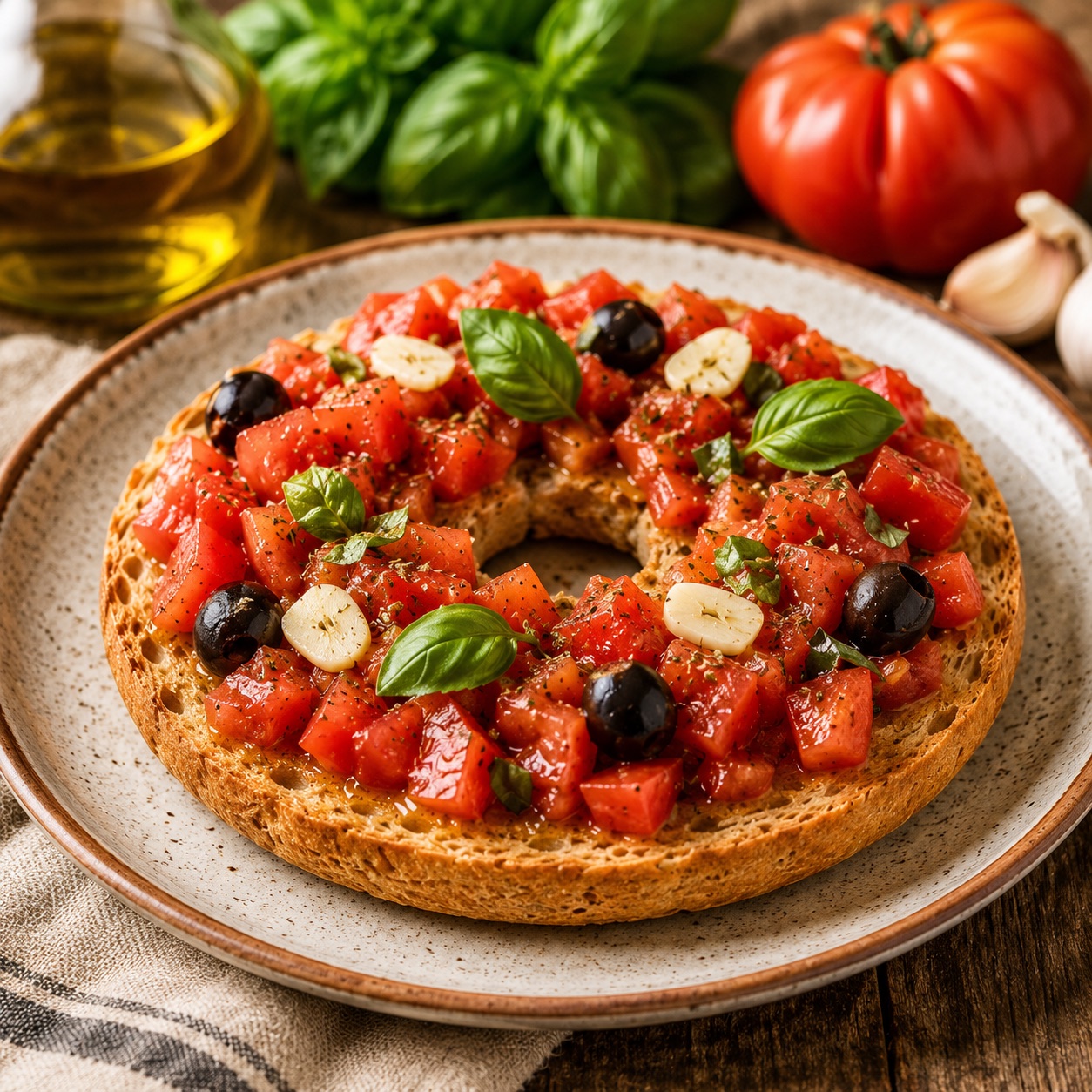
FreselleThe twice-baked bread rings. Survive the journey perfectly. A summer staple here.
My mother's breadDoes not survive intact but arrives as something. We ate it in the first two days.
My mother's quaresimaliHer hard almond cookies. Not findable here. She made them for us specifically.

Biscotti — the ones you love

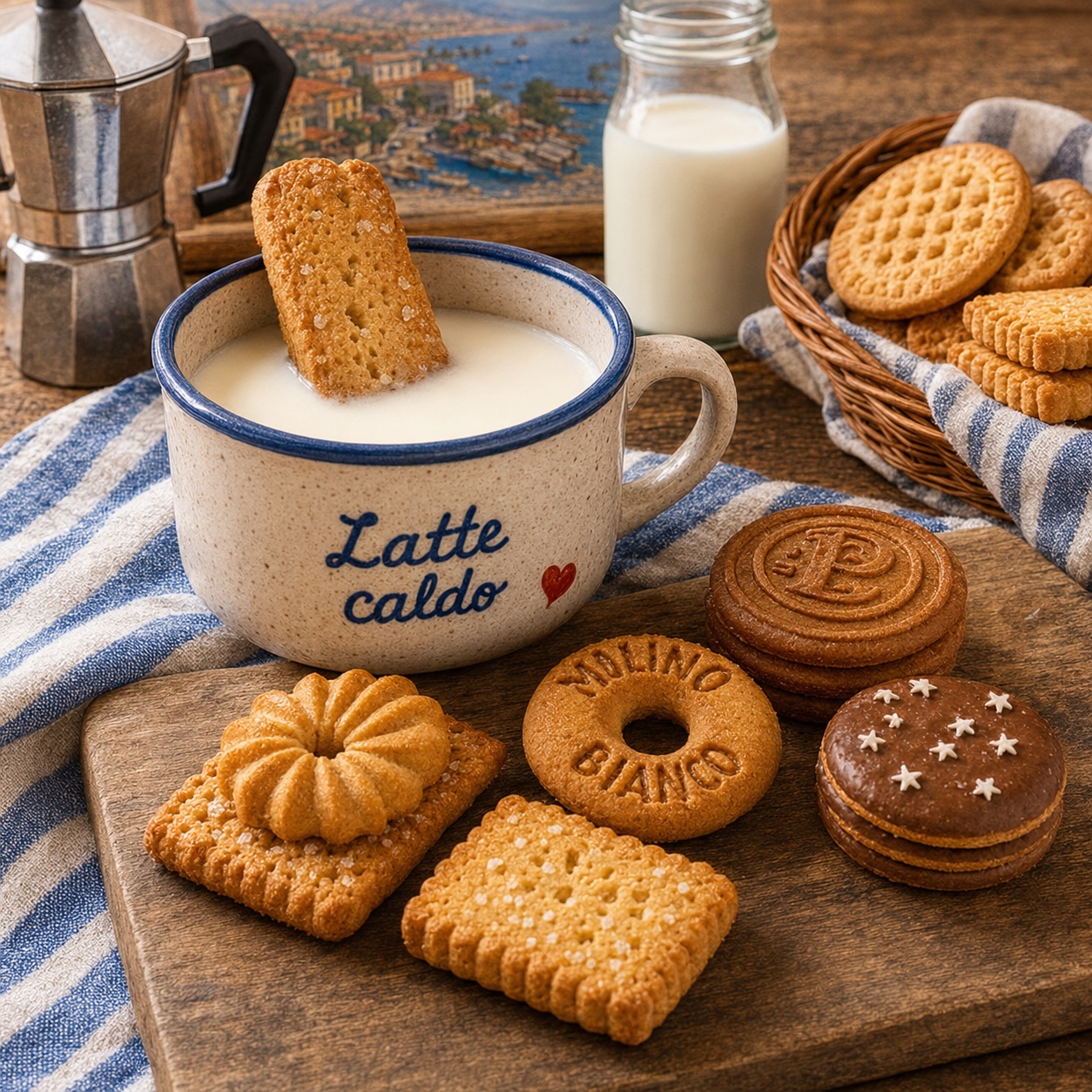
AbbracciYour favourite — first thing checked when the suitcase opens.
MacineRound, crumbly, reliably good. Always in the rotation.
Pan di StelleThe star-stamped chocolate biscuits. A childhood staple that crossed the Atlantic.
RigoliThe wafer with hazelnut cream. Very Mulino Bianco, very Italian childhood.
BatticuoreHeart-shaped, with chocolate. Another Mulino Bianco classic.
GoccioleThe chocolate chip biscuit. Italian version — different from American, better for this kitchen.

Cheese

Parmigiano ReggianoA block, not pre-grated. Sometimes two blocks if there is space.
Pecorino RomanoFor the scarpariello, for the parmigiana. The sharp one, not the mild one.

Flour and dry goods

Semola rimacinataFor frying — the frittura di paranza, the parmigiana. The crust depends on it.
Pizza flour (tipo 00)The Neapolitan pizza flour — lower protein, different gluten structure.
Farina di castagneChestnut flour for certain desserts and fresh pasta. Very hard to source here.
Farina di ceciChickpea flour. Used in various southern preparations including panelle.

Spices, condiments, preserves

Peperoncini secchiDried Calabrian or Campanian chilis. The ones from Italy are different — drier, more complex.
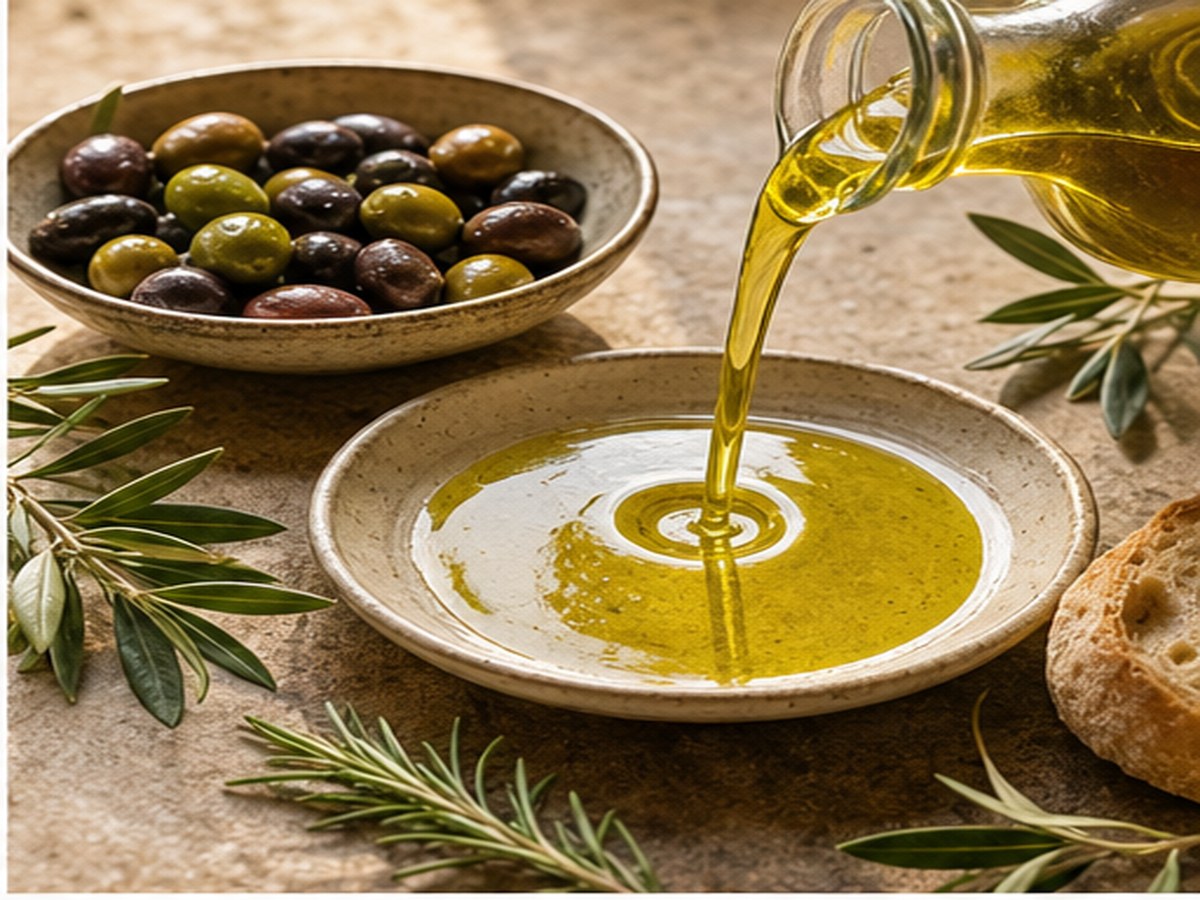
Olive oilWhen there is space. The good Campanian oil. Heavy, but worth it.
TorroneAt Christmas. The hard almond nougat from Benevento or Cremona.
Colatura di aliciThe Cetara anchovy extract. A small bottle lasts a long time.
Melanzane sott'olioMy mother's preserved eggplant in olive oil. A jar of summer from Caserta. Sometimes it survives the journey. Always worth attempting.
Tonno sott'olioItalian tuna in olive oil — the good kind, in glass jars. Different from any canned tuna available here.
Provola affumicataThe cheese for the parmigiana di carciofi and much else.

Legumes, grains and pantry dry goods

Lenticchie localiLentils from Campania or Umbria — smaller, more flavourful than the ones here. For the zuppa di lenticchie.
Fagioli secchiDried local beans — borlotti, cannellini from specific regions. Regional varieties not available here.
Riso italianoCarnaroli or Vialone Nano for risotto. The Italian rice absorbs stock differently from American brands.

Coffee

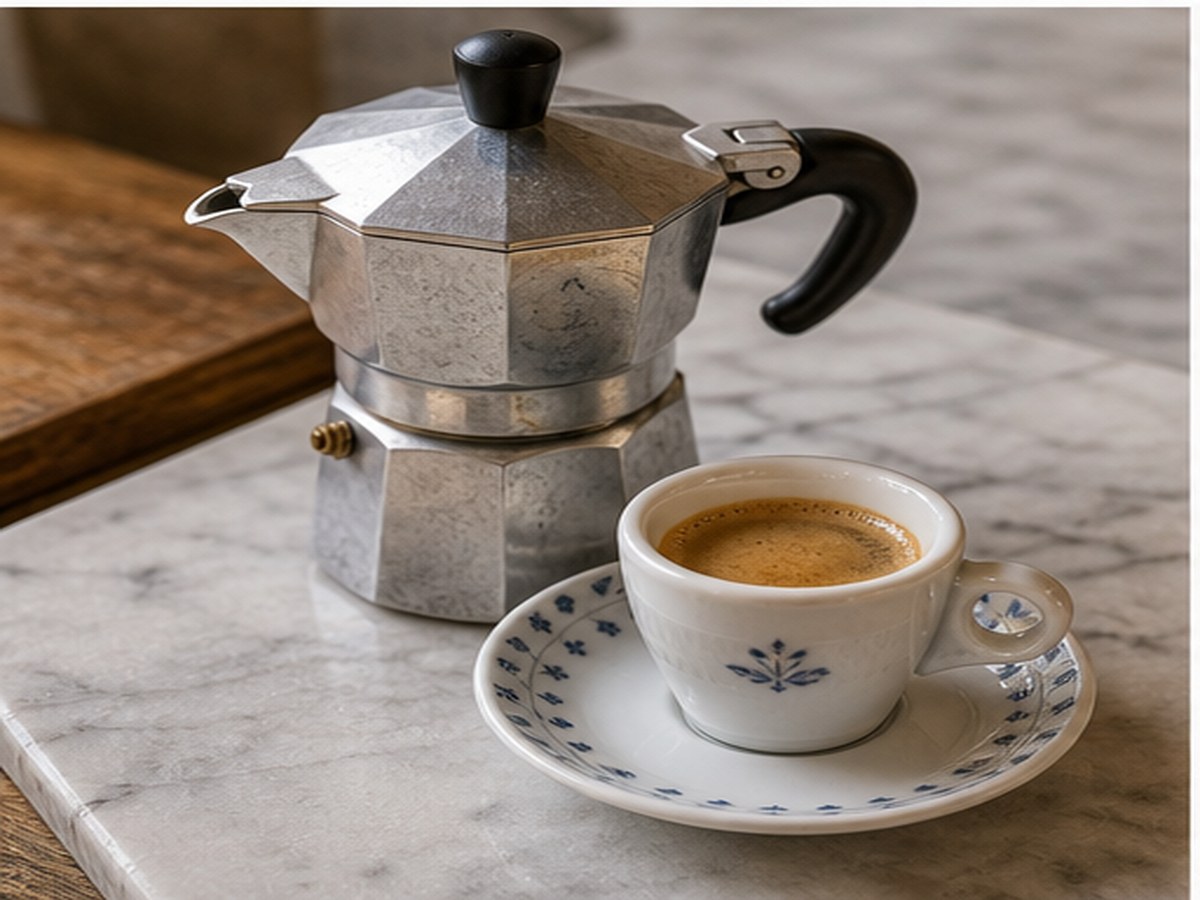
Caffè per espressoMultiple brands, multiple roasts — Kimbo, Illy, Lavazza Rossa, Passalacqua. The cabinet has a rotation.
OrzoThe barley coffee substitute. A Campanian household staple, almost unfindable here.

Seasonal and occasional

Uova di PasquaEaster chocolate eggs. The large ones with the toy inside. You both expected these.
Calza della BefanaThe Epiphany stocking — stockings filled with candy and coal. A tradition that requires specific Italian candy.
WineWhen the weight allows. Falanghina, Greco di Tufo, Aglianico. Southern whites especially.
Mozzarella di bufala — onceThe one-time airport experiment — full story below.

I should add the things I inevitably forget to mention when describing the suitcase: my mother's melanzane sott'olio — the eggplant she preserves herself in olive oil, summer eggplant from her garden in Caserta, layered with garlic and peperoncino and sealed in jars. When a jar makes it back intact it is a minor event. Then the tonno sott'olio — Italian tuna in olive oil in glass jars, which tastes nothing like the canned tuna available here and is used in entirely different ways. The provola affumicata, vacuum-packed, which travels well. The lenticchie locali and the fagioli secchi — local dried legumes, specific varieties from specific places, smaller and more flavorful than anything I can source here. The riso italiano for risotto. And always, inevitably, more coffee than I thought I had room for.

There is one story that belongs in this inventory even though it does not fit neatly into any category. Once — once — I brought fresh mozzarella di bufala back from Naples in a styrofoam container, bought at the airport before boarding. Ten hours later it was on the table in the US. Still fresh, still correct, still tasting of the dairy near Caserta that morning. The family ate it with tomatoes and olive oil without saying much because there was nothing to add. It was exactly what it was supposed to be, which is the highest thing you can say about a mozzarella. I have thought about doing it again every time I pass through Capodichino. Sometimes the customs situation allows it; sometimes it does not. But the logic was sound: if you want the real thing, you carry it yourself.

The one thing that cannot be packed is pizza. And this is not a logistical problem — it is a definitional one. Pizza is not a food that travels. Pizza is a food that exists for approximately the two minutes between leaving the oven and arriving at the table. A Neapolitan pizza — the correct one, from a wood-fired oven at four hundred degrees, the crust charred at the edges and still soft at the center, the fior di latte melted and the basil placed on top in the last ten seconds — is a specific event, not an ingredient. You cannot pack an event. You cannot freeze it, vacuum-seal it, wrap it in paper and carry it across an ocean. We do not eat pizza that has traveled. That is part of what makes coming back to Naples worth the trip. The pizza is the one thing you can only have there, in the city, right out of the oven, standing up if necessary. Everything else I can reconstruct here with the right ingredients and the right technique. The pizza I wait for.

The thing about keeping these ingredients here is that they make the recipes possible. Every post in this blog, every dish described, depends on something being available in the kitchen. The paccheri exist because the cabinet has them. The frittura di paranza is light because the semolina is right. The scarpariello has the correct cremetta because the Pecorino came back in a suitcase. The connection between the travel and the cooking is direct — and this blog is, in part, the record of twenty years of that connection being maintained, one checked bag at a time.

More from the suitcase pantry
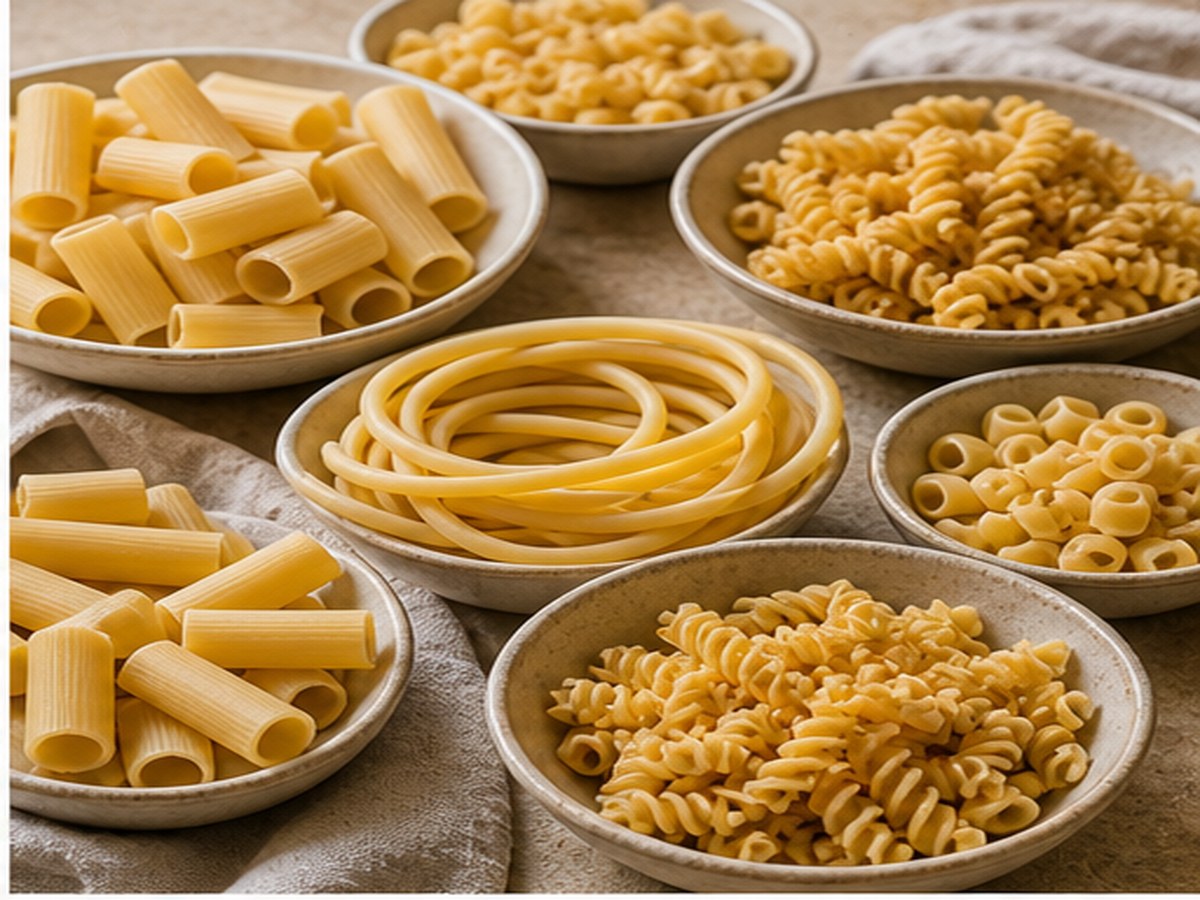
The authentic pasta shapes of Naples
The paccheri, ziti, and pasta mista that come home in the bag.
La fresella
The twice-baked bread that survives the journey perfectly.
Biscotti e latte
The breakfast biscuits that make the suitcase feel like home.
Il Caffè a Napoli
The coffee stash that refills the cabinet after every trip.
Olio di Oliva in Campania
The heavy bottle that explains why suitcase space is never neutral.