The authentic pasta shapes of Naples: what to bring home from Italy
Each Neapolitan pasta dish is inseparable from its shape — the pairing is not decorative, it is structural. Paccheri, ziti, scialatielli, fusilli napoletani, cavatelli, mostaccioli: shapes that are difficult or impossible to find in the United States and that are worth the luggage space on the way back from Italy. Different shapes, one soul.
The idea that pasta shape is interchangeable — that any pasta can be substituted for any other and the dish will be essentially the same — is one of the most persistent misunderstandings in international Italian cooking. It is wrong in a way that matters. The relationship between a pasta shape and its traditional sauce is not accidental or aesthetic: it is a design relationship, developed over generations of cooking, between the surface area and texture of the pasta and the weight, viscosity, and ingredient size of the sauce. A smooth sauce with large chunks requires a large tube that can contain it; a light, oil-based sauce requires a flat or thin surface that carries a thin coating; a chunky, dry vegetable ragù requires the rough, irregular surface of cavatelli or orecchiette that traps pieces in its texture. When the wrong shape is paired with a sauce, the sauce slides off or pools at the bottom of the bowl or fails to reach the interior of the tube. The combination is technically inferior — and Neapolitans will tell you so.
The Neapolitan pasta tradition is one of the most diverse and specific in Italy. The region has produced an enormous variety of shapes — many of which never left Campania, never became international, and remain available reliably only in Italian shops and markets. Coming back from Italy with a suitcase containing good pasta is not eccentric. It is rational and correct, particularly for shapes like the paccheri, the ziti da spezzare (long ziti for breaking), the scialatielli, and the fusilli napoletani al ferretto — shapes that represent fundamentally different eating experiences from the generic penne and spaghetti available in American supermarkets.
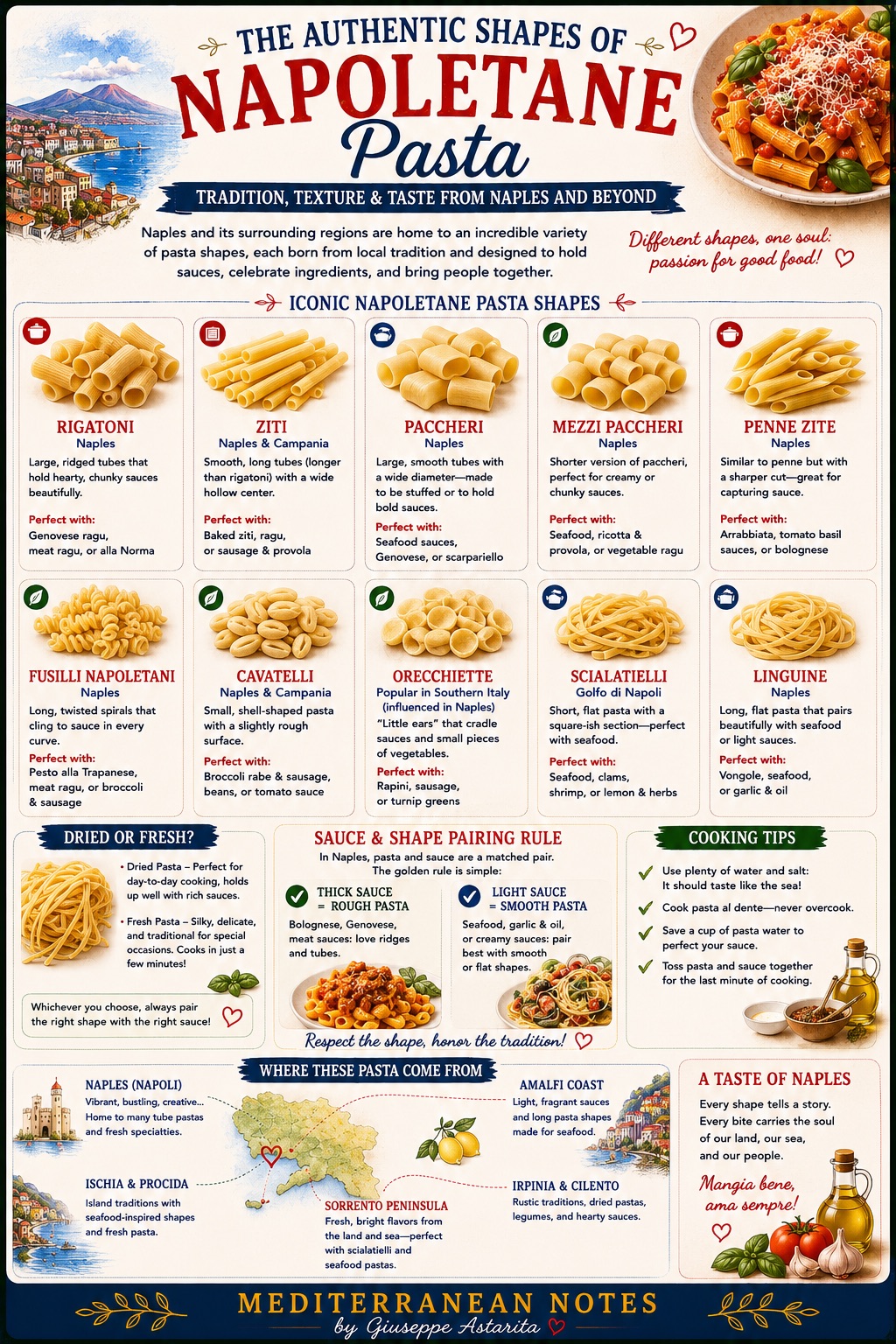
The shapes — and what they belong with
The great tubes
Paccheri
Naples
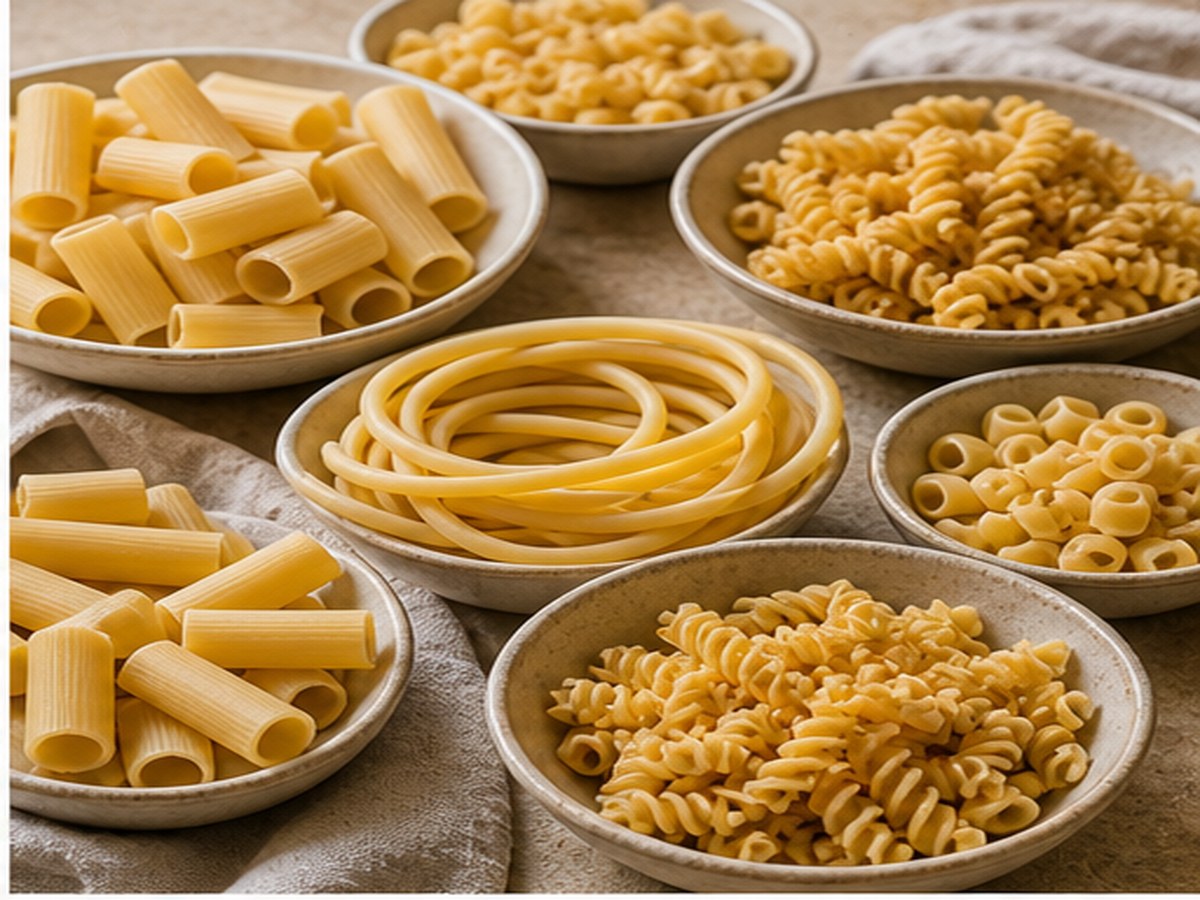
Large, smooth, wide-diameter tubes — one of the most distinctive shapes in the Neapolitan repertoire. The interior holds seafood pieces, large chunks of sauce, ricotta. The exterior carries a light coating. When eaten whole, the pacchero delivers a concentrated mouthful of whatever is inside alongside the pasta. Cannot be substituted without losing the whole point of the dish.
Perfect with: seafood sauces, Genovese, scarpariello, or stuffed
Mezzi Paccheri
Naples
The shorter version of paccheri — half-length, same diameter. More manageable on the fork, distributes sauce both inside and out more evenly than the full length. Excellent with creamy or chunky sauces where the full pacchero would be too dominant. Used in the pasta con zucchini e uova post in this collection.
Perfect with: creamy vegetable sauces, ricotta, seafood ragù
Ziti
Naples & Campania
Smooth, long tubes — traditionally broken by hand before cooking (ziti spezzati) into irregular lengths that give the dish its characteristic roughness and variety of surface. The breaking produces jagged edges that hold sauce differently from clean-cut pasta. Essential for baked ziti, for ragù, for the robust sauces of the Campanian table. The smooth surface distinguishes them from rigatoni.
Perfect with: baked dishes, ragù, sausage and provola
Rigatoni
Naples (and Rome)
Large, ridged tubes — the most widely available of the Neapolitan tube pastas internationally. The ridges hold thick, chunky sauces on the exterior; the hollow interior traps liquid and chunks. The most versatile of the group, appropriate for meat ragù, alla Norma, amatriciana. The ridging is structurally important — smooth rigatoni (which does not exist) would be a different pasta.
Perfect with: Genovese ragù, meat ragù, alla Norma, amatriciana
The traditional shapes — harder to find outside Italy
Fusilli Napoletani al Ferretto
Naples
Long, tightly twisted spirals made by rolling pasta around a thin iron rod (ferretto) — a different pasta from the short factory fusilli common everywhere. The long spiral creates a shape that spirals in every direction, clinging to sauce at every twist. One of the most beautiful pasta shapes in the Italian tradition, and one of the most difficult to find outside Italy in its authentic form.
Perfect with: pesto alla Trapanese, broccoli ragù, chunky meat sauces
Scialatielli
Golfo di Napoli — Amalfi coast
Flat, wide, slightly square-sectioned fresh pasta from the Amalfi coast — made with semolina, eggs, milk, and traditionally fresh basil in the dough. The rough, irregular surface holds seafood sauces in a way that smooth fresh pasta does not. Mentioned in the pasta con mozzarella e basilico post as the most traditionally Neapolitan shape for that preparation. Requires finding a good fresh pasta maker.
Perfect with: seafood, clams, shrimp, lemon and herbs, mozzarella and basil
Cavatelli
Naples & Campania
Small, shell-shaped pasta with a slightly rough, rolled surface — made by pressing a small piece of dough with the fingers and rolling it against a board or a ridged surface. The cup shape and rough texture are specifically designed to trap small pieces of sauce and vegetables inside the curl. Related to the Pugliese orecchiette in philosophy if not in origin.
Perfect with: broccoli rabe and sausage, beans, tomato sauce with ricotta
Penne Zite
Naples
Similar to penne but with a sharper, more angular diagonal cut and a slightly wider bore than standard penne. The specific geometry of the cut affects how the sauce enters the tube and how the pasta sits in the bowl. A distinction that seems minor until you eat the two side by side with the same sauce.
Perfect with: arrabbiata, tomato-basil sauces, Bolognese
The long pastas
Linguine
Naples
Long, flat, slightly oval-sectioned pasta — narrower than fettuccine, wider than spaghetti. The flat surface carries light sauces and seafood more evenly than round spaghetti, whose circular cross-section sheds liquid to the bottom of the bowl. The standard shape for vongole, for garlic and oil, for seafood preparations where the pasta must carry a thin sauce rather than a thick one.
Perfect with: vongole, seafood, garlic and oil
Spaghetti & Vermicelli
Naples — the original
Naples is historically one of the birthplaces of dried spaghetti manufacturing — the climate and sea air of the city were used for centuries to dry pasta in the streets. The Neapolitan spaghetto is slightly thicker than the international standard and has a specific bite. Vermicelli (slightly thinner than spaghetti) is the traditional choice for the Nerano, for the puttanesca, and for the tonno.
Perfect with: Nerano, puttanesca, tonno, aglio e olio, amatriciana
The golden rule of shape and sauce
Thick, chunky, or heavy sauces — ragù, meat, large vegetable pieces — need rough, ridged, or hollow pasta: rigatoni, cavatelli, paccheri, ziti. They need surface to grip and interior space to hold.
Light sauces — seafood, oil-based, garlic and herb — need smooth or flat pasta: linguine, spaghetti, vermicelli. They need a clean surface that carries a thin coating without the sauce pooling in ridges or disappearing inside a tube.
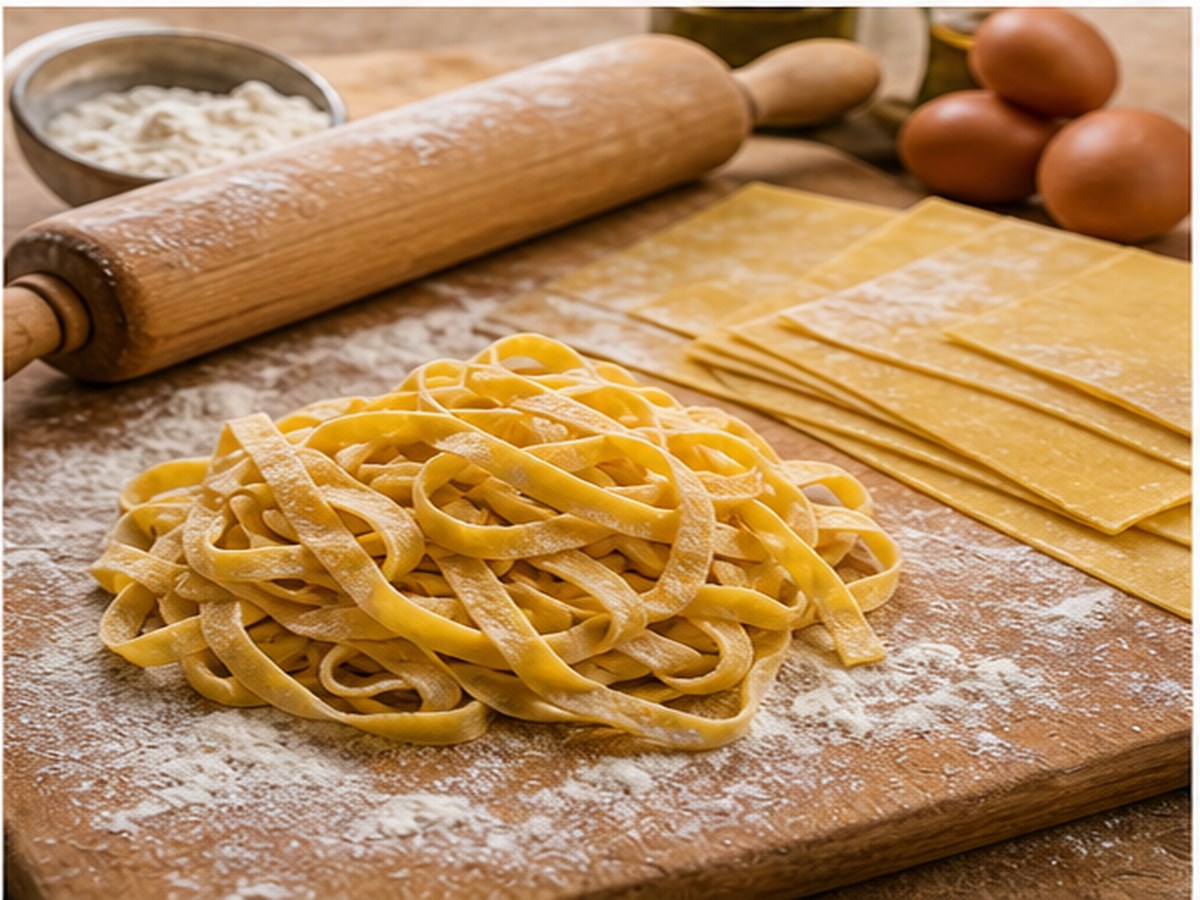
Fresh egg pasta — tagliatelle, pappardelle, tagliolini — is for rich, creamy, or brothy sauces: Bolognese, ragù, brodo. The rough, porous egg-dough surface grips exactly these preparations.
When the shape and sauce are correctly matched, the pasta and the sauce become a single thing in the bowl. When they are mismatched, the sauce is in one place and the pasta in another. This is the whole point.
What to bring back from Italy
If you are traveling to Italy and have any luggage space, the pasta section of any good supermarket or alimentari is worth a long visit. Prices are low, shelf life is long (dried pasta keeps for two years), and the selection of shapes that are genuinely unavailable or available only in poor approximation in the United States makes it one of the most useful souvenirs possible. A dedicated pasta shop — the larger cities have them — will have shapes and formats that supermarkets don't stock.
The pasta dishes in this collection are linked throughout to their correct shapes. The spaghetti Nerano calls for spaghetti specifically. The mozzarella e basilico post calls for mostaccioli. The tagliolini in brodo calls for fresh egg tagliolini. The amatriciana calls for bucatini. The carbonara calls for spaghetti or rigatoni. These are not arbitrary choices — they are the results of generations of pairing that produced the dishes as they exist, and the shape is part of the recipe.
Rispetta la forma, onora la tradizione.
Respect the shape, honor the tradition.