Parmigiana di Carciofi
The artichoke parmigiana -- made Sunday morning, served Sunday evening, better Monday
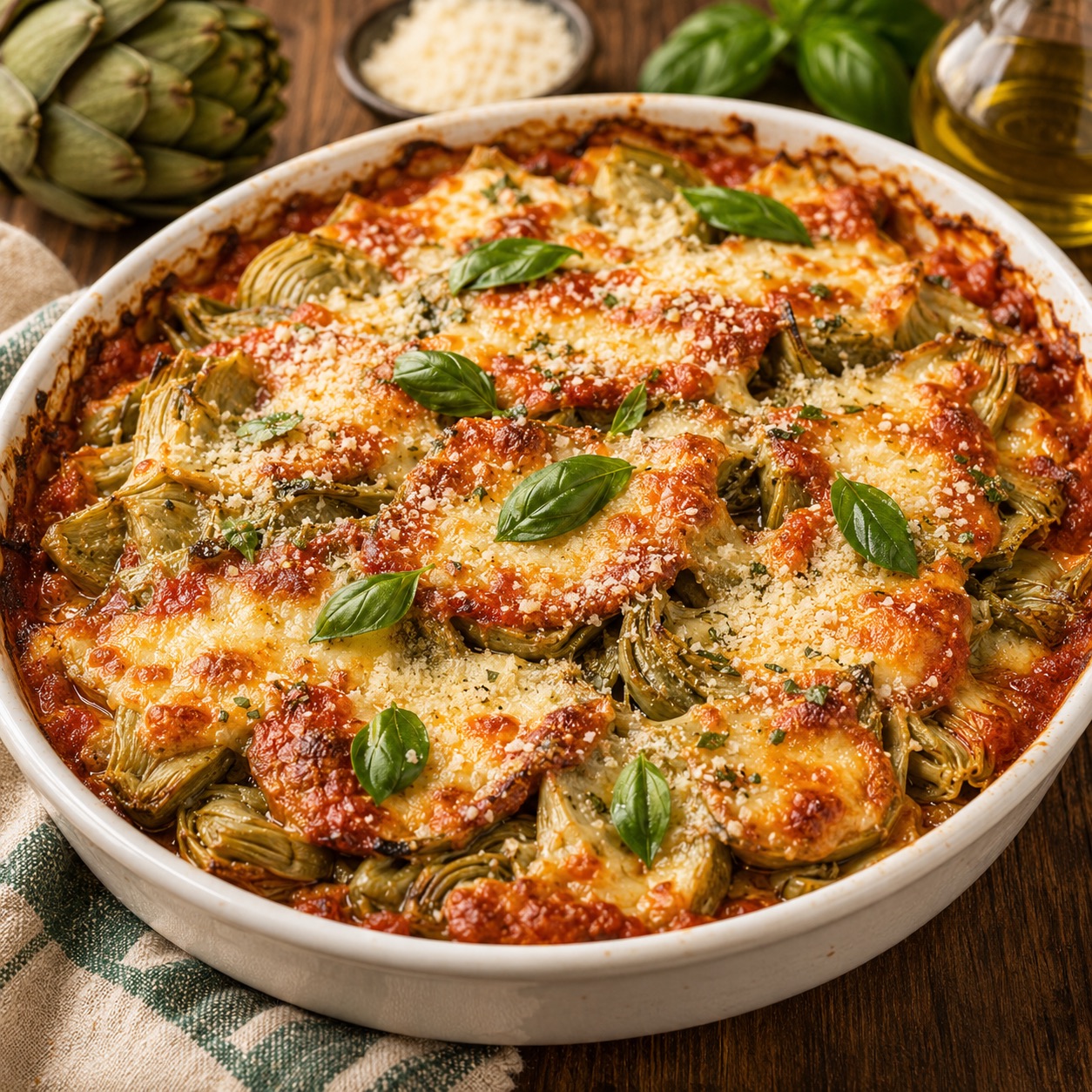
My mother made three parmigianas on a rotation. Not always the same one -- she cycled between eggplant, zucchini, and artichoke depending on the season and what was at the market. All three were made on Sunday morning alongside the big Sunday lunch, and all three were served at dinner that evening, never at lunch. Sunday lunch was for the ragu and the pasta and the meat. Sunday dinner was lighter -- the parmigiana, already assembled and baked from the morning, brought back to room temperature or warmed slightly, eaten with bread and nothing much else. And Monday's leftover went into a panino for lunch the next day, which was, if anything, better than the original.
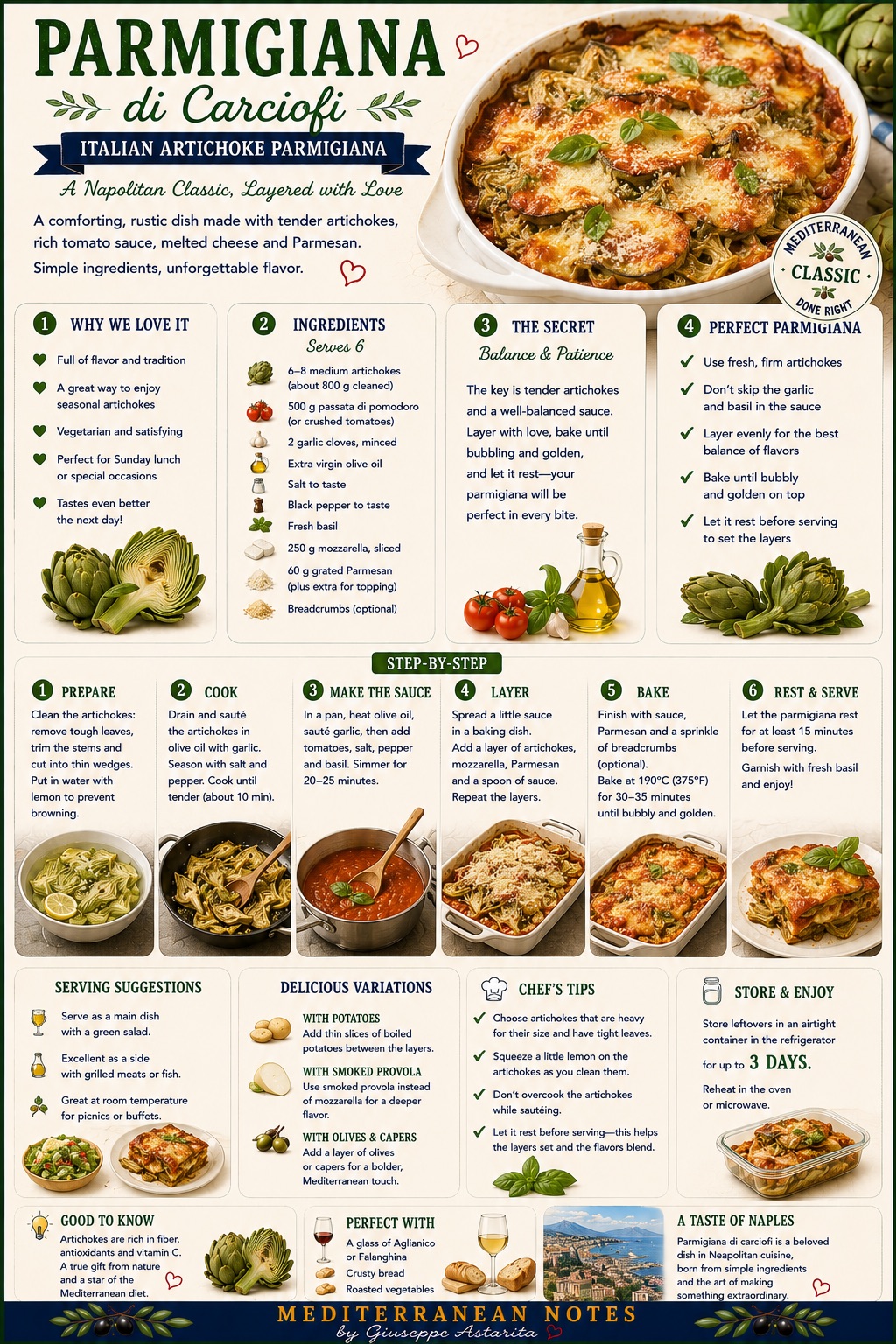
The artichoke parmigiana is the least common of the three outside Campania -- eggplant parmigiana is known everywhere, zucchini parmigiana is known in the south, but parmigiana di carciofi is specifically Neapolitan and specifically associated with spring, when the artichokes are at their sweetest and most tender. The preparation follows the same logic as the other two: the artichokes are cleaned, cooked in olive oil until tender, then layered in a baking dish with tomato sauce, mozzarella, and Parmigiano, and baked until bubbling and golden. The artichoke's slightly bitter, earthy flavor against the sweet tomato and melted cheese produces a combination that the milder zucchini cannot replicate.
The three parmigianas rotated on Sundays — eggplant, zucchini, artichoke, depending on the season and what was at the market. Not every Sunday the same one. My mother made whichever the season suggested: artichokes in spring, zucchini through the summer, eggplant most of the year. All three were made Sunday morning, alongside the Sunday ragù and everything else the kitchen produced before the big lunch. None of them appeared at lunch — Sunday lunch was pasta and meat. The parmigiana was for Sunday dinner, which was a lighter meal, the family still at the table but without the full production of noon. She brought it from the oven in the morning and left it to settle for hours; by evening it had set completely and you could cut it in clean slices. And the next morning — Monday — what was left went between two thick slices of pane casareccio or pane cafone. Not a sandwich with other things inside. Just the parmigiana between the bread, eaten at room temperature before school or work. This is the version I think about most often, more than the Sunday dinner version. The panino with the cold parmigiana from the day before. It was, without question, the best way to eat it.
Artichokes contain polyphenol oxidase, an enzyme that catalyzes the rapid browning of cut surfaces when exposed to oxygen. The discoloration begins within two minutes of cutting and is both cosmetically unpleasant and indicative of flavor compound loss. Lemon juice in the water bath lowers the pH below the enzyme's optimal range and inhibits this reaction, preserving both the pale color and the cynarin content of the artichoke. Cynarin -- the polyphenolic compound responsible for the artichoke's slight sweetness and its famous palate effect (making water taste sweet afterward) -- is water-soluble and leaches into the cooking water during blanching; the shorter the blanching time, the more cynarin is retained in the artichoke flesh. This is why the recipe instructs a brief rather than extended cook before layering.
The recipe
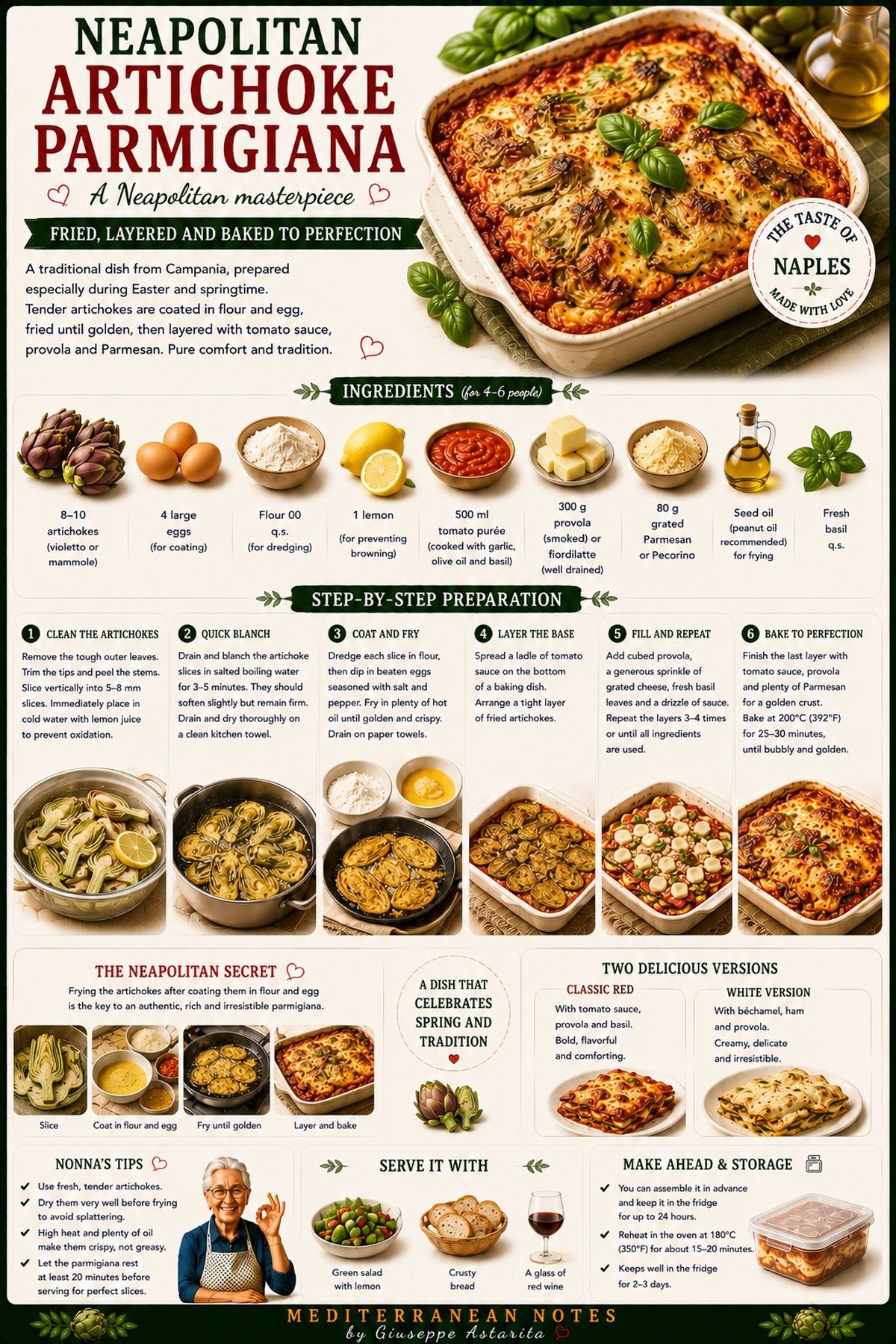
My mother made the parmigiana di carciofi with egg — and for artichokes this is not optional, it is the method. The artichoke slices are not simply sautéed in oil: they are sliced thin, blanched briefly to soften while keeping their shape, dried thoroughly, then dredged in flour and dipped in beaten egg before being fried in olive oil until golden and crisp. This is what indorare e friggere means — to gild and fry — and it is the same technique as the eggplant and zucchini versions. The egg coat transforms the artichoke: the slight bitterness is moderated by the fried crust, the texture becomes more substantial, and the slices hold together in the layers in a way that simply sautéed artichokes do not. The traditional cheese for this preparation in Naples is provola affumicata, not plain mozzarella — the smoky note against the slightly earthy artichoke is the right combination.
2. Blanch in salted boiling water 3–5 minutes until slightly softened but still firm. Drain and dry completely.
3. Dredge each slice in flour, then dip in beaten egg (seasoned with salt and pepper). Fry in olive oil until golden and crisp on both sides. Drain on paper towels.
4. Layer: sauce, fried artichokes, provola cubes, Parmigiano, basil. Repeat 3–4 times. Finish with sauce and Parmigiano.
5. Bake at 200°C for 25–30 minutes until golden and bubbling. Rest at least 20 minutes before cutting.
Buon appetito.