I Vini di Campania
From the Sunny Slopes of Vesuvius to the Hills of Irpinia
My father always had some wine with his meals, especially at dinner. At the end, he would say: fammi mezzo dito di vino — give me half a finger of wine, measured in the glass with his actual finger. I used to tell him it was not good for him. He liked to enjoy it. There were always bottles of wine in the cabinet, and in the years when we went to the countryside to fill the demijohns from farmers, there was always wine in the cellar too.
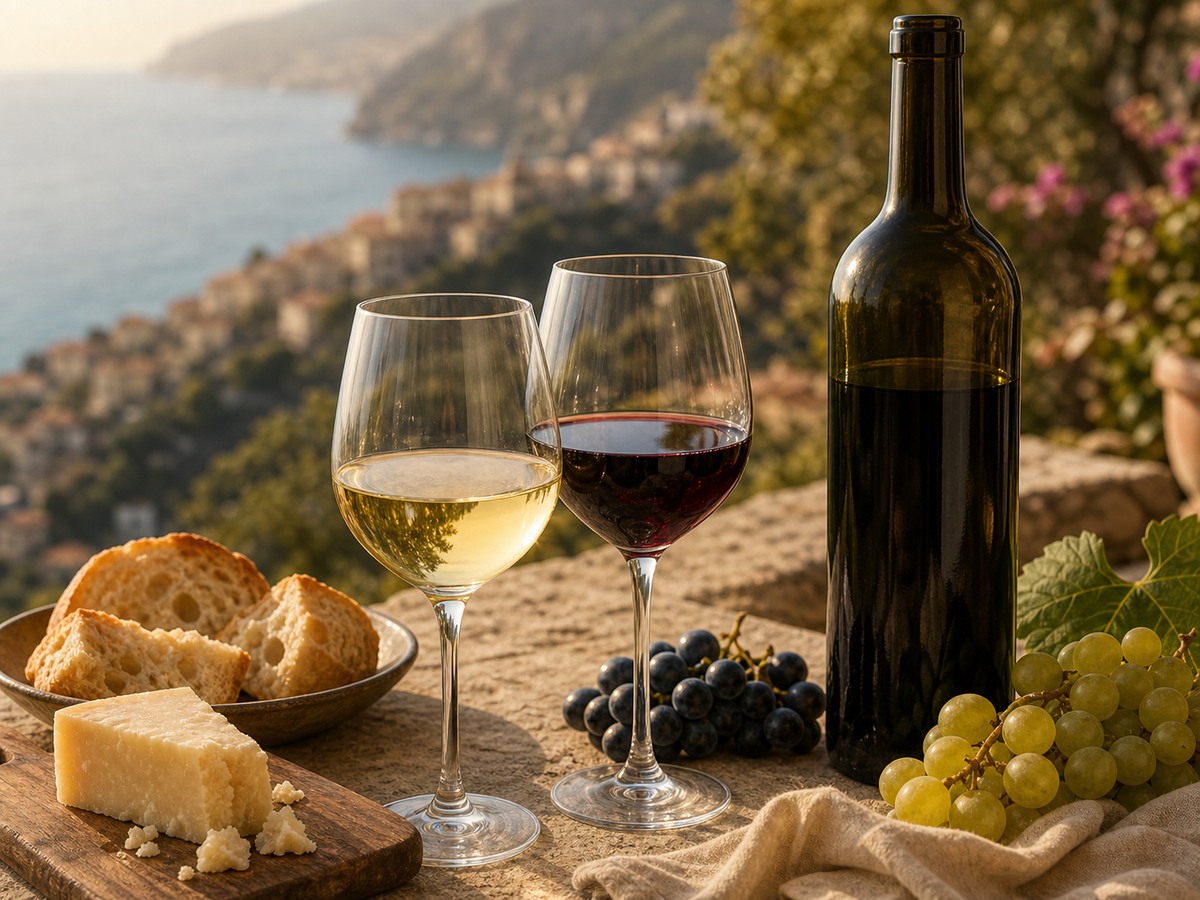
The mezzo dito di vino was a specific quantity — not a full glass, not a symbolic drop, but exactly half a finger's width of wine in the bottom of the glass, which depending on the glass and the finger was somewhere between 40 and 80 milliliters. It was the measured portion of a man who enjoyed wine with his food and who had decided, at some point, that this was the correct amount: enough to taste, enough to accompany the dinner, not enough to be concerned about. He measured it with his finger against the outside of the glass and that was the unit. I told him it was not good for him because I was a teenager and because the medical advice of the 1980s was beginning to become more cautious about alcohol. He listened and poured himself his half finger regardless, which was the correct response.
Wine was a presence in the house in a way that was not associated with occasion. It was not brought out for guests or celebrations — it was simply there, a part of dinner the way bread was a part of dinner. The cabinet had bottles in it. In the years when the tradition was still alive of going to the countryside to buy wine directly from farmers, we drove out to the agricultural land around Caserta with the damigiane — the large glass demijohns in their wicker baskets, holding twenty or fifty liters — and had them filled directly from the cantina of whichever farmer we knew. You came home with the demijohns heavy in the back of the car, and then over the following weeks you travaseresti — you transferred the wine into bottles using a siphon, bottle by bottle, and stored them. The wine was not labeled and it was not of a specific appellation. It was the wine of whoever's land you had bought it from, which was enough information.
Campanian wine does not have the international reputation of Tuscan or Piedmontese wine — Barolo and Brunello and Chianti have dominated the conversation about Italian wine for decades, leaving southern Italian wines in the background. This is changing. The recognition of indigenous Campanian grape varieties — Aglianico, Fiano, Greco, Falanghina — has grown steadily in the past twenty years, and the wines from Irpinia (Taurasi, Fiano di Avellino, Greco di Tufo) now hold DOCG status and are taken seriously in international markets. The wines of the Caserta area specifically — the Pallagrello Bianco and Nero, the Casavecchia, the Asprinio d'Aversa — are perhaps the most interesting story: indigenous varieties that were favored by the Bourbon kings and cultivated in the royal vineyards of the Reggia di Caserta, then nearly lost after the unification of Italy, and now being revived by a small number of committed producers.
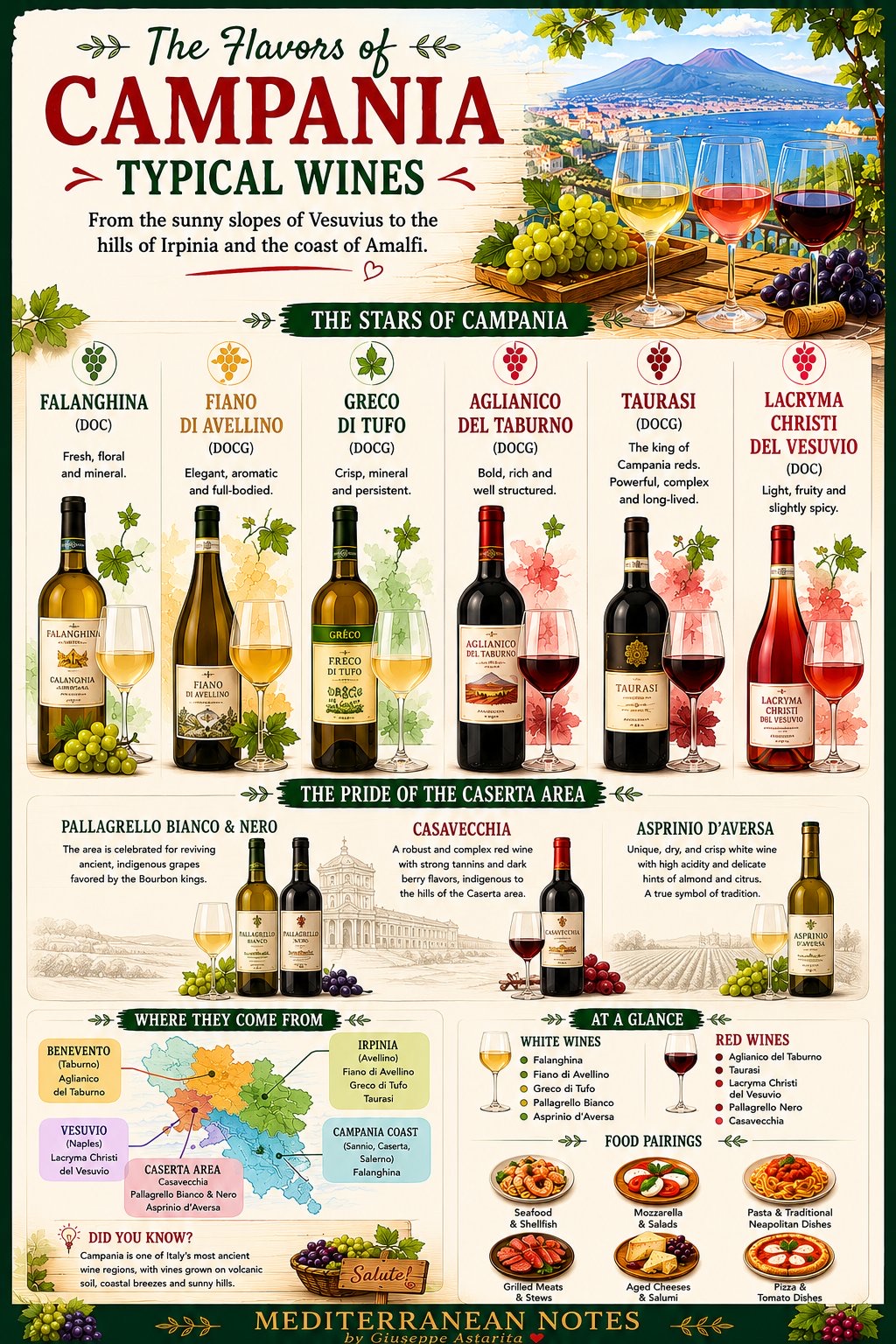
The wines — a guide to the main varieties
The wine that came from these damigiane was not labeled, not certified, and not always of consistent quality — but it was local, it was from a specific piece of land from a farmer you knew by name, and it was the wine of the table in the most direct sense: something grown nearby, bought directly, transferred into bottles at home with a siphon, and drunk with dinner over the following months. This is a supply chain so short it is barely a supply chain. It is simply: land, farmer, family, table.
I told my father wine was not good for him, and in the 1980s the medical advice was becoming more cautious. The picture since then has become considerably more nuanced. The Mediterranean dietary pattern — which the research consistently identifies as associated with favorable cardiovascular, metabolic, and longevity outcomes — includes moderate wine consumption (1–2 glasses per day for men, typically with meals) as a component. The specific compounds under study include resveratrol and other polyphenols in red wine, which have antioxidant properties in laboratory settings, though the clinical significance of these effects in humans at normal consumption levels remains debated.
What the research is less ambiguous about is the "with meals" component. Wine consumed with food — as it was in the Campanian tradition, always at the table, never as a standalone drink — has a different metabolic effect from the same quantity consumed without food. Food slows gastric emptying and alcohol absorption, producing a more gradual blood alcohol rise and a different hormonal response. The mezzo dito my father measured with his finger was, by any clinical definition, a moderate quantity consumed with a full dinner. As a teenager I told him it was not good for him. He was probably right to ignore me.
The Vigna del Re — the King's Vineyard — at the Reggia di Caserta is one of the more poignant stories in Campanian wine culture. An ancient organic vineyard within the grounds of the royal palace, planted with native varieties cultivated by the Bourbon monarchy, where the grapes are still grown and the wine is aged in terracotta amphorae rather than oak barrels. It survived the unification of Italy, the decline of the Bourbon tradition, and the long period when Campanian wine was regarded as table wine at best. It is still there, inside the UNESCO World Heritage Site, producing wine from varieties that predate the modern appellation system by centuries.
My father's half finger of wine at the end of dinner was not from any of these distinguished appellations. It was whatever was in the bottle from the last damigiana, or from whatever the cabinet held. He was not a connoisseur — he was a man who enjoyed a small glass of wine with his dinner, measured carefully, and who found the enjoyment of it sufficient reason to continue regardless of what his teenage son told him about health. He was correct about most things.
Salute — e mezzo dito di vino per tutti.