Campanian kitchen · Caffeine-free · Colazione · For Anna and Carolina · Nonna Titti · La valigia
Caffè d'orzo
Anna, Carolina — when you want a cappuccino and I froth the milk and make you one, what is in the cup is not coffee. It is barley. Roasted, ground, brewed like an espresso, topped with foam exactly like a cappuccino. It looks right, it smells right, the ritual is right. There is no caffeine. My grandmother made it for me in warm milk on the mornings I woke up at her house, and now I make it for you.
Nonna Titti — my father's mother — had a specific morning at her house. When I stayed overnight, which happened sometimes, she would wake me in the morning and make the orzo in warm milk. Not brewed as an espresso — dissolved, the soluble powder stirred into hot milk until the color was right, pale brown, the smell of roasted barley rising from the cup. I did not drink much milk at my parents' house; at Nonna Titti's it appeared naturally, because she made it that way and I accepted it as part of the particular conditions of being at her house. This was different from home. That difference made it specific and memorable in a way that the same drink at home would not have been.
The orzo — barley coffee — has been part of the Italian morning for generations, and it has a permanent place in Neapolitan bars and homes that is easy to miss if you do not know what to look for. In Naples, where espresso is a matter of identity and the coffee culture is the most serious in Italy, the orzo occupies a quiet parallel track. You can order an orzo espresso at the bar — pulled through the machine with a specialized pod, producing a dark cup with cream on top that looks exactly like a coffee and carries the ritual of an espresso without the caffeine. Pregnant women choose it as their bar drink. Mothers order it for children who want to feel they are doing what the adults are doing. People who avoid caffeine for health or preference drink it throughout the day. In a city where coffee is the religion, the orzo is the devotion for those who cannot take the caffeine but will not give up the ritual.
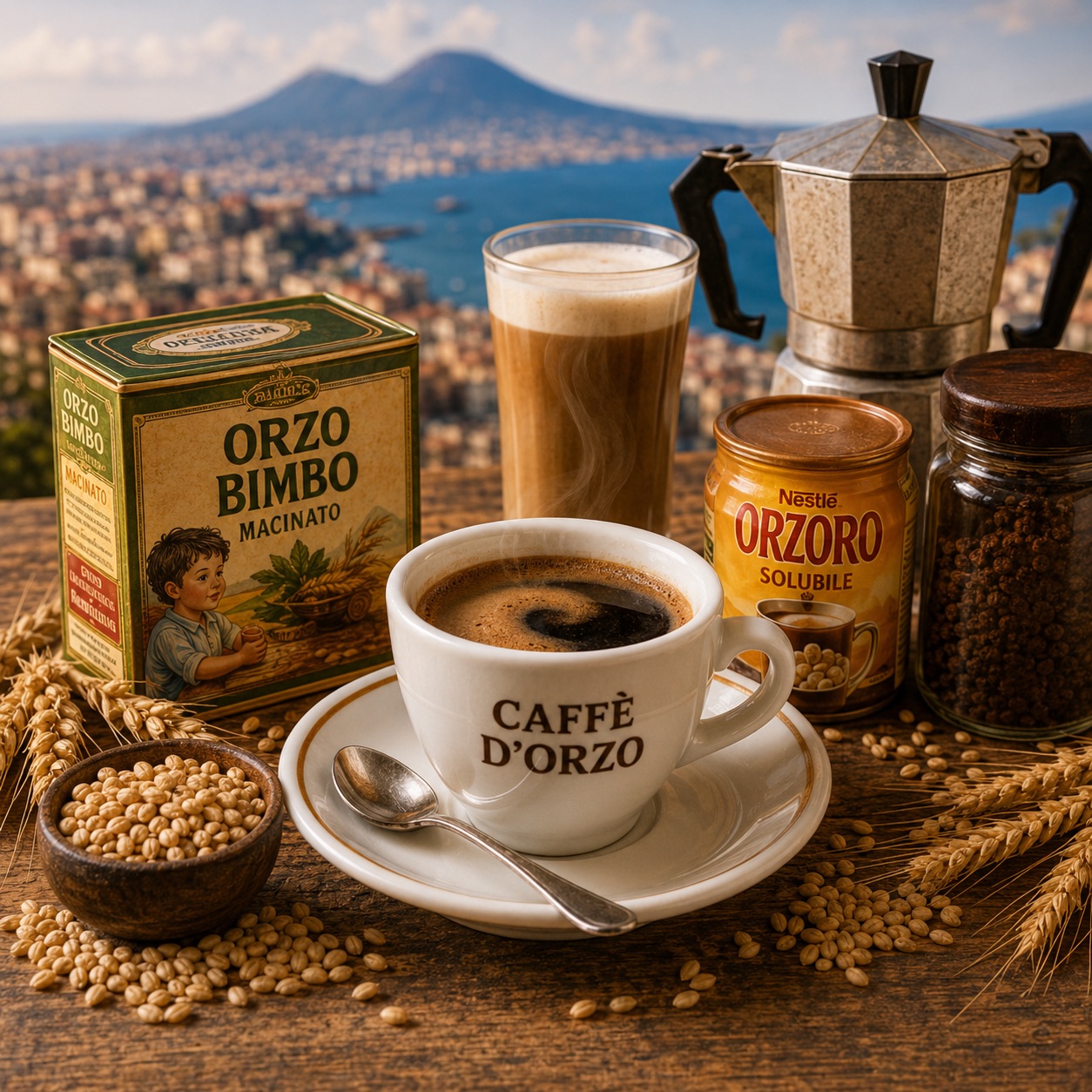
It is also, reliably, one of the things I bring back from Italy. Orzo Bimbo Macinato for the moka, Nestlé Orzoro or Orzo Bimbo Solubile for quick dissolving. Both go in the suitcase. The soluble is what I use when you want a cappuccino and I want to make it immediately, without the moka: dissolve, froth the milk, pour. The foam looks exactly like a real cappuccino. The ritual feels exactly like a real cappuccino. There is no caffeine. This seems important to me now that I am making it for children rather than receiving it from a grandmother.
I have heard that you can make tiramisù with orzo instead of espresso — a version lighter in intensity, completely caffeine-free, suitable for children or for anyone who wants the structure of tiramisù without the coffee. I have not made this version yet. It seems like a natural experiment, and I note it here as something to try. The savoiardi soaked in orzo instead of espresso, the mascarpone cream unchanged, the cocoa on top unchanged. Whether the flavor works the same way I cannot say until I make it. The barley has a similar bitterness and toasted depth — different from coffee, but not so different that the logic of tiramisù would be lost.
What orzo is — roasted barley, beta-glucans, and why it does not taste like coffee
Caffè d'orzo is made from roasted barley (Hordeum vulgare), the same grain used in beer production, ground to an espresso-grind particle size and brewed through pressure or dissolved as a soluble powder. It contains no caffeine because barley contains no xanthine alkaloids — the family of compounds that includes caffeine, theobromine, and theophylline. The dark color, the toasted aroma, and the slightly bitter flavor all come from Maillard browning reactions during roasting: the same chemistry that produces espresso's roasted compounds, but applied to barley proteins and sugars rather than coffee's chlorogenic acids and trigonelline. The result is flavor compounds that share the earthy, toasted, slightly bitter profile of coffee without the stimulant chemistry. Barley is rich in beta-glucans — a class of soluble dietary fiber found in the cell walls of the grain — which slow gastric emptying, reduce post-meal blood sugar spikes, and support the growth of beneficial gut bacteria. This is why orzo is traditionally considered digestive-friendly and why it is recommended for pregnant women and children: it provides the sensory ritual of an espresso-style drink with the nutritional properties of a whole grain. The soluble versions (Orzoro, Orzo Bimbo Solubile) are made from spray-dried orzo extract and dissolve instantly; the ground versions (Orzo Bimbo Macinato) are brewed in a moka pot or specialized orziera and produce a cup closer in character to a proper espresso.
How it is served — in the bar and at home
Orzo espresso
Pulled through the bar espresso machine with specialized pods. Dark, concentrated, with a cream on top. Served in a tazza piccola or tazza grande. Ordered at the bar exactly like a coffee.
Orzo macchiato
Orzo espresso with a splash of warm milk. The macchiato format for those who want a little milk without a full latte.
Orzo latte
Brewed orzo or dissolved powder in warm or frothed milk. What Nonna Titti made. What I make for you. The ratio can go either way depending on who is drinking it.
Orzo cappuccino
Dissolved in a little hot water, then topped with frothed milk using a handheld frother. The foam looks right. The ritual is right. There is no caffeine.
How to make it at home
The cappuccino version — for the girls
Dissolve the orzo. Put 1–2 teaspoons of soluble orzo (Orzoro or Orzo Bimbo Solubile) in a cup. Add a small amount of very hot water — about 3–4 tablespoons — and stir until fully dissolved. The liquid should be dark and concentrated.
Use hot water, not boiling — the soluble powder dissolves better at 80–85°C than at 100°C.
Froth the milk. Heat whole milk in a small jug until hot but not boiling — about 65–70°C. Froth with a handheld milk frother for 20–30 seconds until you have a thick, stable foam. The milk should roughly double in volume.
Pour and serve. Pour the frothed milk over the dissolved orzo, holding back the foam with a spoon and then spooning it on top. The result looks like a cappuccino. Serve immediately.
A dusting of cocoa powder on top if the occasion calls for it. Or a drizzle of honey. Both work.
The moka version — closest to the bar
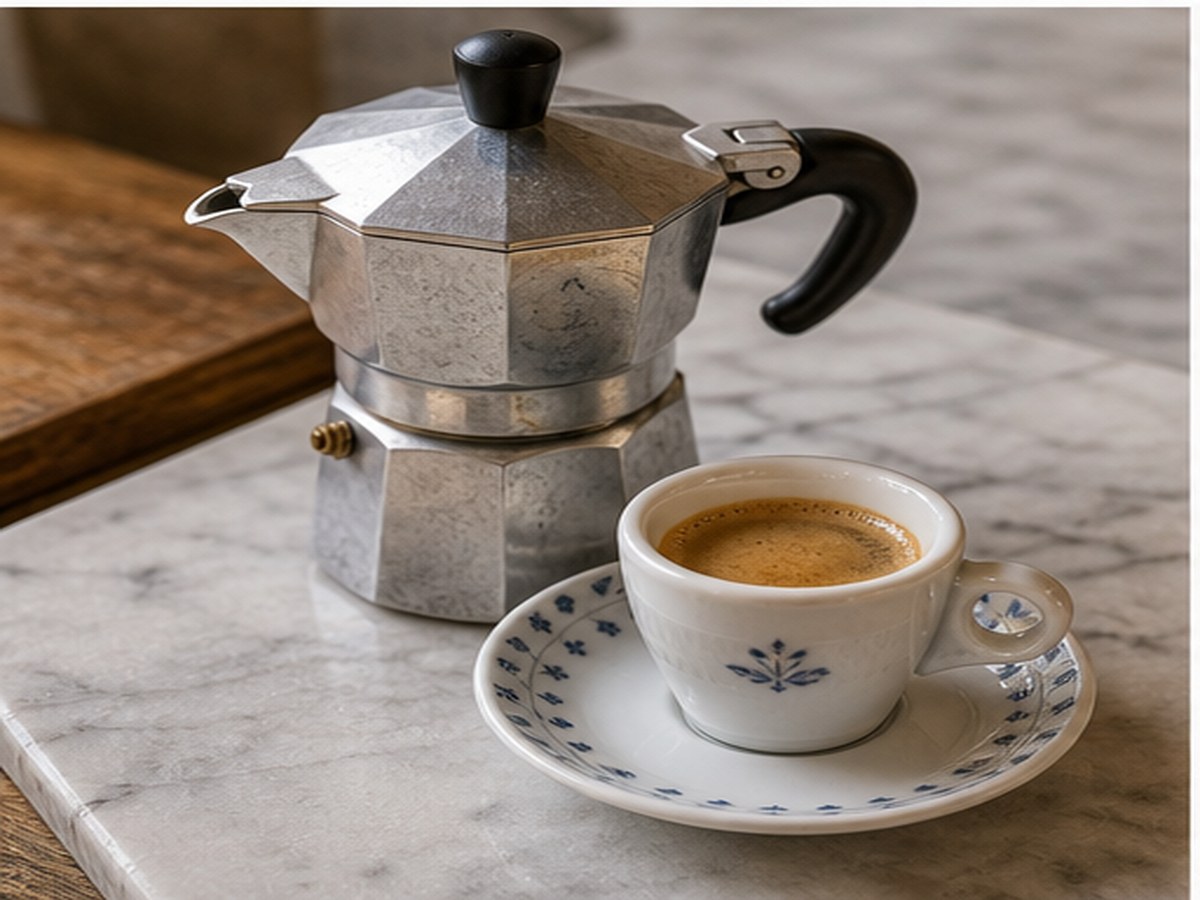
Use ground orzo (Orzo Bimbo Macinato) in your regular moka pot exactly as you would use coffee grounds. Fill the filter basket to the level, tamp gently, fill the bottom with cold water, brew over medium heat. The moka produces a dark, concentrated orzo espresso. Drink straight or use as the base for a latte or cappuccino.
Some moka pots develop a residual coffee flavor that carries into the orzo. If this bothers you, dedicate a small moka pot specifically to orzo — or use a specialized orziera.
Brands to bring back from Italy
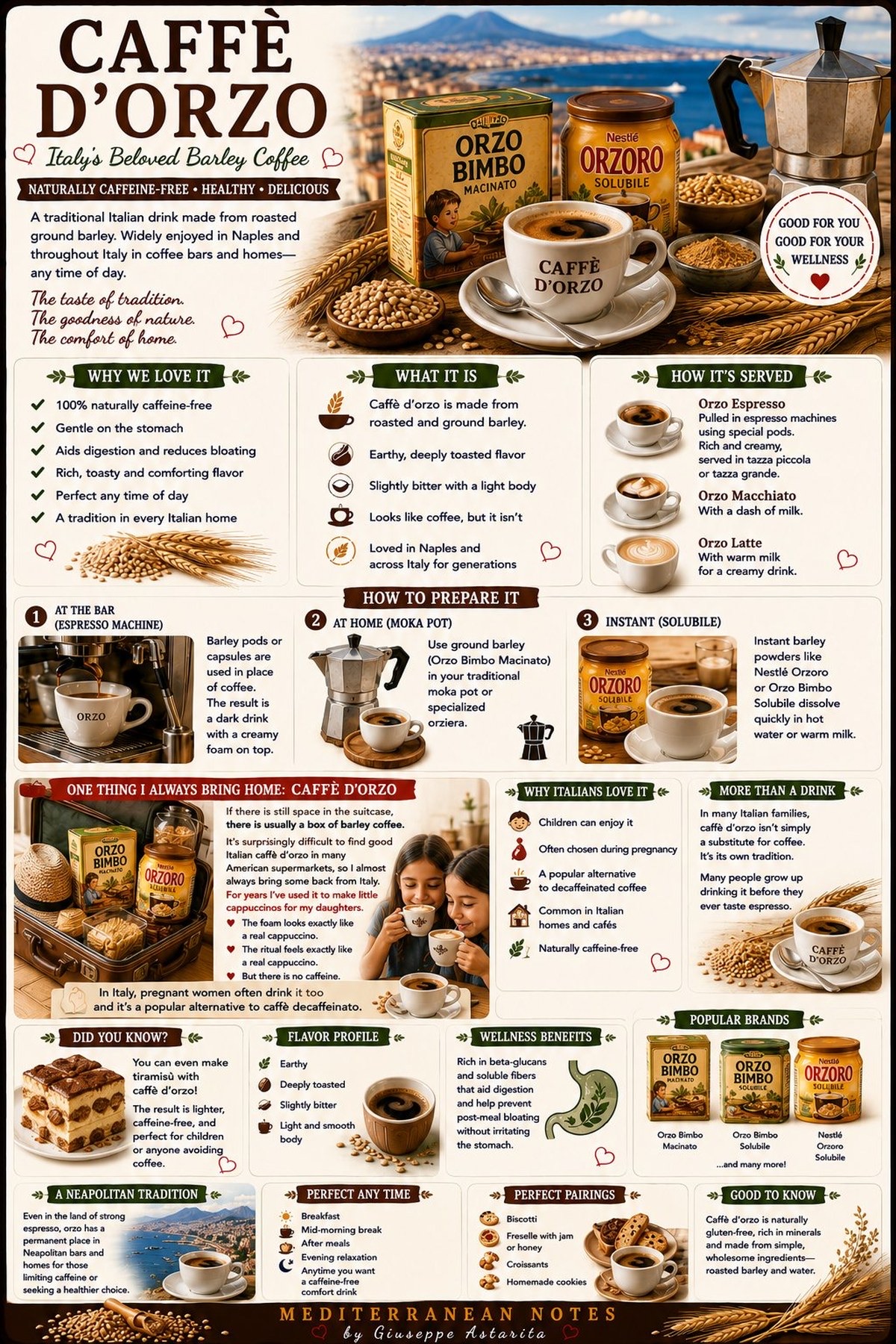
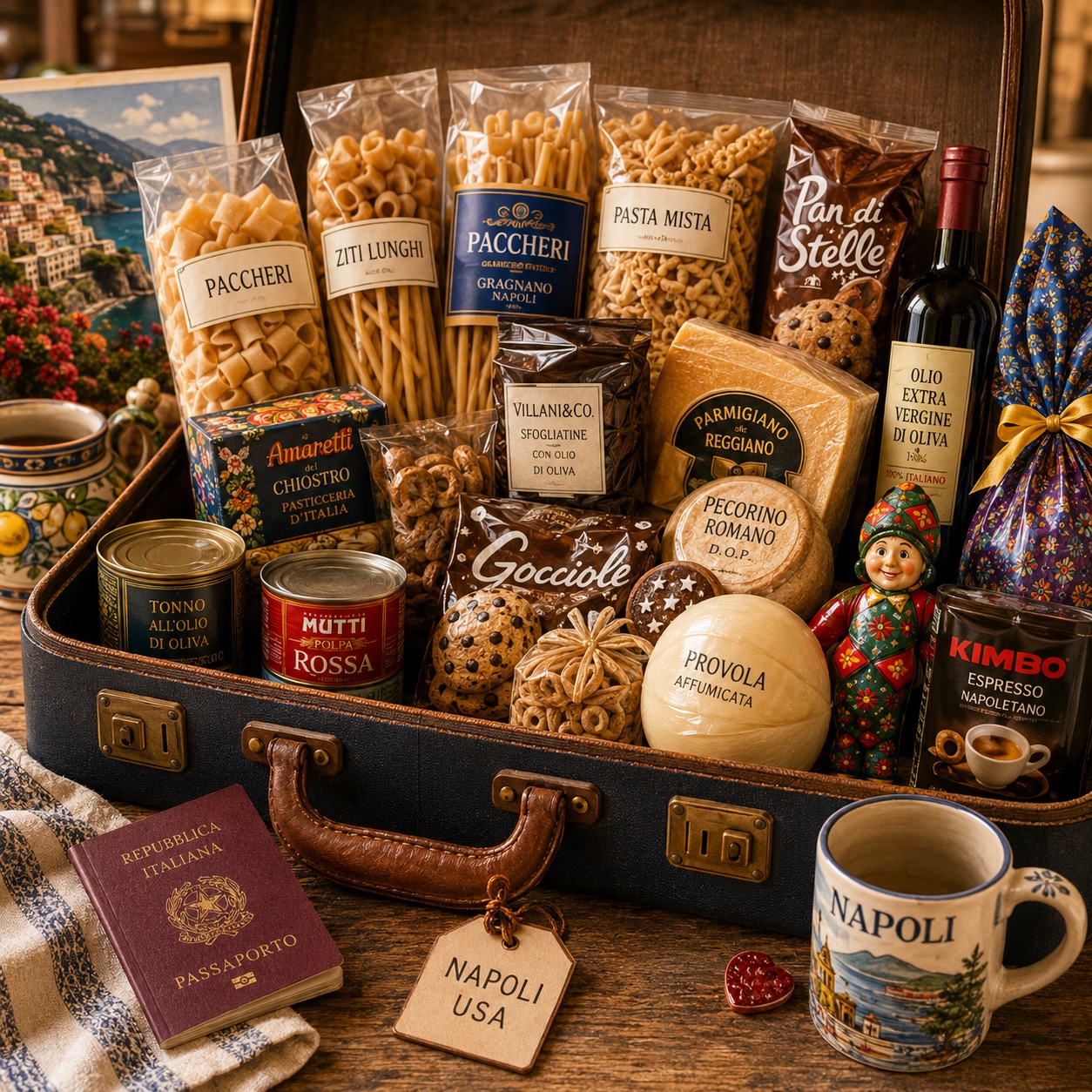
The orzo is one of the items in the suitcase that I bring back without ever running out of reasons to bring it. The caffè per espresso takes up more space and weighs more, but the orzo has its own separate claim: there is no good American equivalent, the ritual it enables — the morning cappuccino for children who want what the adults are having — is specific and Neapolitan and carries a chain of transmission from Nonna Titti's kitchen to ours. Anna, Carolina, when I make you the orzo cappuccino in the morning and froth the milk and you drink it because you want a cappuccino, you are drinking what she made me when I was a child and she was the adult at the stove. The barley is the same. The ritual is the same. The caffeine was never there.
Buona colazione, Anna e Carolina — è orzo, non caffè, ma è lo stesso.