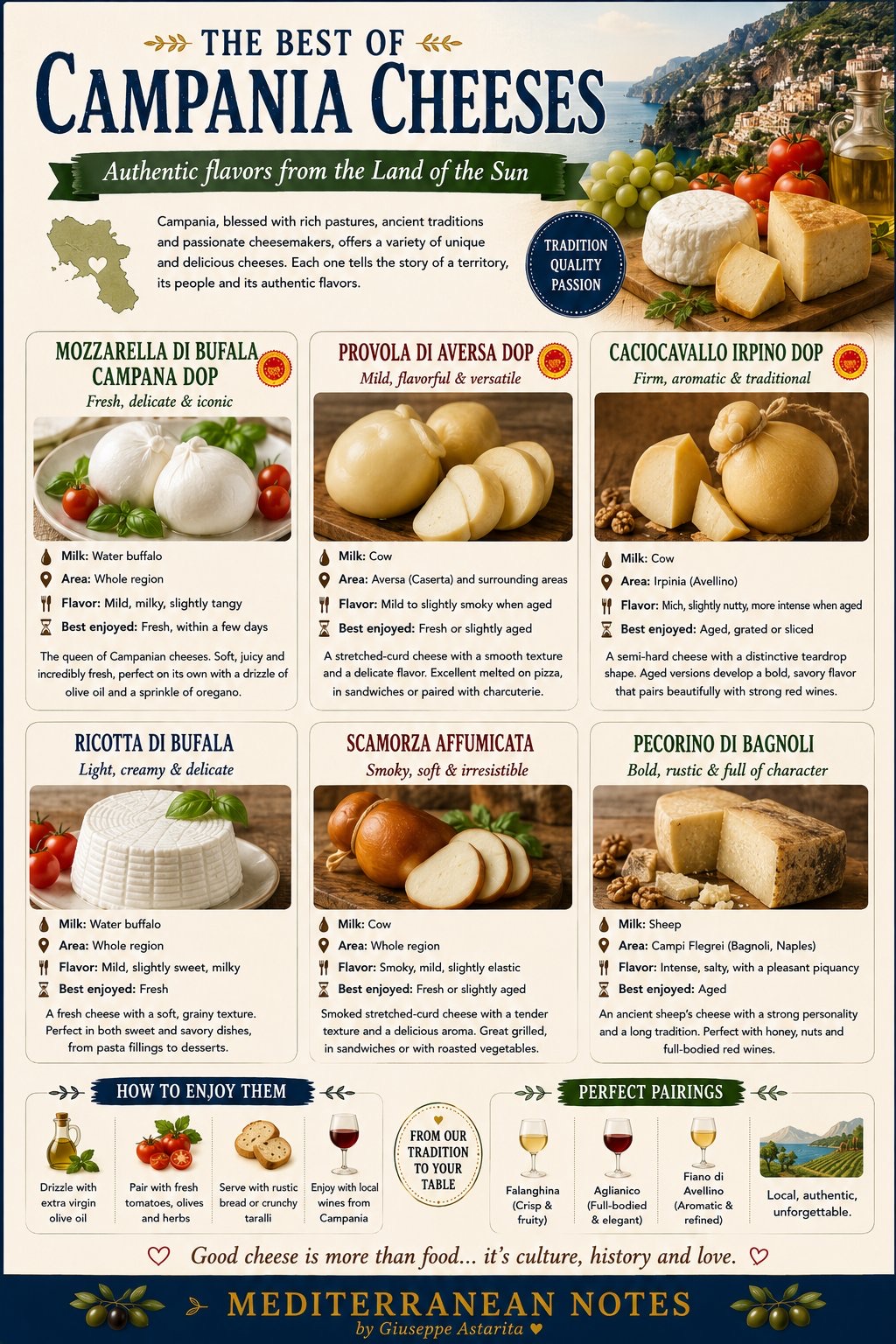
Growing up, cheese — with the exception of mozzarella — was usually eaten at dinner, after the main course and just before the fruit. Local cheeses like provola and caciocavallo could also find their way into pasta dishes and baked preparations. Good cheese is more than food — it is culture, history, and love.
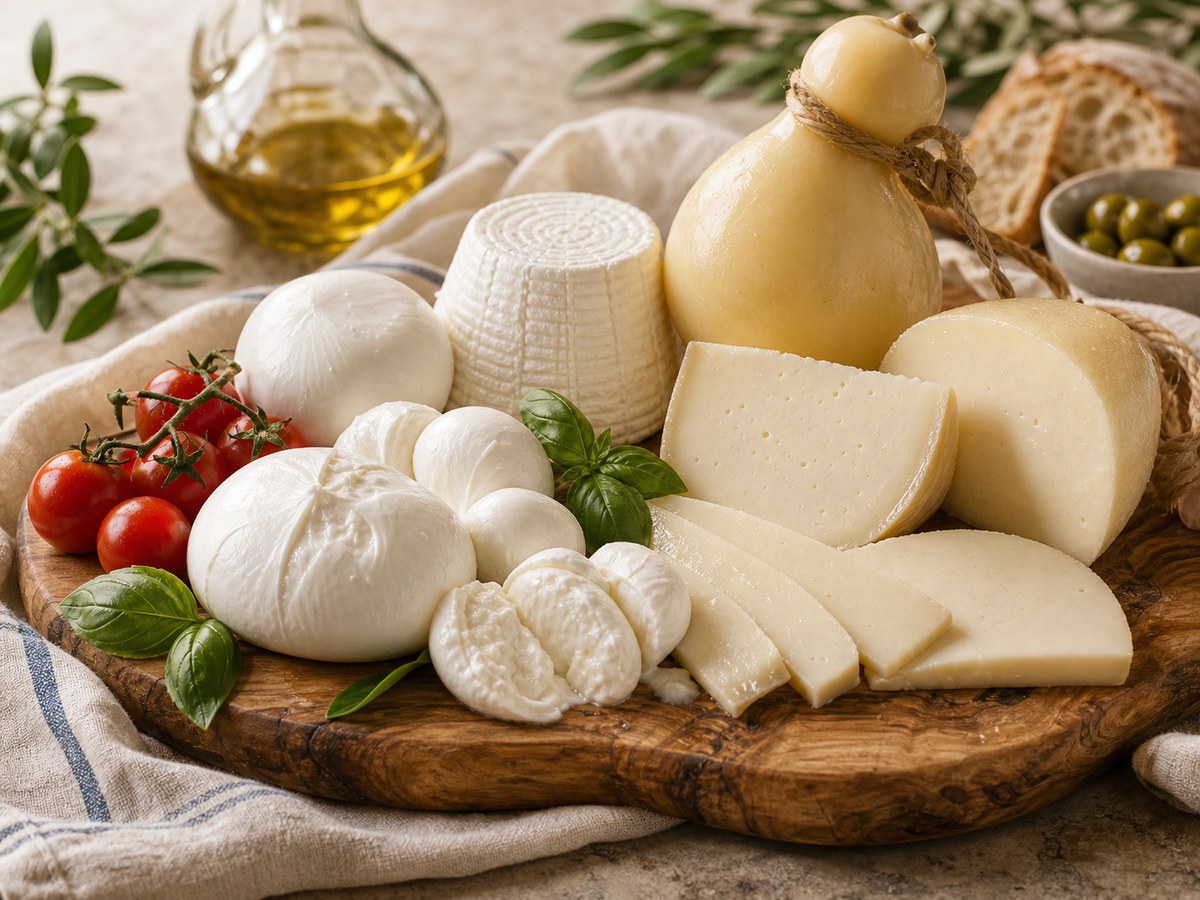
Campania is one of the great cheese regions of Italy, though it is less celebrated for its cheese tradition than for its pasta and its tomatoes. This is partly because mozzarella di bufala — the region's most famous product — is so well known internationally that it overshadows everything else the region produces, and partly because the Campanian cheese tradition is less ancient and prestigious than the Parmigiano Reggiano or Pecorino traditions of Emilia and Sardinia. But the range is genuinely interesting: fresh cheeses made from buffalo milk with a sweetness and richness that cow's milk does not match; stretched-curd cheeses (pasta filata) in various forms — provola, scamorza, caciocavallo — that span fresh to aged and mild to assertive; and sheep's milk cheeses from the Apennine interior that have the bold, salty character of the pastoral tradition.
DOP · The icon
Mozzarella di Bufala Campana
Fresh, delicate & iconic — the queen
Milk: Water buffalo · Whole region · Best within 24–48 hours of production
The most famous Campanian cheese and one of the great fresh cheeses of the world. Made from water buffalo milk by the pasta filata technique — the curd is stretched in hot water until it reaches the characteristic smooth, elastic texture. The flavor is mild, milky, slightly tangy, with a sweetness that cow's milk mozzarella does not achieve. The interior should release a little white liquid when cut. Eaten fresh: with a drizzle of olive oil, a sprinkle of oregano, alongside tomatoes.
At table: always fresh, always its own occasion. Never at the end of dinner — always the opening or the main event.
DOP · The Caserta specialty
Provola di Aversa
Mild, flavorful & versatile
Milk: Cow · Area: Aversa (Caserta) and surrounding towns · Fresh or aged
A stretched-curd cheese made in the towns around Caserta — Aversa, Caivano, and the surrounding agricultural plain. Mild and slightly sweet when fresh, developing a more assertive, smoky flavor when aged. The most versatile of the Campanian cooking cheeses — it melts cleanly and evenly, making it ideal for baked pasta dishes, pizza, and the filled preparations described across this collection.
In this collection: timballo di melanzane, conchiglioni al forno, polpettone (all three fillings include provola),
pizza rustica,
pizza di scarola.
Ricotta di Bufala
Light, creamy & delicate
Milk: Water buffalo whey · Whole region · Always fresh
Made from the whey left after mozzarella production — technically not a cheese but a ricotta (re-cooked). The buffalo milk version is richer and creamier than cow's milk ricotta, with a more pronounced sweetness. Used in pasta fillings (the pastiera, the conchiglioni), in desserts, and eaten fresh with a little honey or simply on bread.
Scamorza Affumicata
Smoky, soft & irresistible
Milk: Cow · Whole region · Fresh or slightly aged
A smoked stretched-curd cheese — recognizable by its light brown smoked exterior and its characteristic tied-neck shape (it is hung to dry, which produces the constriction at the top). The interior is white, slightly elastic, mild with a pronounced smoky aroma. Excellent grilled — it softens and releases its smoke into the surrounding air. Also good sliced thin on bread or melted.
At dinner: a few slices with bread, after the secondo. Excellent also grilled directly on the brace alongside meat.
DOP · The aged one
Caciocavallo Irpino
Firm, aromatic & traditional
Milk: Cow · Area: Irpinia (Avellino) · Best aged, grated or sliced
A semi-hard stretched-curd cheese with a distinctive teardrop shape — hung in pairs over a wooden beam during aging, which gives it its name (cacio a cavallo, cheese on horseback). Mild and slightly nutty when young; bold, sharp, and complex when aged. The aged version grates well and can substitute for Pecorino Romano in pasta preparations. A strong character that pairs with full-bodied red wines.
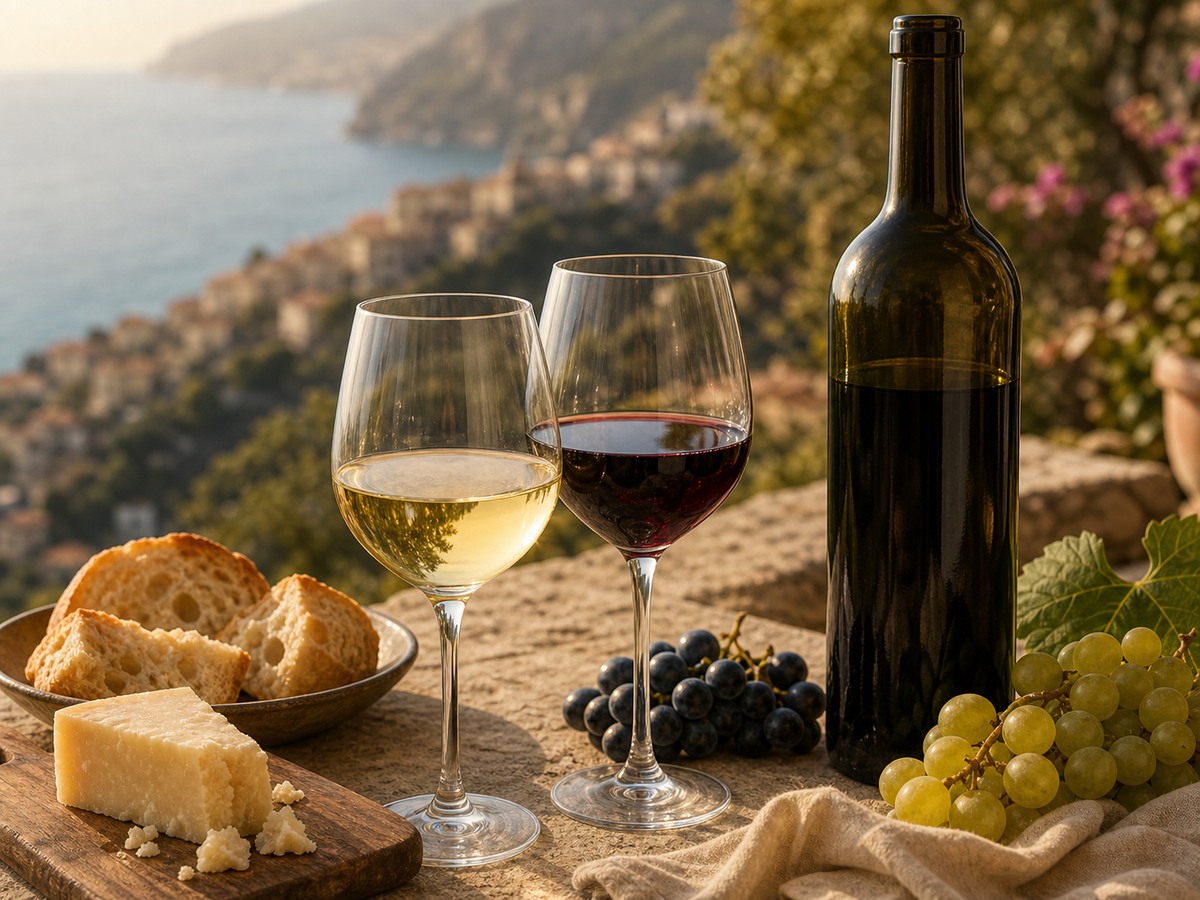
At dinner: sliced, with rustic bread and local wine. Aged: grated over pasta instead of Pecorino.
Pecorino di Bagnoli
Bold, rustic & full of character
Milk: Sheep · Area: Campi Flegrei (Bagnoli, Naples) · Best aged
An ancient sheep's milk cheese from the Campi Flegrei volcanic area near Naples — one of the few surviving sheep's milk cheeses of the Campanian coastal tradition. Intense, salty, with a pleasant piquancy that develops with aging. The volcanic soil of Campi Flegrei, rich in sulfur compounds, gives the milk — and therefore the cheese — a specific aromatic character that cannot be replicated elsewhere. Perfect with honey, walnuts, and a full-bodied red.
At dinner: the boldest of the after-meal cheeses. A small piece with bread and a glass of Aglianico.
Ricotta di Fuscella
Light, unmolded & basket-shaped
Milk: Cow or sheep · Whole region · Always fresh
Fresh ricotta sold and set directly in its small conical basket — the fuscella — rather than pressed into a tub, which keeps it lighter and airier than most commercial ricotta. Eaten straight from the basket with a spoon, sometimes with a little sugar or a drizzle of honey, and often the ricotta of choice for people who want it plain rather than as an ingredient in something else.
At table: eaten on its own, straight from the basket, with a spoon.
Caciotta di Sorrento
Delicate, unsalted & mild
Milk: Cow · Area: Sorrento peninsula · Best fresh
A small, soft table cheese from the Sorrento peninsula, notable for having almost no added salt — it tastes primarily of milk, delicate and mild, meant to be eaten fresh rather than aged. A quiet cheese, easy to underestimate next to bolder Campanian cheeses, and worth trying specifically because of how little it asks for.
At table: fresh, on its own, alongside fruit.
Bocconcini
Tiny, playful & bite-sized
Milk: Cow · Whole region · Fresh, kept in liquid
Small, bite-sized balls of fresh mozzarella-style cheese, kept in their own milky liquid or a light brine rather than a fuller water bath. Not a separate cheese so much as a format — the same stretched-curd technique shaped small, meant for antipasti platters, skewers, and salads where a full-sized mozzarella ball would be unwieldy.
At table: antipasti, caprese-style salads, skewers.
Provolone
Dolce or piccante — sweet or sharp
Milk: Cow · Whole region · Fresh to well aged
A stretched-curd cheese made at various stages of aging, split broadly into two families: dolce ("Bebè"), mild and young, and piccante, aged longer and considerably sharper. In between sits a medium, more balanced version. Older, well-aged provolone was once used by Neapolitan households as a grating cheese for pasta, cheaper than Parmigiano and with its own distinct sharpness.
At table: sliced when dolce, grated over pasta instead of Parmigiano when well aged and piccante.
Burrini
A pocket of butter inside cheese
Milk: Cow · Whole region · Fresh to lightly aged
Shaped like a small caciocavallo, but hollow at the center and packed with fresh butter, all encased in a shell of provolone-style paste about a centimeter thick. Cutting into one reveals the surprise — a soft core of butter inside a firm cheese shell, a preservation technique from a time before reliable refrigeration that has survived as a genuine specialty in its own right.
At table: sliced, the butter core softening as it comes to room temperature.
Why mozzarella di bufala tastes different — and why freshness is everything
The flavor difference between mozzarella di bufala and cow's milk fior di latte begins in the milk. Water buffalo milk contains approximately 8% fat and 4.5% protein, compared to 3.5% and 3.3% in cow's milk. The higher fat content produces a richer, creamier texture and a more pronounced flavor. Buffalo milk also contains higher concentrations of casein (the main milk protein), which produces a firmer curd that stretches more elastically during the pasta filata process and results in the characteristic chewy-yet-yielding texture of fresh mozzarella di bufala. The slightly higher acidity of buffalo milk also contributes to the mild tanginess that distinguishes it from the blander cow's milk version.
Freshness is not a preference for mozzarella di bufala — it is a technical requirement. The stretched-curd structure that gives the cheese its texture begins breaking down almost immediately after production: the protein network relaxes, the internal liquid migrates toward the surface, and the characteristic milky sweetness is replaced by increasing sourness as lactic acid bacteria continue their work. Within 24 hours of production, a mozzarella di bufala at optimal freshness has a specific interior moisture that releases as a white liquid when cut and a flavor that is fresh and alive. By 72 hours at refrigerator temperature, both the texture and the flavor have degraded noticeably. This is why the tradition of eating it the day it is made — and why in Campania the pasticceria and the forno that sells fresh mozzarella receives daily deliveries — is not nostalgia but chemistry.
The cheeses in this collection appear in specific roles. The provola is the great cooking cheese — melting into the timballo, filling the polpettone, enriching the pizza rustica. The ricotta di bufala fills the pastiera and the pasta. The mozzarella is the summer antipasto, the caprese, the thing eaten before a meal rather than after it. The harder cheeses — caciocavallo, pecorino — appear at dinner, after the secondo and before the fruit, fulfilling the same transitional function as the green salad: something between the richness of the main course and the clean close of the fruit. The meal had structure, and the cheese was part of the structure.
Good cheese is more than food — it is culture, history, and love. The infographic's closing sentence is one of those statements that is easy to dismiss as sentiment and that is, on reflection, accurate. The mozzarella di bufala of the Campanian plain reflects two thousand years of water buffalo husbandry on that specific land. The caciocavallo hung over a wooden beam reflects a pastoral tradition of aging cheese while moving livestock between pastures. The provola of Aversa reflects the specific milk of the Caserta plain and the hands of the people who have made it there for generations. Every cheese in the collection tells this story. The meal at which it appears — after the secondo, before the fruit, at dinner, with bread and wine — is the frame.
Buon appetito — e sempre il formaggio prima della frutta.