Il Caffè a Napoli
More Than a Drink — It Is a Way of Life
In Naples, coffee is a daily ritual, a social glue, and a moment of pure pleasure. It is strong, it is often shared, and it is always espresso. Growing up I learned to make it with the moka pot — almost like a tea ceremony for others, a meditation in the preparation. At the bar it was the cheapest daily luxury everyone could afford. You can take us out of Naples, but you cannot take Naples out of our coffee.
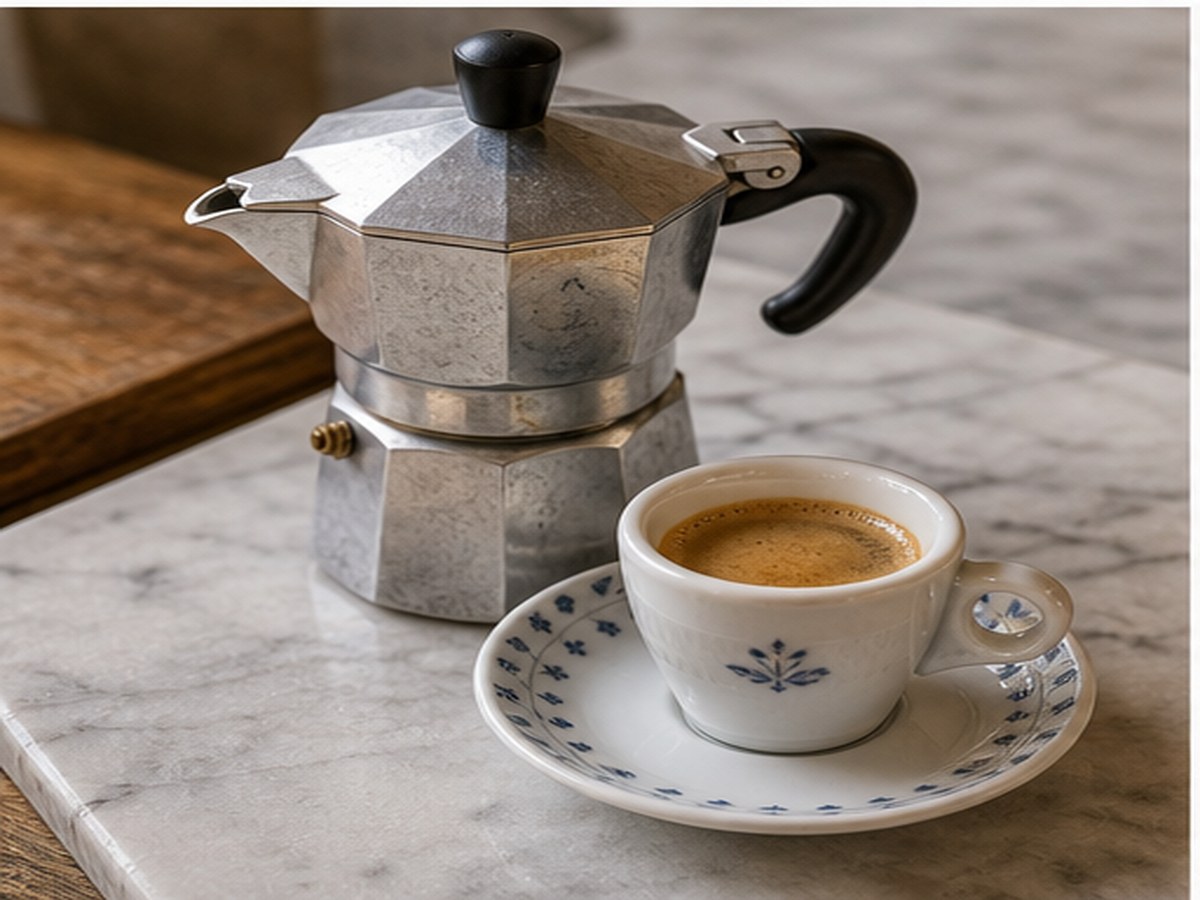
I learned this preparation the way you learn anything important in a Neapolitan kitchen: by watching, by doing, by being corrected. The heat too high — you rushed it. The water over the valve — you overfilled it. The coffee packed too tight — it came through bitter. Each step has a reason and the reason was not explained; it was demonstrated. Almost like a tea ceremony in the attention it required and the respect it expected. The result, when all steps were done correctly, was three or four minutes of the best coffee that a home kitchen produces. Bold, intense, unforgettable.
The moka pot was invented in 1933 by Alfonso Bialetti — an aluminum engineer from Piedmont, not a Neapolitan — but it was adopted so completely and permanently by the Neapolitan home kitchen that it became a cultural symbol of the city more than of its actual origin. By the 1970s and 1980s, a moka pot on the stove in the morning was as standard in Caserta kitchens as the espresso machine was in the bars. There was no alternative considered. The espresso machine was for the bar; the moka was for the house. The coffee they produced was not identical — bar espresso has pressure levels (9 bar) that a moka cannot achieve (1–2 bar), producing different crema and different extraction — but the logic of both was the same: small, concentrated, strong, dark.
The bar — which in Italian is a coffee shop that also serves alcohol, not the other way around — was where the social dimension of coffee happened. The espresso at the bar cost very little, making it genuinely accessible to everyone: a daily luxury that was not actually a luxury because it was within everyone's reach. You stood at the counter — sitting cost more, a formality for tourists — you ordered, it arrived in thirty seconds, you drank it in two or three sips while exchanging a few words with whoever was next to you, and you left. The whole transaction took four minutes. This is the architecture of the Neapolitan coffee break: short, social, standing, punctuating the day at whatever intervals the day requires.
The Neapolitan coffee laws
Coffee moments in a Neapolitan day
The moka pot operates by heating water in the sealed lower chamber until steam pressure builds — reaching approximately 1–2 bar — which forces the water upward through the coffee grounds in the filter basket and into the upper collection chamber. This pressure-driven extraction produces a coffee that is stronger than filter coffee (which uses gravity) but less pressurized than bar espresso (which operates at 9 bar). The lower pressure of the moka means it cannot produce the stable crema that characterizes bar espresso — the fine emulsion of CO₂ and oil droplets suspended in the brew — though it does produce a small amount of surface foam in a well-made preparation. The moka produces a brew with higher caffeine content per volume than most methods because the slow pressure extraction at near-boiling temperature solubilizes both caffeine and the bitter chlorogenic acid lactones more completely than faster methods.
The key variables in moka preparation that most affect flavor are heat level (too high = bitter from overextraction as the water passes through the grounds too quickly and at too high a temperature), fill level (water should reach but not exceed the pressure valve), and coffee grind (slightly coarser than espresso, not tamped — packing the grounds restricts flow and produces over-extracted, bitter coffee). The instruction to remove the moka from the heat before it fully sputters and finishes — standard in Neapolitan practice — avoids the last fraction of water passing through the increasingly depleted grounds, which would be bitter. The tradition understood the extraction chemistry without naming it.
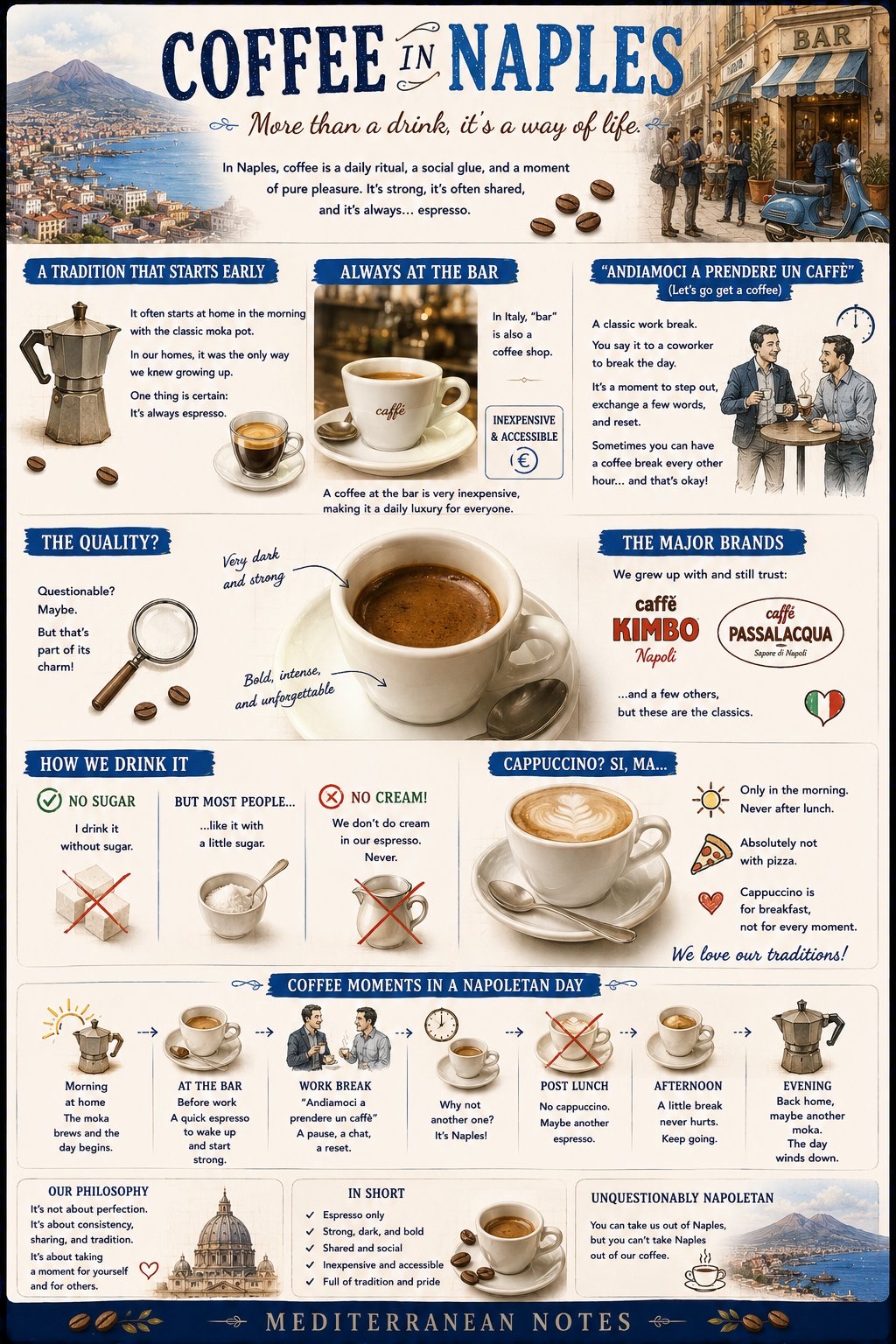
You can take us out of Naples, but you cannot take Naples out of our coffee. The infographic closes with this and it is accurate in a specific way: the coffee habits formed in a Neapolitan childhood — the moka on the morning stove, the espresso at the bar counter, the no-cream rule, the no-cappuccino-after-noon rule, the social break format of andiamoci a prendere un caffè — do not change significantly with geography. I drink espresso without sugar and without cream in Massachusetts the same way it was drunk in Caserta. I have a moka pot. The daughters are learning what the sputtering at the spout means and why you remove it before it finishes. Almost like a tea ceremony. The preparation is the point as much as the coffee.
Andiamoci a prendere un caffè —
sempre, ovunque, alla napoletana.