Spezzare la pasta: the Neapolitan art of breaking pasta by hand
La pasta va spezzata, mai tagliata. Pasta is broken, never cut. In Naples, the long ziti are broken by hand before going into the pot — into three or four pieces, depending on how strong you were. Pieces always flew across the kitchen floor. You had to pick them up before someone stepped on them. An old form of art and meditation that is slowly disappearing, now that they sell pasta already pre-cut.
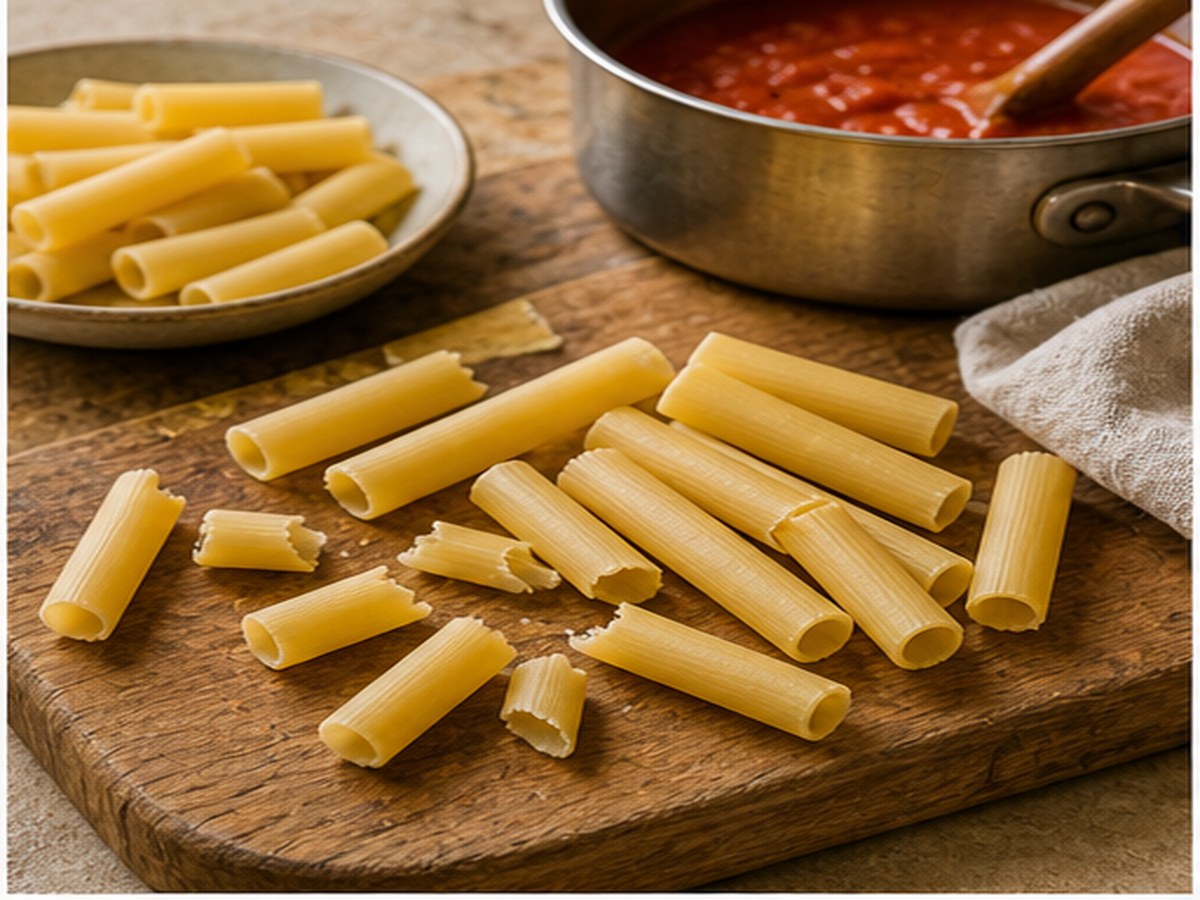
The Neapolitan saying is precise: la pasta va spezzata, mai tagliata. Pasta must be broken, never cut. The distinction matters — a knife damages the structure of the pasta at the cut edge, compressing and sealing it in a way that prevents the sauce from penetrating. A clean hand-break, by contrast, produces a fracture along the natural structure of the dried pasta that leaves the interior slightly exposed and the surface slightly rough at the break — both of which help the sauce hold. This is not folklore. It is a practical observation about how pasta behaves, codified into a rule that has been passed down through Neapolitan kitchens for as long as there have been long pasta shapes to break.
The ziti are the shape most associated with this practice. The long tubes — smooth, 25–30 cm, sold in bundles — are the classic pasta for the Neapolitan ragù and for several baked pasta dishes. They have always been sold long, and they have always been broken before cooking. The task, in households where there were children, was given to the children. A small handful of long ziti taken in both hands, held in the center, bent gently until they cracked along their natural line. Three pieces if you were strong enough to apply even pressure across the full length. Four pieces sometimes — when the ziti were thicker or the hands were smaller and the leverage required multiple bends. Almost always, several pieces escaped during the breaking and flew across the kitchen. These had to be retrieved from the floor before anyone walked across it — a piece of dried ziti stepped on in bare feet is a specific and memorable pain.
The breaking of pasta is also, as the infographic title suggests, a form of meditation — or at least a form of the kitchen activity that is repetitive and rhythmic and satisfying in the way that such activities are: shelling peas, stripping basil, peeling garlic, breaking pasta. The sound of ziti cracking cleanly — which is the sound that tells you the pressure was correct and the break was at the right point — is one of those small sensory signals that the kitchen produces and that carry memory with them. The pre-cut ziti that are now sold in Italian supermarkets save the time and the flying pieces and the swept floor. They also remove that step from the kitchen, and the step was part of the cooking.
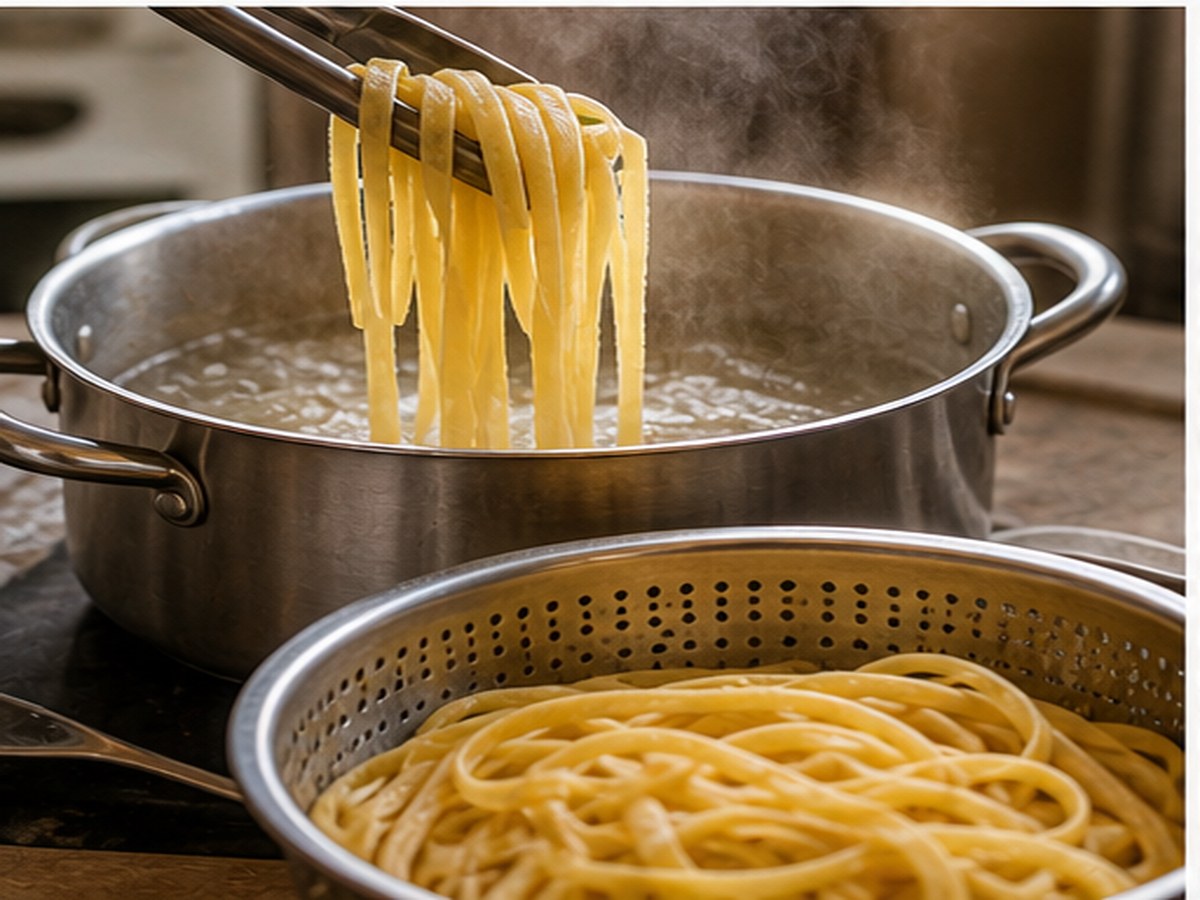
For soups and broths — the minestre, the legume soups, the pasta e fagioli, the pasta e ceci — the breaking of long pasta serves a different but equally practical purpose. Spaghetti, bucatini, vermicelli, linguine: broken to 5–7 cm so they fit in the soup spoon without requiring awkward twirling in a bowl of broth. Broken long pasta in soup has a completely different eating character from short factory pasta: the irregular lengths, the slightly rough break edges, the way the pieces lie at different angles in the bowl. The pasta e zucca and the pasta e cavolfiore in this collection use broken pasta — the whistling of broken bucatini noted in the zucca post is the sound of broken pasta doing what it was broken for. And for some reason the flavor carries different memories — not because the pasta has changed, but because the act of breaking it is part of the dish's history.
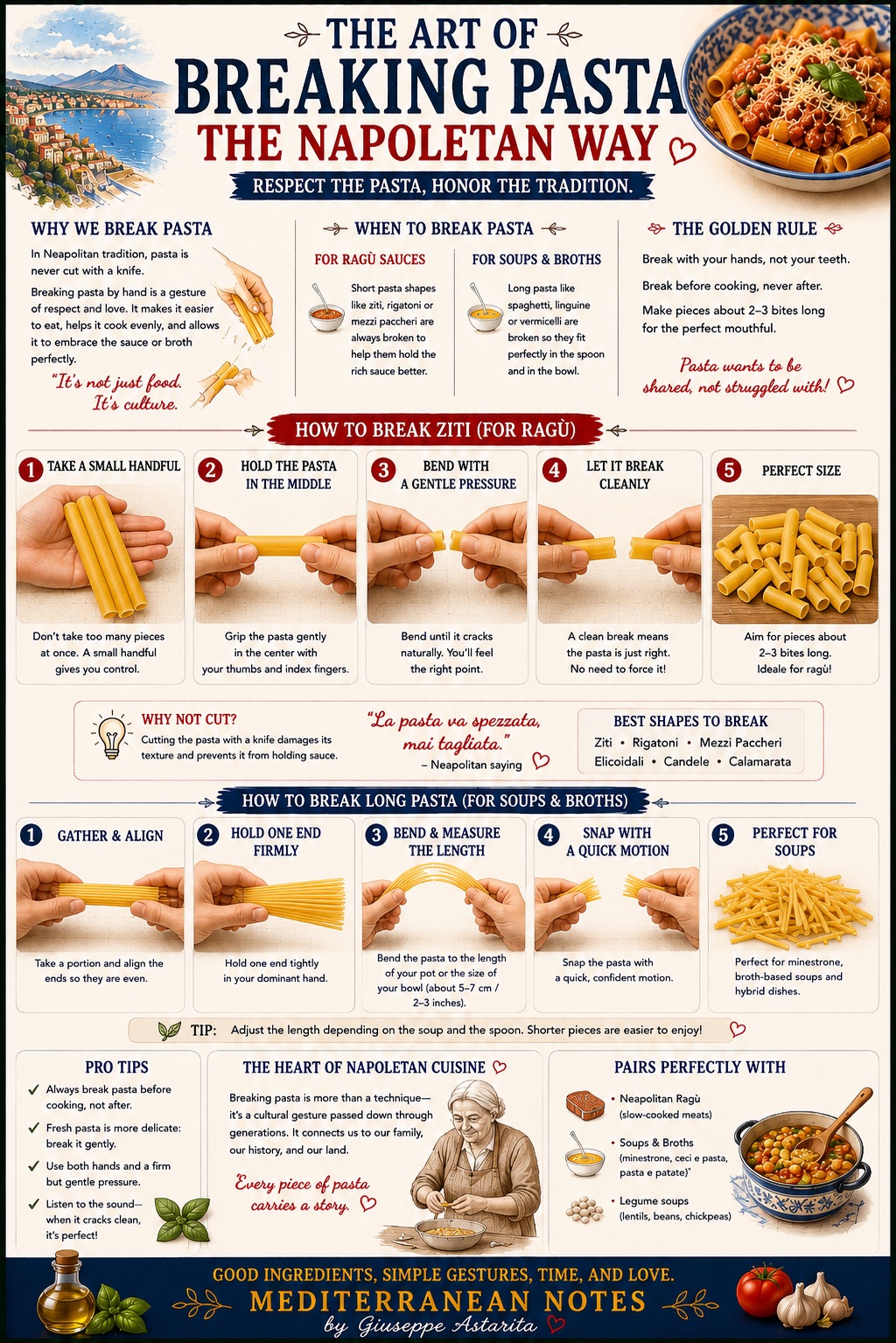
When and how to break — a practical guide
Ziti for ragù or baked pasta
Take a small handful — not too many at once, or you lose control. Hold in the center with both hands, thumbs touching. Apply gentle, even pressure across the full length and bend until the pasta cracks cleanly. Aim for 2–3 bite-sized pieces, about 6–8 cm long. The clean crack sound is the signal that the break was correct. Retrieve any pieces from the floor before continuing.
Spaghetti, bucatini, vermicelli for soups
Gather a portion and align the ends. Hold one end firmly. Bend to the length you want — approximately the length of a soup spoon, 5–7 cm — and snap with a quick, confident motion. The irregular lengths that result are the point: they fit naturally in a spoon and in the bowl without requiring any adjustment. Shorter for smaller bowls, longer for deeper ones.
What never to do
Never cut pasta with a knife or scissors. The blade compresses the cut edge and seals it, reducing the surface available for sauce or broth to penetrate. Never break pasta after cooking — the hydrated pasta tears rather than fractures, produces uneven, mushy pieces, and the whole point is lost. Always break before cooking, always with hands, always by feel.
The shapes that are broken
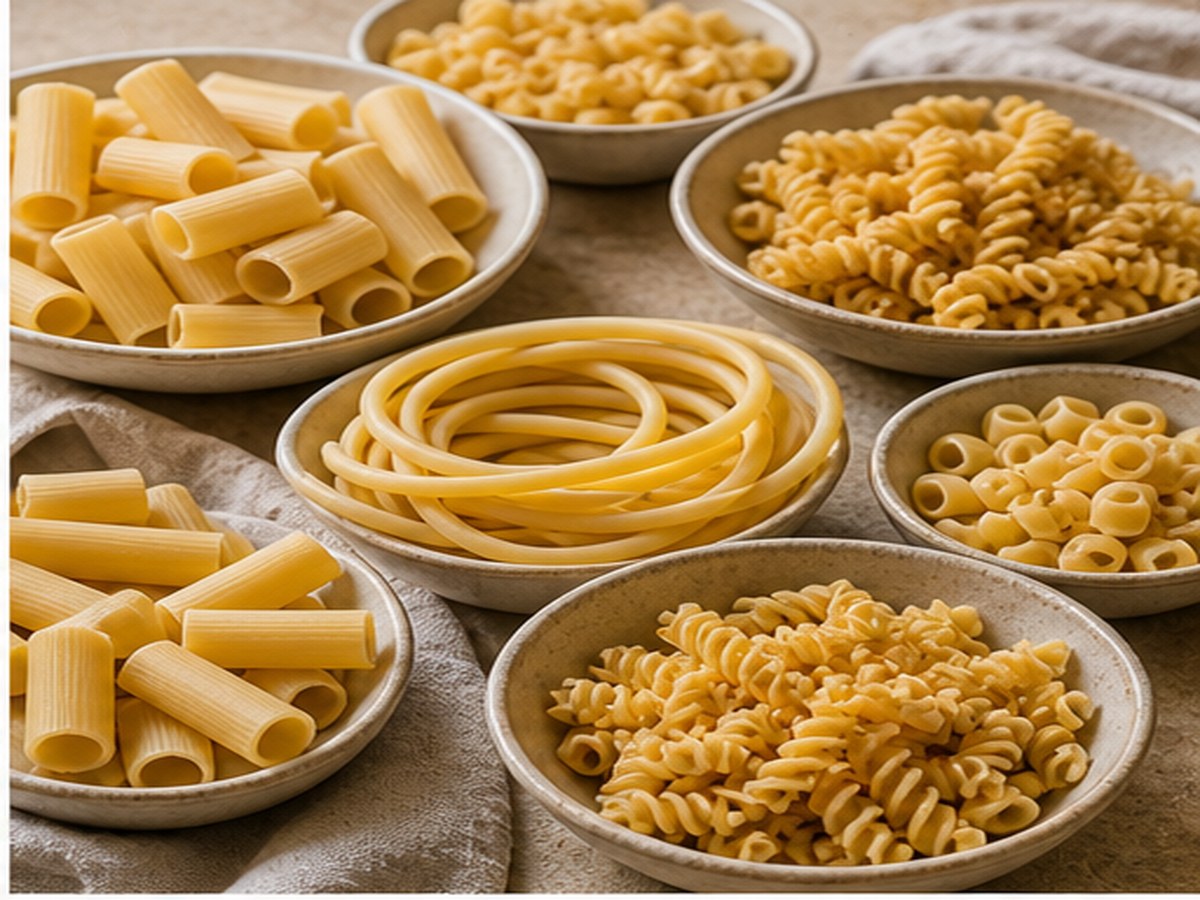
Ziti (for ragù and baked dishes), rigatoni (occasionally, for soups), spaghetti (for minestre and broths), bucatini (for pasta e zucca, pasta e cavolfiore, winter vegetable soups), vermicelli (for light broths and light soups), candele (for special ragù preparations — broken into fewer, longer pieces). Not paccheri, not cavatelli, not fresh pasta.
The golden rules
Break with your hands, not your teeth and not a knife. Break before cooking, never after. Make pieces 2–3 bites long for ragù and pasta dishes; spoon-length for soups. Listen to the sound — when it cracks clean, the pressure was right and the break is perfect. Pick up the pieces that flew. Every piece of pasta carries a story.
La pasta va spezzata, mai tagliata.
Dishes in this collection that use broken pasta
The breaking of pasta appears throughout the recipes in this collection, each time for the specific reason the dish requires it:
The ragù napoletano is the dish most associated with broken ziti — the long tubes broken by hand into irregular pieces before going into the pot of Sunday sauce. The pasta e zucca uses broken bucatini whose hollow tubes fill with the squash broth and then whistle when you eat them — a sound noted explicitly in that post as one of the pleasures of the dish. The pasta e cavolfiore uses pasta mista or broken pasta that cooks to the azzeccata texture (slightly stuck, dense, integrated with the cauliflower). The tagliolini in brodo — though fresh pasta is not broken in the same sense — follows the same logic of pasta sized to the spoon and to the bowl. And the zuppa di lenticchie uses small pasta or broken pasta that fits the soup spoon and carries the lentil broth.
Now they sell ziti already cut — ziti mezzani, half-length, saving the breaking step and the flying pieces and the swept kitchen floor. The dish is the same. Something is different. The step that was given to the children to do — the small task with the specific sound and the small chaos of pieces on the floor — is no longer part of making the meal. An old form of art and meditation is getting lost in the time it takes to open a differently shaped pasta bag. It is worth knowing it existed, and worth keeping it where you can.
"Every piece of pasta carries a story."