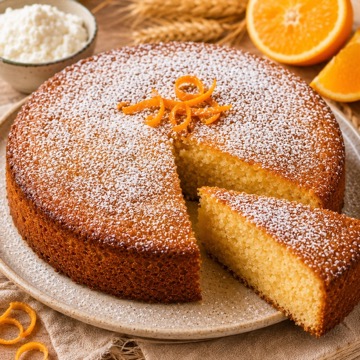
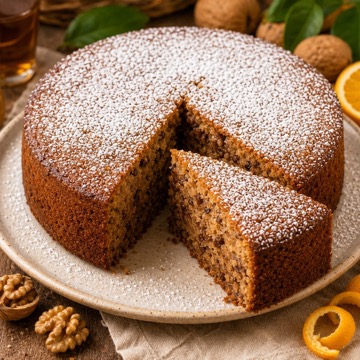
Castagnaccio Napoletano
Cioccolato, castagne e tradizione — due versioni, una radice antica
The Neapolitan castagnaccio is not the Tuscan version. It takes chestnut flour into a completely different direction: dark chocolate, cocoa, raisins, candied fruit, the warmth of autumn in a dessert that smells of the season. My mother made two versions — the original spoonable baked cake, and its refined evolution inside a buttery shortcrust pastry shell with a lattice top. Both are on this page.
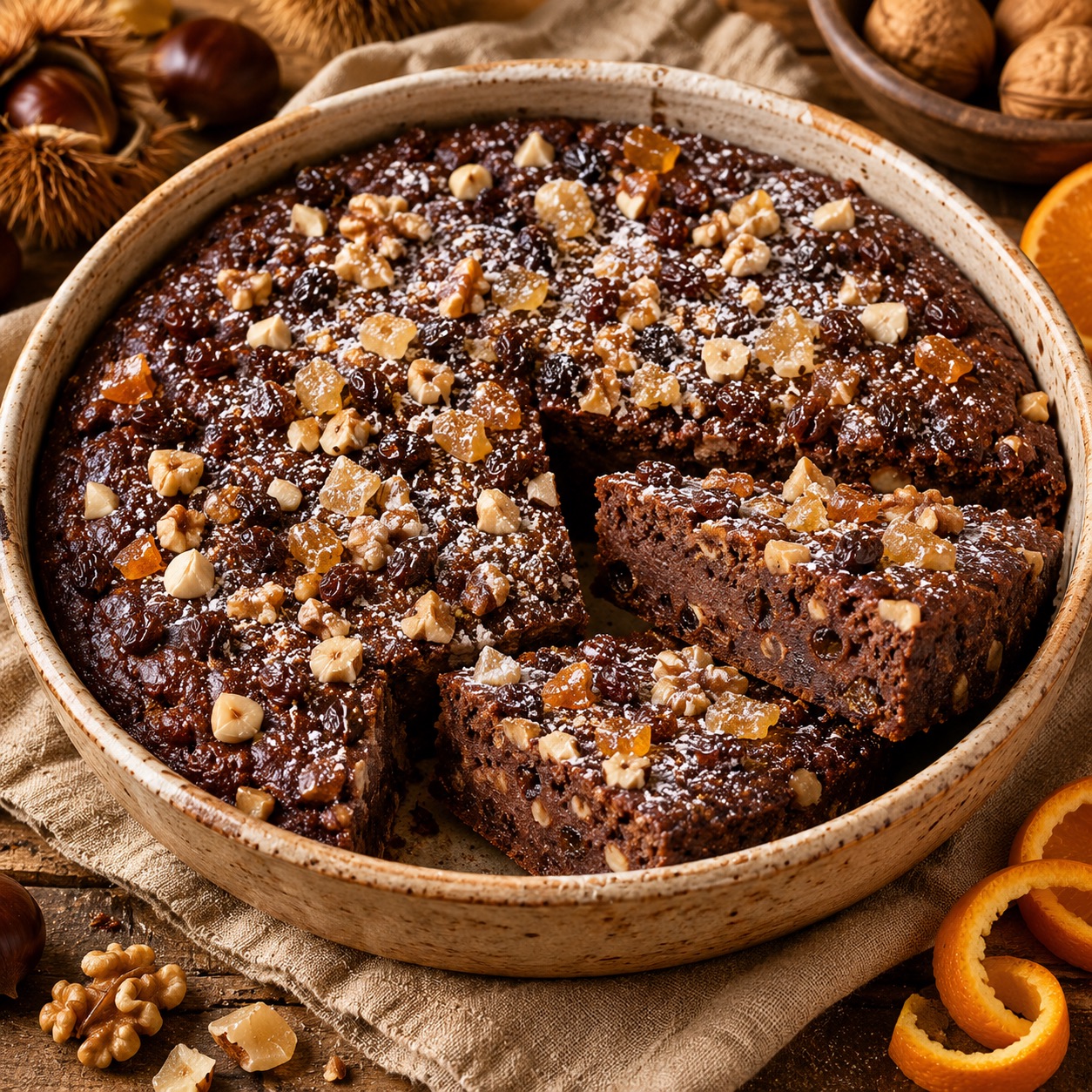
The Tuscan castagnaccio is a flat, dense, unsweetened affair — chestnut flour, water, rosemary, pine nuts, a preparation that is austere and ancient and quite different from what the word means in Naples. The Neapolitan castagnaccio makes no claim to austerity. It takes chestnut flour and combines it with dark chocolate, cocoa powder, sugar, raisins, candied citron, and chopped nuts into something that is rich and comforting and dark in color, with the chestnut-chocolate combination that is one of the great flavor marriages of the autumn pantry. It is a holiday dessert, a winter-evening dessert, the kind of thing that comes out of the oven smelling of its own occasion.
The key to the baked version is the stirring. The chestnut flour and cocoa are sifted into the cold milk first, producing a smooth base, and then the melted chocolate and butter are added, and the whole mixture goes on the stove and must be stirred continuously — without interruption, without pausing to answer the phone — until it thickens into a smooth, dense cream. This step takes patience and a strong arm. The reward is a finished castagnaccio that is uniformly smooth rather than grainy or lumpy, with the chocolate and chestnut flavors fully integrated rather than sitting in separate layers. Let it rest: the texture firms considerably over a few hours, and the full flavor development takes at least one overnight. Made the day before is always better.
The shortcrust version takes the same chestnut and cocoa cream — here made with fresh chestnuts boiled and blended, a refinement that produces a silkier result — and nests it inside a buttery pasta frolla shell with a lattice top. The result is closer to a tart than a cake, and the contrast between the crumbly, slightly sweet pastry and the dark, intense chestnut cream inside is one of the better textural moments in Campanian baking. The Strega liqueur in the filling — or millefiori water as an alternative — adds a herbal, slightly mysterious note to the chestnut cream that is specific and worth the ingredient.
Two versions, the same heart. The spoonable version for winter evenings when something rich and comforting and served in a bowl is what the occasion calls for. The tart version for a table, a slice, something that holds its shape. My mother made both, for different moments and different reasons, and the season was always autumn or winter.
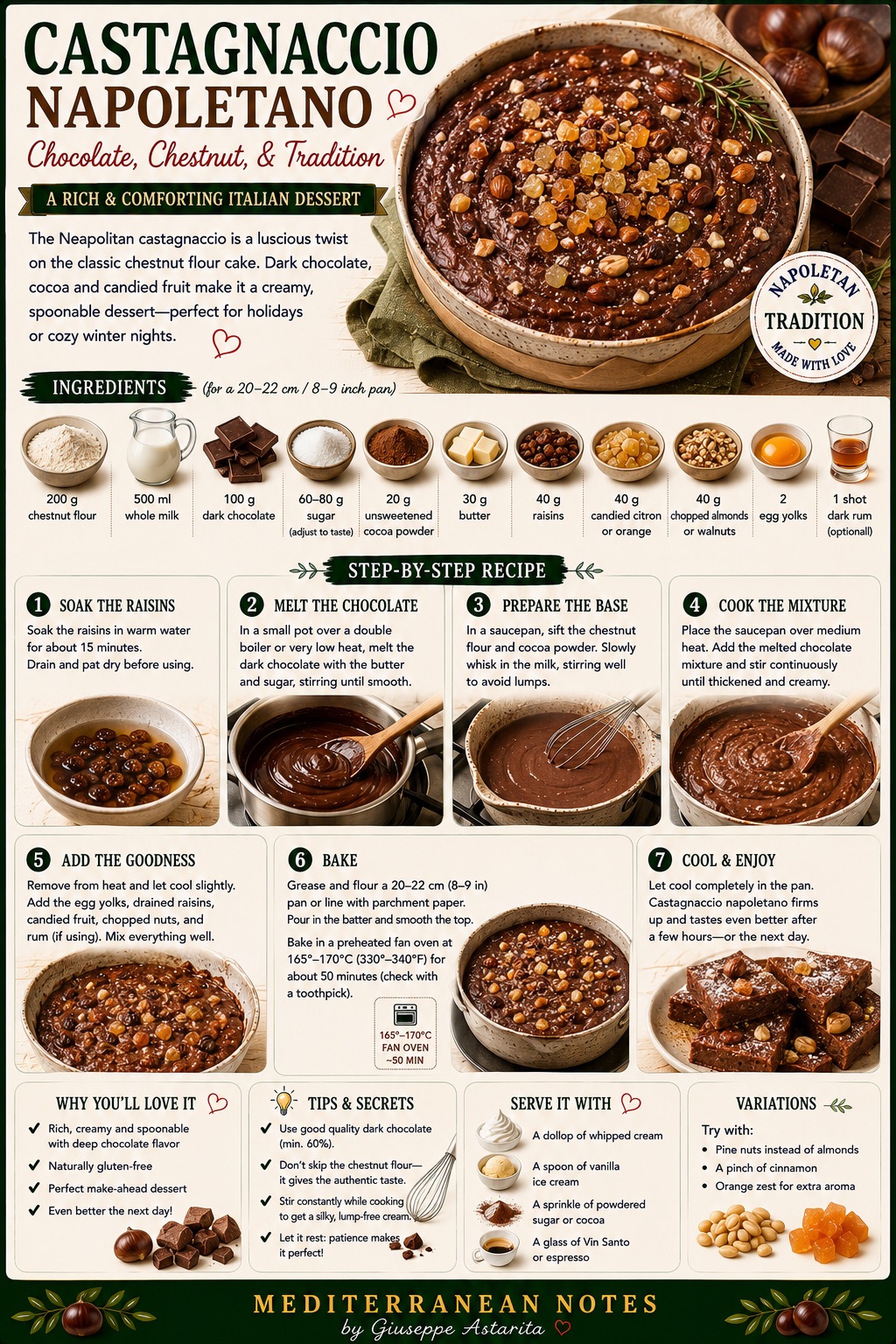
Il castagnaccio napoletano — versione classica — click to enlarge.
Ingredienti — for a 20–22 cm pan
200 gChestnut flour
500 mlWhole milk
100 gDark chocolate (fondente, min 60%)
60–80 g, adjust to tasteSugar
20 gUnsweetened cocoa powder
30 gButter
40 g, soaked in warm water 15 minRaisins
40 gCandied citron or orange
40 gChopped almonds or walnuts
2Egg yolks
1 shot, optionalDark rum
1
Soak the raisins in warm water for 15 minutes. Drain and pat dry before using.
2
Melt the dark chocolate with the butter and sugar in a small pot over a double boiler or very low heat. Stir until smooth.
3
In a saucepan, sift the chestnut flour and cocoa powder. Slowly whisk in the cold milk until smooth and lump-free.
4
Place over medium heat. Add the melted chocolate mixture.
Stir continuously — without stopping — until the mixture thickens into a smooth, dense cream. This takes 10–15 minutes of constant stirring.
Do not stop stirring. The chestnut flour settles on the bottom and scorches if left unattended even briefly.
5
Remove from heat and let cool slightly. Add the egg yolks, drained raisins, candied fruit, chopped nuts, and rum if using. Mix everything well.
6
Grease and flour a 20–22 cm pan or line with parchment. Pour in the batter and smooth the top. Bake in a preheated fan oven at 165–170°C (330–340°F) for about 50 minutes. Check with a toothpick.
Use a fan oven at a slightly lower temperature than static — the chestnut mixture needs even heat to set without cracking the surface.
7
Let cool completely in the pan. The castagnaccio firms up considerably as it cools. Better after a few hours, best the next day. Serve with a dollop of whipped cream, a spoon of vanilla ice cream, or a glass of Vin Santo.
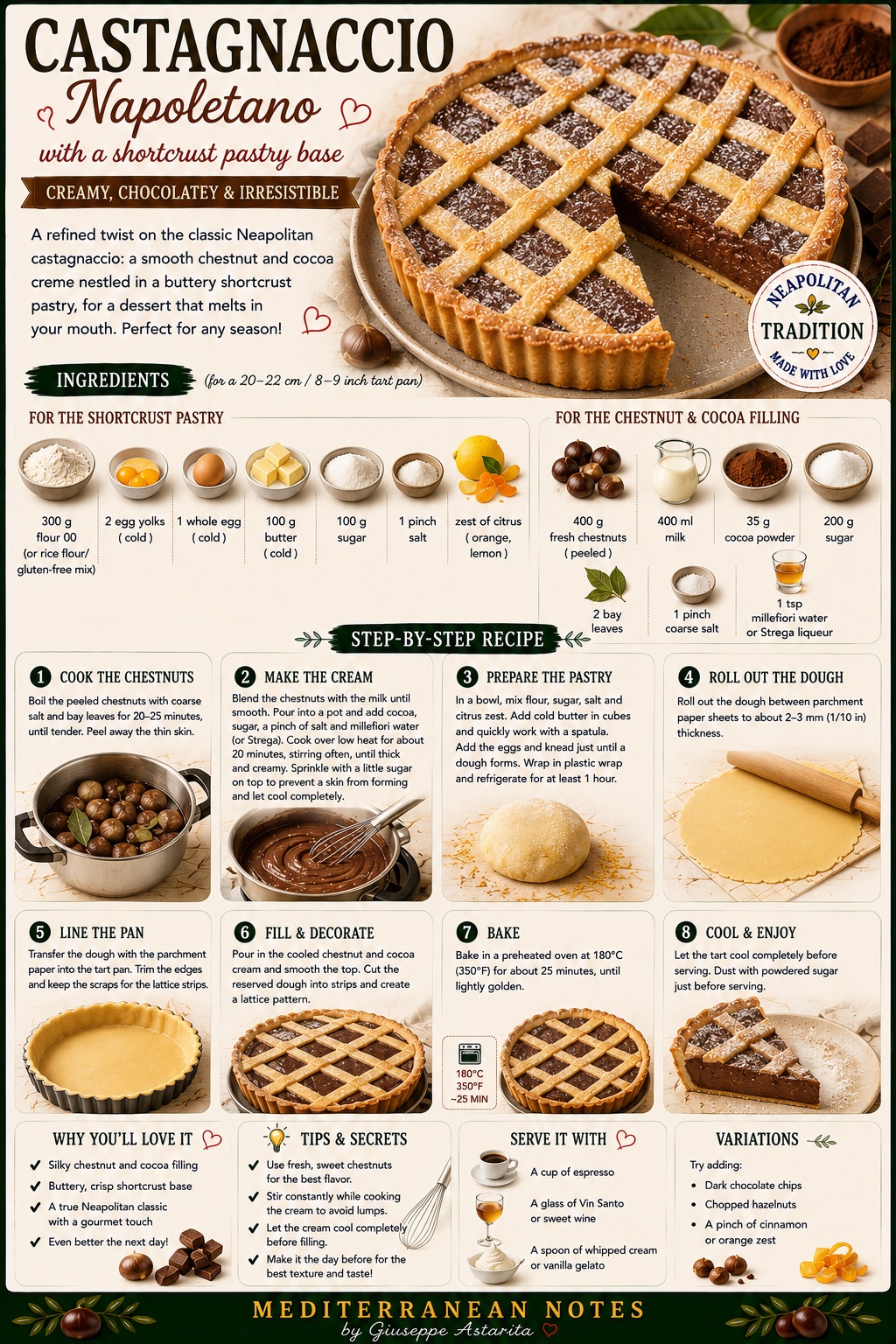
Castagnaccio con pasta frolla — versione crostata — click to enlarge.
Ingredienti — for a 20–22 cm tart pan
Per la pasta frolla
300 gFlour 00 (or rice flour for GF)
2 cold yolks + 1 whole egg, coldEggs
100 g, cold, cubedButter
100 gSugar
1 pinchSalt + zest of orange and lemon
Per il ripieno
400 g, peeled freshChestnuts
400 mlWhole milk
35 gUnsweetened cocoa powder
200 gSugar
2 bay leavesBay leaves (for boiling)
1 tspMillefiori water or Strega liqueur
1 pinchCoarse salt
1
Cook the chestnuts. Boil the peeled chestnuts in lightly salted water with 2 bay leaves for 20–25 minutes until completely tender. Drain. Peel away the thin inner skin while still warm.
2
Make the cream. Blend the chestnuts with the milk until smooth. Pour into a saucepan and add cocoa, sugar, a pinch of salt, and the millefiori water or Strega. Cook over low heat for about 20 minutes, stirring often, until thick and creamy. Sprinkle a little sugar on the surface, cover, and let cool completely.
The cream must be completely cold before going into the pastry shell — warm cream makes the raw pastry soggy before it has time to bake.
3
Make the pasta frolla. In a bowl, mix flour, sugar, salt, and citrus zest. Add cold butter cubes and work quickly with fingertips or a spatula until crumbly. Add the cold eggs and mix just until a dough forms — do not overwork. Wrap in plastic and refrigerate for at least 1 hour.
4
Roll out the dough between two sheets of parchment paper to 2–3 mm thickness. Transfer to the tart pan, pressing gently into the edges. Trim. Reserve the scraps for the lattice.
5
Pour the cold chestnut and cocoa cream into the pastry shell and smooth the top. Cut the remaining dough into strips and lay a lattice pattern over the top.
6
Bake in a preheated oven at 180°C (350°F) for about 25 minutes, until the pastry is lightly golden. Let cool completely before serving. Dust with powdered sugar just before serving.
Make it the day before for the best texture and taste — the pastry softens slightly overnight and the flavors integrate fully.
Both versions serve with espresso, Vin Santo, or sweet wine. Both reward patience — the day-before preparation is not merely practical advice but a genuine improvement. The chestnut flavor deepens overnight in both, and the pastry of the tart version achieves a texture closer to the filling that makes each bite more unified than the just-baked version delivers.
Buon appetito — e aspetta domani per capire quanto è buono.