Come si cuoce la pasta: my father's method
The most common mistake in cooking pasta is not trusting the package. My father trusted the package. He was right.
My father was not a cook in the elaborate sense. He did not make ragù or risotto or anything requiring patience with a spatula. But he made pasta — specifically, he made pasta that was always exactly right, that was never mushy and never underdone, that held its shape through the second helping and the remains on the plate.
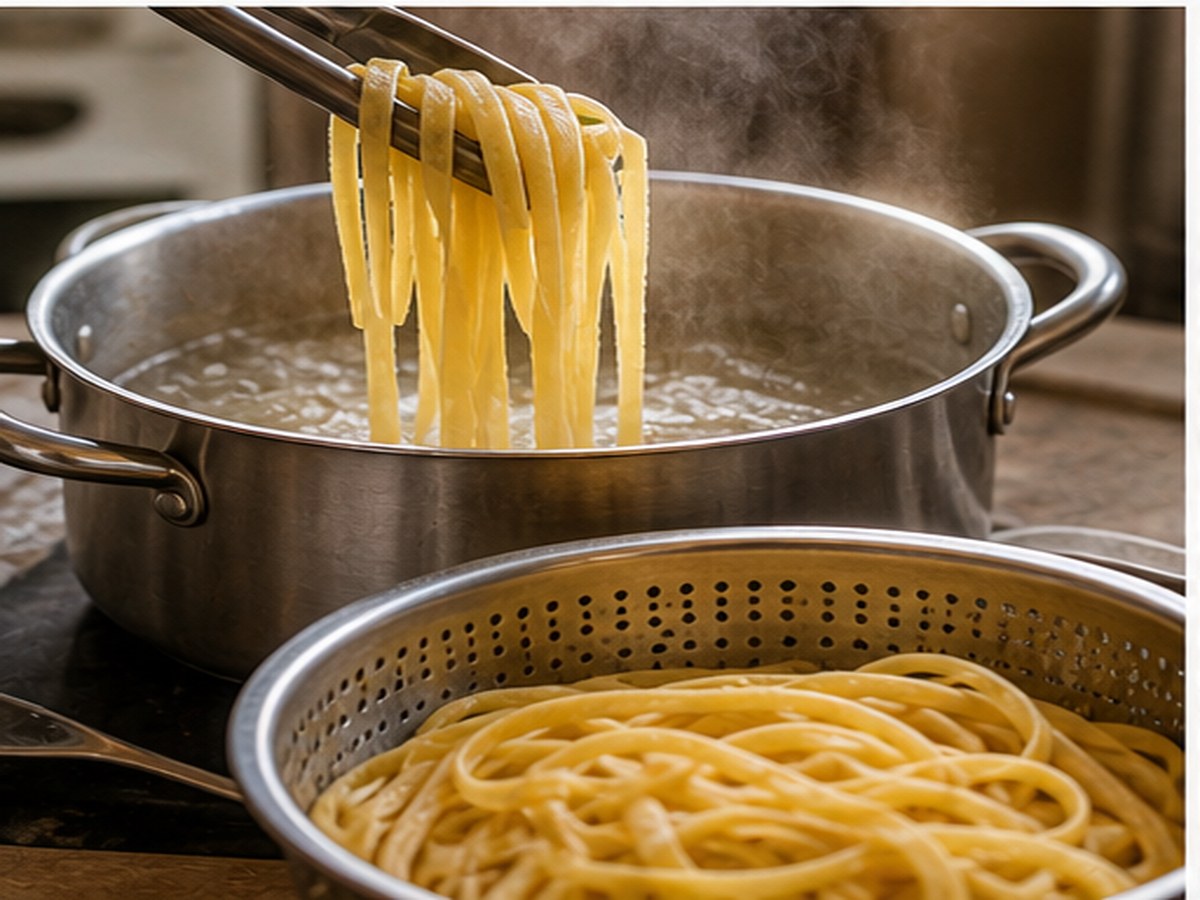
His method: read the time printed on the package. Whatever number it says, that is when you drain the pasta. Not before, not after. The time on the package assumes proper technique — large pot, well-salted water, full rolling boil — and if you provide those conditions, the package is correct.
In many Italian homes there is a belief that pasta can be tested by touch, by bite, by throwing it against the wall to see if it sticks. My father rejected all of this. He used a watch. The pasta was always perfect.
Al dente, glycemic index, and what overcooked pasta does to starch
Al dente pasta — cooked to the firm, slightly resistant center that Italian cooking aims for — has a lower glycemic index than fully cooked or overcooked pasta. The starch in firm pasta is less gelatinized and therefore digested more slowly, resulting in a more gradual rise in blood glucose. Cooking pasta in well-salted water is not just flavor: the salt affects the absorption of water into the pasta and the gelatinization of its surface starch, which determines texture. A large pot of water returns to the boil more quickly after pasta is added and maintains the full rolling boil that cooks pasta evenly — this is why pot size matters.
The technical requirements are simple. The discipline required is watching the clock.
Ingredients · serves 2–3
Method
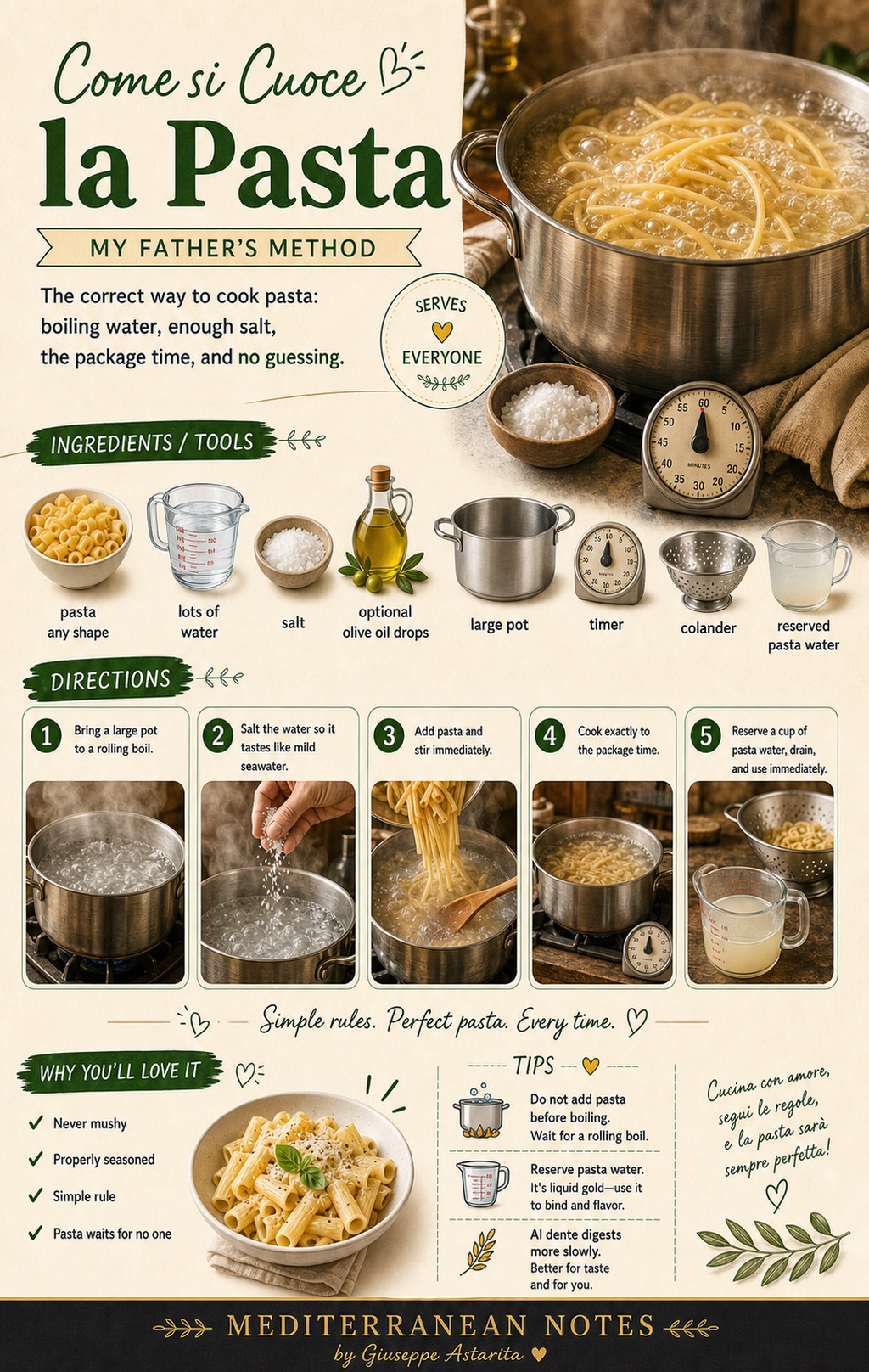
Fill a large pot with water. Bring to a full, rolling boil.
Do not add pasta to water that is just beginning to boil. It needs to be fully boiling.
Add the salt. The water will briefly foam — this is normal.
Add the pasta. Stir immediately to separate.
Note the time. Cook for exactly as long as the package instructs.
Do not guess. Do not taste early. Trust the number.
Drain. Use immediately. Pasta waits for no one.
Reserve a cup of pasta water before draining — it is almost always useful.
Buon appetito.