Pasta e Ceci
The long version takes patience. This one takes fifteen minutes and a pantry. Both are worth knowing.
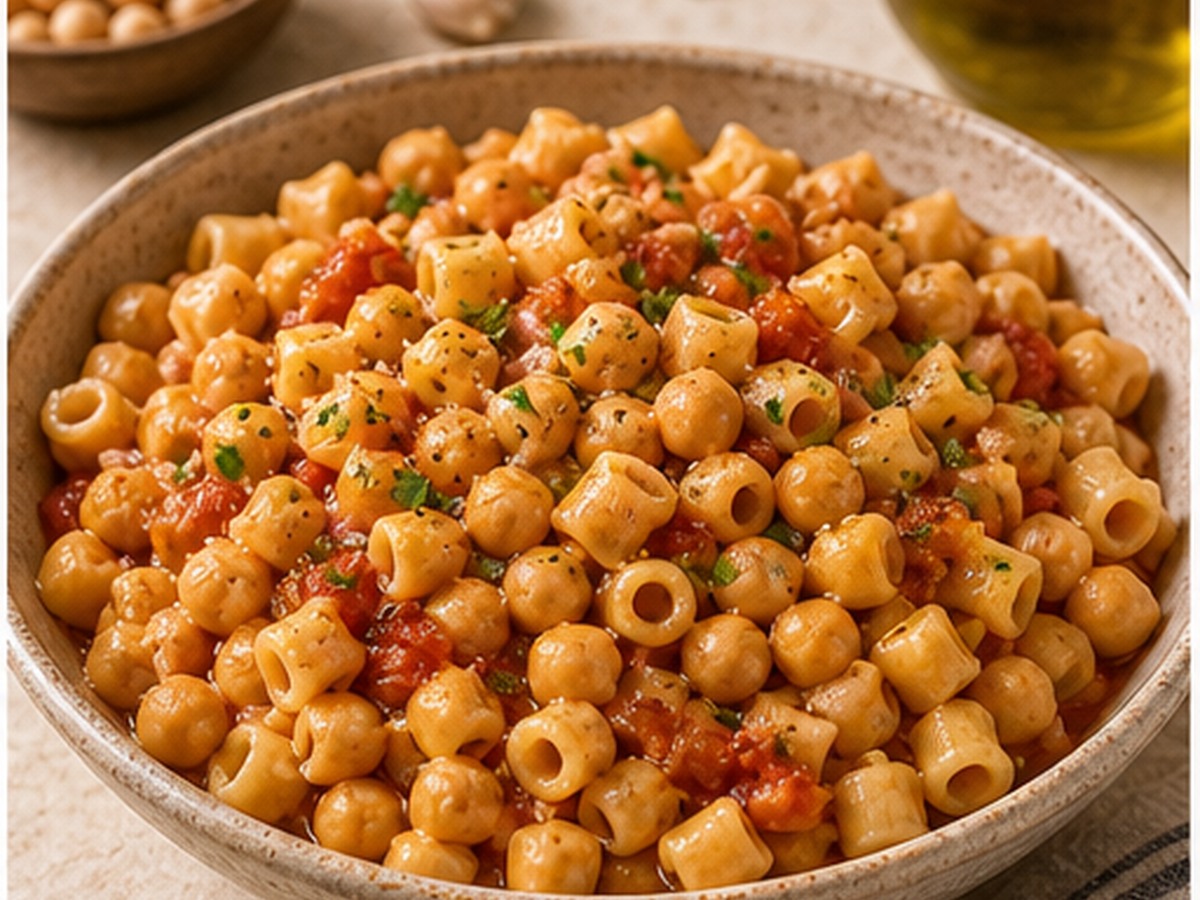
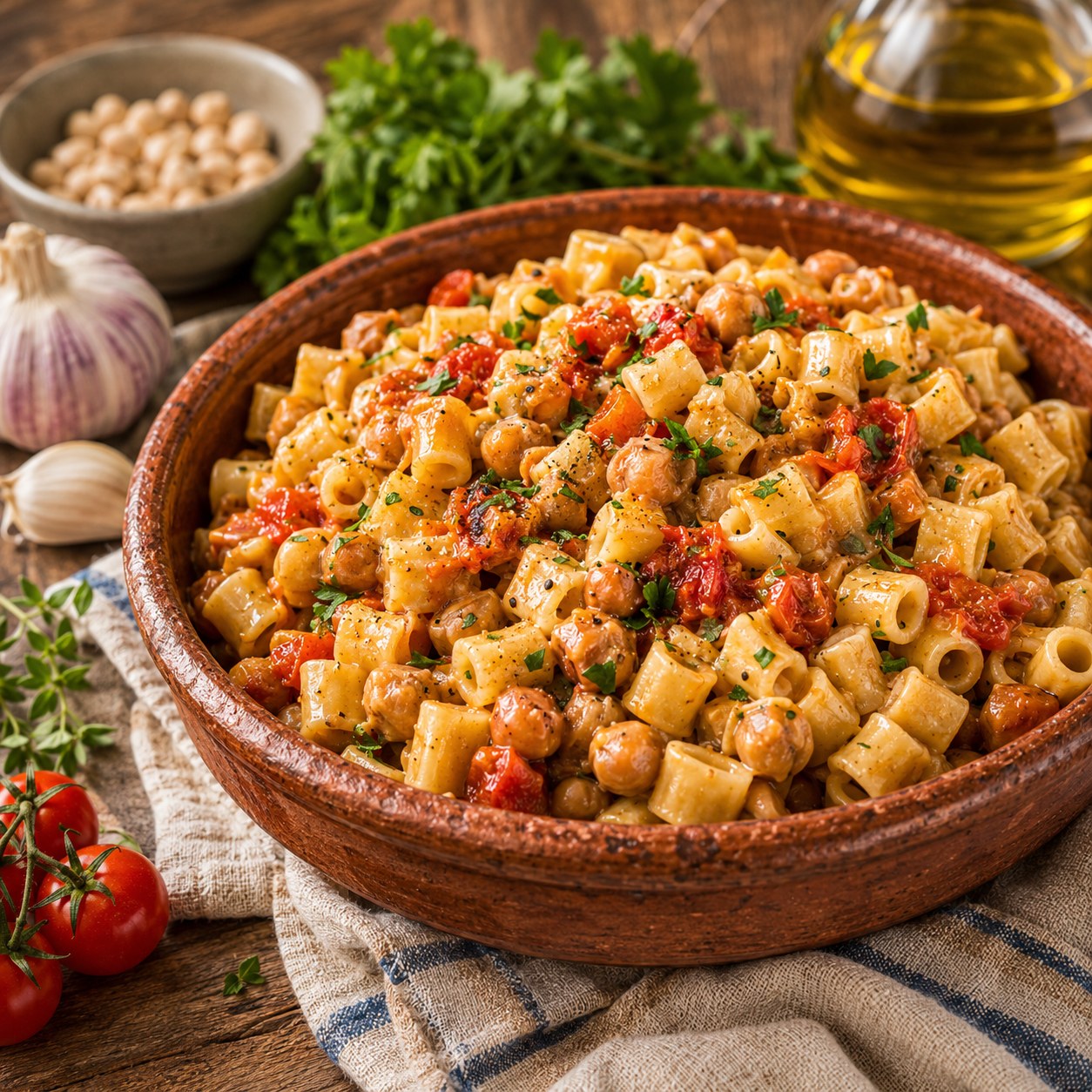
There is a fully elaborated version of pasta e ceci — the one where you blend part of the chickpeas into a thick cream that coats the pasta, where the garlic infuses in oil with rosemary for long enough to become something entirely different from raw garlic. That version is in the Food as Medicine posts on this site, with the full science of resistant starch and lycopene bioavailability.
This is the other version. The one you make on a Wednesday when you get home late and there are two cans of chickpeas in the cabinet and you remember that pasta exists. It takes fifteen minutes. It is not a consolation prize.
In the Campanian tradition, chickpeas appear frequently in cucina povera — cheap, filling, nutritious in ways that nobody needed a lab to confirm. The combination of legume and pasta, endlessly repeated across the South of Italy in different forms, turns out to be one of the most nutritionally complete things a person can eat on a budget.
Chickpeas, resistant starch, and the gut benefit even in quick preparation
Chickpeas contain substantial resistant starch and soluble fiber — compounds that slow gastric emptying and reach the colon to feed beneficial gut bacteria. Even in this Neapolitan classic, without the blending that releases more starch into the cooking liquid, chickpeas contribute a meaningful prebiotic load. The pasta water that accumulates as the dish cooks adds amylose and amylopectin, thickening the liquid into a coherent sauce rather than broth. The finishing drizzle of raw olive oil is, as always, delivering oleic acid and polyphenols at the moment of greatest bioavailability — fat-soluble compounds need dietary fat to cross the intestinal wall.
The short pasta is not optional. In a pinch, break spaghetti into thirds with your hands — this is a perfectly Neapolitan thing to do.
Ingredients · serves 2–3
Method
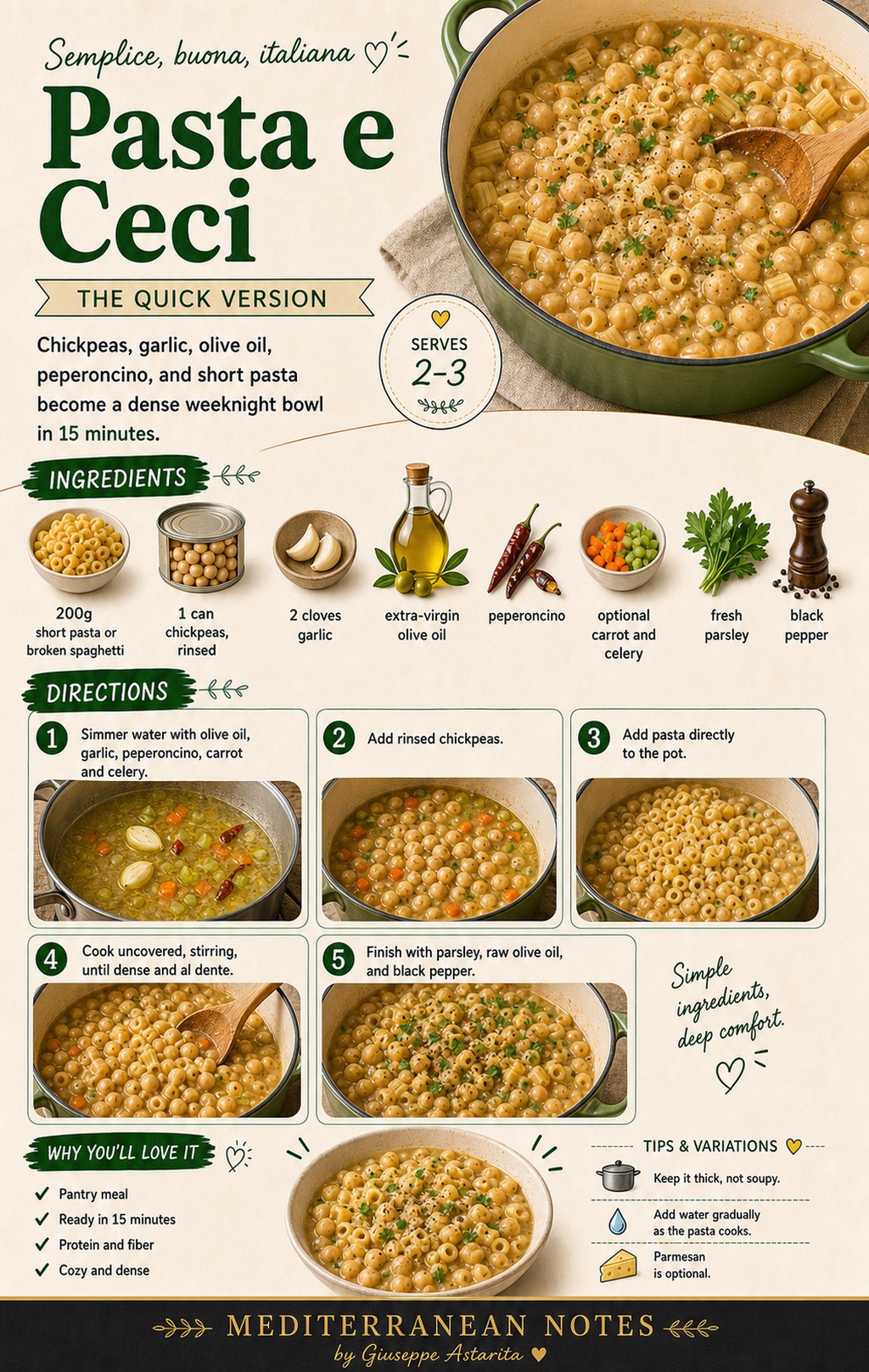
Put about 3 cups of water in a pot over medium heat. Add the olive oil, garlic, peperoncino, and the carrot and celery if using. Bring to a simmer.
Add the rinsed chickpeas. Simmer for 5 minutes.
Add the pasta directly to the pot. Add just enough water to barely cover. Cook uncovered, stirring often, until al dente.
The liquid will thicken as the pasta releases starch. Add water in small amounts if needed — keep it dense, not soupy.
Off the heat, add the fresh parsley and a generous drizzle of raw olive oil. Taste for salt.
Serve in deep bowls with black pepper. A grating of Parmesan is not traditional but not wrong.
Buon appetito.