The Many Lives of Stale Bread
How Southern Italy turned waste into tradition — pane secco saved for weeks, reborn as soups, salads, fillings, meatballs and crusts. Ne avresti dubitato? We did not waste anything.
We saved pane secco. Not for a day or two — for weeks. The dry ends and forgotten halves of loaves accumulated in their place in the kitchen, and nobody thought of them as waste in waiting, because they weren't: they were an ingredient with a calendar of future appointments. Ne avresti dubitato? Would you have doubted it? We did not waste anything. Bread least of all.
Growing up, it was inconceivable to throw away food. Not frowned upon — inconceivable, the way it is inconceivable to throw away money. There was no doggy bag culture because there was no restaurant culture: we did not go out to eat except for pizza, and on the rare occasion we did, you would not leave food on your plate anyway. At home, leaving food was cattiva educazione — bad manners, possibly an insult to the cook — but above all it was a waste of food, and my mother or my father would remind us, as parents did at every table in Italy, of all the children starving in the world. They were right. And the strange, lovely consequence of that severity was not scarcity at all: we lived in an abundance of food and an abundance of imagination — a constant creativity of possibility about what to do with what was there.
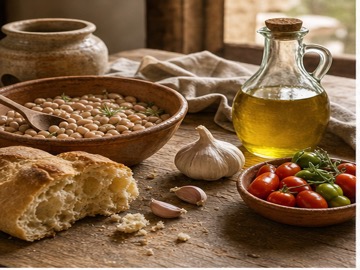
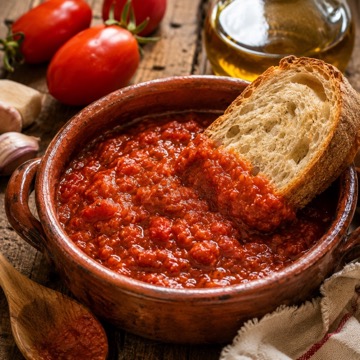
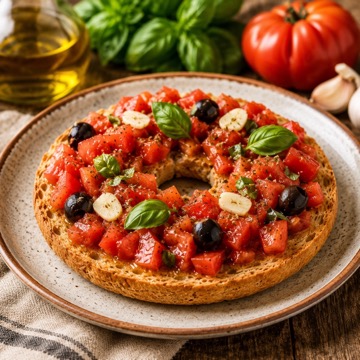
Stale bread is the proof. Southern Italy built an entire cuisine on yesterday's loaf, because flour was expensive, harvests were uncertain, large families shared one bread, and bread itself was considered close to sacred — throwing it away was almost unthinkable. So it was reborn, endlessly. Soaked in water with tomatoes and oil it became acquasale, the simplest meal there is. Cooked with greens it became pane cotto, drinking the pot liquid until it was the best thing in the bowl. With summer tomatoes it became pane e pomodoro; dried into the ring it became the fresella; torn into a salad it became panzanella. And in our kitchen it became, above all, pane nel sugo — the slice in the sauce, which deserves and has its own post.
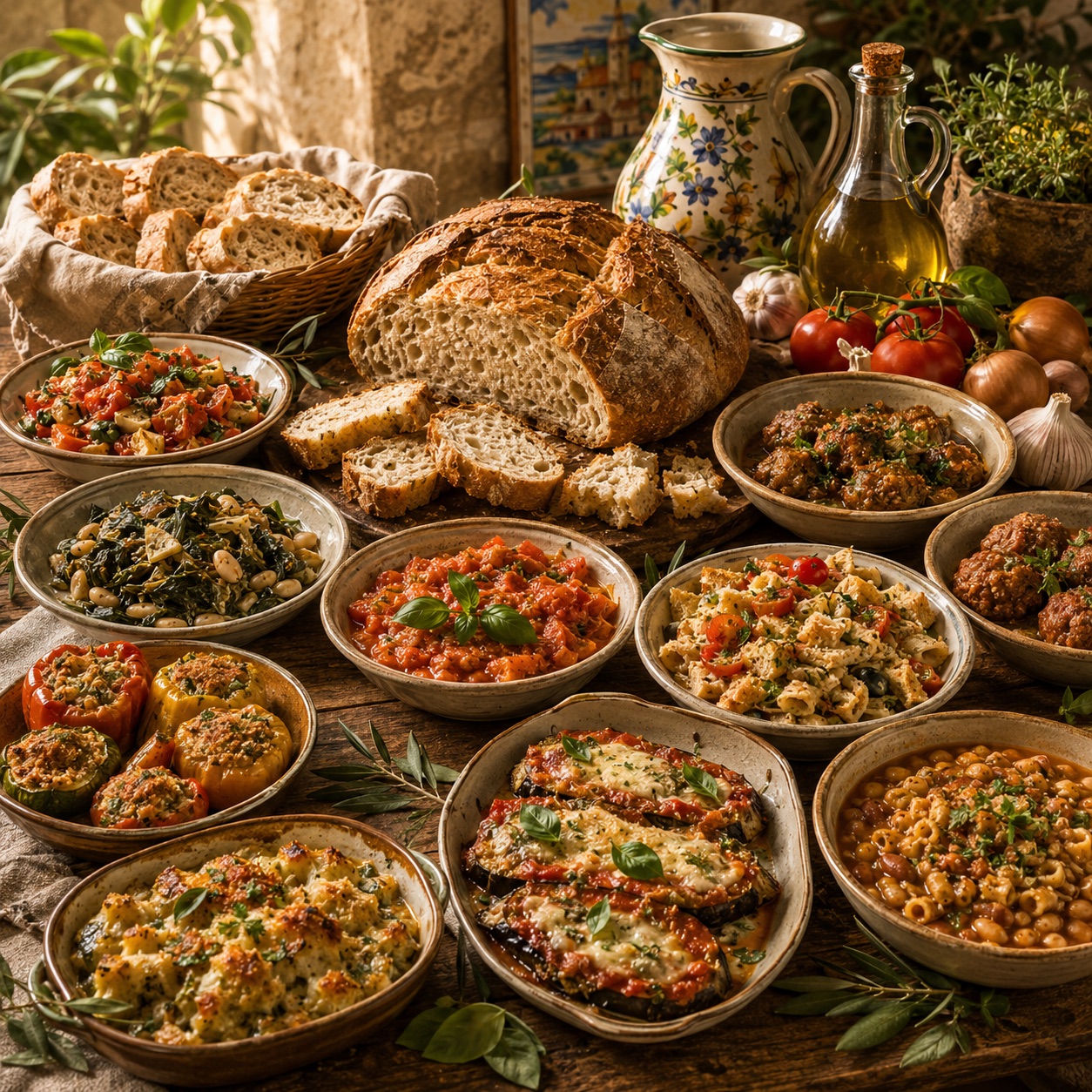
Then there are the disguises. Breadcrumbs — pane secco's final form — are the secret infrastructure of half the Campanian kitchen: the filling of the stuffed peppers, the golden crust of the gratins, the hidden layer in many a family's parmigiana, the toasted "poor man's parmigiano" over pasta mollicata, the binder that stretched a little precious meat into many polpette — and, when meat was not there at all, the bread became the meatball itself: polpette di pane. Bean soups were thickened with it. Christmas Eve seafood was stuffed with it. There were sweet uses — bread puddings, chocolate cakes. Nothing was wasted, and almost nothing was recognizable as leftovers by the time it reached the table.
Staling is not drying — it is retrogradation: the gelatinized starch of fresh bread slowly recrystallizes, squeezing water out of the crumb's structure and turning it firm. Which is exactly why the old recipes work: recrystallized starch is an eager sponge, reabsorbing water, broth, tomato juice or milk far more gracefully than fresh bread, which collapses into paste. Stale bread is not degraded bread; it is bread converted into an absorbent ingredient — the cucina povera understood the material science perfectly, a century before anyone named it. And the frugality has a modern ledger too: bread remains among the most wasted foods in Europe; the nonne's system wasted approximately none.
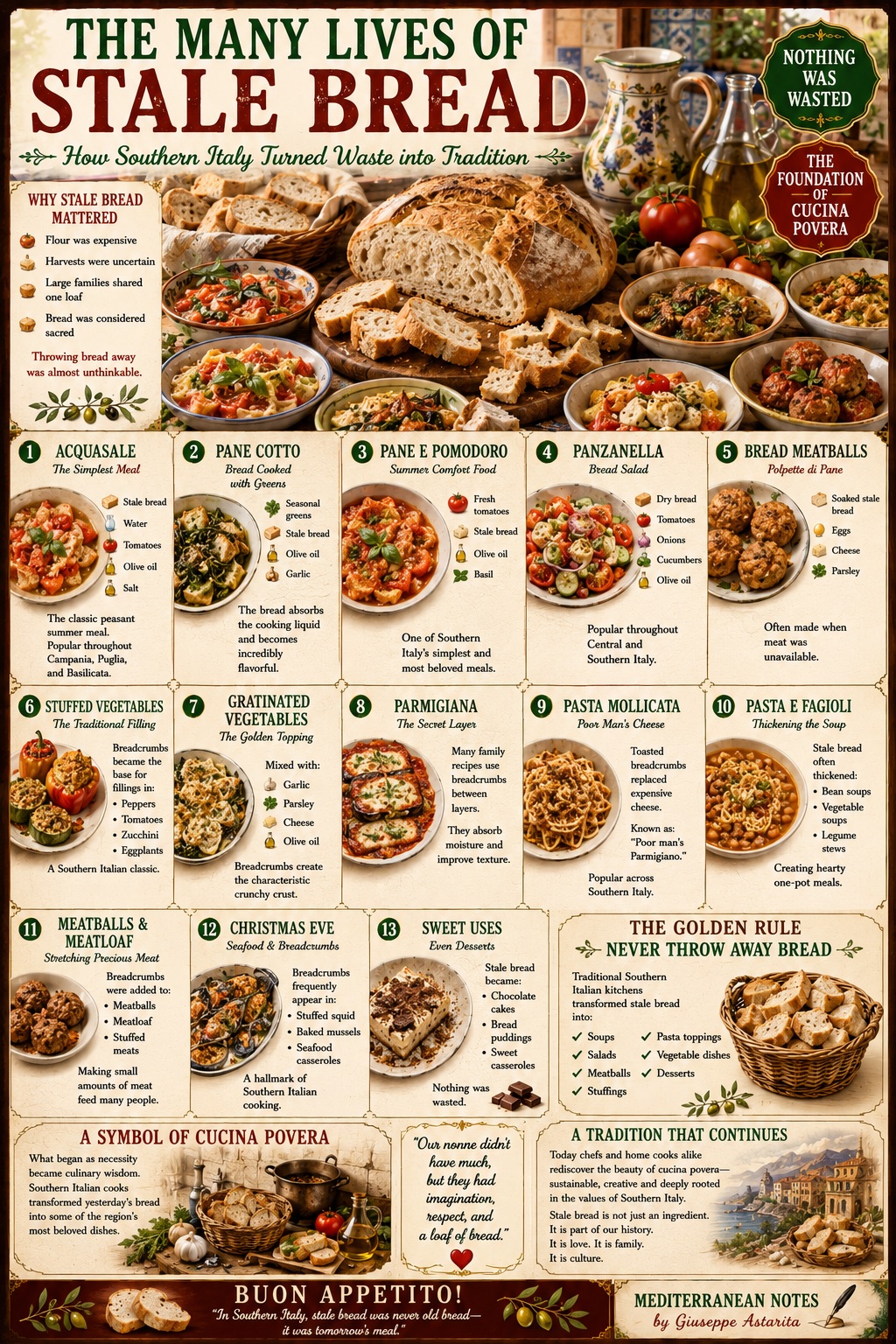
The Many Lives of Stale Bread — ten destinations for yesterday’s loaf, from acquasale to dessert.
The Many Lives of One Loaf
Ten lives of one loaf — from the infographic
- Acquasale — stale bread, water, tomatoes, olive oil, salt: the simplest meal
- Pane cotto — bread cooked with greens, drinking the pot liquid
- Pane e pomodoro — summer comfort at its most direct
- Panzanella — dry bread, tomatoes, onions, cucumbers, oil
- Polpette di pane — bread meatballs, for when meat was unavailable
- Stuffed and gratinated vegetables — breadcrumb fillings and golden crusts
- Parmigiana — the secret breadcrumb layer in many family versions
- Pasta mollicata — toasted crumbs as poor man’s parmigiano
- Pasta e fagioli — bread thickening the soup
- Christmas Eve — stuffed squid, baked mussels, seafood casseroles