Polpette alla napoletana: the original, the Sunday sauce, the one I made with my mother
Big, generous, soft inside — raisins and pine nuts in the mixture, plenty of stale bread, Pecorino, parsley. Fried, then braised slowly in a long tomato sauce. We never had them with pasta. The pasta came first, dressed in the sauce they cooked in. The meatballs were the second course. Sometimes the sauce meat was dinner.
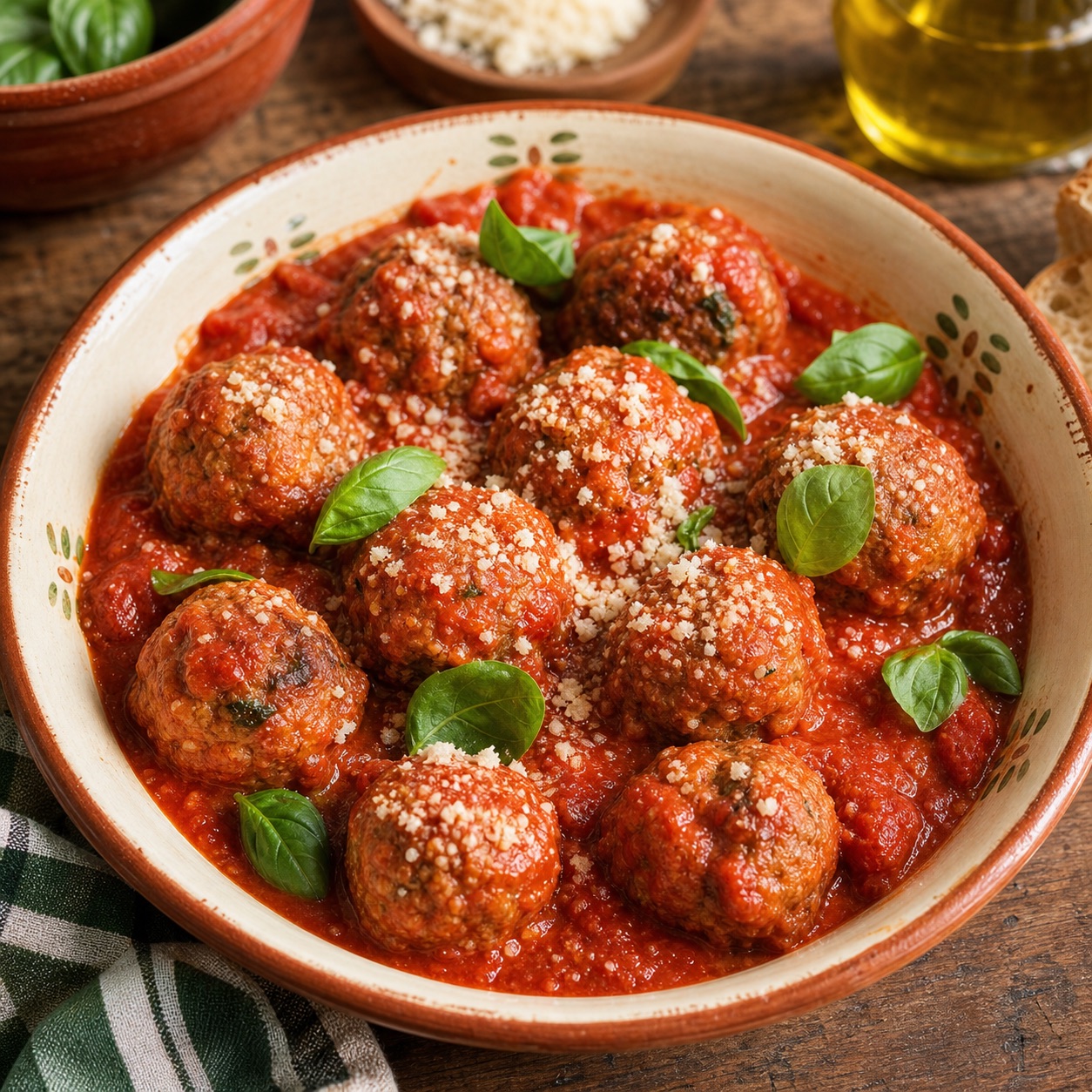
This is the recipe that explains the others. The three vegetarian polpette on this blog — the eggplant, the lentil, the crocchè — exist because of this one. They are adaptations, lighter versions, the creative answer to the question of how to produce the same satisfaction without the meat. But this is the original: the Neapolitan polpetta alla napoletana, with its characteristic sweet-savory mixture of raisins and pine nuts, its thick padding of soaked stale bread that makes it soft and generous and unlike any meatball made anywhere else in Italy.
The raisins are what distinguish it most visibly. You encounter them in the finished meatball — small, soft, sweet — and they surprise people who are not expecting them. But they are not a modern addition or a culinary experiment; they are one of the oldest flavor combinations in southern Italian cooking, the sweet-and-savory contrast that runs through Sicilian and Neapolitan cuisine and that reflects the centuries of Arabic and Spanish influence on the food of the south. Raisins in a meat mixture is not unusual in this tradition. It is characteristic.
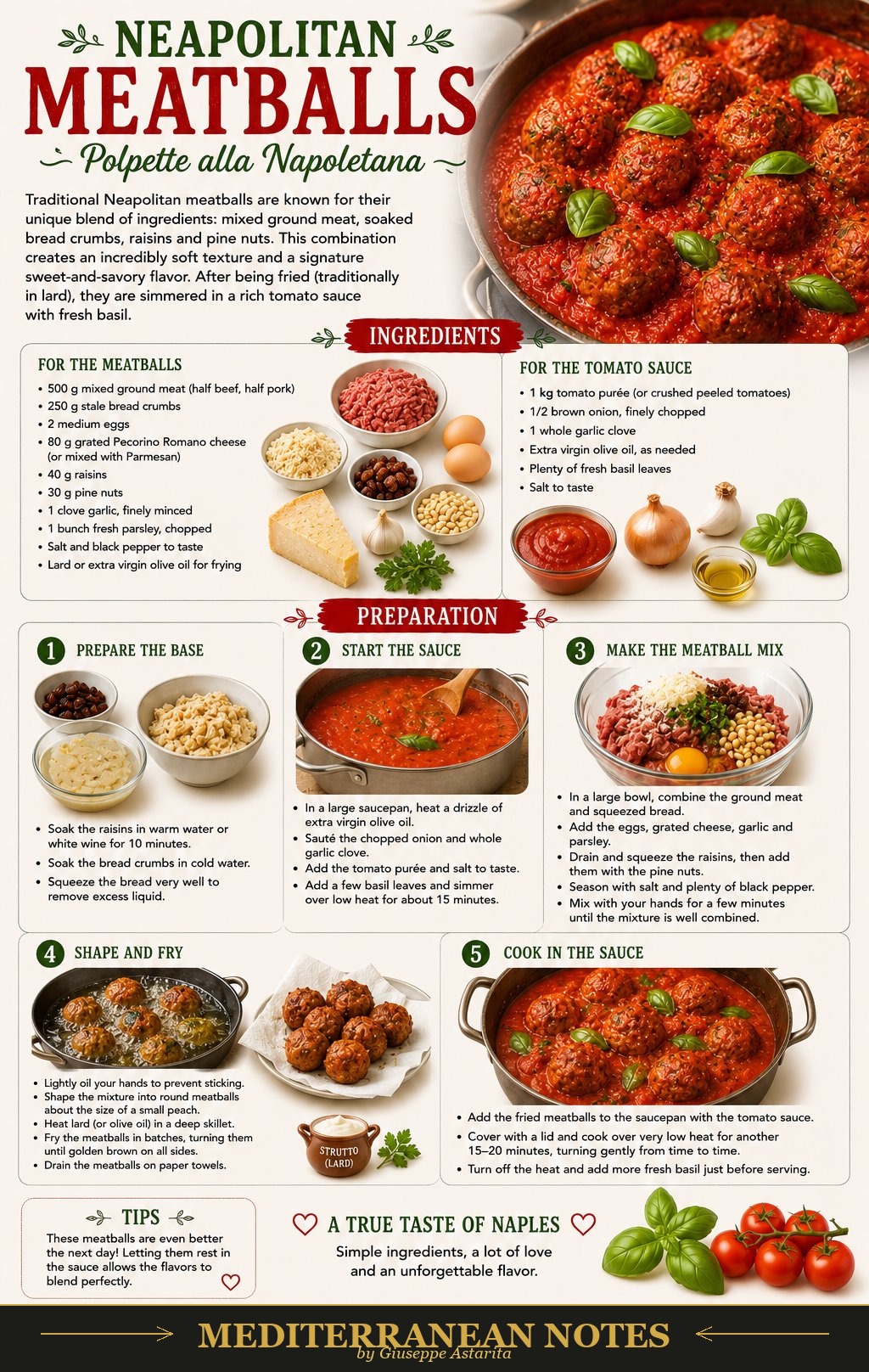
My mother's meatballs were big — the size of a small peach, as the infographic says, and I can confirm that this is an accurate description. They were heavy with bread — a generous amount of stale bread soaked in cold water and squeezed until almost dry, added to the meat to extend it and to make the interior soft and yielding rather than dense. A lot of Pecorino Romano. Parsley. Garlic. Egg to bind. Then the raisins, drained and squeezed, and the pine nuts. Mixed with your hands until everything was combined — this was the step I helped with as a child, which is the ideal age to learn that meatball mixture must be kneaded rather than stirred, and that the warmth of your hands does something to the texture that a spoon cannot.
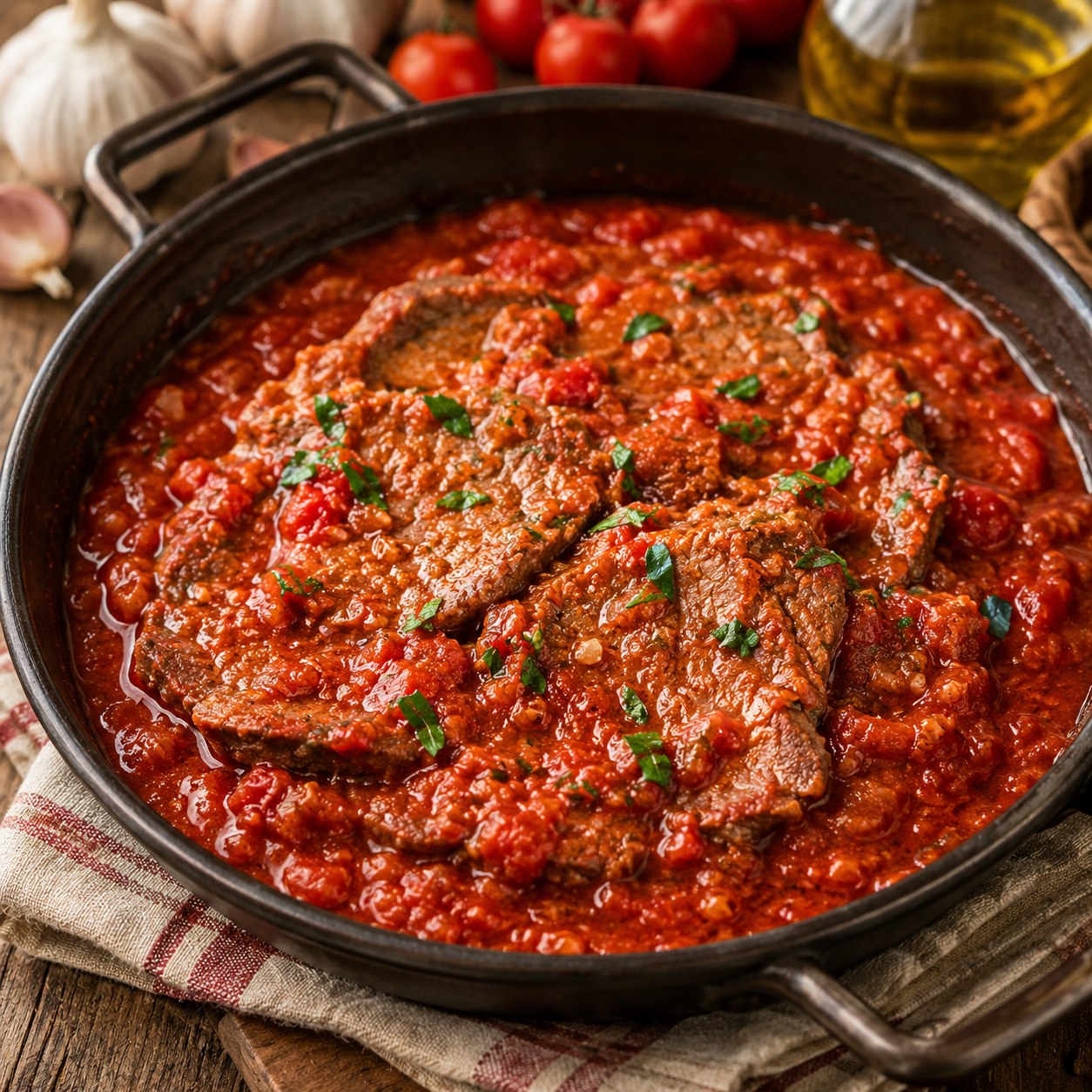
The meatballs were fried first — in olive oil, golden on all sides — and then added to the tomato sauce, which had been cooking separately. They braised in the sauce for another 15–20 minutes, absorbed some of it, gave some of themselves back into it, and the sauce that emerged from this process was not the same sauce that went in. It was deeper, richer, with the fat from the meat and the sweetness of the raisins folded into it. This is the sauce you dress the pasta with. The meatballs are the second course. We never confused the two, and we never had the meatballs on top of the pasta in the same bowl — that is a different tradition, an American-Italian one, and it is not what was made in this kitchen.
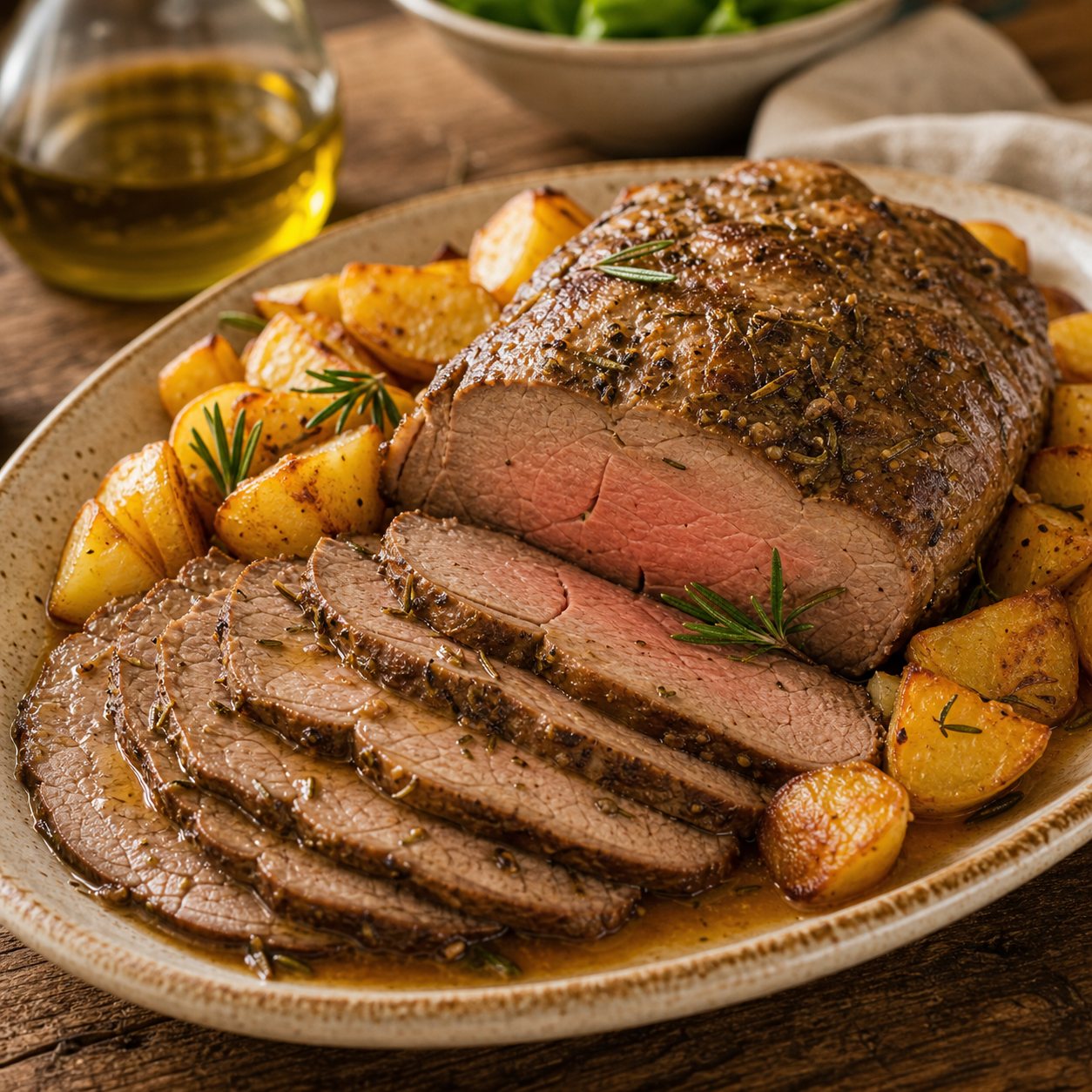
Sometimes, on a long Sunday when lunch was substantial and nobody wanted to cook again, the sauce meat — whatever had braised in the ragù alongside the meatballs, a piece of pork or a braciola — became dinner, served simply with bread. The Sunday sauce in a Campanian household is not a single dish; it is a full day of eating organized around one pot.
The tiny version is worth a separate note. When my mother made Neapolitan lasagna — the real one, with ricotta and hard-boiled eggs and tiny meatballs layered between the pasta sheets — she made polpettine: walnut-sized versions of the same mixture, fried briefly and added to the lasagna layers. They are one of the things that distinguish the Neapolitan lasagna from every other version. If you are making this recipe, reserve some of the mixture to make polpettine for the lasagna. It is the same recipe, different scale.
The panade — why soaked stale bread is a functional ingredient, not filler
The Neapolitan polpetta is a complete lesson in traditional food science. The soaked and squeezed stale bread — the panade — is not filler in the pejorative sense; it is a functional ingredient. Bread proteins (gliadins, glutenins) and starches absorb the fat released by the meat during cooking and redistribute moisture through the meatball, preventing the protein contraction that produces dryness. A meatball without bread has a denser, firmer texture; one with panade is soft, moist, and yields differently under pressure. The half-beef, half-pork mixture provides complementary fat and protein profiles: beef contributes creatine, heme iron, zinc, and B12; pork contributes thiamine, riboflavin, and a higher percentage of monounsaturated fat. Raisins add small amounts of boron, potassium, and polyphenols including resveratrol and quercetin, alongside their functional contribution to flavor complexity. Pine nuts contribute monounsaturated and polyunsaturated fats — specifically pinolenic acid, a polyunsaturated omega-6 fatty acid found almost exclusively in pine nut oil, with some evidence for appetite-modulating effects through cholecystokinin stimulation. Pecorino Romano, made from sheep's milk, has a distinctly different fatty acid profile from cow's milk cheese: higher in conjugated linoleic acid (CLA), branched-chain fatty acids, and medium-chain triglycerides, all of which have been associated with metabolic and anti-inflammatory effects in the literature. The long braise in tomato sauce produces lycopene-rich cooking liquid with high fat-soluble carotenoid bioavailability from the olive oil in the sauce. The finished sauce used to dress the pasta before the meatballs are served is, nutritionally, one of the most complex and layered sauces in the Italian repertoire — built not from stock but from the cooking of meat, bread, raisins, and tomato together over time.
How the Sunday meal is organized
Understanding the polpetta alla napoletana requires understanding the meal it belongs to. It is not a dish eaten alone or as a single course. It is part of a sequence — the Sunday sauce — that organizes an entire afternoon of eating around a single pot that has been on the stove since morning.
First course
Pasta nel sugo
The pasta — rigatoni, paccheri, whatever is in the house — dressed in the tomato sauce the meatballs cooked in. Not on top of the meatballs; dressed in the sauce alone, with a generous handful of Pecorino. This is the first course. The meatballs are not yet on the table.
Second course
Le polpette
The meatballs — served on their own, with a little sauce, perhaps some bread. The second course arrives after the pasta is cleared. There is no hurry. Sunday lunch is a long meal and is supposed to be.
Sunday evening
La carne del ragù
If there was other meat braised in the sauce alongside the meatballs — a piece of pork, a braciola — it sometimes became the evening meal, served simply with bread. The sauce had given everything it had; what was left was quiet and useful.
The recipe
For the meatballs
For the tomato sauce
Method
Prepare the base. Soak the raisins in warm water or white wine for 10 minutes. Separately, soak the stale bread in cold water for a few minutes, then squeeze firmly with both hands until almost completely dry — the bread should be a dense, compact mass with almost no moisture remaining. Set both aside.
Start the tomato sauce. In a large, wide saucepan, heat a generous drizzle of olive oil over medium heat. Sauté the chopped onion and whole garlic clove until soft and golden. Add the tomato purée, a few basil leaves, and salt. Stir, reduce heat to low, and simmer for about 15 minutes while you prepare the meatballs. The sauce should be loose and bright.
Make the meatball mixture. In a large bowl, combine the ground meat and the squeezed bread — break the bread up and incorporate it thoroughly into the meat. Add the eggs, grated Pecorino, garlic, and parsley. Drain and squeeze the raisins once more, then add them with the pine nuts. Season generously with salt and black pepper. Work the mixture with your hands for 2–3 minutes until everything is evenly combined and the texture is uniform. It should feel soft and cohesive.
This is the step done by hand — a spoon does not integrate the bread and meat the same way. The warmth of your hands softens the fat slightly and helps the mixture bind. Work it properly.
Shape and fry. Lightly oil your hands to prevent sticking. Shape the mixture into round meatballs about the size of a small peach — large, generous, substantial. Heat olive oil in a deep skillet over medium-high heat. Fry the meatballs in batches, turning them gently, until golden brown on all sides — about 4–5 minutes per batch. Do not crowd the pan. Drain on paper towels.
For the lasagna polpettine: reserve a portion of the mixture and shape into walnut-sized balls. Fry briefly — just enough to hold their shape. Add directly to the lasagna layers without further braising.
Braise in the sauce. Add the fried meatballs to the simmering tomato sauce. Cover and cook over very low heat for 15–20 minutes, turning them gently once or twice. The meatballs finish cooking inside, absorb some sauce, and the sauce deepens and enriches from the meat and fat. Add more fresh basil at the end with the heat off.
The meatballs are better the next day — and the day after. The sauce deepens further overnight; the meatballs are more tender and more flavorful. Make them ahead whenever possible.
These meatballs belong to the category of dishes that cannot be hurried and should not be simplified. The raisins matter. The pine nuts matter. The soaked bread in generous quantity matters. Remove any of these and you have a different meatball — perhaps a good one, but not this one. The Neapolitan polpetta has a specific character, built from specific ingredients in a specific tradition, and it is worth making it as it is.
The tiny version — the polpettina for the lasagna — is a reminder that the same mixture works across scales. A Sunday sauce that produces both the large meatballs for the second course and the polpettine for the lasagna is a Sunday well spent. Both dishes carry the same flavor, the same raisins, the same memory of a kitchen in Campania where a child was given the bowl and told to mix.
There was also a version of polpette-making that happened nowhere near a kitchen. At the beach, we made polpette out of wet sand — packed tightly in our palms the same way, shaped the same size. Then we found dry sand and rolled them in it, the way you roll the real ones in breadcrumbs before frying, and the dry sand stuck to the wet just as breadcrumbs stick to meat, which seemed to us a satisfying proof that the physics of polpette-making was universal. These were inedible and fell apart immediately, which was not the point. The point was the rolling, the shaping, the coating — the gestures of a process we had watched enough times to reproduce without thinking, on any surface that offered itself.
Buon appetito — e buona domenica.