Spaghetti allo Scammaro
Naples' legendary Lenten pasta — olives, capers, pine nuts and raisins, with or without the anchovies (without, in my father's house; with, in mine). Press it into the pan and it becomes the original pasta frittata.
In our house the scammaro was mostly made without anchovies, because my father did not like them — which is its own small irony, since the dish is one of the great pantry pastas of Naples and the anchovy is its traditional backbone. My mother simply left them out, the olives and capers and raisins carried the dish anyway, and nobody felt cheated. Now, decades later and an ocean away, I make it for myself with the anchovies. Some inheritances you keep; some you quietly amend.
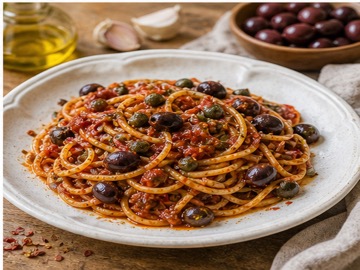
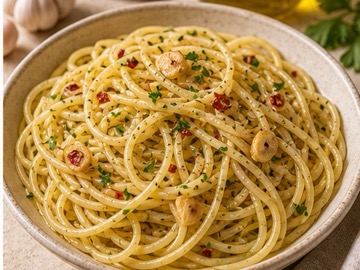
The dish is a 19th-century Neapolitan invention with a monastic backstory: during Lent, monks were forbidden meat, but sick or elderly ones were permitted simple meals in their rooms — in camera — and over time the term twisted into scammaro, meaning a lean, meatless preparation. What the lean rule produced is a masterpiece of the pantry: spaghetti tossed in olive oil infused with garlic and (optionally) melted anchovies, with Gaeta olives, capers, pine nuts, and raisins — the sweet-savory signature that runs through half of old Naples, from the pizza di scarola to the capitone.
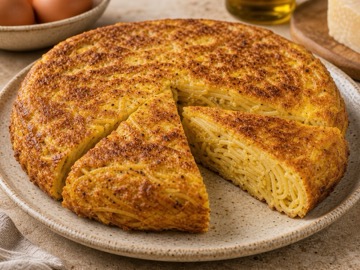
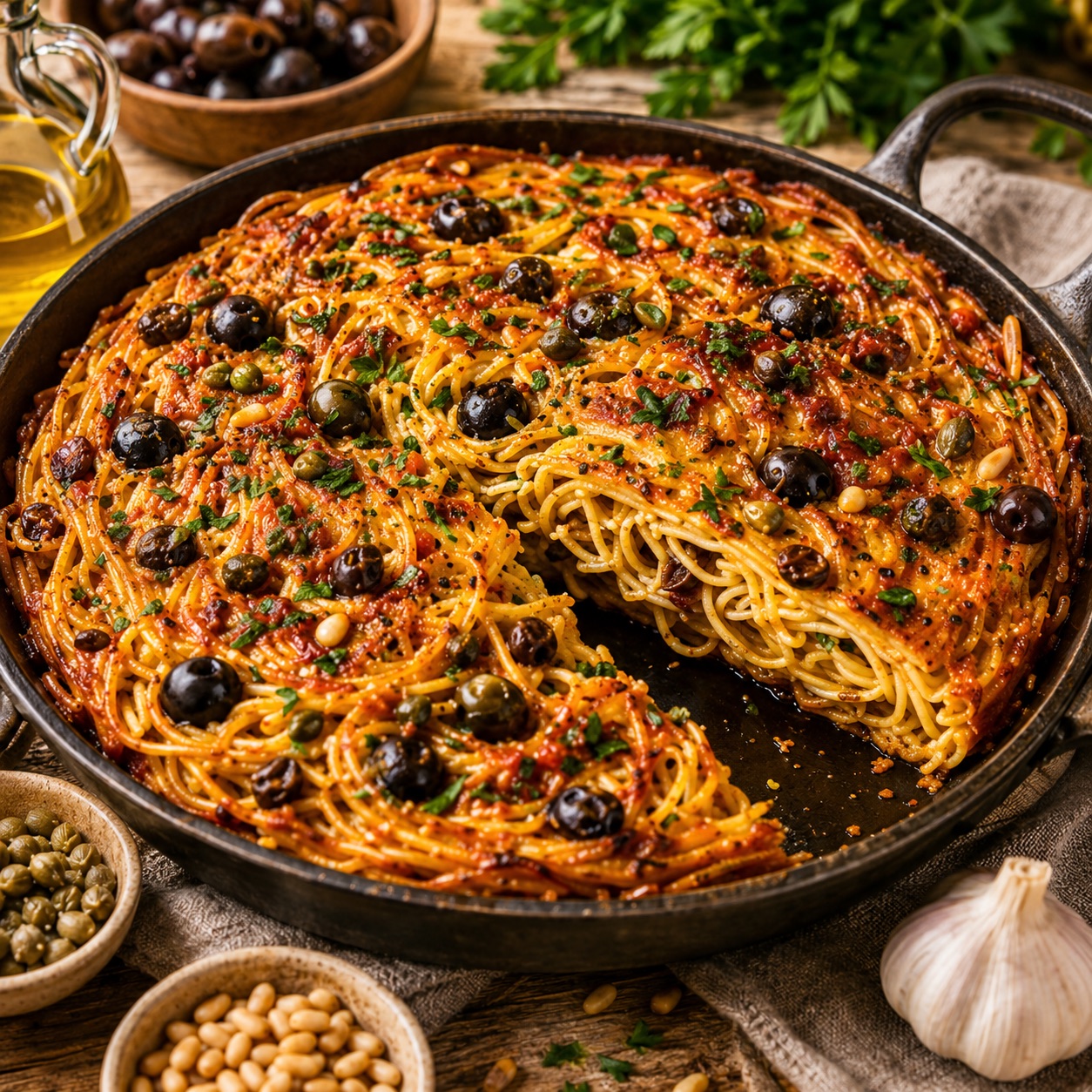
And then the second act, which is the one Naples remembers: pressed into the skillet and fried on both sides, the scammaro becomes a golden cake — the original pasta frittata, crisp outside, soft inside, sliced like a torta. It is wonderful hot and arguably better at room temperature, which made it the picnic and beach pasta of generations. Quick, cheap, made entirely from jars and packets — the cucina povera at its most elegant.
Why the frittata version works
Surface starch on the cooked spaghetti gelatinizes against the hot oiled pan and then dehydrates into a continuous crisp layer — the same chemistry as the socarrat of a paella. No egg is needed: the starch is the binder. Inside, the strands steam gently and stay tender, which is why the contrast between crust and heart defines a good scammaro. The raisins and pine nuts are not decoration but the dish's chemistry of balance — sugars and fats against the brine of olives, capers and anchovy.
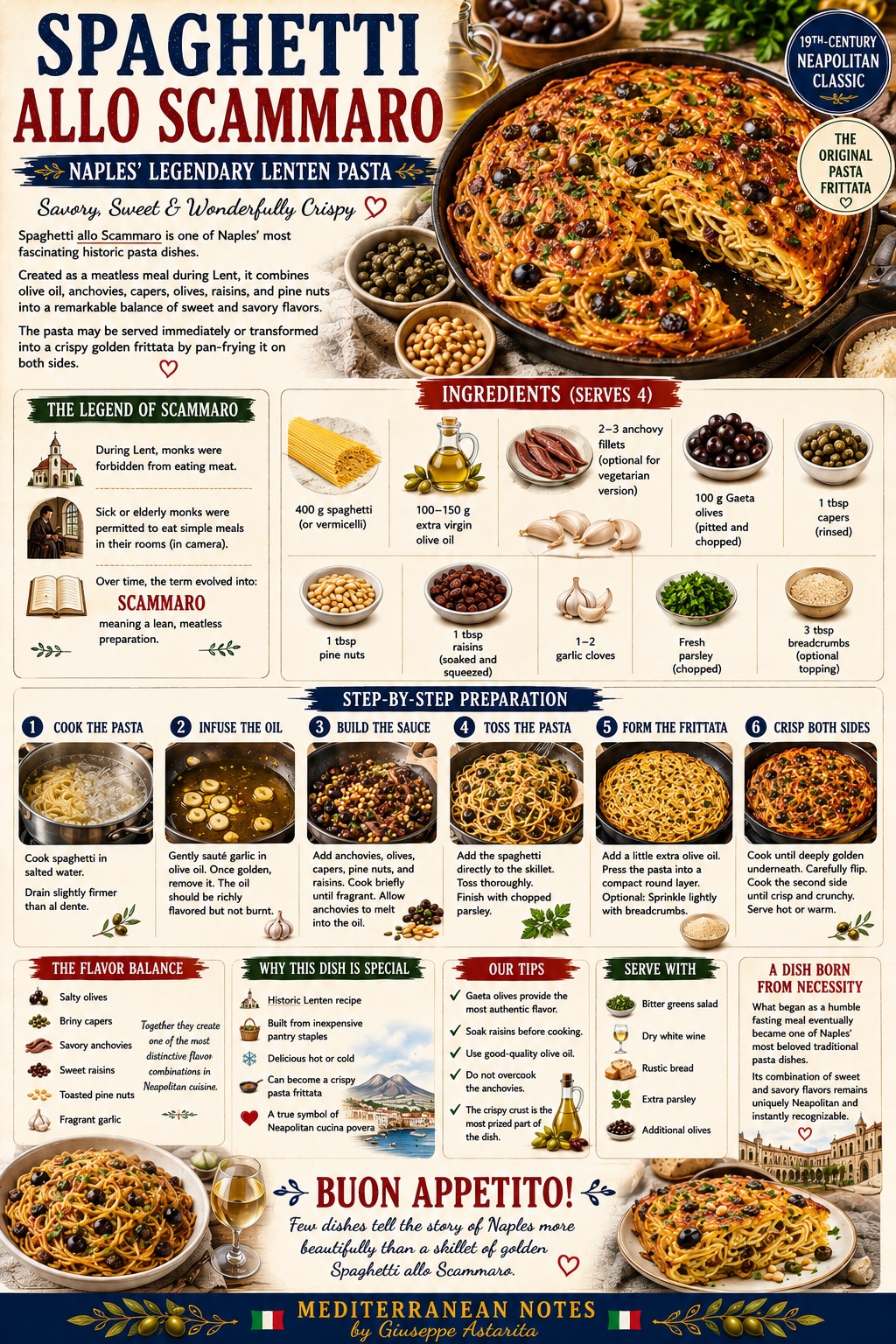
Tap to enlarge — Spaghetti allo scammaro: the legend and the method
Recipe — Spaghetti allo Scammaro
Serves 4 · About 30 minutes
- 400 g spaghetti or vermicelli
- 100–150 g extra virgin olive oil
- 2–3 anchovy fillets optional — my father's version omits them; mine doesn't
- 100 g Gaeta olives pitted and chopped
- 1 tbsp capers rinsed
- 1 tbsp pine nuts
- 1 tbsp raisins soaked and squeezed
- 1–2 garlic cloves
- Fresh parsley chopped
- 3 tbsp breadcrumbs optional topping
The scammaro sits in the same family as the frittata di maccheroni — its egg-bound descendant — and shares its pantry with the puttanesca. Lean by law, rich by craft. My father would still pick the anchovies out; I have stopped apologizing for putting them in.