Capitone Arrostito
La tradizione del Natale napoletano — Christmas Eve, every year, without question
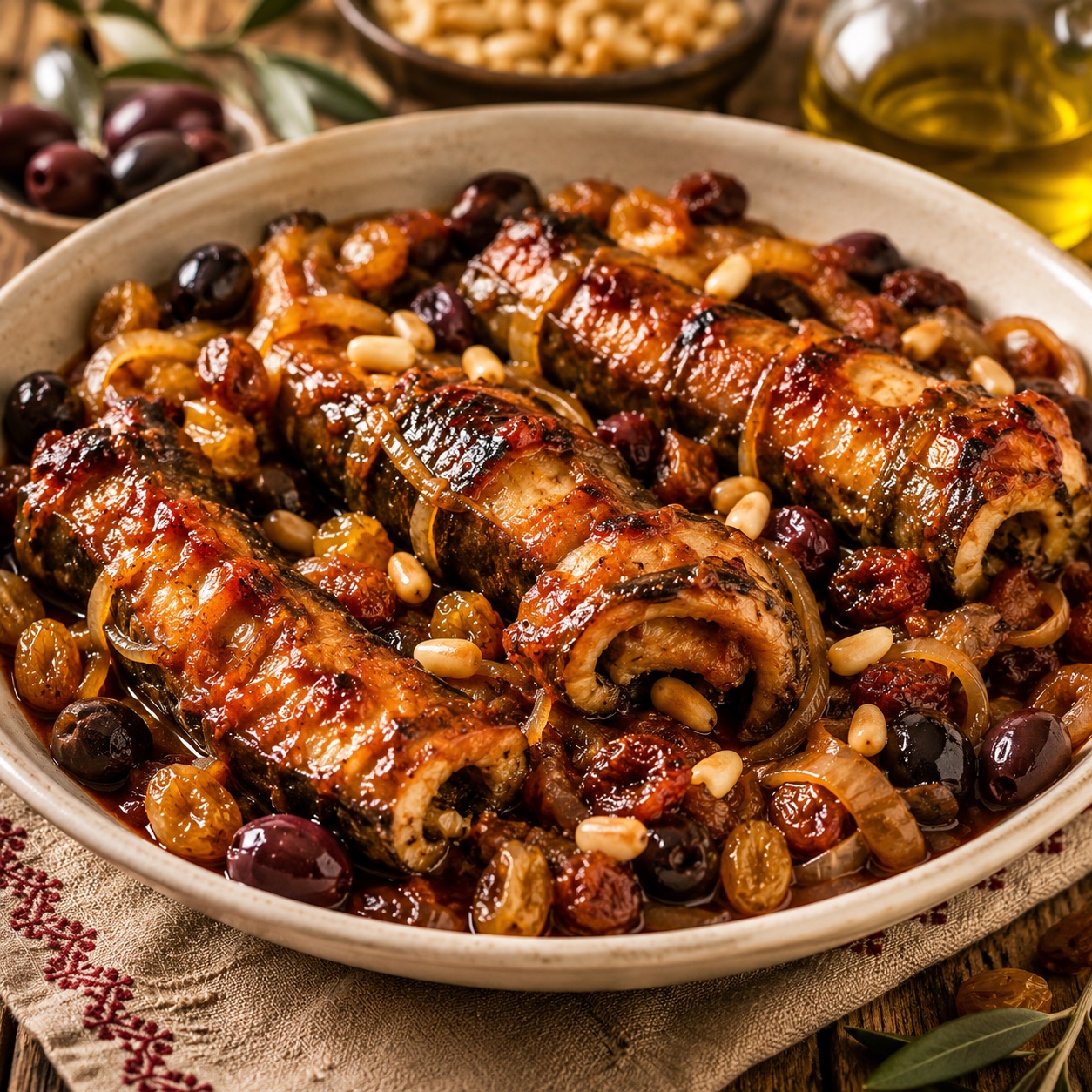
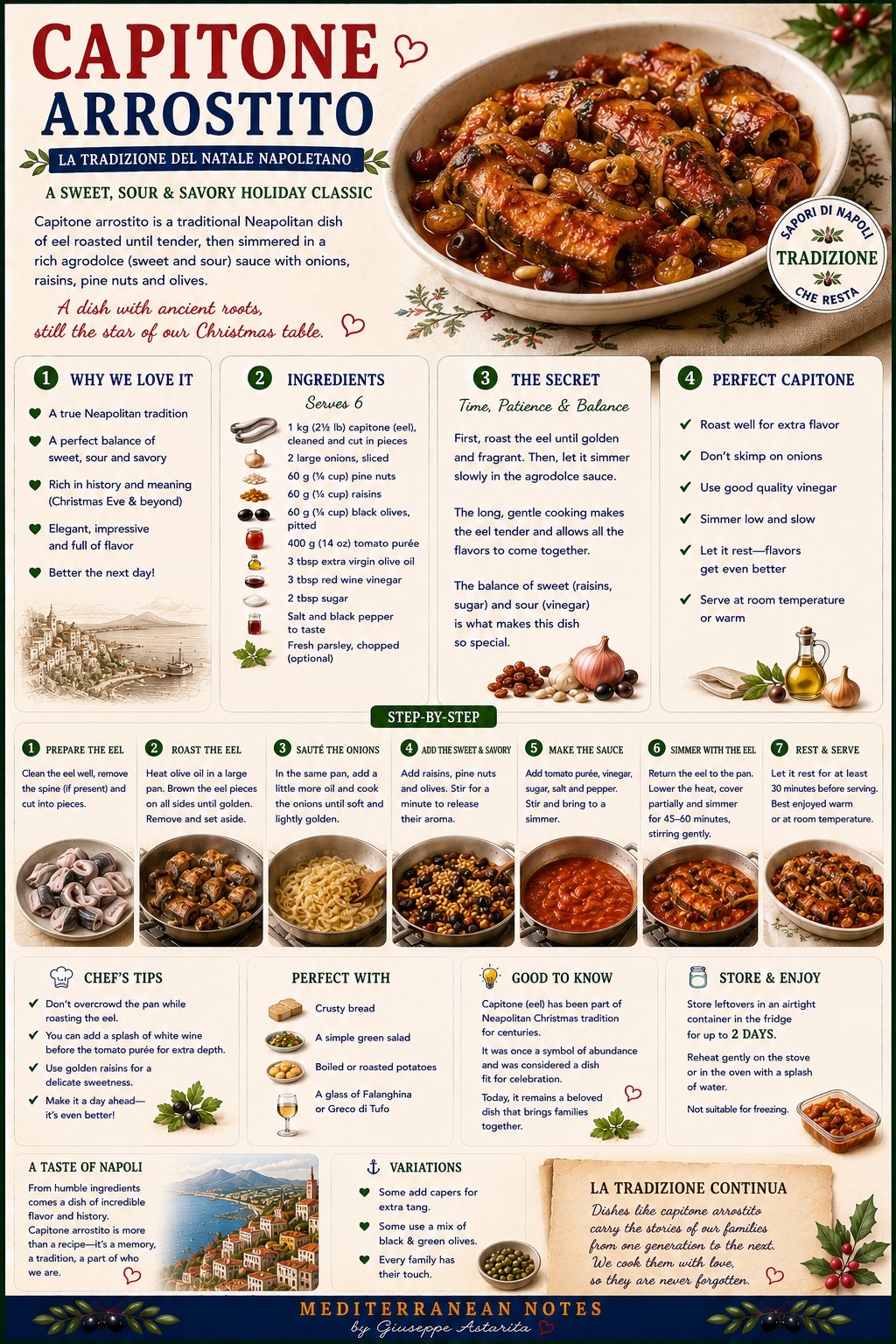
The capitone is the large female eel, and on the evening of December 24th it appears on every traditional Neapolitan table. Roasted until golden, then simmered slowly in an agrodolce sauce of onions, raisins, pine nuts, black olives, tomato purée, and red wine vinegar, until the eel is meltingly tender and the sauce has balanced its sweet and sour into something rich and complex. A dish with ancient roots, still the star of the Christmas Eve dinner. Better the next day.
The capitone at Christmas is one of the oldest and most specific food traditions in the Neapolitan calendar. Not the general category of fish on Christmas Eve — which is a pan-Italian Catholic tradition, the abstinence from meat on the Vigilia di Natale producing the great fish-centered dinners of the south — but the capitone specifically, the large female eel, which has been the symbolic centerpiece of the Neapolitan Christmas Eve table for centuries. The eel was historically associated with abundance and celebration, its serpentine form carrying a range of symbolic meanings in the popular religious imagination of Naples, and its appearance at Christmas dinner was the marker of a proper holiday table. Families who could afford it bought the capitone live from the fishmonger in the days before Christmas; those who could not made do with smaller eel. The dish, in one form or another, was present at the holiday meal as a matter of course.
The preparation in our home was the agrodolce version — the roasted capitone finished in a sweet-and-sour sauce that is one of the most characteristic Neapolitan flavor preparations. The eel is cut into pieces and browned in a pan until golden on all sides; it is removed while the onions are softened in the same pan; then the raisins, pine nuts, and olives go in with the tomato and vinegar and sugar, and the eel returns to simmer in this mixture for forty-five to sixty minutes until everything has cooked together and unified. The balance of sweet from the raisins and the sugar against the acidity of the red wine vinegar is what defines the dish — the same agrodolce principle that appears in the scarola all'agro and in the zucchine alla scapece, applied here to a rich, fatty fish that needs exactly this kind of bright counterweight.
The capitone is better the next day. This is one of those dishes where the overnight rest in the refrigerator deepens the flavor dramatically — the agrodolce sauce continues to penetrate the eel, the vinegar mellows, the raisins and pine nuts distribute their sweetness and richness through the sauce, and the whole thing becomes more unified and more itself. Many Neapolitan families serve it on Christmas Day as well, reheated or at room temperature. The tradition allows for this. The capitone, once made, lasts.
Eel is one of the fattiest freshwater fish, containing approximately 15–20% fat by weight — significantly more than most seafood. This high fat content gives the eel its characteristic richness and its ability to absorb and carry fat-soluble flavor compounds during cooking, but it also means the dish can feel heavy without a counterbalancing element. The agrodolce sauce — the combination of vinegar acidity and sugar sweetness — provides this counterbalance through two mechanisms: the acetic acid in the vinegar cuts through the perception of fat richness on the palate (the same role lemon plays with fried fish and olive oil in many Mediterranean preparations), and the sweetness from the raisins and sugar provides a contrast that keeps each bite interesting rather than cloying. The 45–60 minute simmer converts the eel's collagen to gelatin, which thickens the sauce and produces the characteristic glossy, coating consistency of a properly cooked capitone arrostito.
The recipe
Serves 6. This is a dish that improves overnight — make it on the afternoon of December 24th and it will be even better reheated or at room temperature on Christmas Day. Use golden raisins if possible; they are milder and sweeter than dark raisins.
Buon Natale —
e buon capitone.