La Rosticceria Napoletana
Rustici, fritti e il vassoio da portare alla festa
A rosticceria is not a panetteria. It is not a pastificio, not a gastronomia in the generic sense. It is its own thing — a shop whose window is filled, all day, with fried and baked savories kept warm behind glass: things that exist nowhere else in quite this form and that are woven into every party, every gathering, every spontaneous afternoon spent in someone's kitchen waiting for guests.
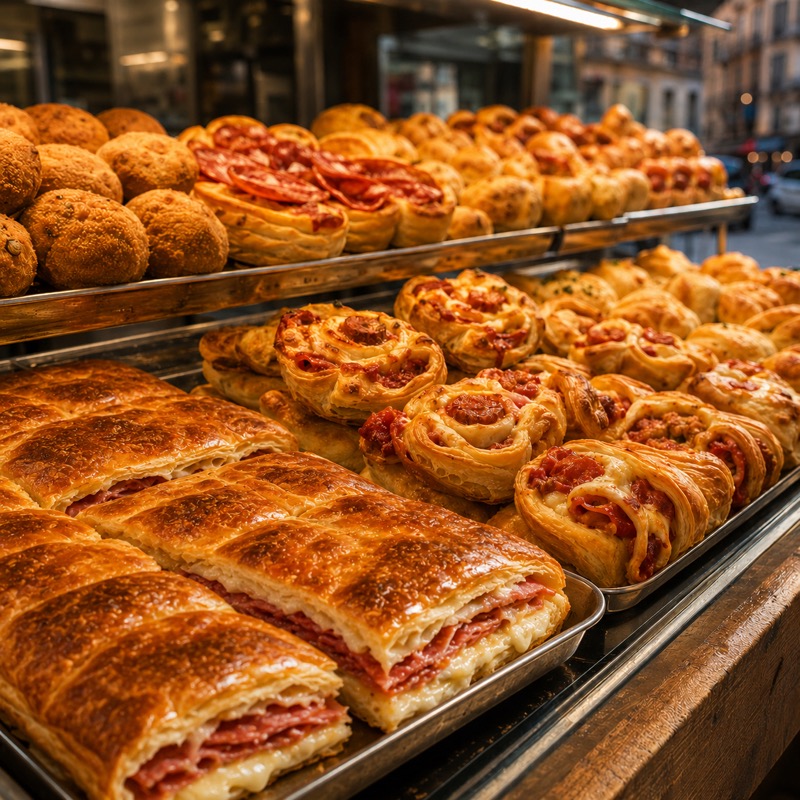
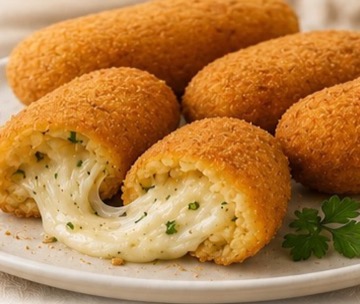
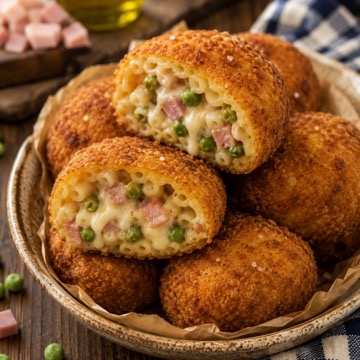
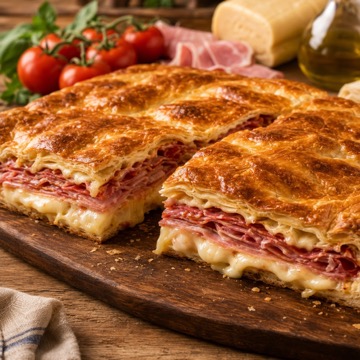
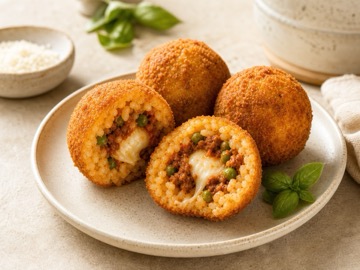
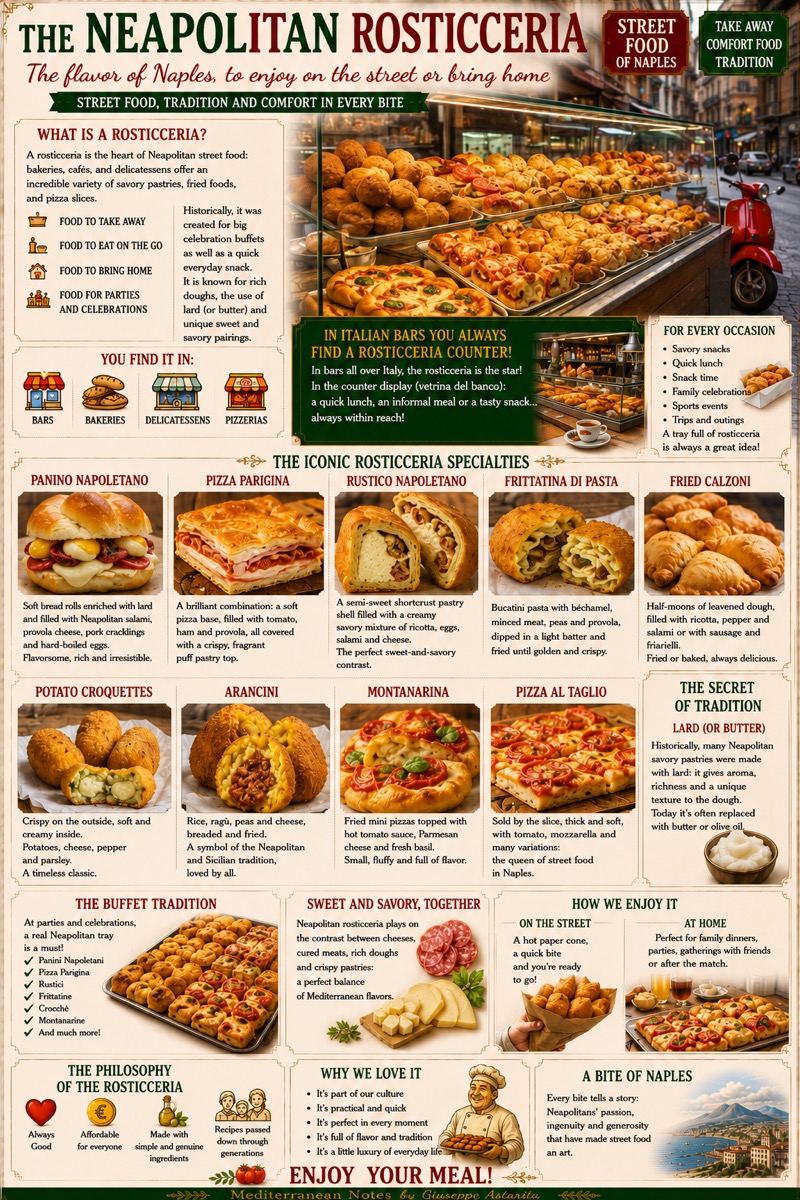
When I grew up, you knew which shops were the rosticcerie. They were not announced by a particular sign — the category was self-evident from the window. You looked inside and you saw the tray of crocchè, the stack of parigine, the pile of fried calzoni, the cubes of frittatina di pasta, the pizzette, the panini stuffed with salami and provola. Everything golden, everything a little heavy, everything designed to be eaten quickly while standing at the counter or taken home in a paper bag still warm enough to feel through the bag itself.
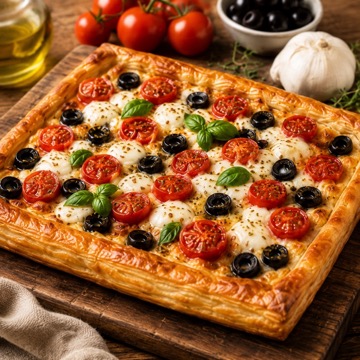
These shops occupied a specific niche. A panetteria made bread. A pastificio made pasta. A pasticceria made pastries. The rosticceria made the things you ate between proper meals, or before the meal started at a party, or instead of a meal when you were hungry and passing by. They had their own grammar of ingredients — leavened doughs enriched with strutto (lard), puff pastry layered over pizza dough, fillings of salami and provola and ricotta and uova sode — and their own category of customer, which was everyone. You went there alone for a crocchè on the way home. You went there with your mother to collect a tray before a birthday. The same shop, the same window, two completely different transactions.
Many bars in Naples and Campania maintained a rosticceria section — a smaller version of the dedicated shop, but functioning on the same logic. In the glass counter beside the coffee machine, along with the pastries and brioche for the morning, sat the savory things: a pizzetta under a cloth, a calzoncino in a paper napkin, the inevitable parigina in its rectangle of puff pastry. Prendo anche un rustico — I'll take a rustico too — was as normal a thing to say at a Neapolitan bar as ordering the coffee itself.
Il rustico — what it is
In Italian the word rustico (plural: rustici) simply means rustic — rough, unpolished, country-style. In the language of the Neapolitan rosticceria it means something more specific: a single-portion savory pastry, usually bite-sized or two-bite-sized, made from one of several standard doughs and filled with one of several standard combinations. The defining quality is that it is self-contained — no knife, no plate, no ceremony. You pick it up, you eat it, you move on. This is food designed for standing at a counter or filling a platter at a party where people are moving around the room.
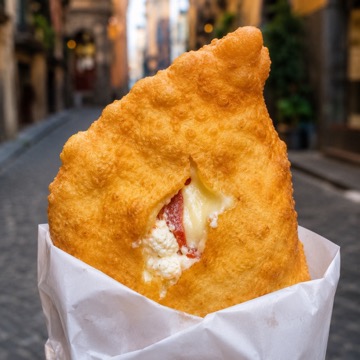
The category is broad but not arbitrary. A crocchè is a rustico. A parigina is a rustico. A fried calzoncino is a rustico. The montanarina — the little fried pizza disc dressed with tomato and basil at the counter — is a rustico. What they share is the format: a single-serving, grab-and-go savory, warm, substantial, eaten without ceremony.
Il vassoio di rustici
The vassoio — the tray — is a specific social object. It appears at every Neapolitan party, every celebration, every informal gathering where people arrive and leave at different times and where no one expects to sit down to a formal first course. You ordered it the day before at the rosticceria: a large rectangular tray covered in silver foil, containing a selection of rustici arranged in rows. The shop assembled it. You collected it the morning of the party, reheated it in the oven if needed, and set it on the table where it would be demolished in the first twenty minutes before the hot food was ready.
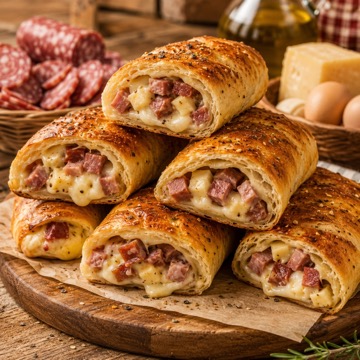
The composition of a good vassoio was partly fixed and partly a matter of preference. The classics were non-negotiable: crocchè, parigine, calzoncini fritti, pizzette. Beyond these you might add frittatine di pasta if the shop made them well, panini napoletani (the small enriched rolls stuffed with salami and provola), a brioche salata (the soft pull-apart loaf filled with salumi and provolone, brought by whoever was hosting), or the rustico napoletano proper — the individual pastry shell made from sweet shortcrust (pasta frolla semi-dolce) enclosing a savory filling of ricotta, egg, salami, and cheese. The deliberate contrast between the sweet pastry and the salty filling is the thing that defines it and distinguishes it from every other rustico: you bite through something that tastes faintly of a cookie and find yourself inside a savory, spiced interior. It should disconcert you slightly and then immediately seem exactly right.
Strutto — rendered pork fat — was the traditional fat in Neapolitan enriched doughs, used where Northern Italian cooking might use butter. It has a higher melting point than butter and a different fat composition: higher in oleic acid, lower in the volatile compounds that give butter its characteristic flavor. In a leavened dough like those used for panini napoletani or calzoncini, strutto lubricates the gluten network without adding significant water (butter is about 16–20% water; strutto is nearly 100% fat), resulting in a more tender crumb with a slightly richer, more neutral flavor — the filling comes through clearly without the dairy note of butter. In pastry shells, it produces extraordinary short texture. Today many rosticcerie use butter or margarine as a substitute; the result is acceptable but noticeably different for anyone who ate the original. The fat is not incidental — it is structural.
I pezzi forti — the classics of the vassoio
The bar counter rosticceria
Many bars in Campania kept a smaller version of the rosticceria in the glass counter beside the espresso machine. In the morning it held cornetti and pastries; by mid-morning the savory things appeared — a few crocchè under a cloth, a tray of parigine cut into portions, maybe a calzoncino or two. The logic was the same as the dedicated shop, compressed into a corner of the counter. You ordered your coffee and pointed at something behind the glass. The bar charged you for both. You ate standing at the counter, you finished the coffee, you left. This was not a snack in the Anglo-American sense — something incidental, something to tide you over. This was a tradition with its own vocabulary, its own rituals, its own correct items. Getting it right — knowing which crocchè was still hot, which parigina had been there since morning — was part of knowing how to be in a Neapolitan bar.
In Caserta, where I grew up, there was a rosticceria almost on every block — sometimes right next to a pizzeria, so that the two smells mixed on the street and you had to make a decision before you even walked in. During school breaks and after school, groups of us would go to the rosticceria to eat something: a calzone, a crocchè, an arancino. It was not organized, not planned — someone would say andiamo a prendere qualcosa and you went. Sometimes the shop had a small tray you could take outside, and a few of us would find a patch of grass nearby and sit and eat there, which in retrospect had all the elements of a picnic without anyone calling it that.
The rosticceria as a dedicated shop has become rarer, as specialized shops of all kinds have become rarer in the face of supermarkets and delivery. But the rosticceria section of the bar survives almost everywhere in Campania, and the vassoio da buffet remains indispensable at any gathering where food is expected. Some things, once embedded in the culture of a place, do not go away. They just become slightly harder to find in their best form.
Un vassoio di rustici? — Certo, per quante persone?