Prosciutto e Mozzarella
La semplicità che conquista — quality is the whole recipe
Prosciutto crudo and fresh mozzarella — two ingredients, a drizzle of olive oil, and the decision to serve them at room temperature. This is not a recipe in any technical sense. It is a set of instructions about sourcing and temperature that produce something that tastes either ordinary or extraordinary depending entirely on how seriously you take those two things.
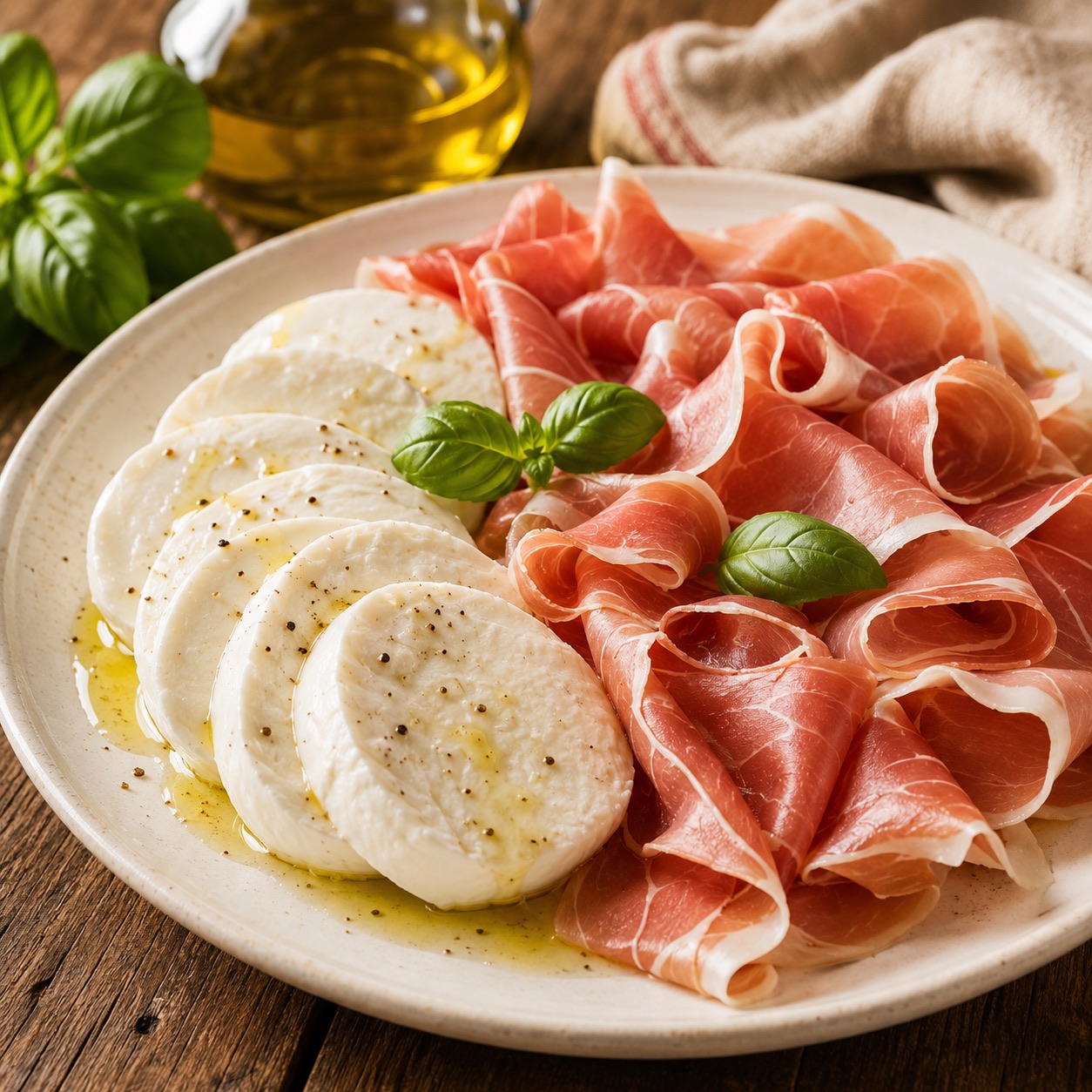
There are dishes that are actually recipes — where technique, timing, and the sequence of steps determine the outcome. And then there are dishes like this one, where the outcome is determined almost entirely by the quality of what you buy and the temperature at which you serve it. Prosciutto e mozzarella belongs firmly to the second category. There is nothing to cook. There is very little to assemble. The whole preparation takes two minutes. The result can be the best thing on the table or a forgettable combination of salty pink meat and rubbery white cheese, depending on one factor: whether the mozzarella is genuinely good and genuinely at room temperature, and whether the prosciutto is genuinely good and genuinely freshly sliced.
The mozzarella is the more demanding of the two. Mozzarella di bufala campana DOP — made from the milk of the water buffalo raised in the plains between Caserta and Salerno — is a different product from the supermarket fior di latte sold in every country. The bufala has a higher fat content, a slightly sour, almost tangy quality, and a softness that means it releases its liquid immediately when you cut it. It should be eaten the day it is made if possible; the day after at the latest. Cold mozzarella — taken directly from the refrigerator — tastes of nothing. The fat and protein that carry the flavor are set by the cold and do not release their compounds until they warm. Twenty minutes at room temperature before serving is not a preference; it is the condition under which the cheese becomes itself.
The prosciutto should be sliced to order — thin, translucent, draped rather than folded. Pre-sliced prosciutto left in a packet loses its freshness within hours; the fat oxidizes and the sweetness that distinguishes good prosciutto crudo from cured meat in general begins to fade. In Naples, the habit is to go to the alimentari and ask for it to be sliced while you wait. The difference between fresh-sliced and packaged is significant enough to justify the extra stop.
The flavor of mozzarella comes primarily from short-chain fatty acids and aromatic compounds produced during the acidification and stretching process. These compounds are dissolved in the fat phase of the cheese. At refrigerator temperature (4°C), the fat is partially solidified and these compounds are effectively locked in — they cannot volatilize into the air above the cheese or dissolve readily into saliva, which is how we perceive them. At room temperature (18–22°C), the fat softens, the volatile compounds are released, and the cheese tastes of itself. This is the same phenomenon responsible for why cold butter has almost no flavor and room-temperature butter has a rich, complex one. The protein matrix of mozzarella also responds to temperature: cold, it is slightly rubbery and resistant; warm, it has the yielding, almost liquid quality that makes a fresh mozzarella so different from any other white cheese.
Prosciutto crudo develops its flavor through an extended aging process during which muscle proteins are broken down by native enzymes into free amino acids — particularly glutamate, which contributes savory depth — and fatty acids that contribute sweetness and complexity. The Maillard-like reactions that occur slowly during aging also produce aromatic compounds responsible for the cured meat character. These flavor compounds are temperature-sensitive in the same way as mozzarella: cold prosciutto has a flat, slightly salty character; at room temperature its sweetness and complexity are fully present.
The preparation
Serves 2. Per person: 100 g prosciutto crudo, 200 g fresh mozzarella (fior di latte or bufala). Everything else is optional. The only non-optional step is bringing the mozzarella to room temperature before serving.
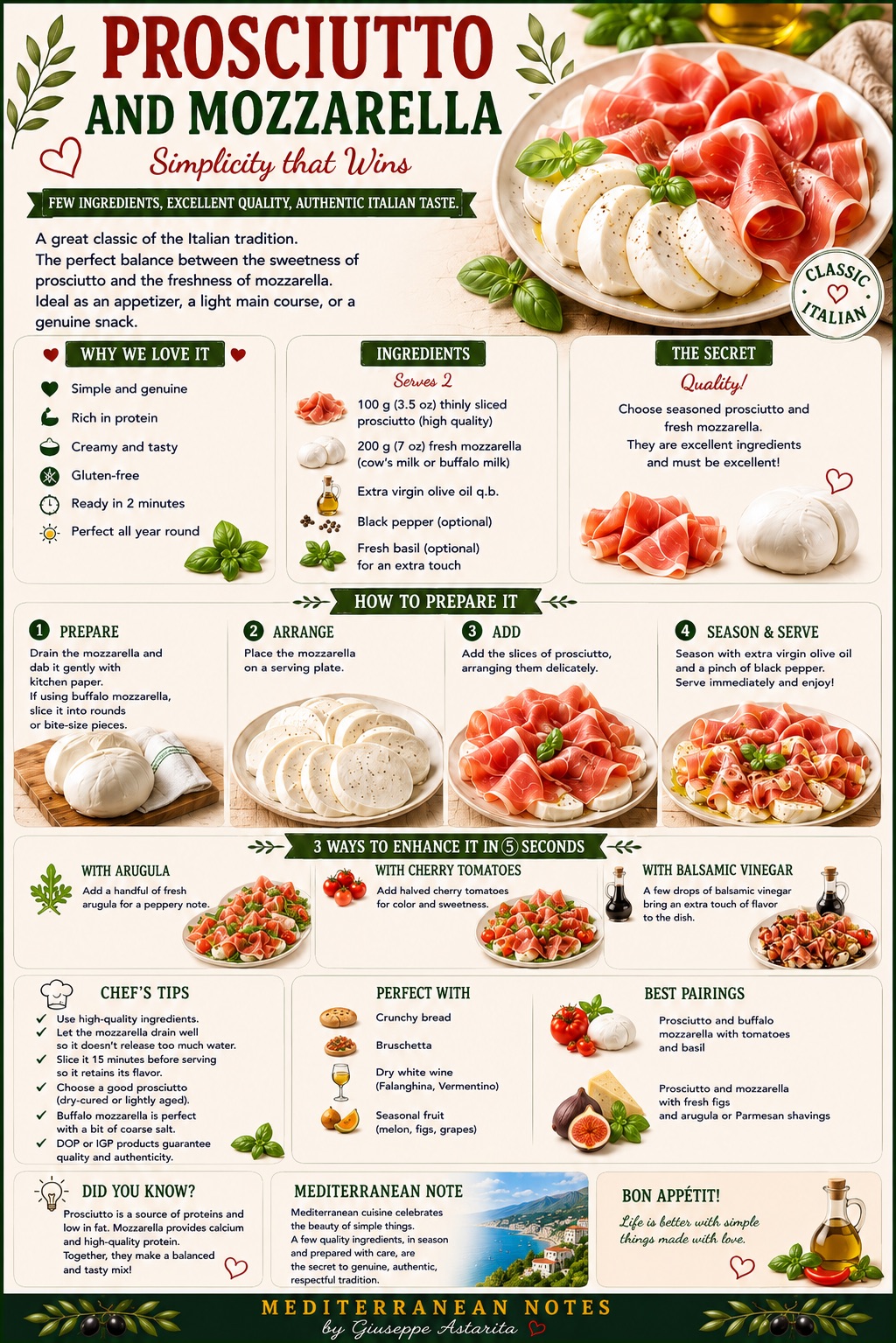
Variations worth trying: with a handful of rocket (arugula), which adds a peppery bitter note that balances the richness of both the prosciutto and the mozzarella; with halved cherry tomatoes for color and acidity; with a few drops of aged balsamic, which is not Campanian but works. With fresh figs in late summer — sweet, fragrant, and completely correct alongside salty prosciutto. The combination of prosciutto and melon is the version most people know; in Naples figs are preferred, when they are in season.
Buon appetito — la vera gioia è nelle cose semplici.