Insalata di Finocchio
Fennel, lemon, olive oil — five minutes, maximum flavor
Two fennel bulbs, a lemon, olive oil, salt. Slice thin, dress, serve immediately. This is the recipe. It is also an argument that restraint and good ingredients produce better results than elaboration and mediocre ones.
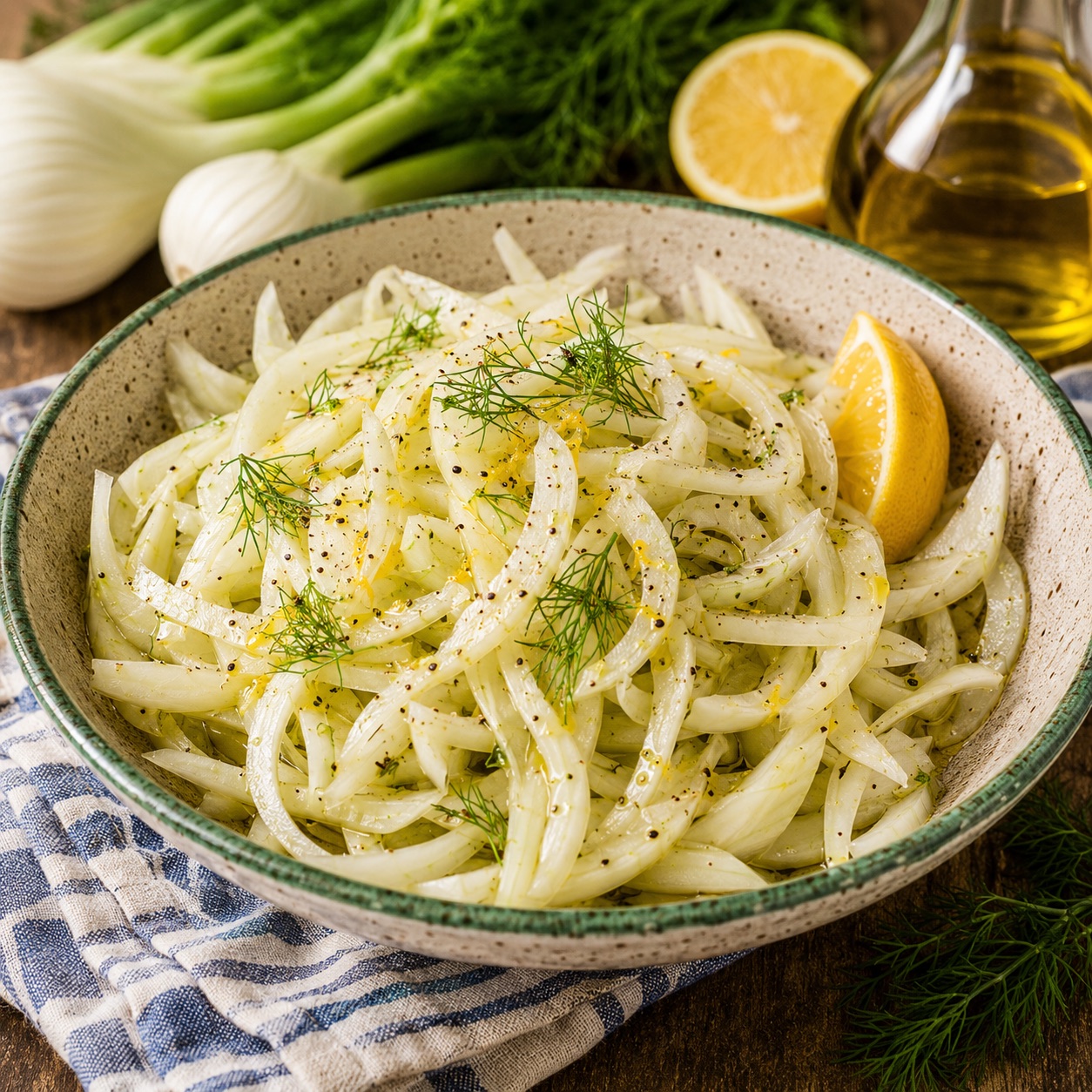
The fennel salad is the purest expression of a principle that runs through the whole Neapolitan kitchen: the best treatment of a good ingredient is often the one that does least to it. Raw fennel sliced paper-thin on a mandoline has a texture and a freshness that cooked fennel does not — crisp, almost watery, with a mild anise sweetness and none of the concentrated softness that heat produces. Dressed with lemon juice and olive oil and nothing more, it is one of the most refreshing things you can put on a table in warm weather. In cold weather with orange segments instead of lemon it becomes a different dish, warmer and sweeter, equally simple.
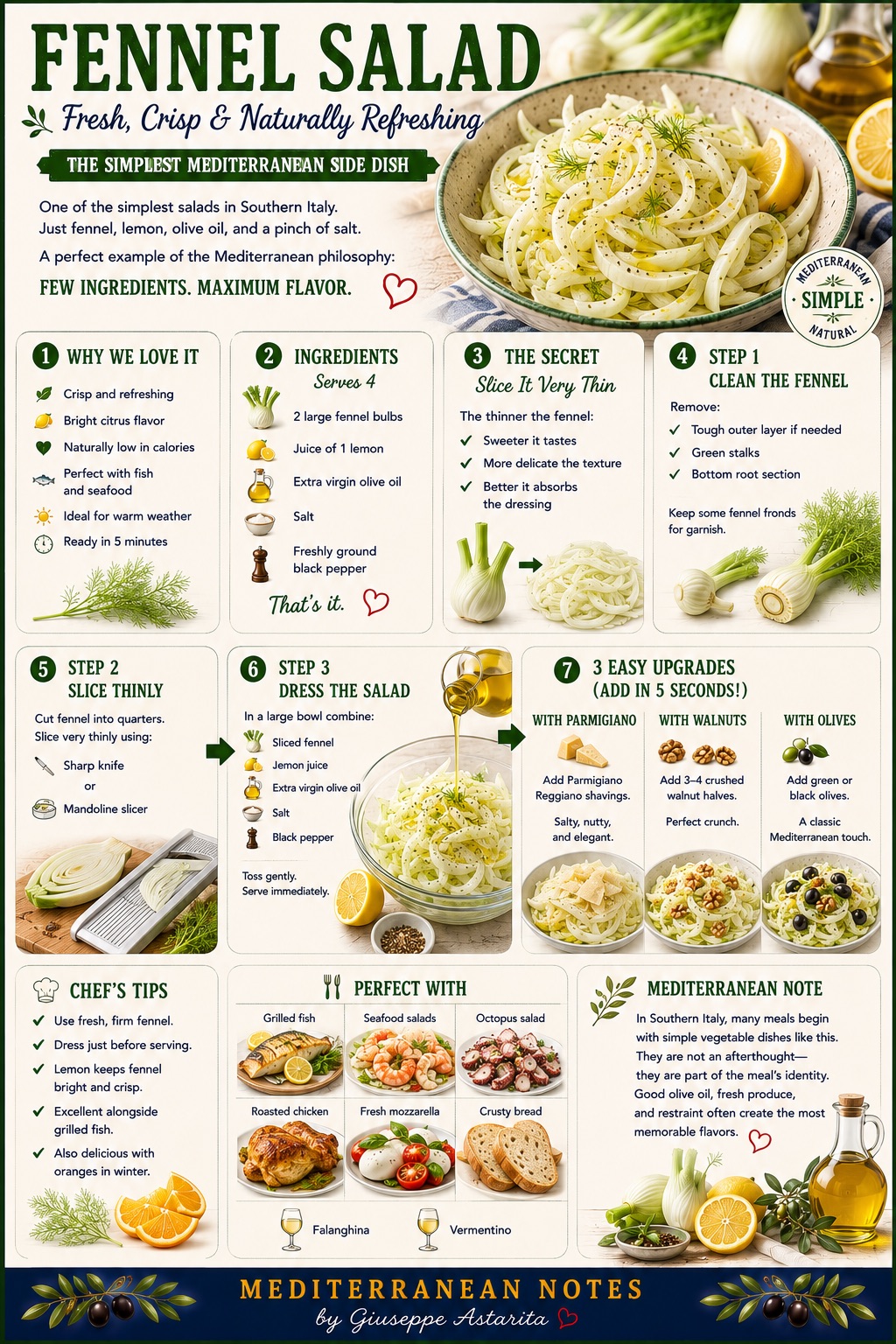
The thickness matters. The infographic says to slice very thin for good reason: thicker slices are harder to eat and the flavors integrate less completely with the dressing. At 2–3 mm the fennel is still crisp but the lemon has access to every surface and the whole piece is saturated with the dressing when you eat it. At 5 mm or more it is crunchy but slightly coarse and the center of each slice tastes only of fennel rather than of fennel and dressing together. A mandoline set to its thinnest setting produces the best result. A sharp knife, with patience, produces an almost equally good one.
Dress just before serving. Unlike the dressed cooked vegetables in this collection — the spinach, the cauliflower, the artichoke — which improve with resting time, the fennel salad is best eaten within ten minutes of dressing. The lemon juice begins to soften the fennel quickly and within an hour the texture is compromised. The fronds reserved from the fennel bulbs are worth using as garnish: they have the same anise flavor as the bulb, concentrated, and they make the dish look like something that grew where it was served.
The characteristic anise flavor of fennel comes primarily from anethole — a phenylpropanoid compound that is the same molecule responsible for the flavor of anise, star anise, and licorice. In raw fennel, anethole is present at a lower concentration than in fennel seeds; it is more subtle and is balanced by the freshness of the high water content (fennel is about 90% water) and the crispness of the cellular structure. Cooking concentrates anethole by driving off water, which is why cooked fennel tastes more intensely anise than raw. The lemon juice serves two functions: it provides acidity that brightens the flavor of the fennel, and the ascorbic acid it contains acts as an antioxidant that prevents the enzymatic browning of the cut surfaces. Freshly cut fennel left in air turns slightly beige at the edges within 20–30 minutes; dressed immediately with lemon, it stays white through the meal.
The recipe
Serves 4. Use fresh, firm fennel — tight and heavy, no yellowing. Keep the fronds for garnish. A mandoline is ideal but a sharp knife works. Dress just before serving.
Buon appetito.