Campanian kitchen · Summer · Mozzarella · Tomatoes · No cooking · For Anna and Carolina
Insalata caprese
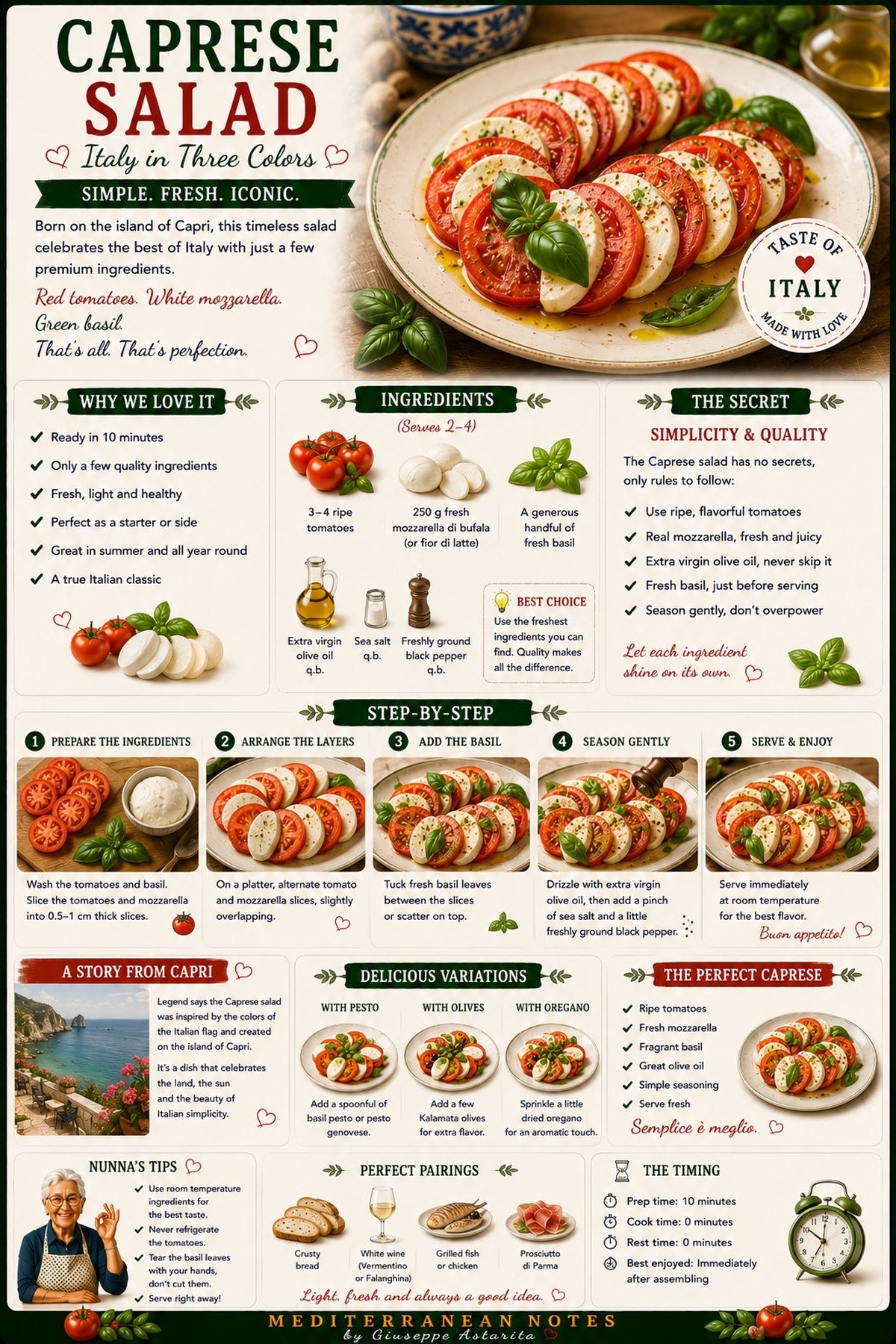
Anna, Carolina — this is the dish you already know without knowing you know it. Tomatoes and mozzarella have appeared on our table in one form or another as long as you have been at the table. The formal version, with the slices arranged on a plate and the basil between them, is something we make sometimes. The real version is what happens every other time: the mozzarella cut open at the counter, tomatoes alongside, olive oil, and everyone standing there eating before it reaches a plate.
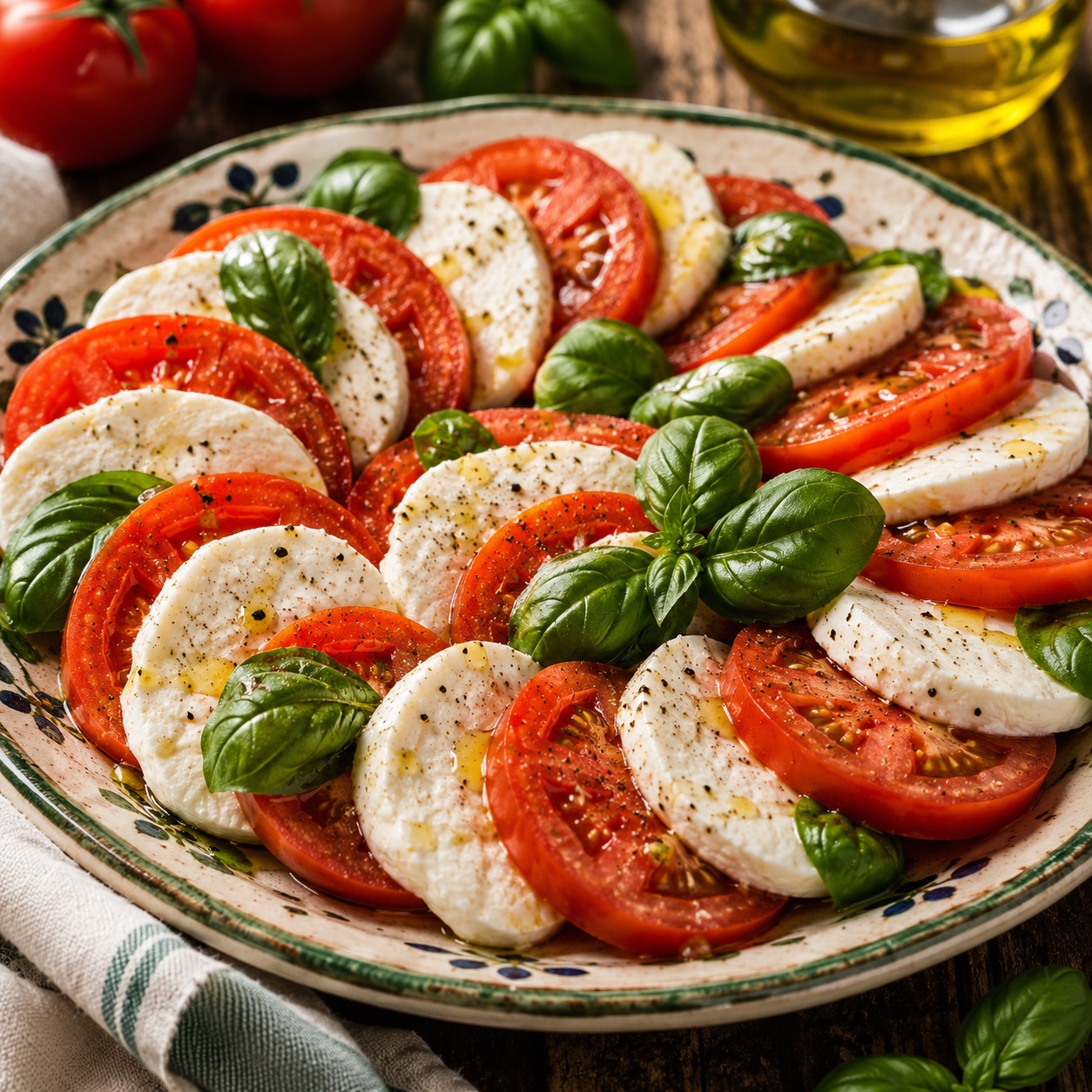
There is a version of the caprese we do not quite make. You will see it in restaurants and in food photographs: the perfect alternating circles of tomato and mozzarella, a basil leaf between each pair, arranged on a white plate with a drizzle of olive oil that lands exactly right. It is a beautiful dish when made with excellent ingredients in season. We have made it. But it is not what happens in this family most of the time, and the reason is the mozzarella.
Fresh mozzarella — a real one, bought that morning, still in its liquid, warm from the dairy if you can get it — does not wait. The moment you cut it, it begins to release its whey. Left on a plate in air, exposed, it dries at the surface, loses temperature, and within fifteen or twenty minutes it is a different and lesser thing than what it was. In Campania this is understood as a fact of life rather than an inconvenience. The answer is not to display the mozzarella; it is to eat it. You cut it open and you eat it. The tomatoes come alongside — sliced, seasoned, a little salt, the olive oil. You eat the two things together, at the counter or at the table, immediately. This is not a lesser version of the caprese. It is the more honest one.
My understanding of this came from growing up in Caserta, where good mozzarella was not a special ingredient — it was a Tuesday ingredient, bought at the alimentari or the latteria, eaten the same day. The caprese as a formal composed salad is a tourist dish, or a restaurant dish, made from mozzarella that has been refrigerated and transported and is therefore robust enough to sit on a plate for ten minutes without loss. The real thing, which we had at home, required a different approach. The tomatoes were the accompaniment to the mozzarella, not the other way around. That is also, incidentally, the correct proportion: the mozzarella is the main event; the tomato is what keeps it company.
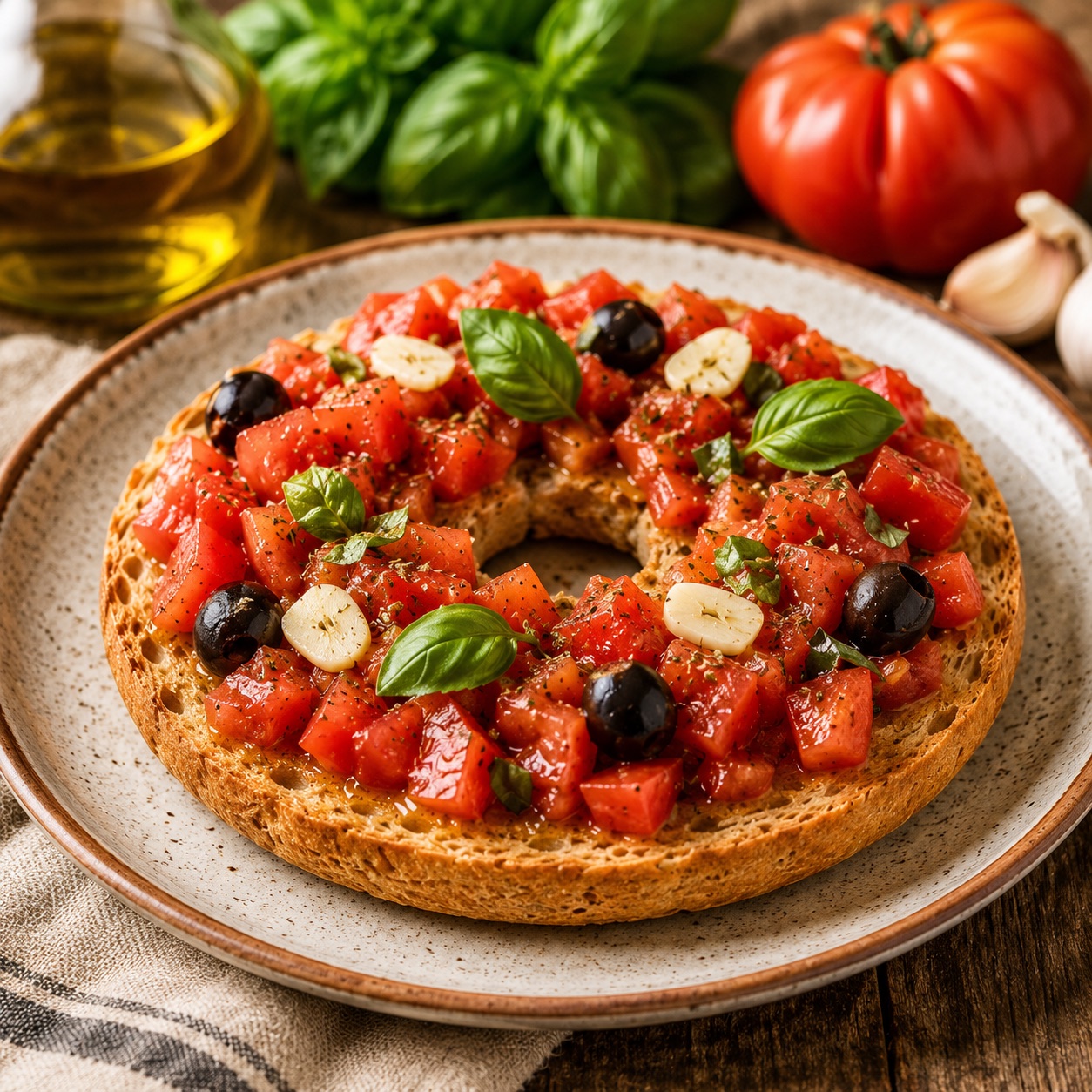
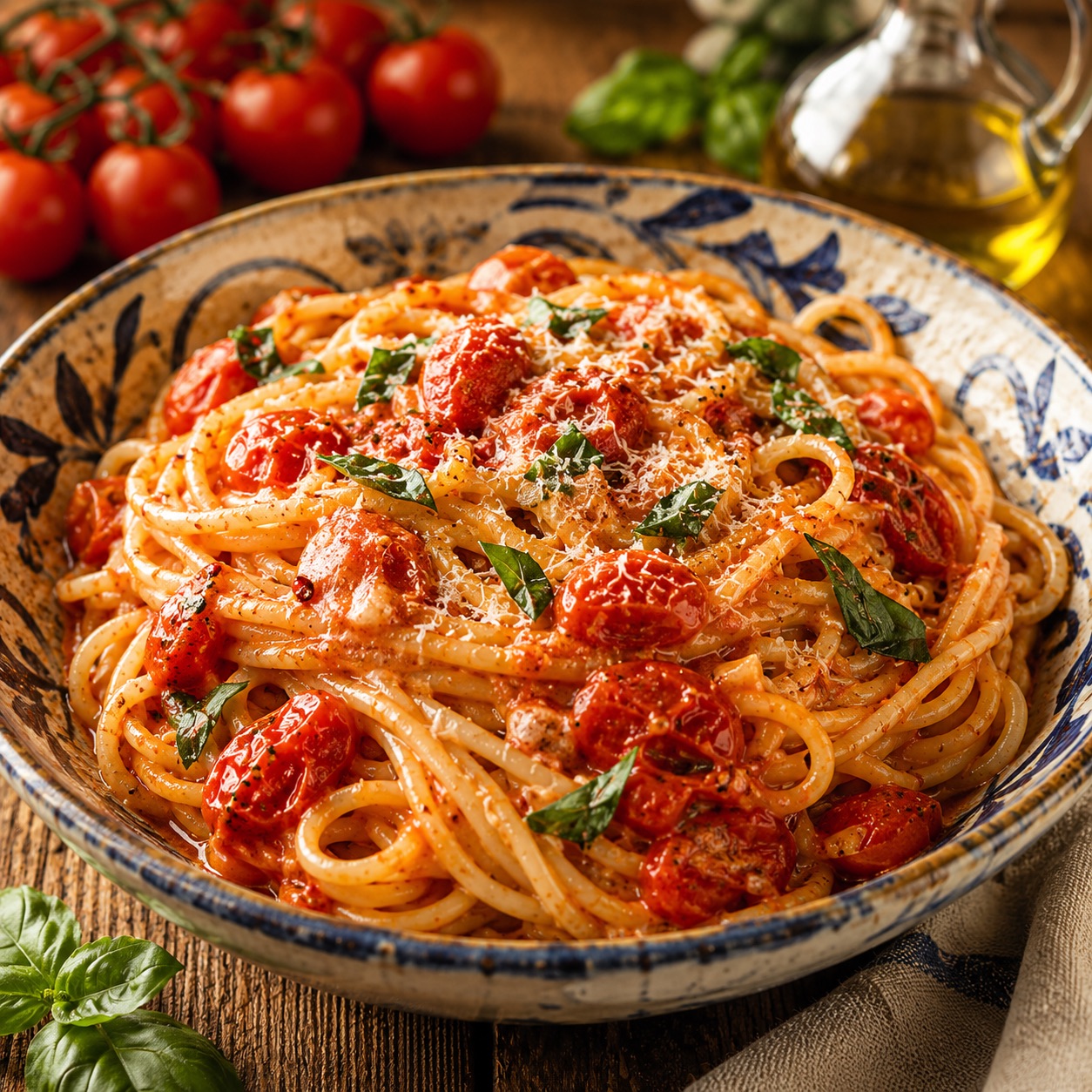
Anna, Carolina — the combination of tomatoes, mozzarella, basil, and olive oil is one of those things that appears in your life in many forms. On a fresella soaked in cold water, with the tomatoes pressed into the surface and the mozzarella on top. In a panino with good bread, the mozzarella still slightly warm, the tomato sliced thick. On a pizza margherita, where the same three ingredients — tomato, mozzarella, basil — are arranged on dough and the oven transforms them. In pasta, where they become a sauce without cooking: cubed mozzarella melting into hot spaghetti with fresh tomato and basil. These are not variations of the caprese. They are the same logic applied to different surfaces. Italy has been doing this for a long time.
Why fresh mozzarella must be eaten immediately — protein structure, whey, and temperature
Fresh mozzarella di bufala and fior di latte are pasta filata cheeses: the curd is heated and stretched until the casein proteins align into long parallel fibers, producing the characteristic stringy, elastic texture. This structure holds moisture — typically 52–60% water content — as liquid whey trapped between the protein fibers. Once cut, the exposed surface loses its structural integrity and the whey begins to weep out through capillary action. Refrigeration slows but does not stop this process; exposure to air at room temperature accelerates it. The optimal eating window for a freshly cut mozzarella is 10–15 minutes — after which the surface has dried, the internal temperature has dropped further, and the fat, which contributes the characteristic rich milky flavor, has partially resolidified. The flavor compounds in fresh mozzarella — diacetyl, acetaldehyde, and short-chain fatty acids from the lactic acid fermentation — are volatile and most perceptible when the cheese is at room temperature (18–20°C). Refrigerated mozzarella served cold suppresses these aromatics. This is why Campanian tradition never refrigerates fresh mozzarella: it is bought the morning it is eaten and eaten at the temperature it arrives at.
The formal version — when you have time
Ingredients · serves 2–4
Method
Slice the tomatoes. Cut into rounds about 1 cm thick. Arrange on a plate, overlapping slightly. Season with a pinch of sea salt — the salt draws out the tomato juice which becomes part of the dressing.
Slice the mozzarella. Remove from its liquid just before serving. Cut into rounds of similar thickness to the tomatoes. Alternate with the tomato slices on the plate.
Do this last, immediately before serving. Not five minutes before — immediately before.
Add basil and olive oil. Tuck torn basil leaves between the slices or scatter over the top. Drizzle generously with olive oil. No vinegar, no lemon — neither belongs here.
Eat immediately. This is not a dish that improves with resting. Bring it to the table and eat it.
The other forms — the same logic on different surfaces
These are not recipes. They are the ways this combination appears when you are not making the formal caprese. They are all correct.
On a fresella
Soak the fresella in cold water for 30 seconds. Press ripe tomatoes into the surface. Mozzarella on top, torn or sliced. Olive oil, salt, basil. The bread absorbs the tomato juice as you eat it. This is a meal.
In a panino
Good bread — pane cafone, pane casareccio, a rosetta if you can find one. Mozzarella still slightly warm. Tomato sliced thick. A basil leaf. No condiments that compete. Eat before the bread absorbs too much liquid.
On pasta
Hot spaghetti or paccheri tossed with olive oil, ripe tomatoes cut into small pieces, mozzarella cubed small. The heat of the pasta melts the mozzarella slightly. Basil off the heat. No cooking required for the sauce — the pasta does the work.
On pizza
The margherita is the caprese on dough. Tomato sauce, mozzarella, basil, olive oil — the same ingredients transformed by high heat into something different but recognisably the same logic. The most important pizza and the simplest reason.
At the counter
Cut the mozzarella open. Put the tomatoes alongside. Salt, olive oil. Eat standing. This is the most common version in our family and the most honest one. No arrangement required.
Semplice è meglio — e mangiala subito.