Carne alla Pizzaiola
The Taste of Simplicity. The Soul of Naples.
My father's favorite secondo, and the recipe I associate most with dried oregano — more than any other dish my mother made. Thin beef slices barely two minutes in a concentrated tomato sauce with garlic. The sauce left in the pan goes on pasta the next day. Bread finishes what the fork cannot reach.
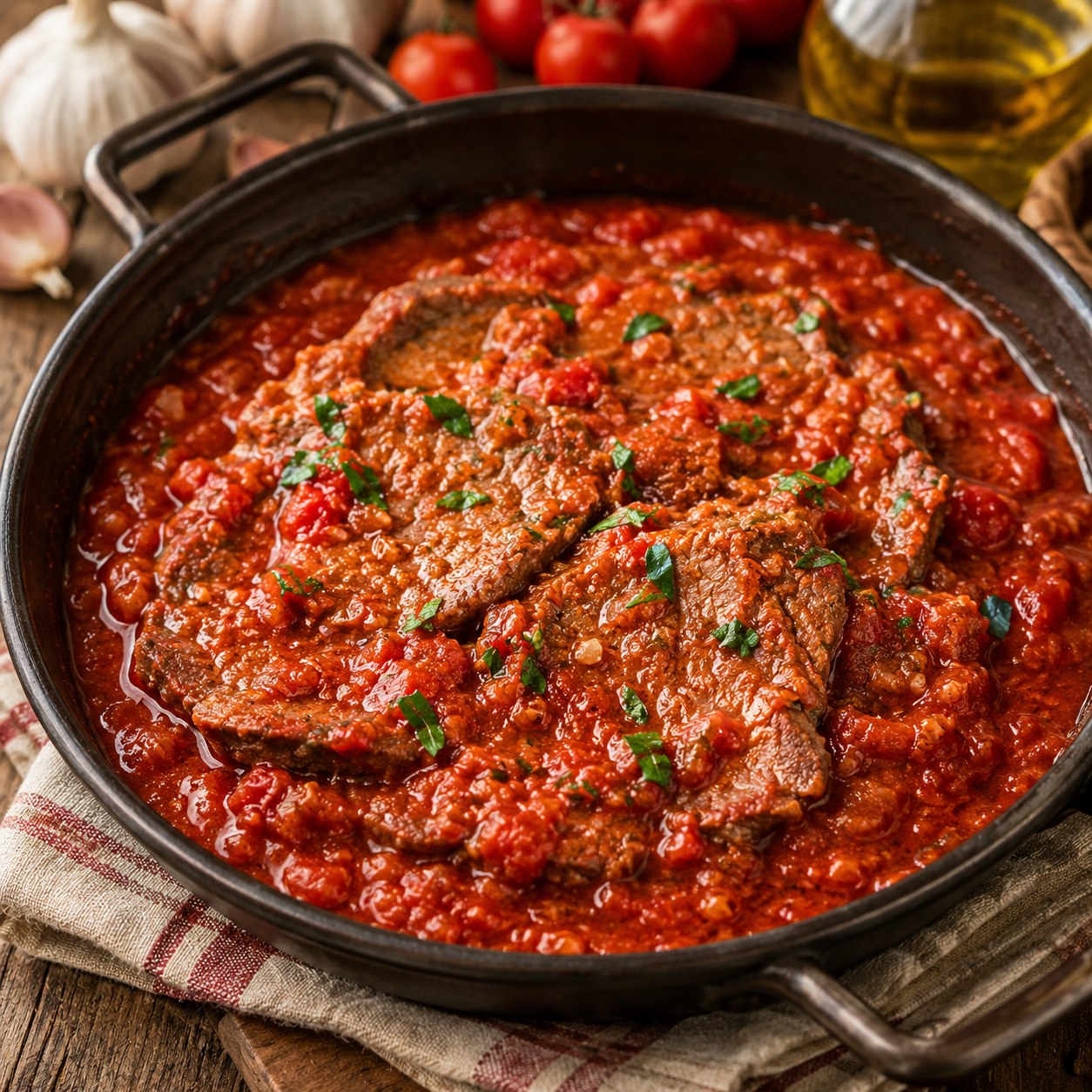
Of all the recipes in my mother's kitchen, with the possible exception of the tomato salad in summer, the carne alla pizzaiola is the one where I most clearly remember a single ingredient: the oregano. Dried, abundant, added at two points — into the sauce while it reduced and again raw at the very end, just before serving. The smell of dried oregano hitting a hot tomato sauce is one of the most specifically Italian smells I know, and in our kitchen it meant this dish was being made. My father liked it very much. It appeared regularly on weekday lunches and the plate was always clean when it left the table.
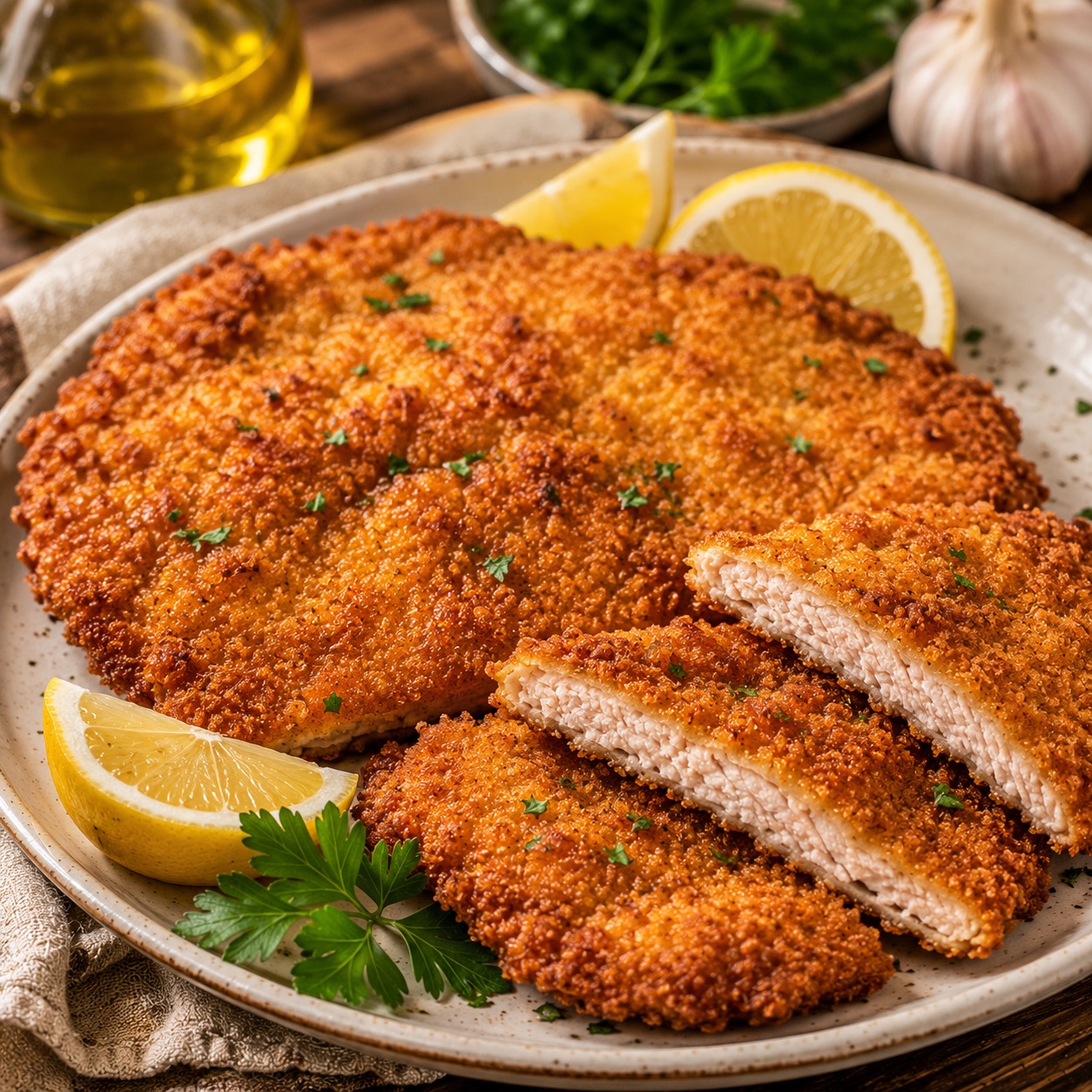
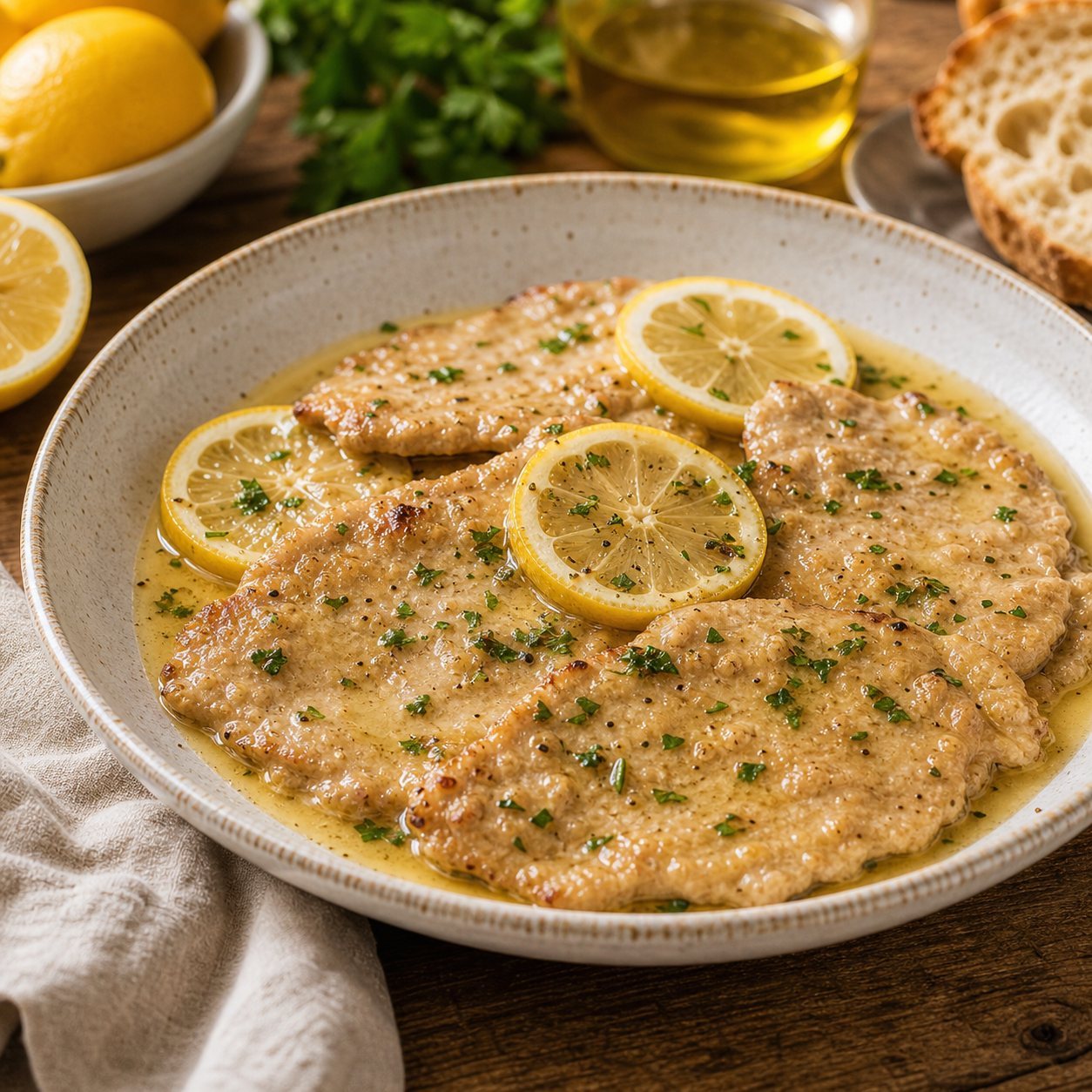
The pizzaiola is one of the two historic fates of the Neapolitan fettina — the red one. The white one, my father's specialty, is the fetta di carne in padella with garlic and parsley: same thin slice, same seconds-only law, no tomato. Here, the Neapolitan trick is to cook the sauce first and slip the meat in only at the end, so it stays soft.
The name explains the ingredients: pizzaiola means in the style of the pizza maker, and the sauce — tomato, garlic, oregano — is exactly the sauce of a pizza marinara, the oldest and simplest Neapolitan pizza, the one made before mozzarella entered the picture. The logic of applying pizza marinara flavors to a piece of beef is very Neapolitan: take the best sauce you know, reduce it further until it is thick and concentrated, and cook the meat briefly inside it so the beef absorbs the sauce without losing its texture. The cooking time for the meat itself is genuinely short — two to three minutes per side over high heat, just enough to change color and soak up the sauce while staying juicy. This is the opposite of braising. The meat does not soften in a long liquid; it is flashed through a dense sauce that coats it.
The sauce is made first, without the meat, and reduced until thick enough that it coats the back of a spoon and has darkened from the fresh tomato color to something deeper and glossier. This takes twelve to fifteen minutes. Only then does the meat go in. The sequence matters: a thin beef slice dropped into a thin, watery tomato sauce will steam rather than flash-cook, and the texture will be wrong. The sauce must be dense before the meat arrives. The meat cooks in the concentrated sauce, not in tomato water.
After the meat comes out, what remains in the pan is the actual prize. The sauce has picked up the meat's flavor during those few minutes — the juices that released from the beef during cooking have mixed with the tomato and oregano and garlic into something richer and more complex than the sauce was before. My mother never discarded this. It went into a small container, and the next day — or sometimes that evening — it dressed spaghetti or rigatoni with a sprinkle of Parmigiano or Pecorino. Two courses from one preparation: the meat as secondo at lunch, the sauce as primo the following day. This is the economy of a kitchen that wastes nothing, and the pasta with that sauce is genuinely one of the best things you can make with leftovers.
Dried oregano and fresh oregano are chemically different enough that they are not interchangeable in this dish — dried is correct here, and fresh would produce a noticeably different result. The drying process concentrates oregano's volatile compounds, particularly carvacrol and thymol, which are the primary carriers of its characteristic aroma. In fresh oregano these compounds are present but diluted in the leaf's water content; drying removes that water and increases the concentration dramatically. Heat releases carvacrol and thymol from the dried herb into the surrounding fat — in this case the olive oil in the sauce — which then distributes them throughout the preparation. The second addition of raw dried oregano at the end provides a fresh aromatic hit that the heat-treated oregano in the sauce no longer has, because the most volatile compounds have already evaporated during cooking. This is why both additions are needed: the first builds depth, the second provides top-note aroma.
The very short cooking time for the meat is not about convenience — it is about myosin and actin, the two main muscle proteins in beef. Myosin begins to denature at around 50°C and is fully set by 65°C; actin, which is responsible for the tough, dry texture in overcooked meat, begins to denature above 70°C. A thin beef slice cooked for two to three minutes per side in a very hot sauce reaches the myosin set point without reaching the actin denature point — it is cooked through and safe but has not yet contracted and expelled its moisture. The result is tender and juicy rather than tough and dry. Every extra minute over this window means more actin denaturation and a tougher, dryer slice. The recipe is not asking for speed for its own sake. It is asking for precision about protein chemistry.
The recipe — serves 4
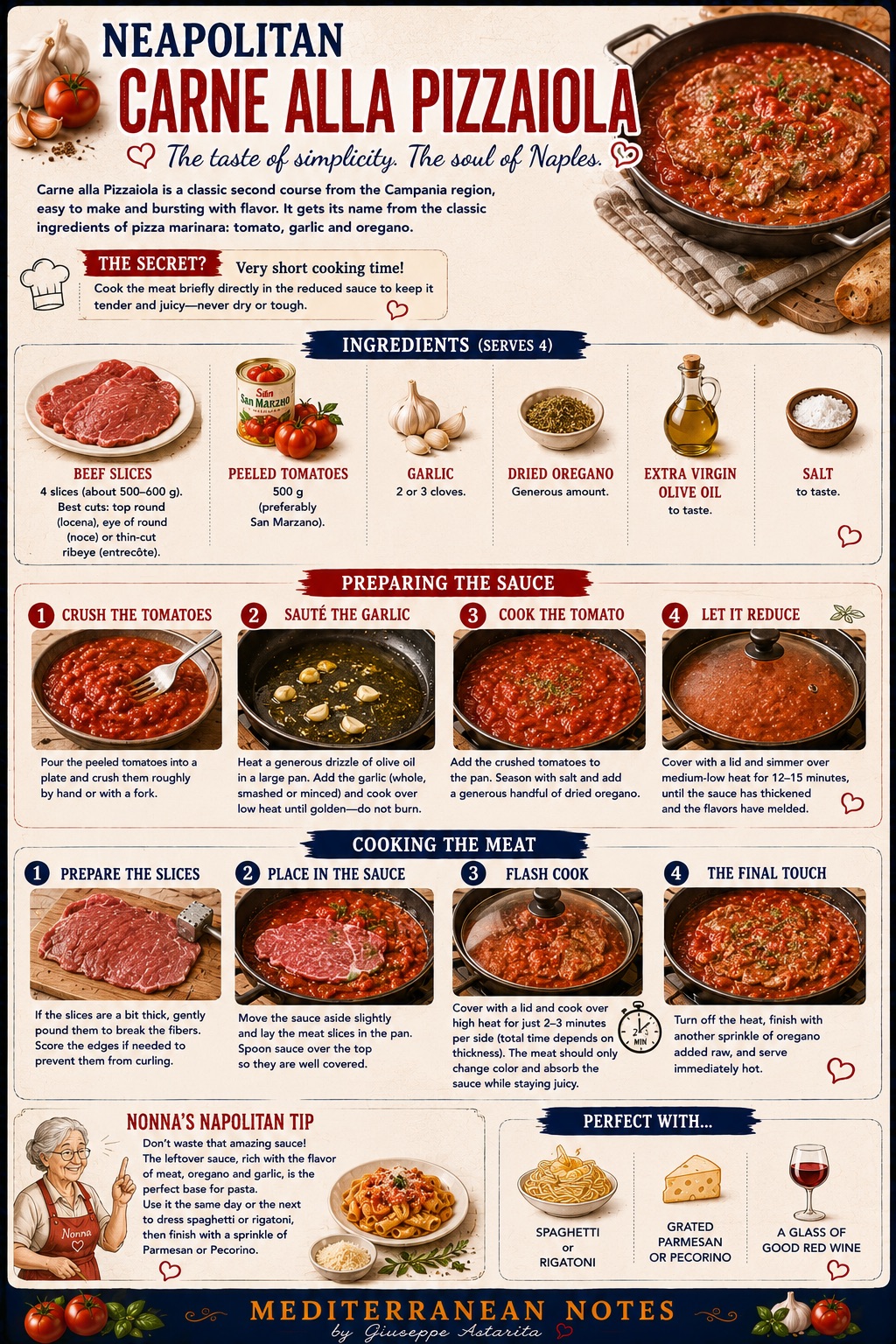
The following day, or that same evening, cook spaghetti or rigatoni al dente, drain, and dress generously with the reheated sauce. Finish with a sprinkle of Parmigiano Reggiano or Pecorino Romano. This is one of the great weekday pasta dishes — five minutes of work, genuinely exceptional result — and it is entirely dependent on having made the carne alla pizzaiola the day before. The meat was the secondo. The sauce is the primo. One preparation, two complete courses, nothing wasted. This is the Neapolitan kitchen's economy at its best.
On the meat, the bread, and a few other details
The carne alla pizzaiola is one of those dishes that seems too simple to be as good as it is. Six ingredients, thirty minutes, and a result that tastes like much more effort was involved. The secret the infographic correctly identifies is the sequence: sauce first, reduced properly, then the meat briefly inside it, then the raw oregano at the end. Each element is unremarkable alone. Together, in the right order, they produce something that my father asked for regularly and that I still associate with the smell of dried oregano in a hot pan more than with anything else my mother made.
Buon appetito — e non buttate il sugo.