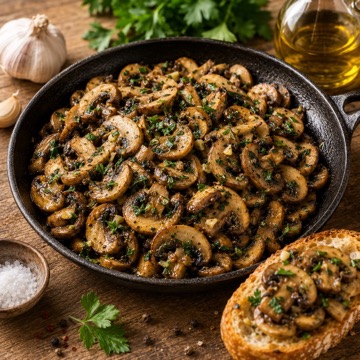
Piselli con Pancetta
Peas with Pancetta — and the Joy of Opening Fresh Ones
A typical side dish my mother made to accompany meat. I still make it — which makes it one of the few recipes in this collection that is present rather than past. The version for my daughters has no pancetta: just onion, a little water, salt. They love it. And when fresh peas are in season and we shell them together, that is the real recipe.
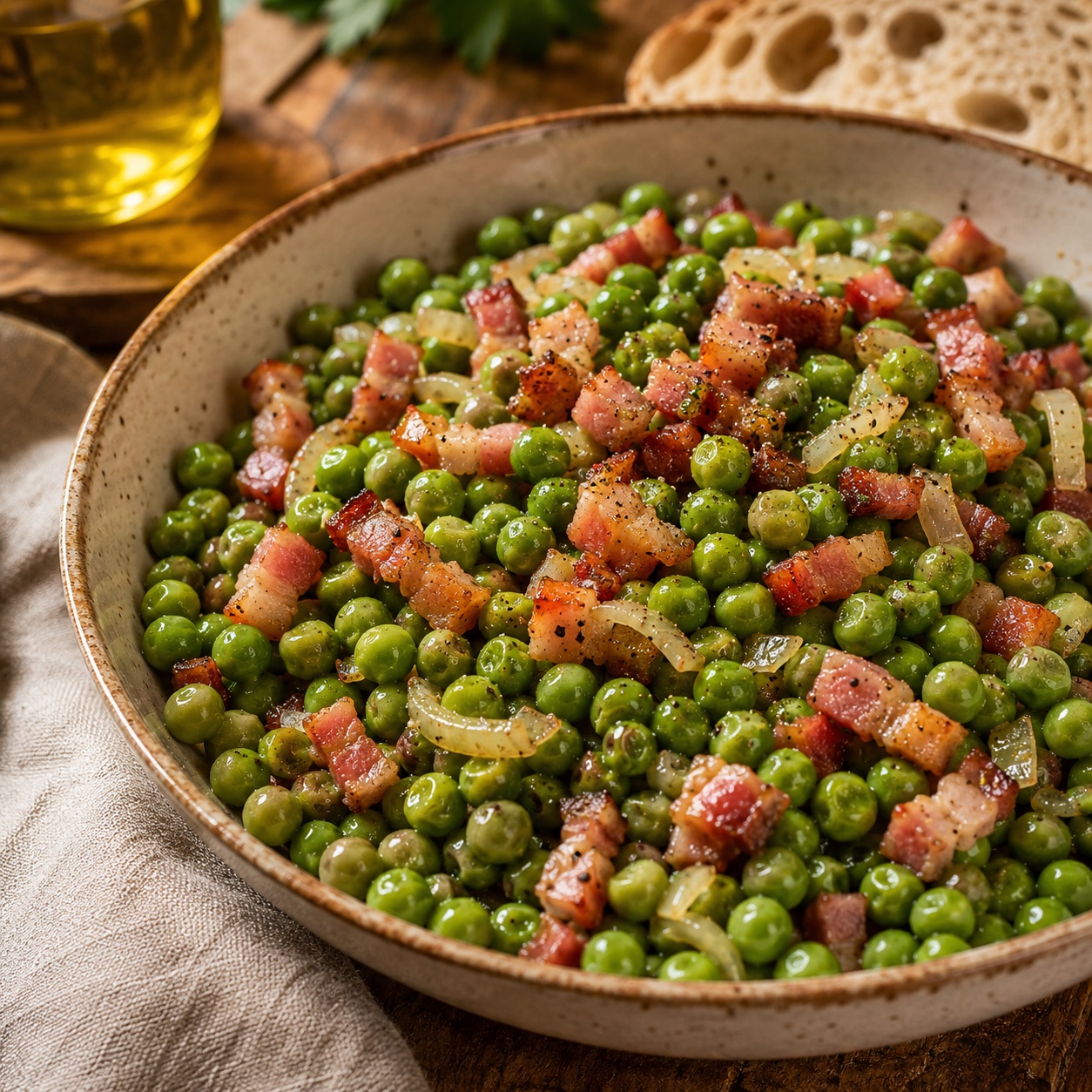
The dish itself is one of the simplest in the collection. Onion softened in olive oil, pancetta browned alongside it, peas added with a splash of water or broth and braised gently until tender. Twenty minutes. It appeared on the table alongside meat dishes as the contorno — the accompaniment that gave the secondo something green and slightly sweet to balance against. It is a dish that requires so little attention once it is started that it could be made simultaneously with something else on another burner, which is how it was always used.
The version I make for my daughters drops the pancetta entirely — just a small onion, olive oil, salt, a splash of water. The peas cook in their own steam and the onion provides the only aromatic. It produces something milder and sweeter than the pancetta version and it is the preparation that my daughters actually eat without negotiation, which — as noted in the context of the petto di pollo — is the relevant measure of success in a family kitchen. Both versions are correct for their context. The pancetta version is what my mother made for the family table. The plain version is what I make for the girls.
Fresh peas convert their sugars to starch at a rate of approximately 40% within six hours of being picked — which is why peas bought at a farmers market and shelled the same day taste markedly sweeter than peas that have been refrigerated for several days after shelling. The sugars are present at the moment of picking, and they begin converting to starch almost immediately as the pea's metabolic processes continue after harvest. This is why the traditional practice of shelling peas immediately before cooking — not hours before — produces a noticeably sweeter result, and why eating a few raw while shelling (when the sugar content is at its peak) is so satisfying.
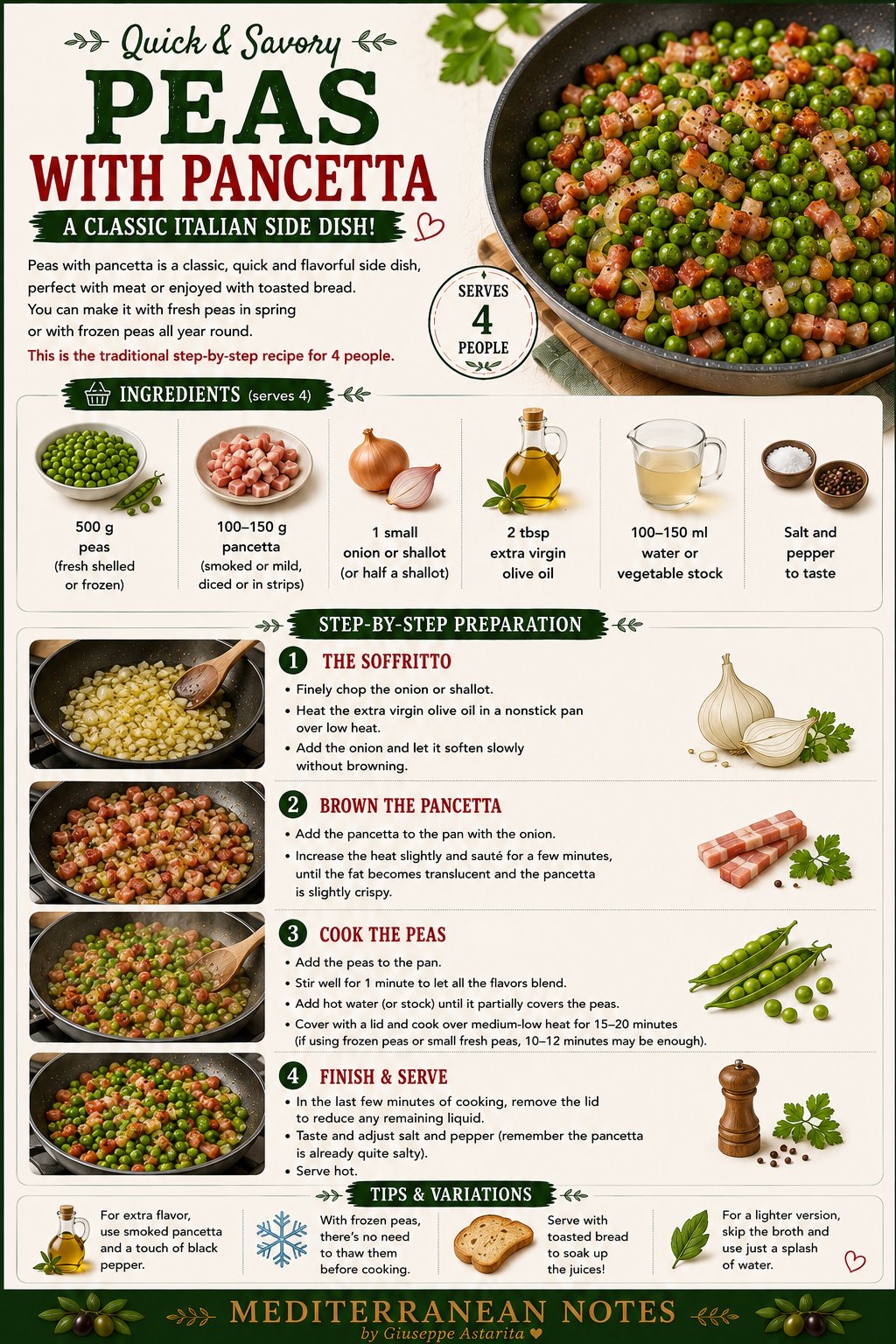
Frozen peas are picked and flash-frozen within hours of harvest — often faster than fresh peas reach a supermarket shelf — which stops the sugar-to-starch conversion almost immediately. This is why frozen peas often taste sweeter and brighter than "fresh" peas that have been in transit and refrigeration for several days. The blanching before freezing also sets the chlorophyll and preserves the green color. For the braised preparation described here, frozen peas are genuinely excellent and require no thawing — they can go directly into the pan from frozen, where they will release their moisture as they heat, providing the liquid the preparation needs. The infographic is correct that there is no need to thaw them first.
The recipe — serves 4
This is one of the posts in the collection where the present tense applies. I make this. The girls eat it. In spring, when the peas are in season at Whole Foods or at the farmers market, we buy the pods and shell them at the kitchen table in Massachusetts — which is the same activity that happened at kitchen tables in Caserta, in the same spring season, with the same pile of pods and the same percentage of peas eaten raw before they reach the bowl. The dish that results takes fifteen minutes and goes alongside whatever the main course is, and nobody at the table objects to it.
That continuity — the same gesture repeated across generations and across an ocean — is what the collection is trying to document alongside the recipes. The peas are a small example. There are larger ones. But the small ones are sometimes the most durable.
Buona primavera — e sempre i piselli freschi quando ci sono.