Funghi Trifolati
Italian Sautéed Mushrooms — A Classic Side Dish
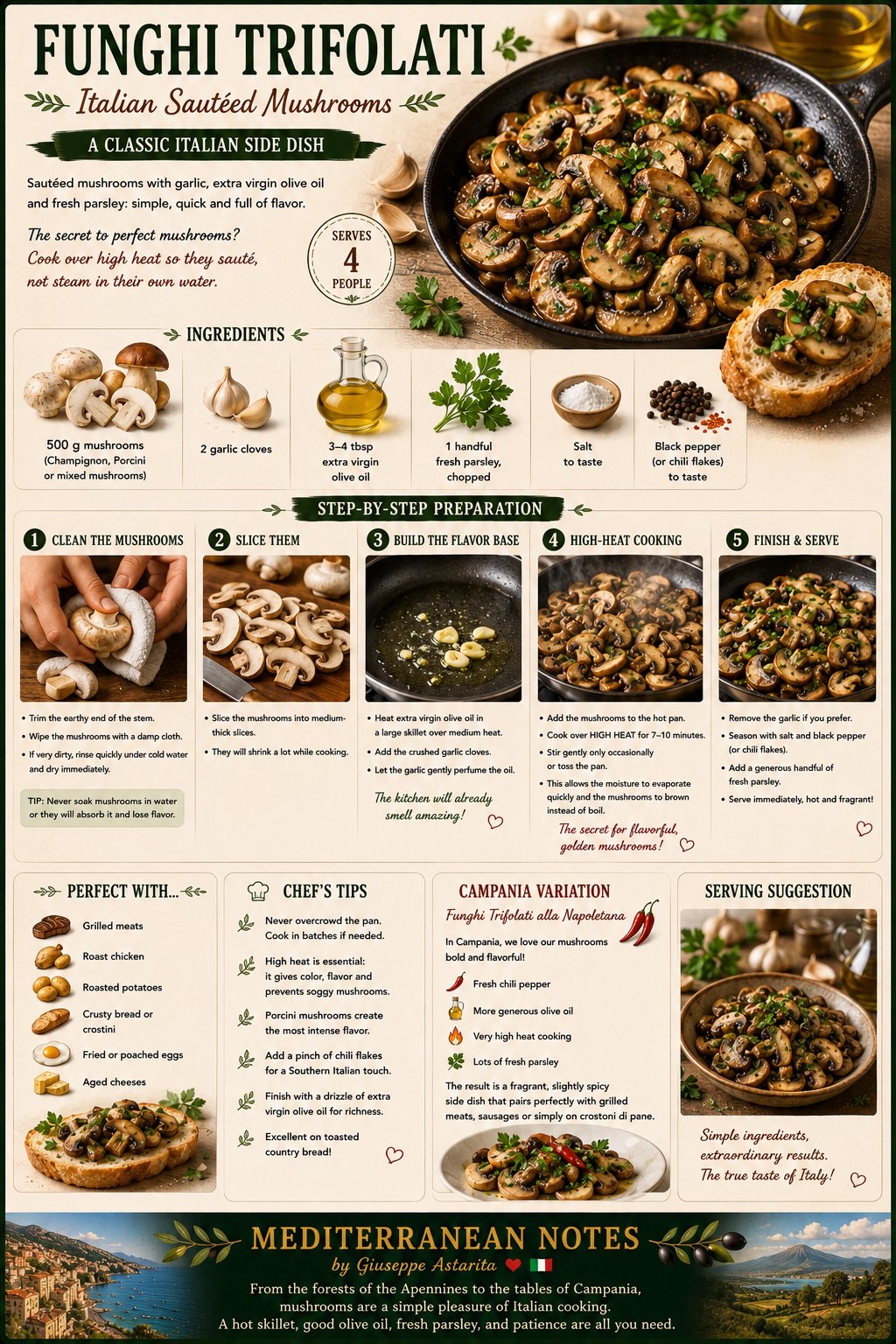
A typical side dish my mother used to prepare to accompany meat dishes. Mushrooms, garlic, extra-virgin olive oil, fresh parsley, salt and black pepper. That is the whole preparation. The secret is high heat — so they sauté and brown rather than steam in their own liquid. Simple ingredients, extraordinary results.
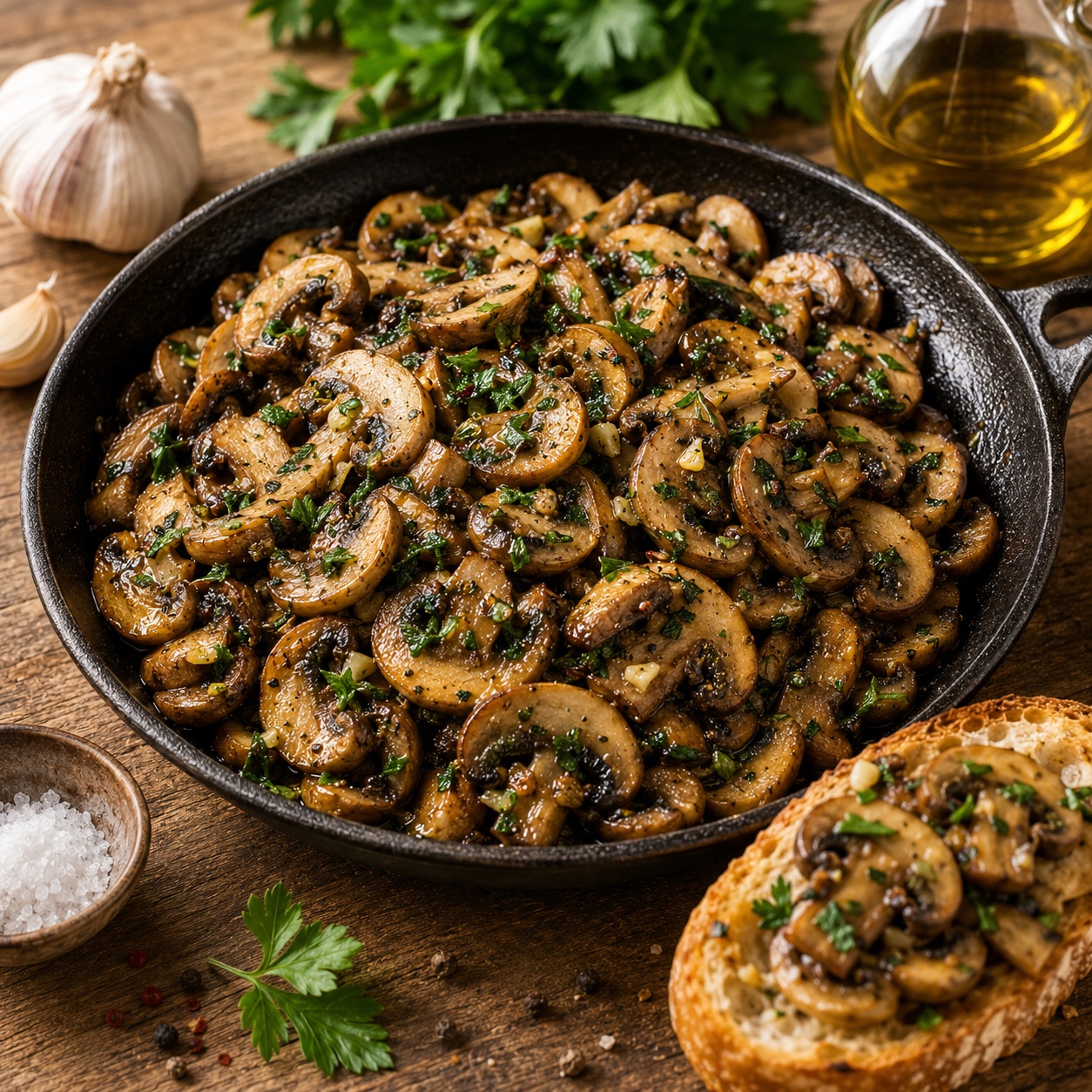
The funghi trifolati belong to the same category as the piselli con pancetta — weekday contorni, simple side dishes that accompanied the secondo without requiring their own occasion or much preparation time. They appeared on the table because the secondo needed something alongside it, and because mushrooms were available, and because garlic and olive oil and parsley are always at hand. This is practical cooking, the kind that fills the plate around the main dish without demanding a separate narrative.
What makes the trifolati specifically good rather than merely acceptable is the heat. Mushrooms contain a very high percentage of water — between 85 and 95% depending on variety — and when that water releases into a cool or crowded pan it produces steam rather than Maillard browning. Steamed mushrooms are pale, soft, and slightly rubbery, sitting in a pool of grey liquid. Sautéed mushrooms — cooked in a wide pan over high heat in small enough batches that each mushroom has space and the pan temperature stays high — brown on the surface, concentrate their flavor, and develop the nutty, earthy character that makes the dish what it is. High heat is not a preference. It is the technique.
The recipe — serves 4
Mushrooms are composed of 85–95% water depending on variety, with the remainder being protein, carbohydrates, and a small amount of fat. When a mushroom is placed in a cool or crowded pan, the surface temperature stays below 100°C as the surrounding water prevents it from rising — and below 100°C, only evaporation occurs. The mushroom sits in an increasingly large pool of its own liquid, steaming in a closed environment, and never reaches the 140–165°C surface temperature required for Maillard browning to begin. The Maillard reaction — the reaction between amino acids and reducing sugars that produces the hundreds of aromatic compounds responsible for the flavor of browned food — simply does not occur below approximately 140°C at the surface.
In a wide pan over high heat with sufficient space between pieces, the liquid that releases from the mushroom surface evaporates almost immediately rather than accumulating. The surface temperature rises to the Maillard range and browning begins — producing the specific nutty, earthy aromatic compounds (including various pyrazines, furans, and sulfur-containing volatiles) that make well-cooked mushrooms so satisfying. Porcini mushrooms develop a particularly complex brown flavor because their higher initial sugar content and specific amino acid profile produce more varied Maillard products than the milder champignon. The principle is the same; the result is more intense.
This is a fifteen-minute side dish that, done correctly, tastes considerably better than its preparation time would suggest. The mushroom risotto uses the same first step — high heat, garlic, mushrooms browned before they go into the dish — because the browning of the mushroom in the first phase is what gives the risotto its depth. The trifolati are the distilled version of that same logic: mushroom, garlic, olive oil, heat, parsley. Nothing else required. From the forests of the Apennines to the tables of Campania.
Buon appetito — e funghi ben dorati, sempre.