CoursesBasicsFirst CoursesSecond CoursesSides & VegetablesSoupsSaucesEggs & FrittatePizza & BreadBreakfastSnacksStreet FoodDesserts
DietVegetarianVegan
SeasonSpringSummerAutumnWinter
MainSeafoodMeatEggs
MoreCulture & TraditionsGlossaryAbout

Zuppe · Cucina Povera · Legumi · Meridione

Pasta e Cicerchie

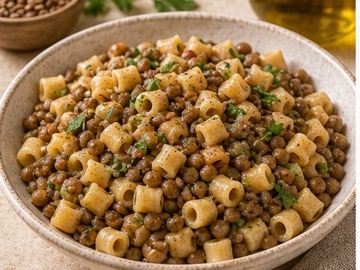
The ancient grass pea — earthier than a chickpea, wilder than a fava — cooked into a thick, comforting stew with short pasta. One of the oldest dishes in the Apennine kitchen.
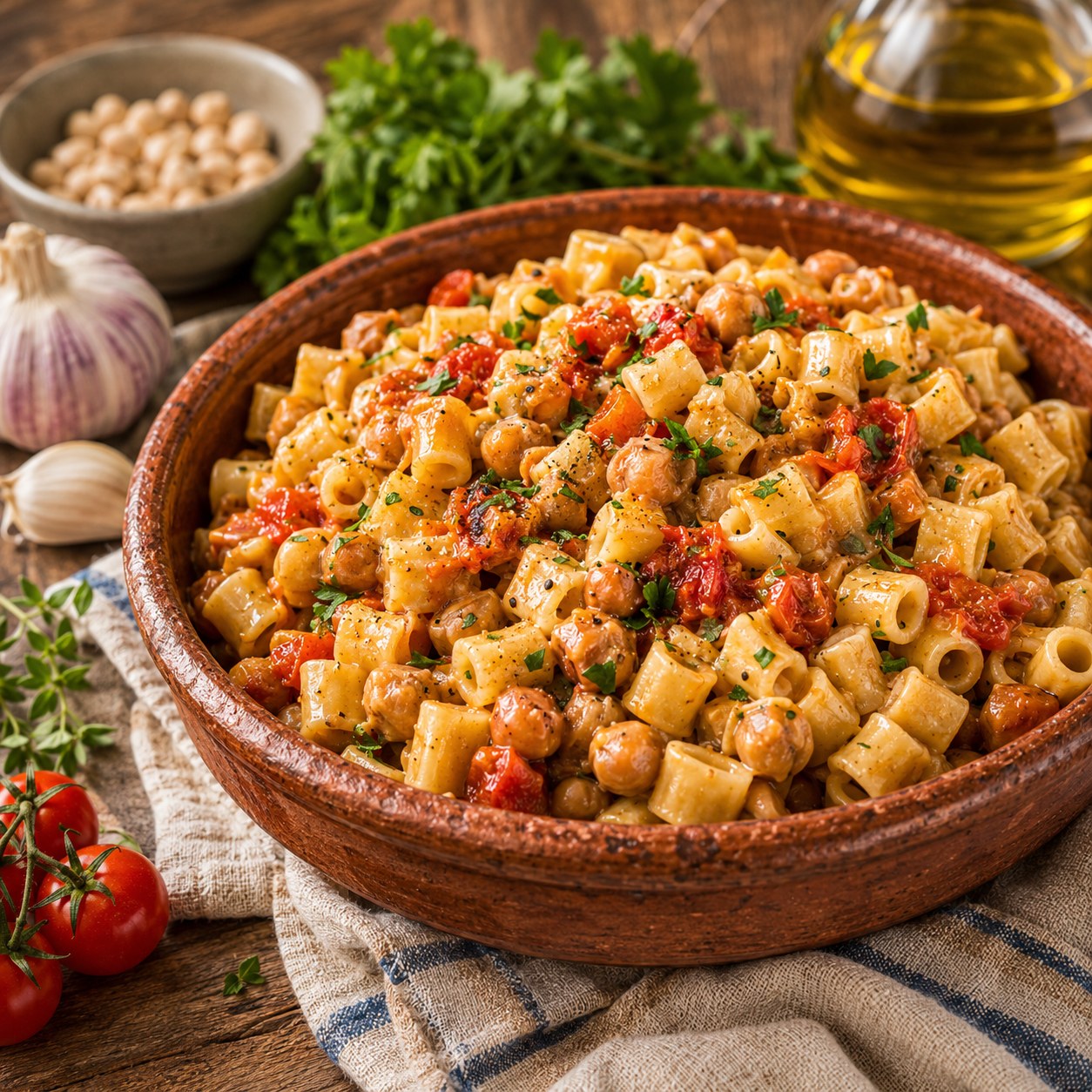
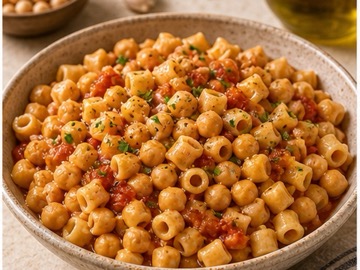
Pasta e cicerchie — thick stew of grass peas and short pasta in a rustic terracotta bowl

There is a legume older than the chickpea, older than the lentil in Italian peasant cooking, that most people outside of southern and central Italy have never encountered. The cicerchia — grass pea, chickling vetch, Lathyrus sativus — is a tooth-shaped, mottled pulse that has been cultivated in the Mediterranean since before recorded history. In the Apennine interior of Lazio, Puglia, Basilicata, and Molise, it was the legume that fed people through the hardest winters, the most desperate springs. It is earthier than a chickpea and richer than a fava, with a flavor that tastes specifically of the stony, mineral soil it prefers.

I should be honest about what this dish is: it belongs not to Naples specifically but to the broader cucina povera of central and southern Italy — the Apennine spine, the regions inland from the coasts. Campania has its own relationship with it, particularly in the provinces of Avellino and Benevento where the mountainous interior shares food traditions with neighboring Basilicata and Molise. The recipe below follows the method common to all these regions: the cicerchie soaked long, cooked in their own water until tender, then united with a soffritto, tomatoes, and short pasta cooked directly in the pot until the whole thing becomes a thick, inseparable stew.

The cicerchie is not simply a chickpea substitute. It has a quality of its own — a slight bitterness, a mineral depth, a texture that holds through cooking without becoming mealy — that makes the dish something specifically itself. If you find them (specialty Italian grocers, online, or in a good dry goods shop), they are worth the 24-hour soak and the long simmer. The result is one of the most honest and satisfying things the Italian peasant kitchen ever produced.
About cicerchie. Grass peas (Lathyrus sativus) are listed as a Prodotto Agroalimentare Tradizionale (PAT) in several southern Italian regions. They carry a neurotoxin (ODAP) in very small amounts that is neutralized completely by soaking and thorough cooking — hence the long soak and full simmer. Do not skip either step. When properly prepared, cicerchie are safe, nutritious (high protein, low glycemic index), and completely unlike anything else in the dry goods section.
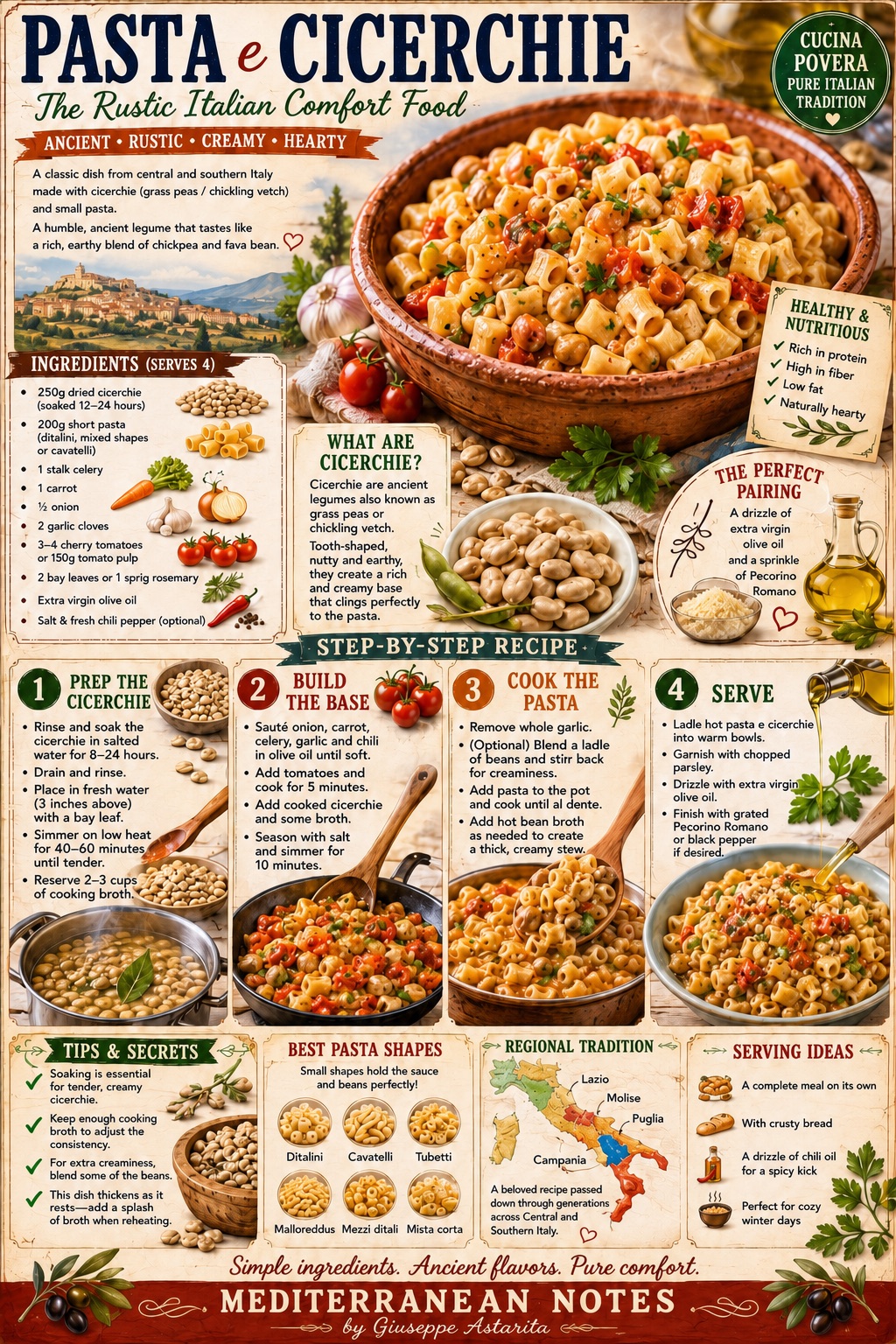
Pasta e cicerchie — cucina povera infographic, step by step

Tap to enlarge — La ricetta della pasta e cicerchie, passo dopo passo


Recipe — serves 4, 1h 20 min (+ soaking)

1
Rinse the cicerchie and soak in plenty of salted water for 12 to 24 hours. The longer the better — they absorb a great deal of water and soften considerably. Drain and rinse thoroughly before cooking.
2
Place the soaked cicerchie in a deep pot, cover with fresh water by at least 8 cm. Add a bay leaf. Bring to a boil, then simmer over low heat until completely tender — 40 to 60 minutes depending on the age of the beans. They should crush easily between two fingers. Drain, reserving all the cooking liquid.
3
In the same pot (or a wide saucepan), heat a generous splash of olive oil over medium heat. Add the minced onion, carrot, celery, garlic, and chili if using. Sauté until soft and fragrant, about 8 minutes. Add the tomatoes and cook for 5 minutes until they break down. Add the cooked cicerchie and two ladles of their reserved cooking broth. Season with salt and simmer together for 10 minutes to marry the flavors.
4
Remove the garlic cloves (and bay leaf). Optional but highly recommended: ladle out roughly a third of the beans and blend them smooth, then stir back into the pot. This creates the thick, creamy base without adding any fat — pure legume starch doing the work.
5
Bring the mixture to a gentle boil. Add the pasta directly into the pot with the beans. Cook, stirring frequently, adding more hot bean broth or water as needed to maintain a thick but flowing consistency. The pasta should finish cooking in the bean stew, absorbing its flavor and releasing its own starch into the sauce.
The final consistency should be dense — somewhere between a soup and a pasta dish. In Italian cooking this is called "né troppo asciutta, né troppo brodosa" — neither too dry, nor too brothy. It should flow slowly off a ladle.
6
Ladle into shallow bowls. Finish with chopped fresh parsley, a generous drizzle of raw extra-virgin olive oil, and — if you like — a sprinkle of Pecorino Romano or a few turns of black pepper. Serve immediately; this dish does not wait.
Questo piatto è vegano. The Pecorino Romano is optional — the dish is complete without it. Cicerchie are high in protein and the combination with pasta provides a complete amino acid profile. A fully plant-based, deeply satisfying meal from a tradition that invented plant-based eating out of necessity, not ideology.

This dish belongs to the tradition described in full on the cucina povera page — cooking that begins with constraints and ends with something better than its ingredients suggest. The cicerchie, like many prodotti tipici del Meridione, fell out of fashion in the postwar decades as cheap industrial food took its place. It is returning now, slowly, and the return is deserved. Nothing else tastes quite like it.
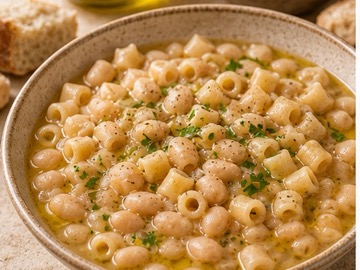
Legumi antichi, sapori profondi.
More pasta e legumi
Pasta e fagioli
Cannellini beans and short pasta, thick and creamy in the classic Campanian way.
Pasta e ceci
Chickpeas, short pasta, garlic, oil, and the same cucina povera logic.
Pasta e lenticchie
Lentils and pasta cooked into a thick one-pot dish for the colder table.