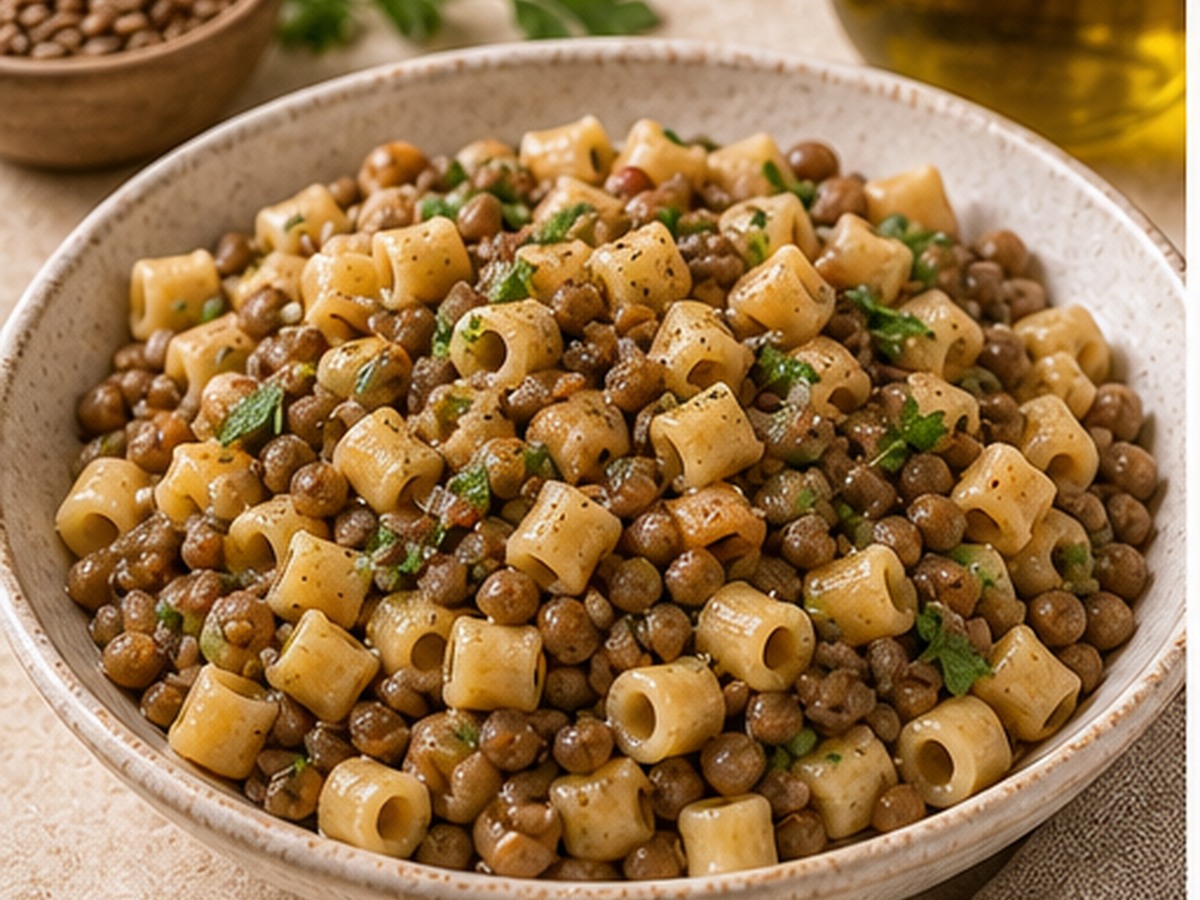
Pasta e lenticchie: the longevity recipe
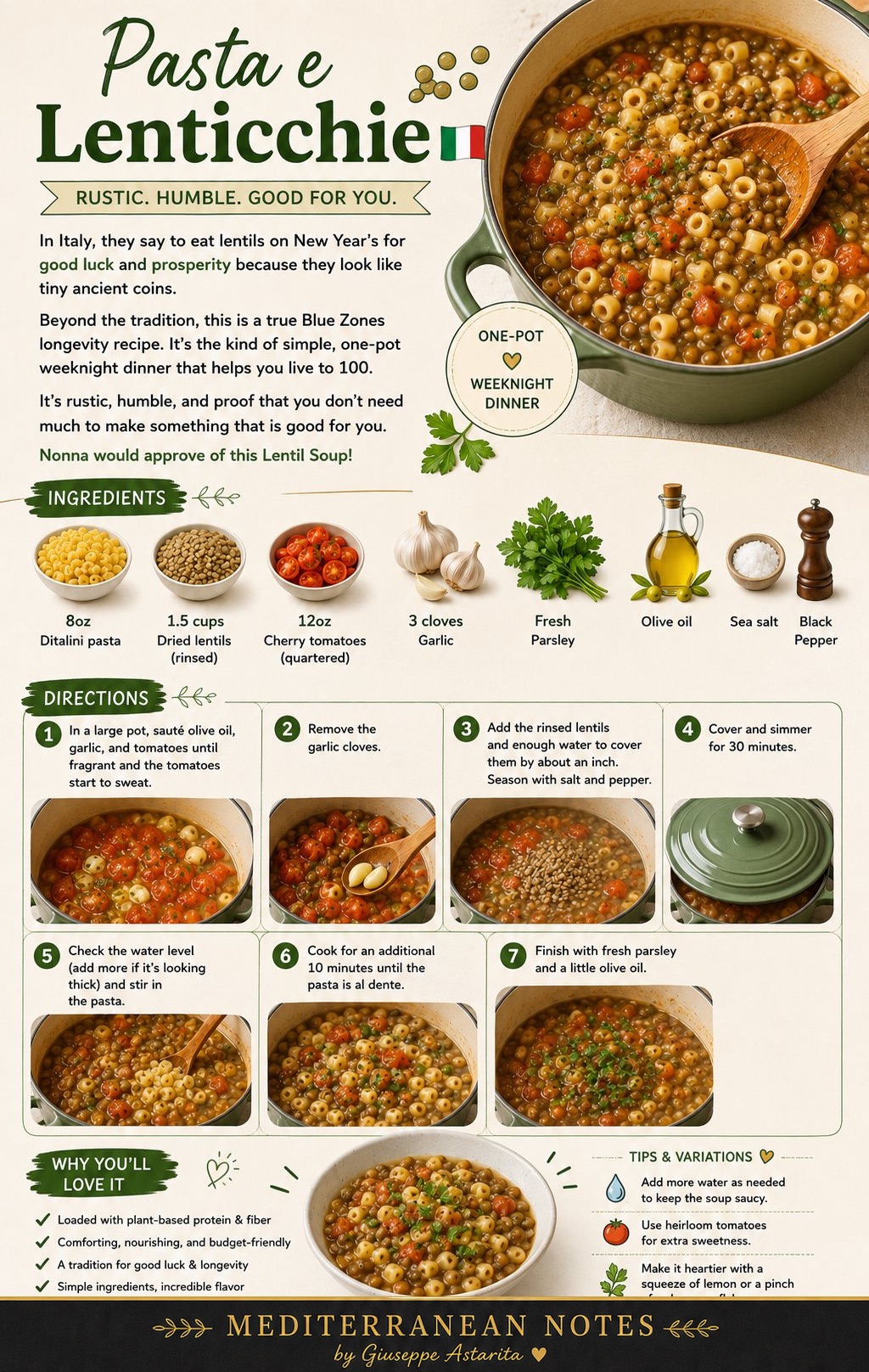
In Italy, they say to eat lentils on New Year’s for good luck and prosperity, because they look like tiny ancient coins. Beyond the tradition, this is a true Blue Zones recipe. The kind of thing that helps you live to 100.
There is a version of this superstition in almost every culture that has cultivated lentils, which is to say almost every culture that has existed long enough to develop superstitions. In Campania, the tradition is specific: on the night of December 31st, you eat lentils with cotechino or zampone — a rich, fatty cured pork — and the combination of legume and abundance is supposed to bring prosperity into the new year. The lentils look like coins. The pork is the luck. The wine is the wine.
What the superstition did not know, and what the nutrition science has since confirmed, is that lentils are genuinely one of the most valuable foods a human being can eat. Not ceremonially. Not symbolically. Molecularly. The people of Sardinia, who eat legumes at nearly every meal and are among the longest-lived populations on earth, were not following a Blue Zones protocol — they were eating the food that was available, cheap, filling, and had sustained their ancestors for millennia. The science arrived later and confirmed what the food already knew.
Pasta e lenticchie is the weeknight version of this logic. No cotechino required. No New Year’s required. A pot, some lentils, pasta, olive oil, garlic, cherry tomatoes, and parsley. Done in forty minutes. Better than it has any right to be.
Lentils, resistant starch, and the highest soluble fiber concentration of any legume
Lentils contain one of the highest concentrations of resistant starch and soluble fiber of any food — both reaching the colon intact, where gut bacteria ferment them into butyrate, propionate, and acetate. Butyrate is the primary energy source for colonocytes, supports the gut barrier, and has documented anti-inflammatory effects that extend systemically. Lentils are also among the richest plant sources of folate, which is critical for DNA synthesis and repair and chronically underconsumed in modern diets. Their polyphenol content — primarily flavonoids and phenolic acids — contributes antioxidant activity with documented associations with reduced cardiovascular risk. The cherry tomatoes add lycopene; the olive oil makes it bioavailable. The parsley provides apigenin and luteolin, flavonoids released by chopping. This is not a simple soup. It is a molecularly sophisticated delivery system that happens to taste like something a grandmother made.
One note on the lentils: use green or brown lentils for this dish, not red. Red lentils dissolve completely in cooking, which creates a lovely thick soup but leaves no texture. Green and brown lentils hold their shape while still releasing enough starch to thicken the liquid around the pasta. The texture — some lentils whole, some partially broken, the pasta dense and coated — is what makes this dish feel substantial rather than thin.
Ingredients · serves 3–4
Method
In a large pot, warm the olive oil over medium heat. Add the smashed garlic cloves and the quartered cherry tomatoes. Cook until the tomatoes begin to soften and release their juice — about 5 minutes. The tomatoes should be collapsing, not browning.
Remove and discard the garlic cloves — they have done their work infusing the oil and tomatoes.
If you prefer a stronger garlic flavor, leave one clove in and smash it into the tomatoes with a spoon before adding the lentils.
Add the rinsed lentils and enough water to cover them by about an inch — roughly 4–5 cups. Season generously with sea salt and black pepper. Cover and bring to a simmer.
Simmer covered for about 30 minutes, until the lentils are tender but still holding their shape. Some will have broken down and thickened the liquid — this is what you want.
Check the water level at 20 minutes. The liquid should be brothy but not soupy. Add a splash more water if it looks too thick before the pasta goes in.
Add the ditalini pasta directly to the pot. Stir. Cook uncovered for about 10 minutes until the pasta is al dente, stirring frequently. The pasta will absorb liquid rapidly — add water a ladleful at a time to keep the consistency dense but not dry.
You want this to move slowly when you tilt the pot — thick and creamy, not soup, not paste. The Neapolitan word is pippiare: a lazy, gentle bubble.
Pull off the heat. Add a generous drizzle of raw extra-virgin olive oil and the chopped fresh parsley. Taste for salt.
Serve in deep bowls with additional black pepper and another drizzle of olive oil. The dish thickens as it sits — a splash of hot water brings it back. In our house, this was New Year’s Day lunch and Tuesday dinner and whatever day we needed something warm and restorative.
Buon appetito. Buona fortuna.