Insalata di riso: the rice salad that goes to the beach
Something to have in the fridge ready on hot summer days — or packed in a cooler for a day at the sea. Every family makes it differently. My father's version had no tuna. It had everything else.
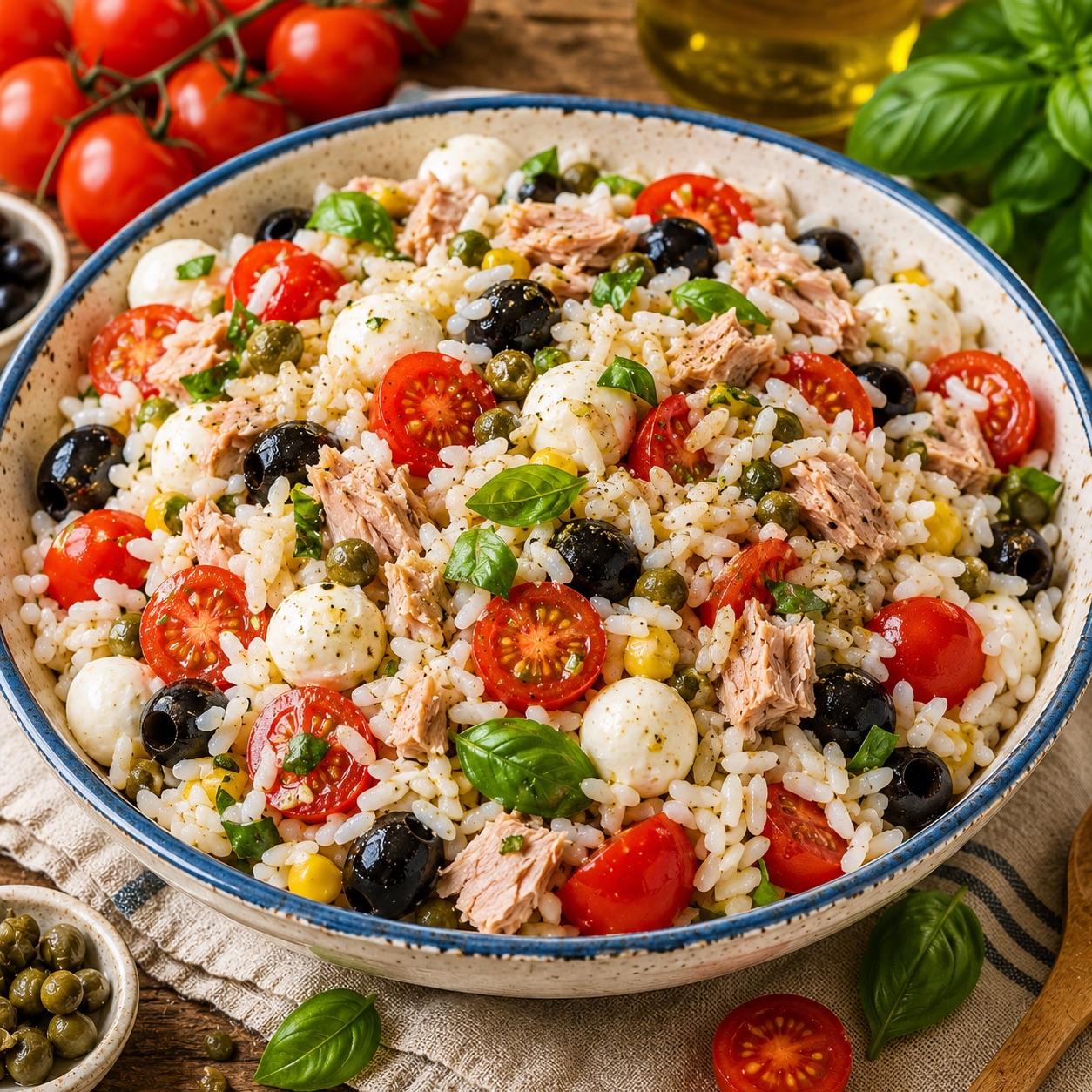
The insalata di riso is one of the definitively Italian summer preparations — not because it is complicated or particularly regional, but because it is in every Italian kitchen from June to September, made slightly differently by every family, eaten cold from the refrigerator or packed into containers for the beach, and constituting a full meal that requires no plates, no heat, and no thought on the day you eat it.
My father didn't like tuna. This was different from the anchovy situation — with anchovies he had a strong and vocal objection, but with tuna it was quieter, more of a general indifference than a specific dislike. So the rice salad in our house was tuna-free, which made it look different from the version most people describe — the colorful, mozzarella-and-tuna Neapolitan rice salad that appears in cookbooks. Ours was a rice salad of the pantry and the sottaceti: pickled things, preserved things, whatever was in the jars that the summer kitchen kept. Melanzane sott'olio — the preserved eggplant in olive oil — cut into pieces. Cipolline sottaceto — the small pickled onions, slightly sweet and vinegary. Sliced tomatoes. Pieces of cheese. Capers. Olives. Everything dressed with a generous amount of extra-virgin olive oil and a splash of vinegar that united the whole bowl into something coherent and sharp and completely summer.
The rice itself is the structure on which everything else is arranged. It needs to be cooked, drained very al dente, spread on a tray, and dressed with olive oil while still warm — then left to cool completely before anything else is added. Do not rinse the rice in cold water; this removes the surface starch that allows the grains to absorb the dressing. Cool it in the air, on the tray, fluffed occasionally with a fork. This takes patience but produces a rice that is still individual grains when cold rather than a compacted block.
The beach version travels in a large lidded container, packed in a cooler with ice. It is best eaten in the shade, on a blanket, with plastic forks and no further ceremony. It is a complete meal that was carried down to the sea in the morning and eaten in the afternoon, when hunger arrived properly after several hours in the water. It requires nothing alongside it. Bread, if you have it, is welcome but not essential.
Cooled rice, resistant starch, and the glycemic benefit of eating it cold
The insalata di riso benefits from a nutritional principle that appears elsewhere in this blog: cooked and cooled rice has a significantly higher resistant starch content than freshly cooked hot rice. During cooling, the gelatinized starch partially retrogrades — returning to a more crystalline structure that resists digestion in the small intestine, reaches the colon intact, and serves as a prebiotic substrate for butyrate-producing gut bacteria. A rice salad eaten cold or at room temperature, as this always is, therefore has a lower glycemic index and a better prebiotic profile than the same rice eaten immediately after cooking. The olive oil dressing applied while the rice is still warm penetrates the grains as they cool, contributing oleic acid and phenolic antioxidants to each bite. Pickled vegetables — cipolline sottaceto, capers, olives — contribute acetic acid (which further reduces postprandial glycemia when consumed with a starchy meal), quercetin and other flavonoids from the onions, and sodium (which, in the context of a summer day with significant fluid loss through perspiration, is not unwelcome). Melanzane sott'olio adds the nasunin and chlorogenic acid of eggplant along with additional olive oil polyphenols from the preserving oil. Cherry tomatoes contribute lycopene and vitamin C. Mozzarelline or other fresh cheese provide calcium, casein protein, and fat-soluble vitamins. The vinegar in the dressing acts on the same glycemic-reduction mechanism as acetic acid from pickled vegetables. The insalata di riso is, as a beach meal eaten under the afternoon sun with sea salt on the skin, probably the most appropriate nutritional profile for the moment of its consumption in the entire Italian summer repertoire.
The recipe
Ingredients · serves 4
The rice base
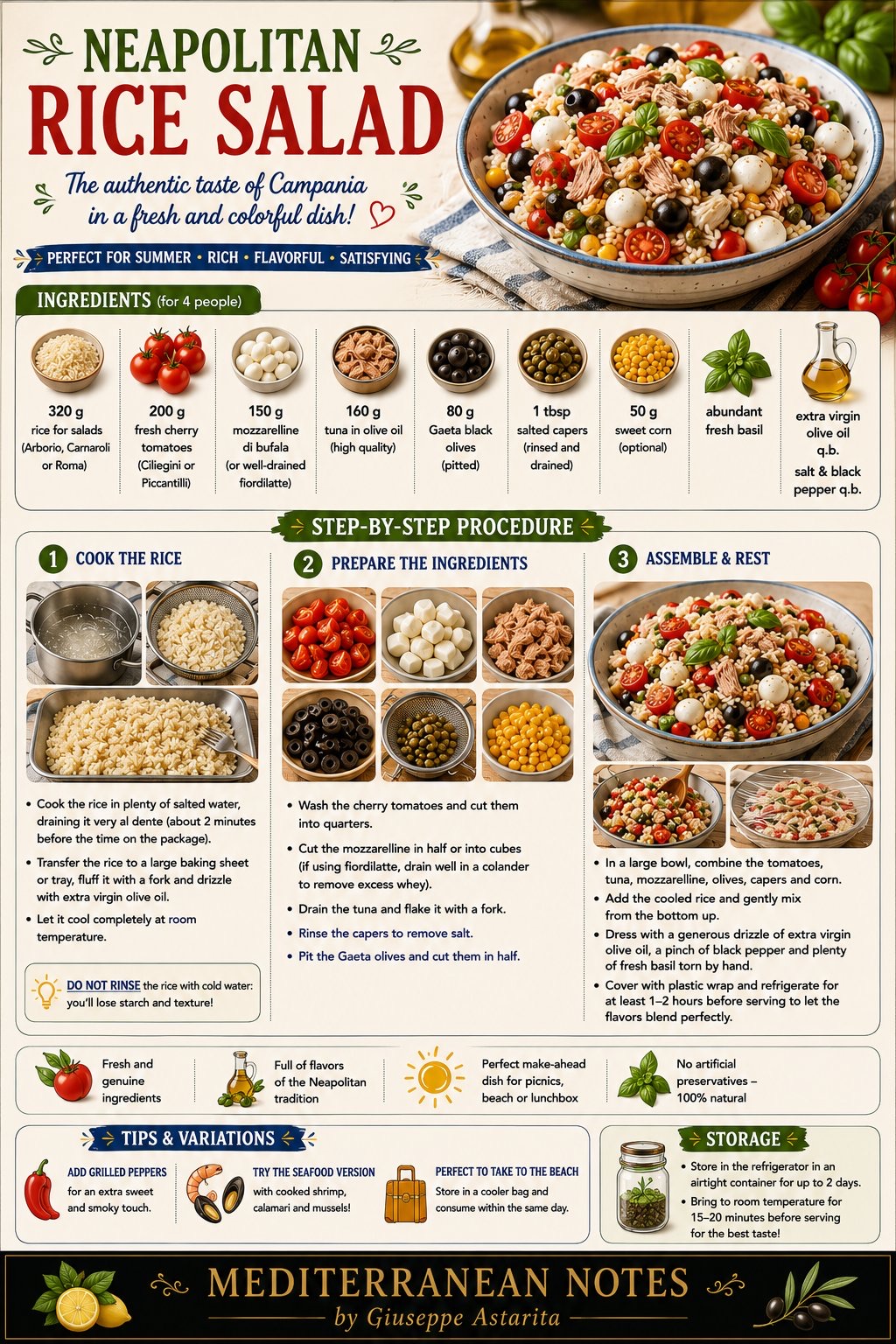
The classic Neapolitan version — with tuna
My family's version — no tuna, from the pantry
Method
Cook and cool the rice. Cook the rice in plenty of salted boiling water, removing it about 2 minutes before the package instruction — it should be al dente, with a firm center. Drain well. Transfer immediately to a large baking tray or flat surface. Drizzle generously with extra-virgin olive oil and fluff with a fork to coat every grain. Spread out and let cool completely at room temperature — at least 30–40 minutes. Do not rinse with cold water. Do not rush this.
The oil-while-warm step is essential — it prevents the grains from clumping and gives the rice the ability to absorb the dressing when assembled. Cold, dry, rinsed rice does neither of these things.
Prepare the ingredients. Quarter the cherry tomatoes. Halve the mozzarelline (if using) and drain well in a colander — excess whey makes the salad watery. Flake the tuna (if using). Rinse the capers under cold water to remove salt. Pit and halve the olives. Cut the melanzane sott'olio and other pickled vegetables into appropriately sized pieces. Have everything ready before assembling.
Assemble and dress. In a large bowl, combine all the filling ingredients. Add the cooled rice and mix gently from the bottom up — do not stir aggressively or the rice will break and become pasty. Dress with a generous drizzle of extra-virgin olive oil, a splash of white wine vinegar, a pinch of salt, and black pepper. Taste and adjust. The balance of acid (vinegar plus the pickled vegetables) against the oil and the starchy rice is the whole flavor of this dish.
If using both pickled vegetables and vinegar in the dressing, taste carefully before adding more acid — the sottaceti contribute significant acidity of their own.
Refrigerate for at least 1–2 hours. Cover with plastic wrap and refrigerate before serving. This rest is not optional — it is where the flavors merge and the rice absorbs the dressing. The salad after 2 hours is completely different from the salad immediately after assembly, and better. The salad the next day is better still.
Before serving, bring to room temperature for 15–20 minutes. Cold from the refrigerator the flavors are muted; at room temperature they open up. Add the fresh basil (if using) only at this moment — not before refrigerating.
Two versions — the same soul
The Neapolitan classic — with tuna
Tuna in olive oil, cherry tomatoes, mozzarelline di bufala, Gaeta olives, capers, fresh basil. The version most associated with the dish in Campania — colorful, substantial, with the savory depth of good oil-packed tuna running through the rice. Best with buffalo mozzarella if you can find it; the difference from standard mozzarella is significant.
The pantry version — my family's
No tuna. Melanzane sott'olio, cipolline sottaceto, tomatoes, cubed provolone or scamorza, olives, capers, giardiniera, whatever sottaceti are in the jars. Olive oil and vinegar. This version uses what the Campanian pantry keeps — preserved vegetables in oil and vinegar that are always ready, that add complexity without any additional cooking, and that make each family's version slightly different from every other family's. Our version. Equally good.
The seafood version
Cooked shrimp, squid, and mussels in place of (or alongside) the tuna. A more elaborate summer version, closer to a seafood salad on a rice base. More effort, appropriate for a gathering. The dressing stays the same: olive oil, a squeeze of lemon instead of vinegar, fresh parsley.
The beach version — logistics
Pack in a large lidded container, inside a cooler with ice. Mozzarella should be well-drained before packing; excess whey pools at the bottom and makes the rice wet by afternoon. Eat within the same day when carrying it to the beach. Plastic forks work. No further ceremony required.
Buon appetito — e buona estate.