Pomodori con il Riso al Forno
Baked Rice-Stuffed Tomatoes with Potatoes
My mother made these sometimes — a summer dish, comforting in the way that baked things are even in the heat. The rice sits in the blended tomato pulp for an hour and a half before the oven, absorbing everything. The potato wedges bake around the base of the tomatoes in the same pan, catching all the juices. Warm or cold, and genuinely better the next day.
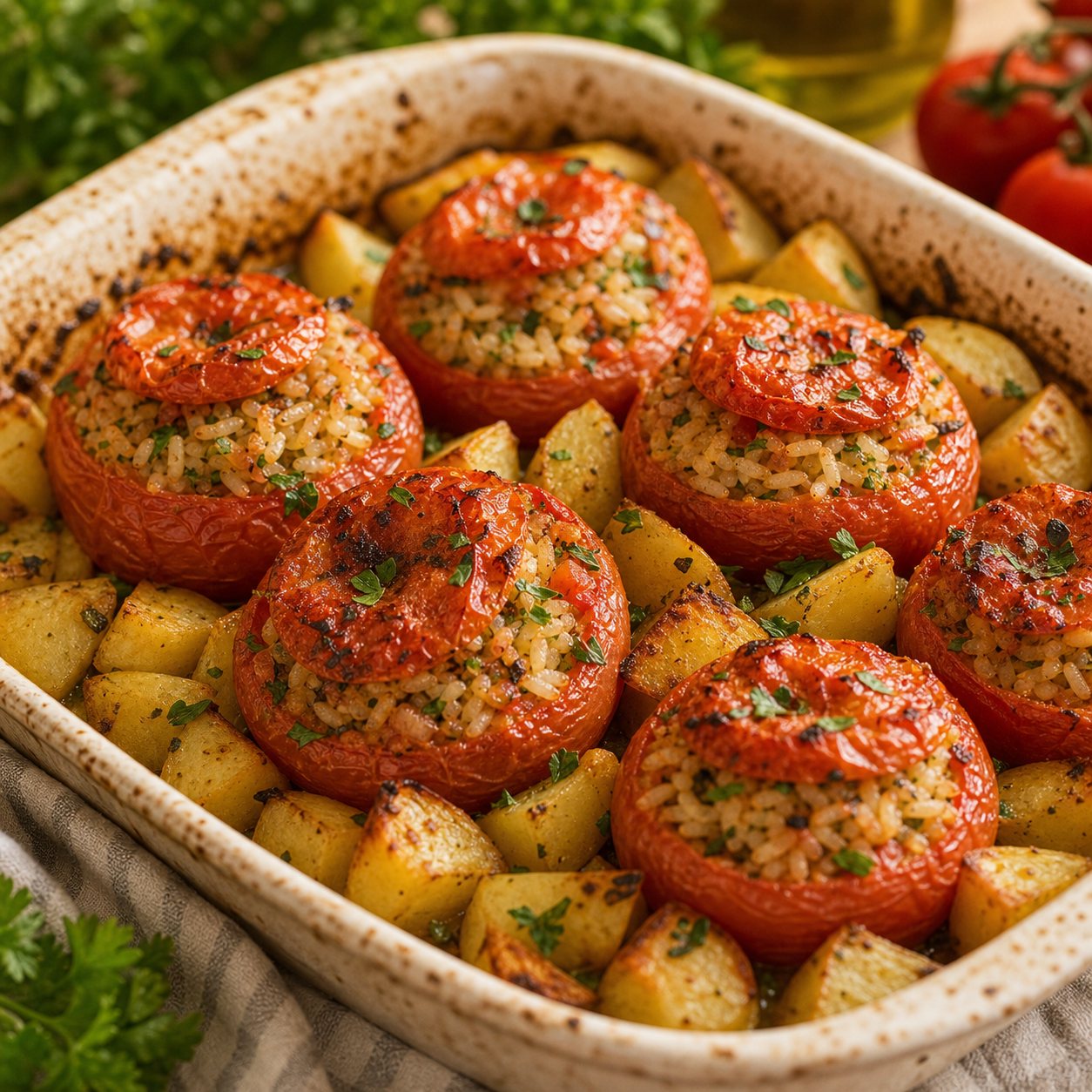
This is one of the great Italian summer dishes and it belongs primarily to the Roman tradition, though it appears across central and southern Italy with small regional variations. The dish is built on a simple insight: the tomato is both the container and the sauce. You hollow out the tomato, blend the pulp and juices with garlic, oil, basil, and oregano, add the raw rice directly to this liquid, and let the whole mixture rest for at least an hour and a half. During this rest the rice begins absorbing the tomato liquid — swelling slightly, softening at the surface, taking on color and flavor — before the oven is even turned on. By the time it goes into the oven, the rice is already fragrant and partially hydrated, and the remaining baking time finishes it inside the tomato vessel that has been supplying the liquid all along.
The potatoes go into the same pan, cut into wedges, seasoned with oil and oregano, arranged around the base of the tomatoes where they will absorb the juices that run off during baking. They do in the oven what potatoes always do in the Neapolitan kitchen when placed alongside something slow and wet: they take on the flavor of everything around them and become the best part of the pan. By the end, the potato wedges at the edge of the dish — slightly caramelized, their undersides soaked with tomato juice and olive oil — are what people reach for first.
This is also a dish that holds up at room temperature — which makes it part of the same summer logic as the pasta salad and the rice salad: food made ahead, eaten when the appetite arrives, unaffected by the absence of air conditioning. The tomatoes can be served warm from the oven, at room temperature an hour later, or cold from the refrigerator the following day. Each version is genuinely good; the cold-next-day version is in some ways the best, because the rice has continued absorbing the tomato juices overnight and the flavors have integrated further in the cold.
The counterintuitive step in this preparation is adding raw, uncooked rice directly to the tomato pulp mixture rather than pre-cooking it. This works because the baking environment inside the tomato provides both the liquid and the heat the rice needs to cook. The raw rice has a specific advantage over pre-cooked rice: its starch granules are intact and will gelatinize during baking, swelling to absorb the tomato liquid and releasing starch as they do so. This gelatinized starch is what gives the finished filling its dense, cohesive texture — it binds the tomato pulp to the rice in a way that pre-cooked rice cannot replicate.
The 1½-hour rest before baking is not decorative patience — it is the step that makes the recipe work. During this time, the rice absorbs a significant portion of the liquid from the tomato pulp through osmosis and capillary action. This pre-hydration means the rice needs less liquid from the tomato walls during baking, reducing the risk of the tomato collapsing or the filling drying out before the rice is cooked. Carnaroli or Arborio are specified because their high amylopectin content (the branched form of starch) produces a creamier, more cohesive result than long-grain rice, which remains more separate and firm. The tomato provides acidity during the rest, which slightly weakens the cell walls of the rice and accelerates subsequent hydration during baking. Basil and garlic added to the pulp contribute volatile aromatics that penetrate the rice surface during the rest period and are locked in as the starch gelatinizes. The tradition got all of this right without any of this vocabulary.
The recipe — serves 4
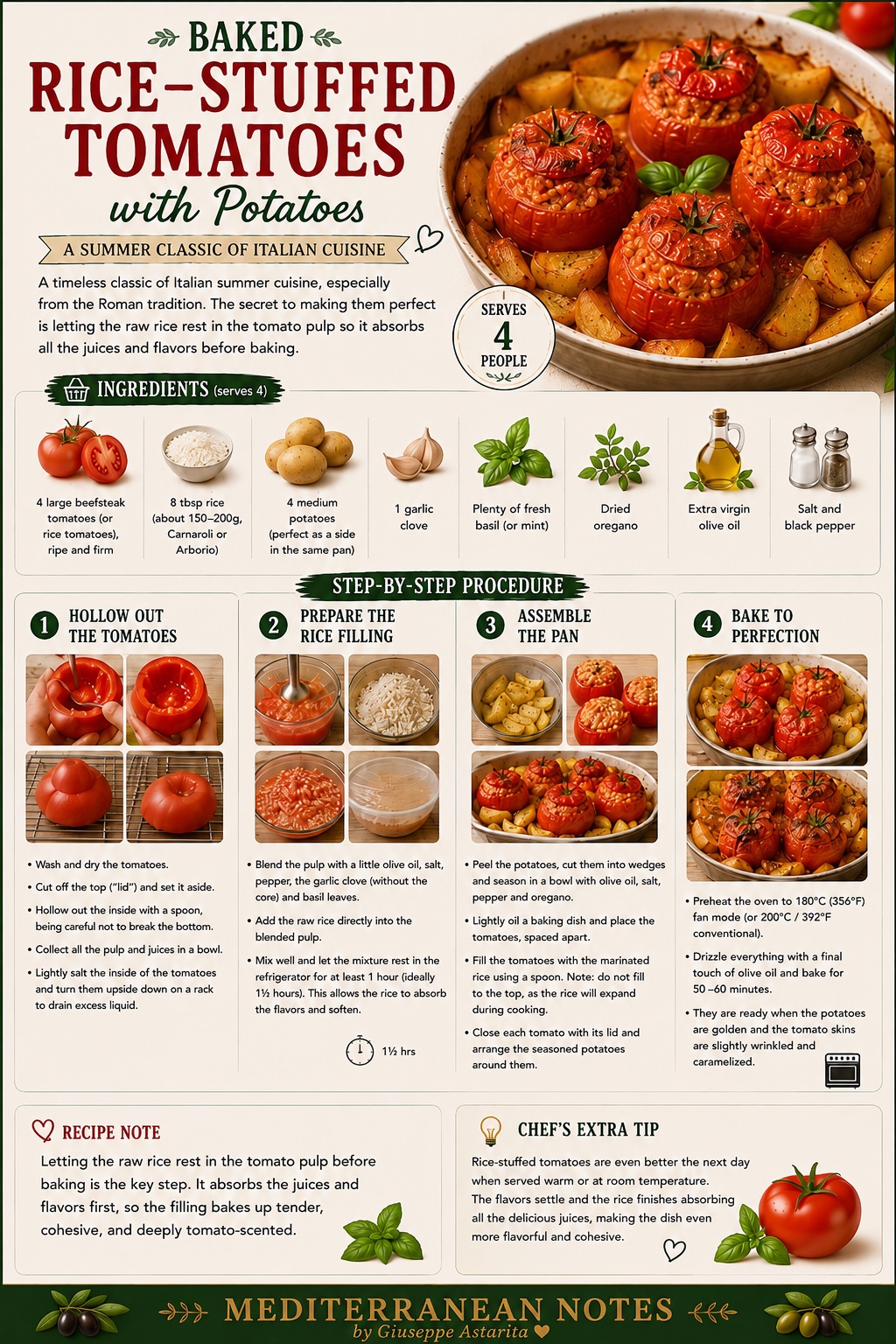
Warm or cold — both correct
Cut the potatoes to medium-large wedges — too small and they over-caramelize and dry out before the tomatoes are done. They should be roughly the size of a quarter of a medium potato. Season them well and ensure they are coated in oil before going in the pan.
This is also, incidentally, a genuinely vegetarian dish — one of the few in this collection that is so by nature rather than by the carne fjuta tradition of substitution. The filling has no meat, no fish, no ambiguity. It is rice, tomato, olive oil, basil, garlic. It is complete as it is. During the years when I was vegetarian this would have been one of the dishes I could have eaten without modification, if I had known how to make it then. The memory of eating it is from childhood; the understanding of it is from now.
Buon appetito — caldi o freddi, sono sempre buoni.