Fetta di Carne in Padella
My father's dish — the thin Neapolitan fettina cooked all'anema e core in seconds, with garlic and parsley. Una vutata e una girata: one turn and one flip, or it turns to shoe sole.
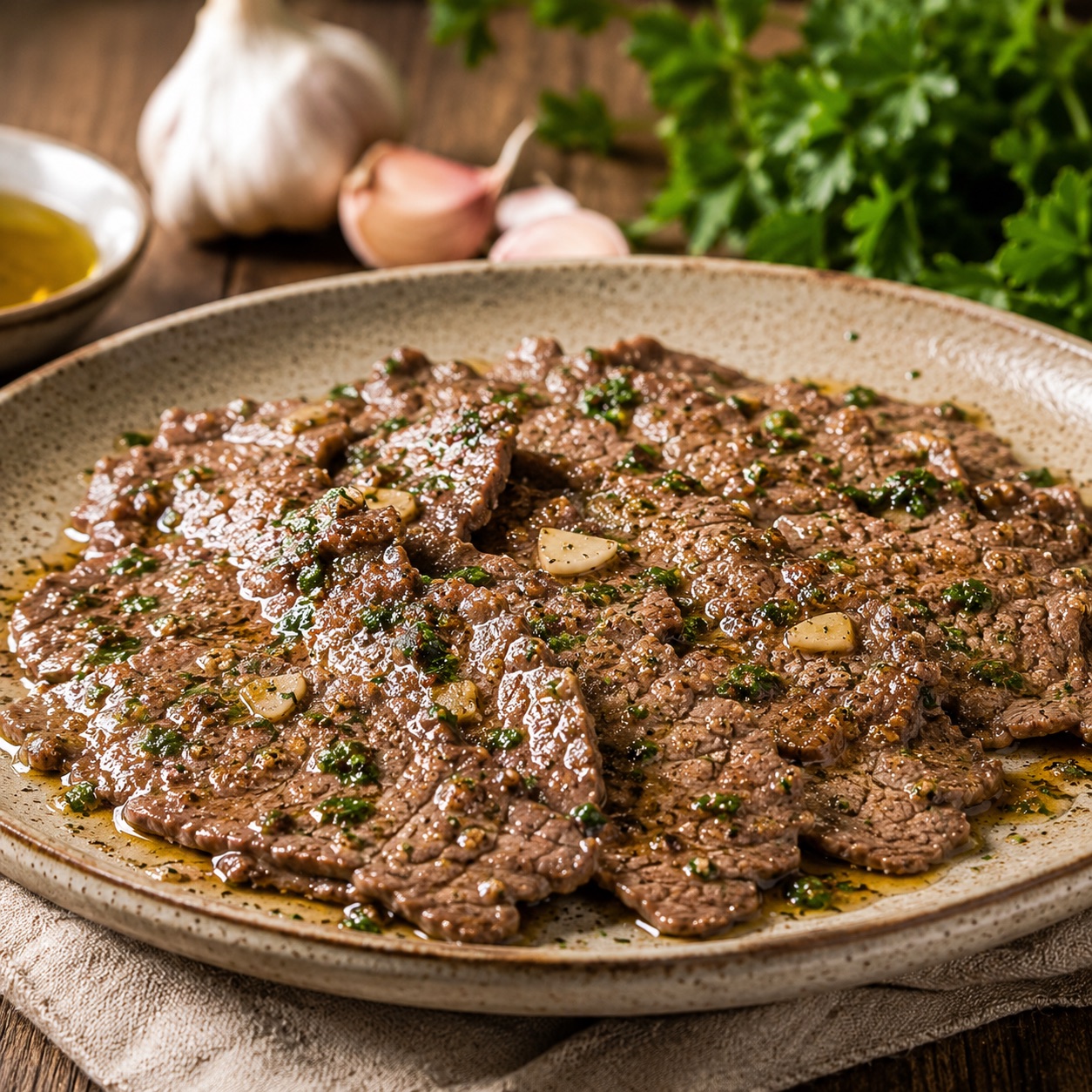
This was one of my father's dishes — one of his favorites, and one of the few he cooked himself, because he enjoyed exactly this kind of cooking: easy, fast, done before anyone could ask when dinner was ready. The fettina — a very thin slice of lean beef or veal — hits a screaming-hot pan with garlic, olive oil (lard, in his parents' generation) and a shower of parsley, and it is cooked all'anema e core: in seconds, with soul and heart. The grandfathers' formula says everything: una vutata e una girata — one turn and one flip — or the meat turns hard as a shoe sole.
I should explain the fettina itself, because it is a cultural document. Meat, for us, was always thin — never the thick steaks I learned to eat in the US. Thin when pan-fried, thin even when grilled. Part economy, part cucina povera arithmetic: a thin slice stretches further, cooks in seconds over precious heat, and feeds more people from the same cut. And it means our meat was always, always well done — the pink center is an American discovery I made decades later. Nobody in Caserta ever asked me how I wanted my fettina cooked. There was one answer.
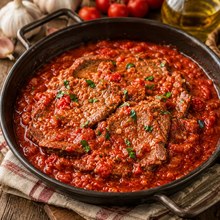
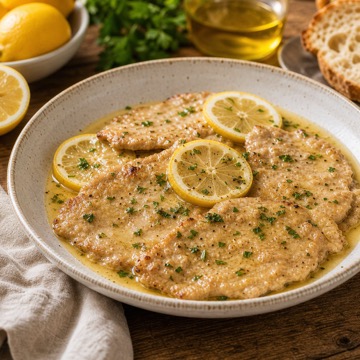
There are two historic versions, and the choice is the whole recipe. The first — my father's — is garlic and parsley: meat in, thirty seconds, flip, salt, parsley, out. The second adds a splash of white wine right after the flip, deglazing into a light pan sauce of extraordinary aroma. And if the fettina meets tomato instead, it stops being this dish and becomes the carne alla pizzaiola — where the Neapolitan trick is the reverse: cook the sauce first, slip the meat in only at the end, keep it soft.
Why seconds, not minutes
A fettina is 3–4 millimeters of lean muscle with almost no fat or collagen to protect it. Heat reaches its center nearly instantly, and every additional second contracts the myofibrils further, wringing out moisture — the sole-of-a-shoe effect has a precise mechanism. The high heat exists for one purpose only: enough surface browning in the few seconds available. The garlic flavors the fat, the parsley goes on at the end because its aroma would not survive the pan, and the optional wine dissolves the browned bits into sauce. Everything about the method is the thinness, understood.
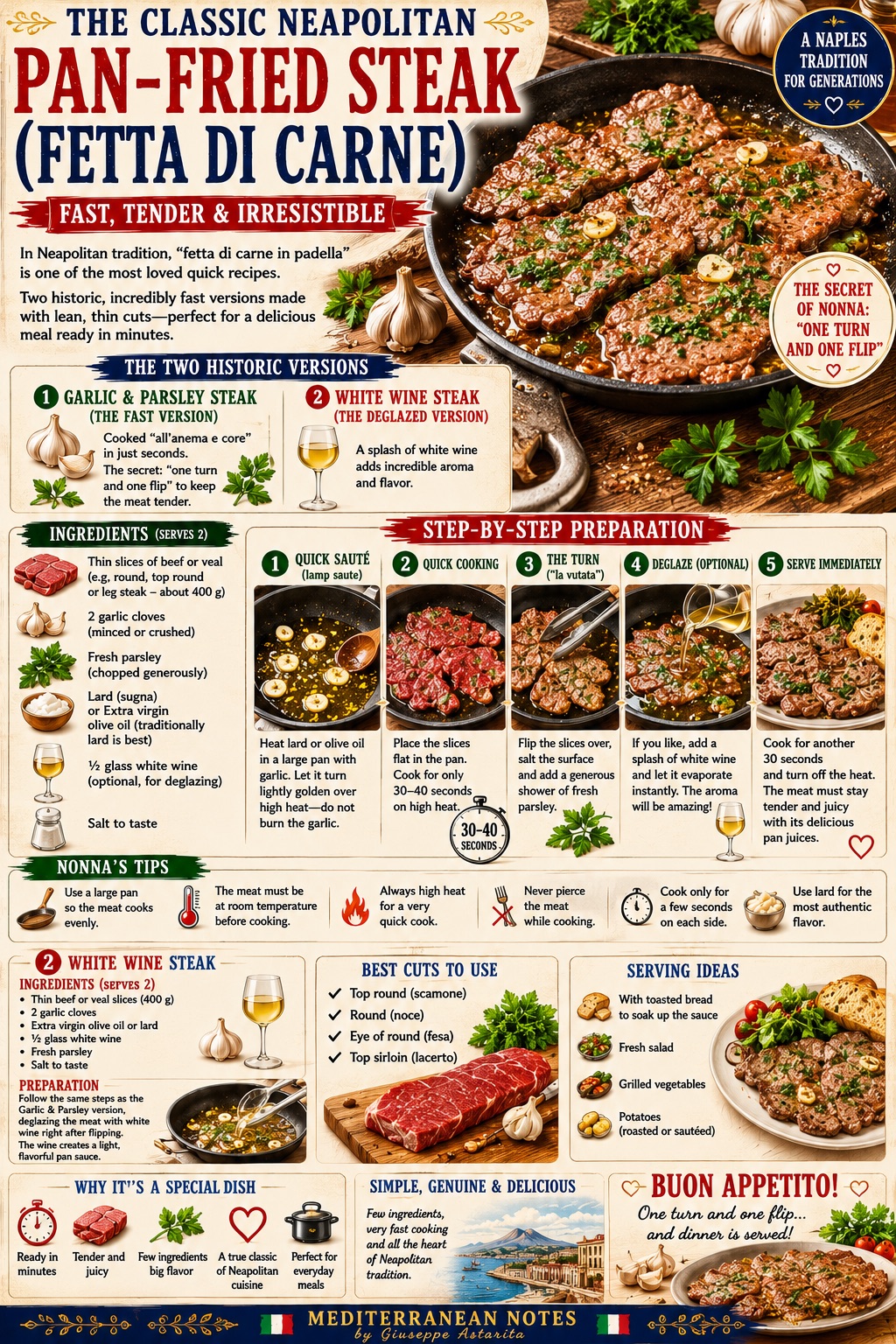
Tap to enlarge — Fetta di carne: the two historic versions
Recipe — Fetta di Carne in Padella
Serves 2 · Ready in 5 minutes
- 400 g thin slices of beef or veal round, top round or leg — 3–4 mm
- 2 garlic cloves minced or crushed
- Fresh parsley chopped generously
- Lard (sugna) or extra virgin olive oil lard is the ancestral choice
- ½ glass white wine optional, for the deglazed version
- Salt to taste
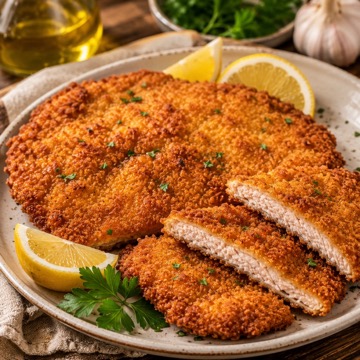
The fettina belongs to the family of weeknight rescues my father trusted — fast, lean, impossible to ruin if you respect the one rule. Its red-sauce sibling is the pizzaiola; its breaded cousin the cotoletta. Thin meat, high heat, no ceremony: dinner, in the time it takes to set the table.