Pasta con mozzarella e basilico: the summer smell my mother made
Mostaccioli, mozzarella di bufala, an abundance of fresh basil — much more than you think is necessary — and Pecorino and Parmigiano together, and good olive oil. No tomatoes. My mother made it in summer when the basil was everywhere. The smell of it is very specific. Hard to imagine it with any other mozzarella.
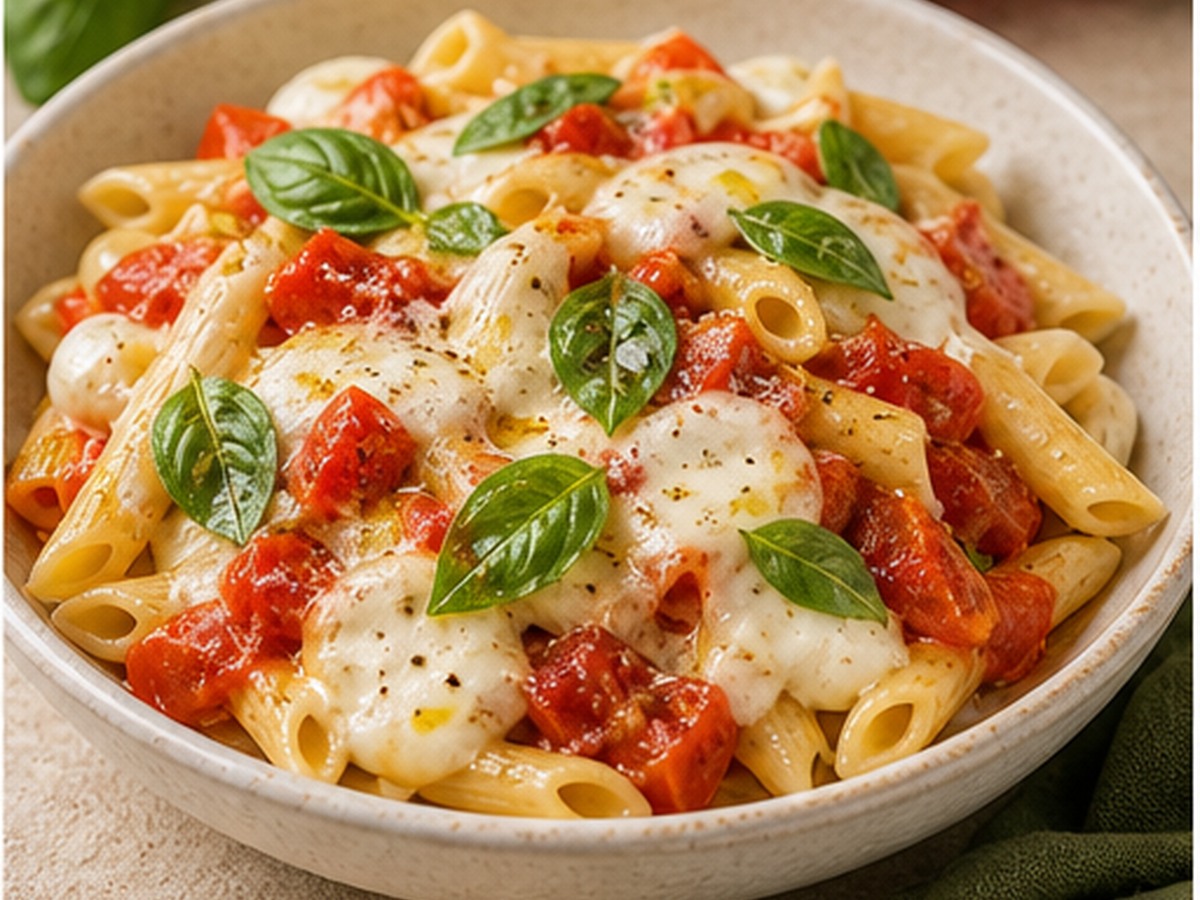
This dish may not exist in a published recipe anywhere. It does not have an official name beyond the description — pasta with mozzarella and basil — and it does not appear in the standard taxonomy of Neapolitan pasta dishes the way the tonno or the cavolfiore do. It is a household recipe, the kind that exists in kitchens rather than cookbooks, passed along by demonstration rather than instruction, made when the conditions are right: summer, abundant basil, good mozzarella.
The conditions in Campania were always right. Growing up near Caserta, mozzarella di bufala was not a specialty ingredient found in specific shops — it was simply the mozzarella, available everywhere, made from the milk of the water buffalo herds that have grazed the Campanian plain since at least the medieval period. It was fresh and milky and slightly sour and it stretched in a way that cow's milk mozzarella does not quite replicate — the proteins in buffalo milk form a different structure, and the behavior of the melted mozzarella in the hot pasta, enveloping everything in long stretchy threads, is specific to the buffalo milk version. You can make this dish with good fior di latte. It will be very good. It will not be the same dish.
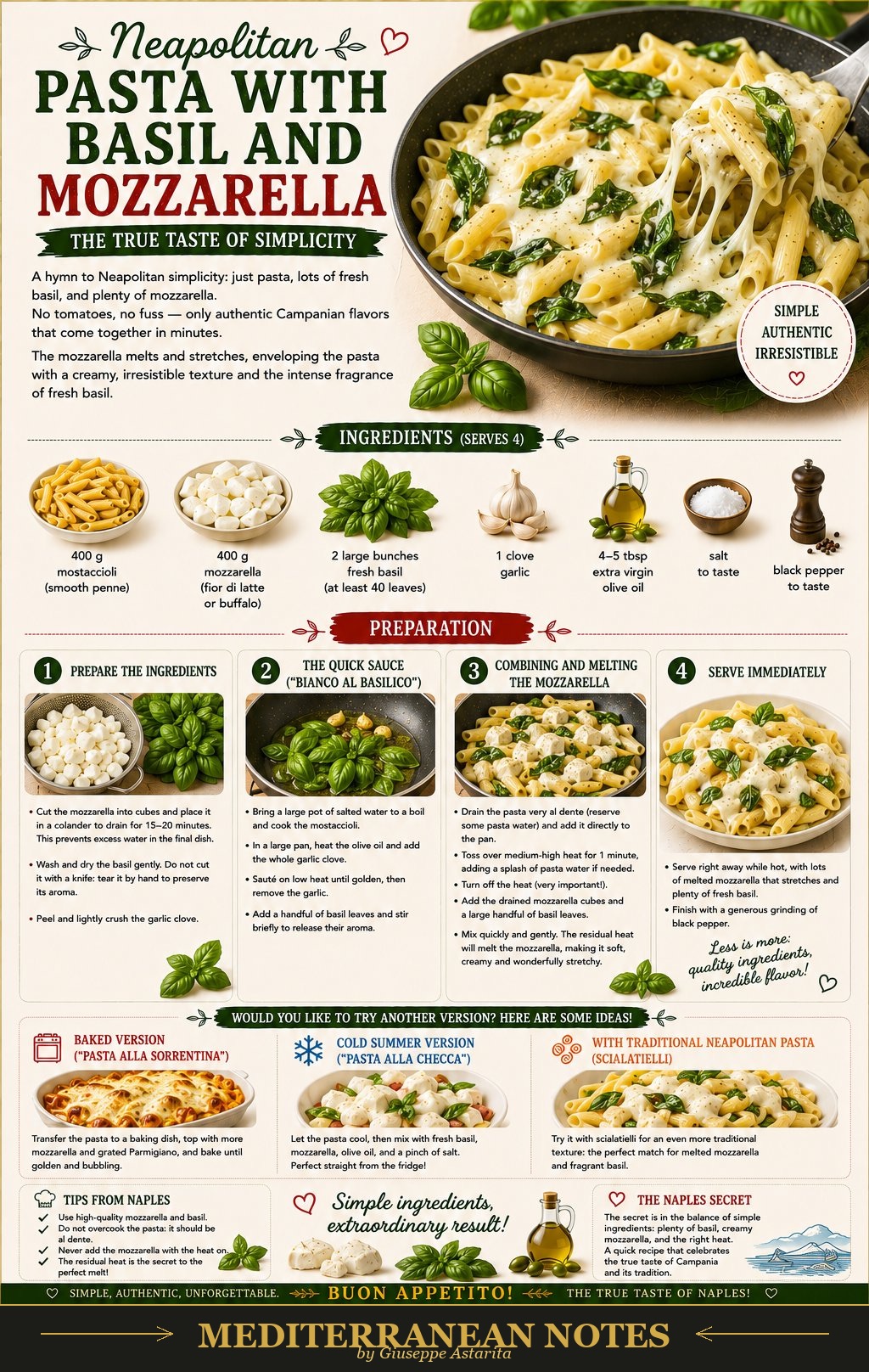
The basil is the second element that cannot be reduced. The recipe says a large bunch. Use two. Use forty leaves, as the infographic suggests, and do not feel this is excessive — the basil wilts into the hot pasta and becomes part of the texture and flavor of the dish rather than a garnish on top. It should be torn by hand, never cut with a knife: the blade bruises the cells at the cut edge and causes rapid oxidation, turning the leaves black and destroying the volatile aromatics that are the whole point of using so much basil. Tear it, add it generously, and the heat of the pasta does the rest.
The cheese combination — Pecorino Romano and Parmigiano together — is the detail that distinguishes this from the simpler bianco al basilico version. The Pecorino adds sharpness and salt; the Parmigiano adds depth and glutamate. Together with the milky richness of the melting mozzarella they produce a sauce that is complex without being complicated. The pasta must be al dente, the mozzarella must go in off the heat, and the tossing must be quick and confident. Thirty seconds of heat on the mozzarella turns it from stretchy to rubbery. The window exists and it is brief.
The pasta shape matters more in this dish than in most. Mostaccioli — a smooth, diagonal-cut tube, similar to smooth penne — is what we had at home, and the smooth surface allows the melted mozzarella to coat the exterior rather than pool inside the tube. The mozzarella threads wrap around the pasta as you lift it from the bowl. This is the visual and textural signature of the dish: the stretch, the coating, the way the pasta and the melted cheese become inseparable.
Buffalo vs. cow's milk mozzarella — fat content, protein, and why they melt differently
Mozzarella di bufala has a distinctly different nutritional and rheological profile from cow's milk mozzarella (fior di latte). Buffalo milk contains approximately 8–9% fat compared to 3.5–4% in cow's milk, and the fat globules are larger, producing a richer, more calorie-dense cheese with a higher concentration of fat-soluble vitamins A, D, E, and K2. The protein structure is also different: buffalo milk casein forms a denser, more elastic gel during coagulation, which is why buffalo mozzarella has its characteristic stretch and why it melts differently from fior di latte — the proteins are more cohesive and pull into longer threads at the same temperature. The melting behavior observed in this dish — the long stretchy threads enveloping the pasta — is a direct consequence of this protein architecture. From a culinary chemistry standpoint, the instruction to add the mozzarella off the heat is critical: above approximately 60°C, the casein network begins to break down and the cheese becomes rubbery rather than stretchy, and the fat separates from the protein matrix, producing an oily rather than creamy result. The thirty-second window mentioned in the method is chemically accurate. Fresh basil's volatile aromatics — linalool, eugenol, β-ocimene, and methyl chavicol — are highly heat-labile and are released maximally when the cell walls are ruptured by tearing rather than cutting. The knife creates localized high-pressure cuts that cause rapid oxidation at the damaged edge (enzymatic browning via polyphenol oxidase acting on caffeic acid); tearing causes more diffuse cell rupture that releases aromatics more efficiently without the concentrated oxidation at a cut edge. The instruction to tear rather than cut basil is not aesthetic preference — it is the mechanically correct way to maximize aroma release and minimize oxidative damage. Pecorino Romano's glutamate combines with Parmigiano's glutamate and the natural glutamates of the mozzarella to produce a synergistic umami effect at concentrations where each cheese alone would not produce the same intensity — a documented phenomenon in flavor chemistry called glutamate potentiation.
The recipe
Ingredients · serves 4
Method
Prepare everything in advance. Cut the mozzarella into cubes and place in a colander. Let drain for at least 15–20 minutes — excess water from the mozzarella will make the pasta wet and prevent proper melting. Tear the basil leaves by hand and set aside. Grate the cheeses. Bring a large pot of well-salted water to a boil and cook the mostaccioli.
This dish assembles in under a minute once the pasta is drained — have everything ready and at hand before the pasta finishes cooking. It will not wait.
Build the aromatic oil. In a large, wide pan — large enough to hold the pasta — heat the olive oil over low heat. Add the crushed garlic clove and a few basil leaves. Sauté very gently for 2–3 minutes until fragrant. Remove the garlic. Turn off the heat entirely.
Combine — off the heat. Drain the pasta very al dente, reserving a ladle of pasta water. Add the pasta to the pan with the aromatic oil. Toss briefly over medium-high heat for 30 seconds with a splash of pasta water. Turn the heat off completely. Add the drained mozzarella cubes and the torn basil leaves — all of them, generously. Mix quickly and gently: the residual heat of the pasta will melt the mozzarella into long creamy threads. Add the grated Pecorino and Parmigiano and toss again. Everything should take about 30 seconds total.
Do not add the mozzarella with the heat on. This is the one rule. Heat turns the mozzarella from stretchy-creamy to rubbery and separates the fat. Off the heat, thirty seconds, done.
Serve immediately. Into warm bowls, with the mozzarella still stretching and the basil bright green and the oil glistening. A final grinding of black pepper. Eat at once — the mozzarella continues to set as it cools and the dish loses its essential character within minutes.
Variations
Pasta alla Sorrentina — the baked version
Transfer the assembled pasta to a baking dish, top with additional mozzarella and grated Parmigiano, and bake at 200°C until golden and bubbling — about 15 minutes. The mozzarella forms a crust on top and remains molten underneath. Traditionally made with penne, tomato, and mozzarella — this version keeps the basil-and-oil character without tomato and bakes it into something more substantial.
Pasta alla checca — the cold version
Cool the cooked pasta completely, then toss with fresh basil, diced raw mozzarella, olive oil, salt, and pepper. No heat involved in the assembly. The mozzarella stays fresh and milky rather than melting. A summer version for when the kitchen is too hot for anything involving a pan — perfect from the refrigerator, eaten cold or at room temperature.
With cherry tomatoes
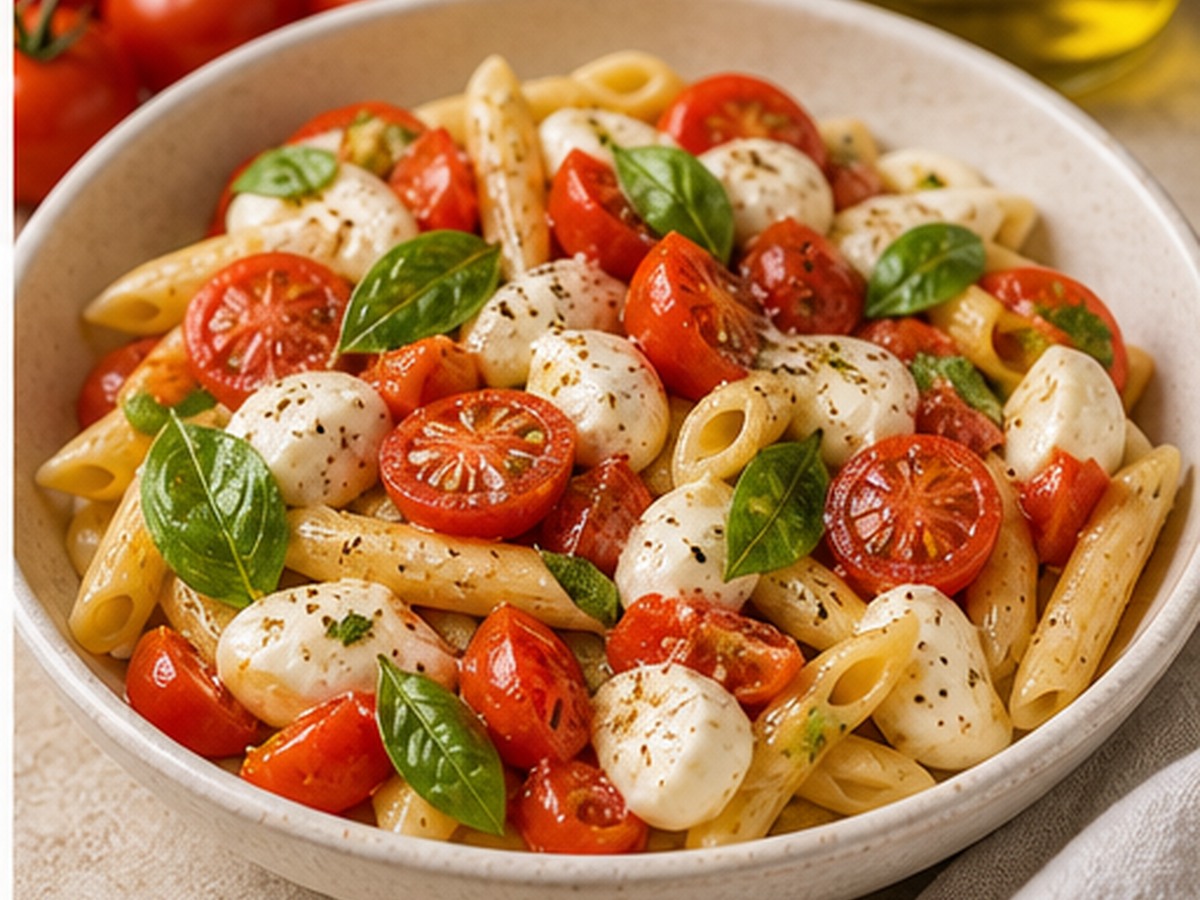
Add halved cherry tomatoes — either raw at the end (alla checca style) or very briefly sautéed in the olive oil. This brings the dish closer to a simplified caprese pasta: mozzarella, tomato, basil. Good, though the tomato changes the character and moves it away from the pure white version. The version my mother made had no tomatoes, and that was the point.
With scialatielli
The traditional Campanian fresh pasta — thick, rough-surfaced, made with semolina and basil — holds the melted mozzarella beautifully on its surface and carries the basil theme through the pasta itself. If you can find or make scialatielli, this is the most traditionally Neapolitan version of the dish.
This recipe may not be in any published cookbook. It exists in kitchens, in the memory of summer, in the specific moment when a large amount of basil needs to be used and a ball of good mozzarella is in the refrigerator and the pasta is already on the stove. The smell when it comes together — warm buffalo milk and fresh basil and olive oil — is not a smell that requires explanation to anyone who has been in a Campanian kitchen in August. It is immediate and complete and it is summer.
Buon appetito.