Le Uova a Napoli
Simple, Honest, Always Delicious
We grew up eating eggs alla coque — the soft-boiled egg in its cup, whites just set, yolk warm and runny, with toast soldiers for dipping. We had a special holder for it. In the US, almost nobody eats eggs this way. My father grew up on the uovo sbattuto — the raw yolk beaten with sugar, the generation before ours. Eggs have always been a Neapolitan staple. They were in everything.
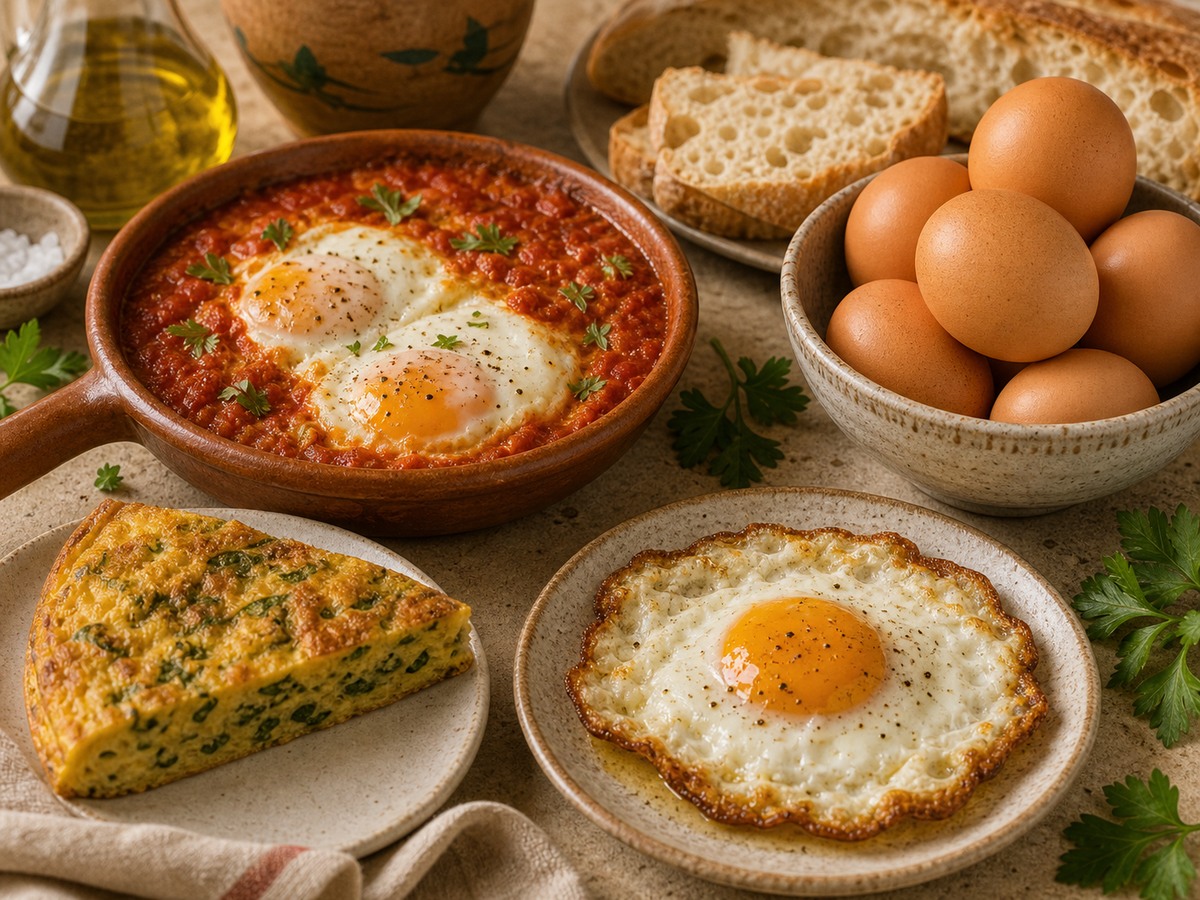
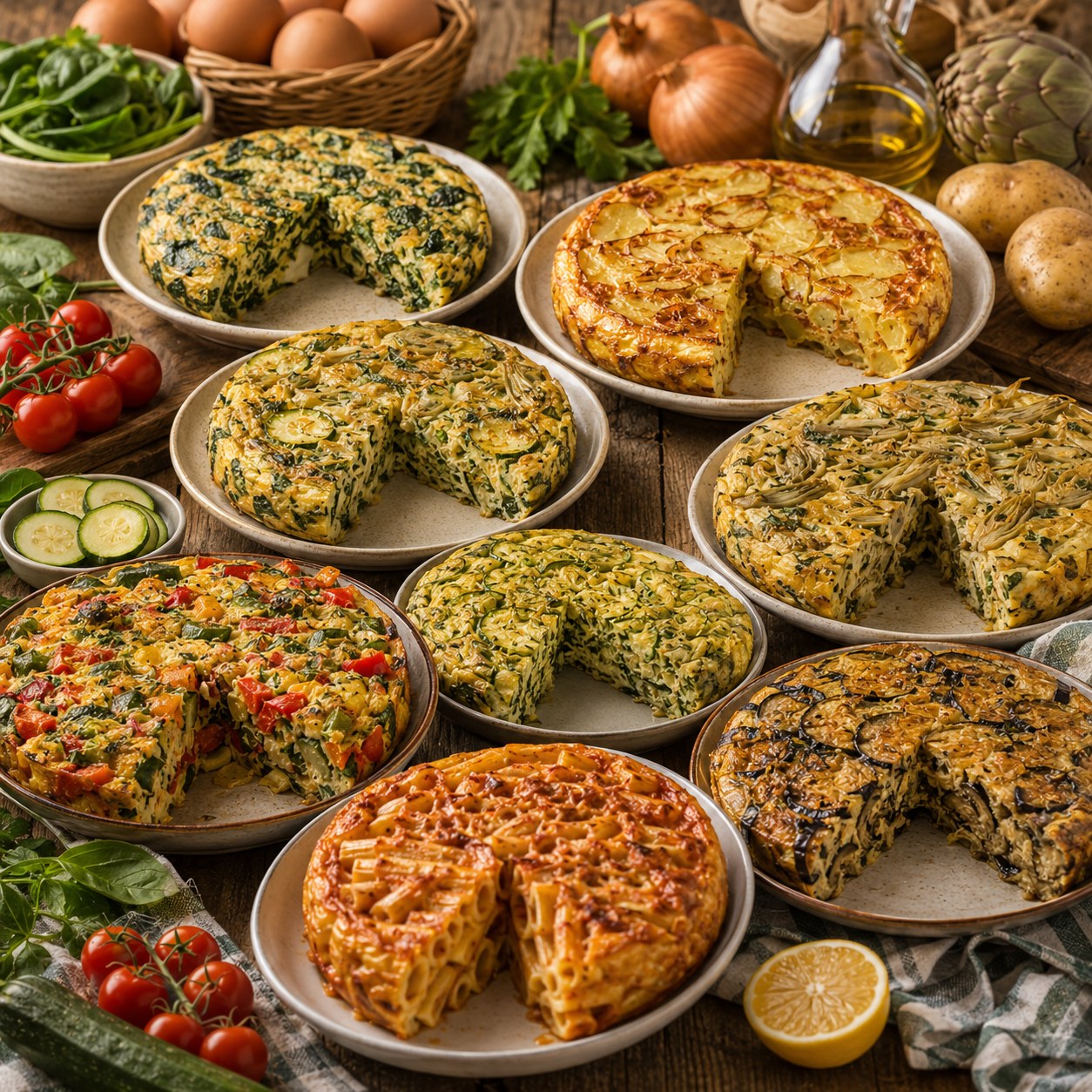
The Neapolitan proverb says it plainly: N'ata vota, cu ll'uovo se faceva festa — "Once upon a time, a simple egg made it a feast." The egg in southern Italian cooking was not a humble ingredient so much as a versatile and reliable one, present in every part of the meal and every part of the week. In a kitchen built on the cucina povera tradition, the egg provided protein, richness, and binding when meat was unavailable or expensive. It appeared at breakfast, at lunch in the pasta al forno, at the table as a stand-alone secondo, as a dessert component in the pastiera and the zabaglione, inside the casatiello at Easter. There is almost no category of preparation in the Neapolitan kitchen that does not contain an egg somewhere.
The egg alla coque was the breakfast of my childhood that I associate most specifically with the special holder — a ceramic or metal coquetier, the egg seated upright in it, the top tapped with a small spoon and lifted off to reveal the just-set white and the soft yolk underneath. Toast soldiers — strips of bread cut for dipping — went in one at a time. The egg took four to five minutes in boiling water, no more. This preparation is common in France and England and through much of southern Europe; in the United States it is rare to the point of invisibility. My daughters have eaten eggs alla coque at home in Massachusetts and found it entirely normal, as children find normal whatever they grow up with, which is partly the point of teaching it to them.
My father's generation had the uovo sbattuto — the raw egg yolk beaten vigorously with sugar until it became pale and airy and almost mousse-like, eaten as a quick energy supplement or a light breakfast, occasionally with a drop of Marsala to produce something close to a zabaglione. This preparation was common in Italian households through the postwar period and earlier, when the nutritional properties of the egg yolk were regarded as a kind of medicine for children and convalescents. It has largely disappeared — the raw egg concern arrived, nutritional advice changed, and the texture fell out of fashion. But for a generation it was a regular part of the morning.
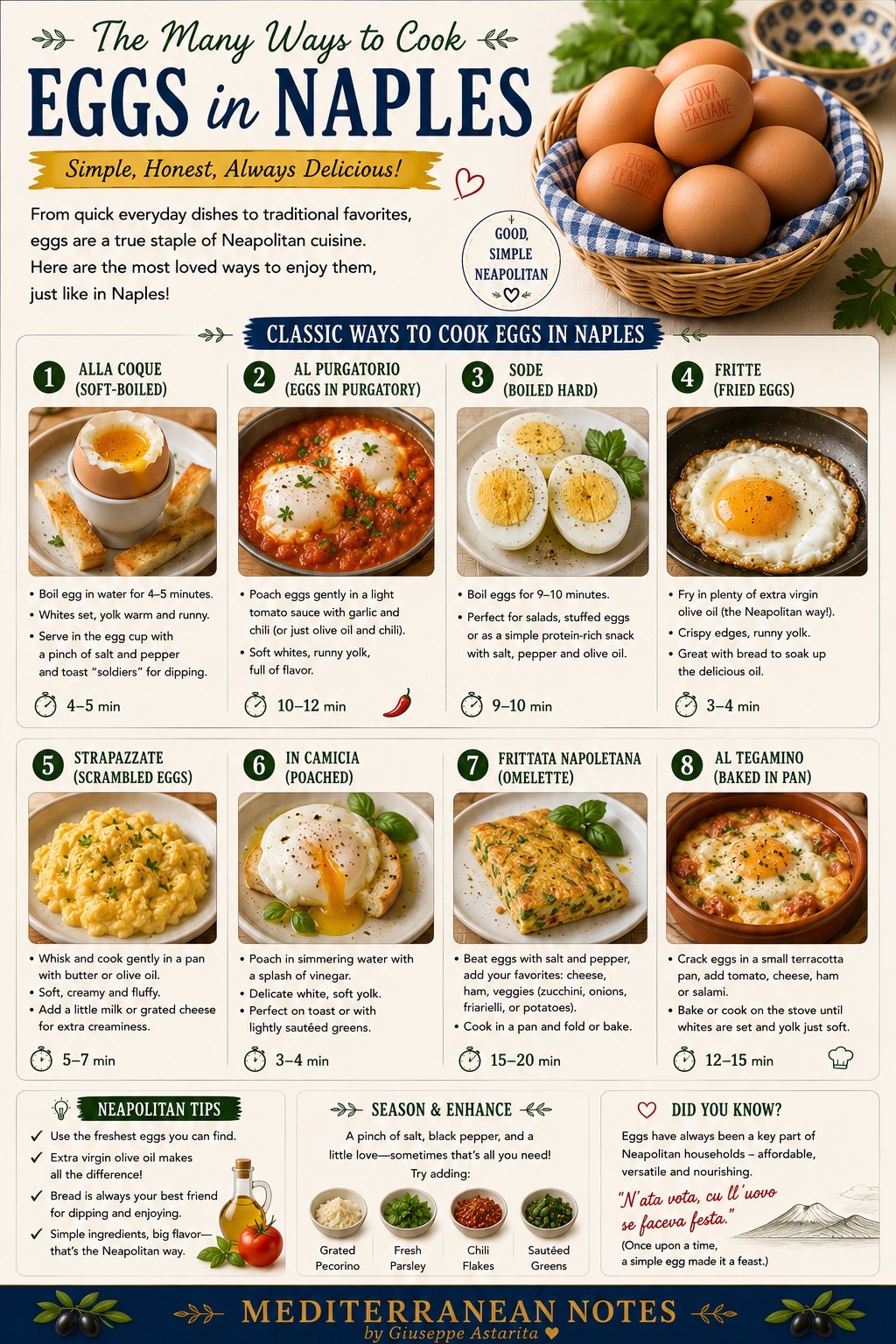
The eight Neapolitan ways
The hard-boiled egg — where it appears
Of all the preparations in the Neapolitan egg repertoire, the hard-boiled egg is the one that appears in the most places across the rest of the collection — not as the main ingredient but as a structural component. It is worth noting where it shows up, because it illustrates how thoroughly the egg was integrated into the kitchen.
An egg is made of proteins that coagulate at different temperatures: the white begins setting at around 62°C and is fully firm at about 82°C; the yolk begins to thicken at around 65°C and sets completely at about 70°C. Cooking time in boiling water (100°C) controls the internal temperature by heat penetration — 4 minutes produces a barely set white and a fully liquid yolk; 5 minutes produces a just-set white and a warm, runny yolk (the alla coque); 7 minutes produces a yolk that is beginning to set at the edges but still soft in the center; 9–10 minutes produces a fully set yolk throughout. The greenish-grey ring that forms around an overcooked yolk is a reaction between iron from the yolk and sulfur from the white, producing iron sulfide — harmless but unappealing, and entirely preventable by removing the egg from heat at the right moment and cooling it immediately in cold water to stop the reaction.
The uovo sbattuto — the beaten raw yolk with sugar — is effectively a cold zabaglione: the vigorous beating incorporates air into the lecithin-rich yolk, producing a foam that is light and slightly thick. The sugar helps stabilize the foam by increasing the viscosity of the liquid phase. It is nutritionally dense (egg yolk provides fat-soluble vitamins A, D, E, K, choline, and complete protein) and was historically recommended for children, the elderly, and convalescents precisely because it delivers high nutrition in a small, easily digestible volume.
In Italy the coquetier and the matching egg cups were part of household equipment the way a pasta pot is. In the United States they are a specialty item and the preparation is considered slightly exotic. My daughters have egg cups and eat their eggs alla coque when they want them. This is one of those small transmissions that the collection is trying to accomplish alongside the recipes: not just what we ate, but how.
The egg is probably the most democratic ingredient in the Neapolitan kitchen — available to every household, adaptable to every preparation, present from breakfast to dessert. What the collection shows, in aggregate, is how thoroughly it was integrated: not just as a protein source but as a structural component in pastry, as a binding agent in fillings, as a thickener in sauces, as a feast ingredient in the Easter preparations. A kitchen with a dozen eggs could produce a week's worth of different things. That is not a poverty-era compromise — it is culinary intelligence. The egg earned its place on every table in Campania not by default but by merit.
Buon appetito — e sempre un uovo in cucina.