Salsiccia e Friarielli
The perfect match of Naples — pork sausage and bitter wild greens in one pan. At our table it was a weekday dinner, my father's favourite, and it never needed to be anything more.
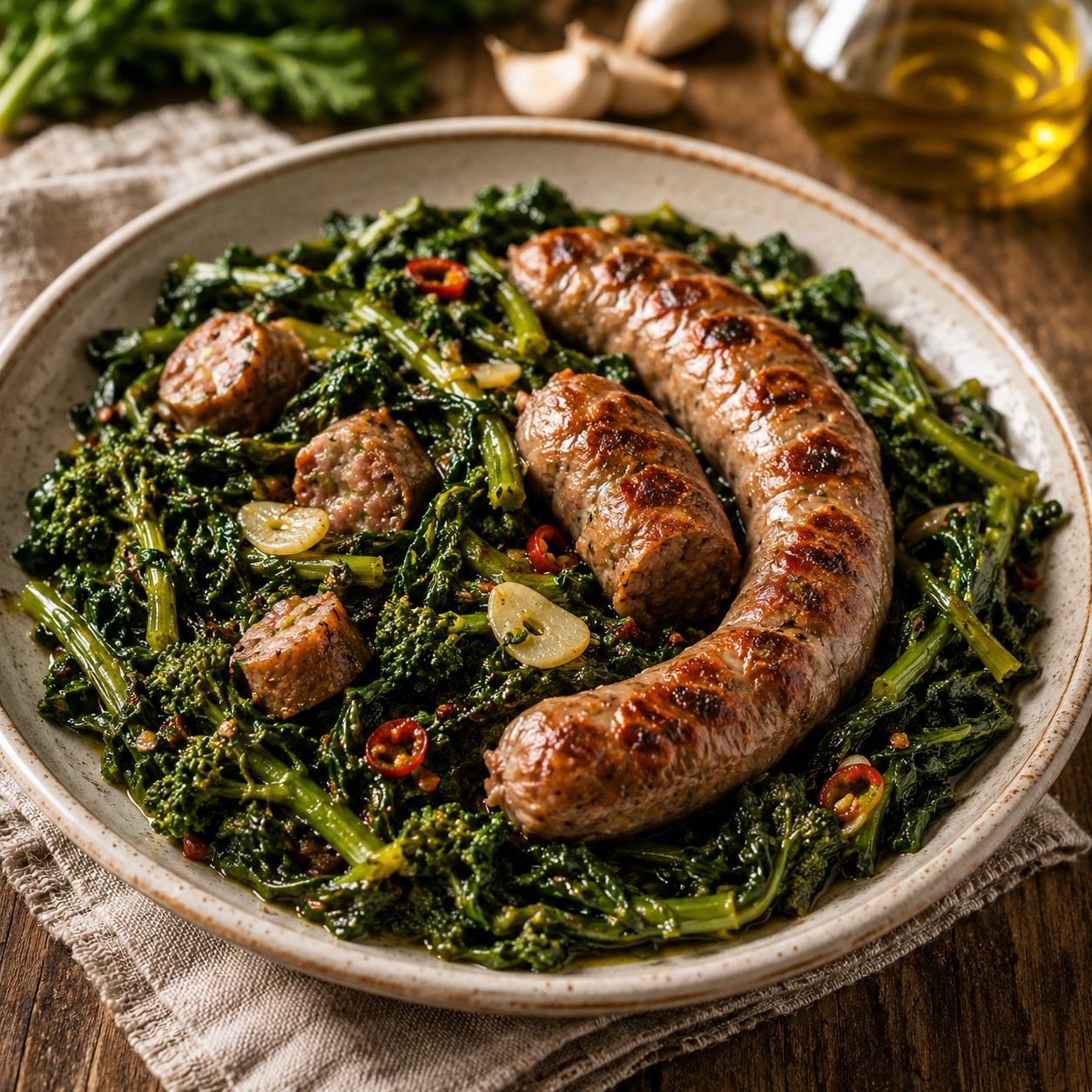
Some pairings in the Neapolitan kitchen are suggestions. This one is law. In Naples they say a sasiccia è 'a morte d' 'o friariello — the sausage is the death of the friariello, "death" here meaning destiny, the best possible end. The rich, fatty pork and the bitter greens do not merely tolerate each other; each one exists to correct the other's excess. The sausage alone is heavy. The friarielli alone are austere. Together they are the most complete weekday dinner the city ever invented.
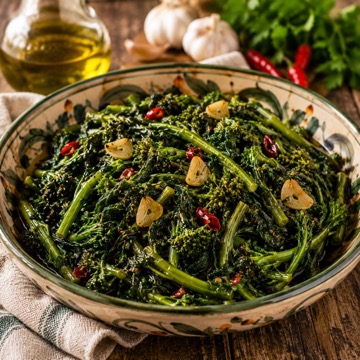
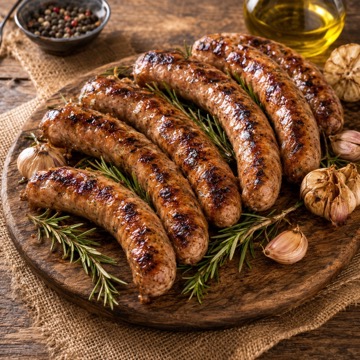
In our house this was dinner — always dinner, almost always during the week, and one of my father's favourites, which in his economy of enthusiasm meant it appeared often. My mother made the two halves separately, the way the dish demands: the friarielli wilted down with oil, whole garlic, and chili until soft and glistening; the salsiccia simmered first in a little water, then browned properly once the water had gone. Only at the end did they meet in one pan, five minutes together, the sausage juices finishing what the oil had started.
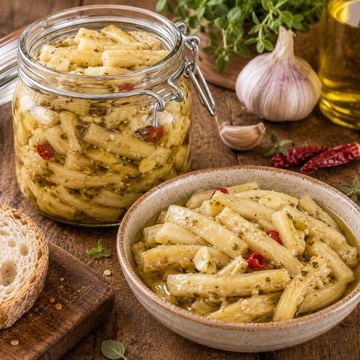
On the table next to it there were always the sides that belonged to it: cheese — provola, or whatever the fridge held — and my mother's melanzane sott'olio, the preserved eggplant cutting through the richness the way the friarielli did, from a different direction. Bread, of course. The plate did not need anything else and never got it.
And then there was the other life of the dish — the street one. Sometimes we had it as a panino with friends, standing, wrapped in paper: the cuzzetiello, the crusty end of the pane cafone hollowed out and stuffed to the brim with sausage and friarielli, the bread doing the work of plate, fork, and napkin at once. The same two ingredients, a completely different occasion. In Naples the pairing also goes onto pizza — the legendary white pizza with smoked provola — which tells you everything about how seriously the city takes this marriage: it works at the table, in the hand, and in the oven.
Why bitter and fat belong together
Friarielli owe their bitterness to glucosinolates — the same family of compounds as in broccoli rabe and mustard greens — which stimulate the palate and cut through the perception of fat. Pork fat, in turn, carries and softens those bitter notes: fat dissolves the lipophilic flavor compounds of the greens and spreads them across the tongue, rounding the edge without erasing it.
The pairing is, in effect, a self-balancing system — each ingredient is the seasoning of the other. This is why the dish needs almost nothing else: oil, garlic, chili, salt. Anything more would be commentary.
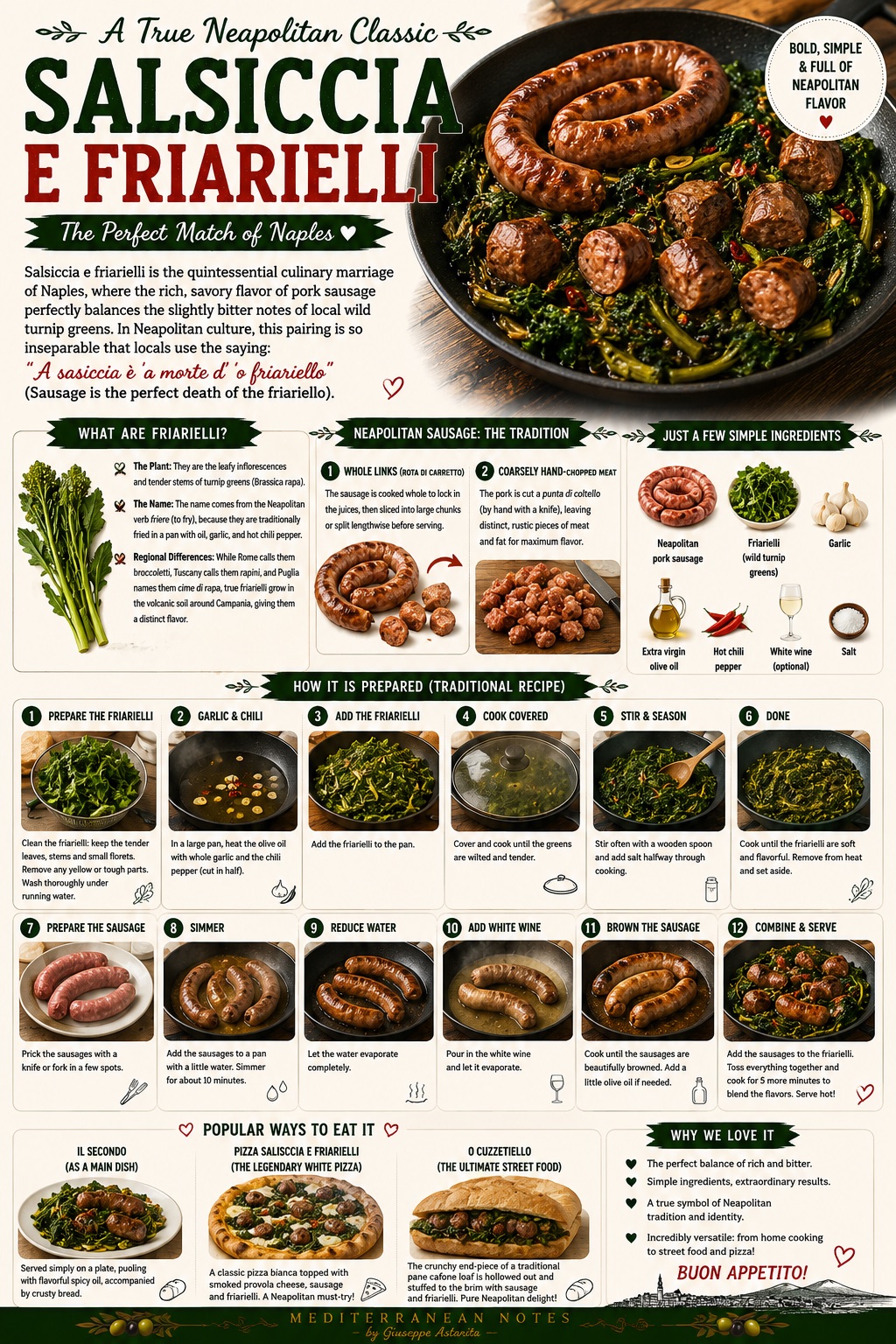
Tap to enlarge — Salsiccia e friarielli: ingredienti, metodo, consigli
Recipe — Salsiccia e Friarielli
Serves 4 · About 40 minutes
- 600 g Neapolitan pork sausage whole links, coarsely hand-chopped meat
- 800 g friarielli wild turnip greens — or broccoli rabe
- 3 cloves garlic whole, lightly crushed
- Extra virgin olive oil generously
- 1 fresh hot chili pepper cut in half
- ½ glass white wine optional, for the sausage
- Salt to taste
Both halves of this dish have their own pages — the friarielli and the salsiccia campana — because each is worth knowing on its own. But the marriage is the point. On a plate with bread, provola, and melanzane sott'olio it is a weekday dinner from my childhood; stuffed into a cuzzetiello it is street food eaten standing with friends. Same pan, same five final minutes, two different kinds of happiness.