Polpette di melanzane: the vegetarian meatball that needs no apology
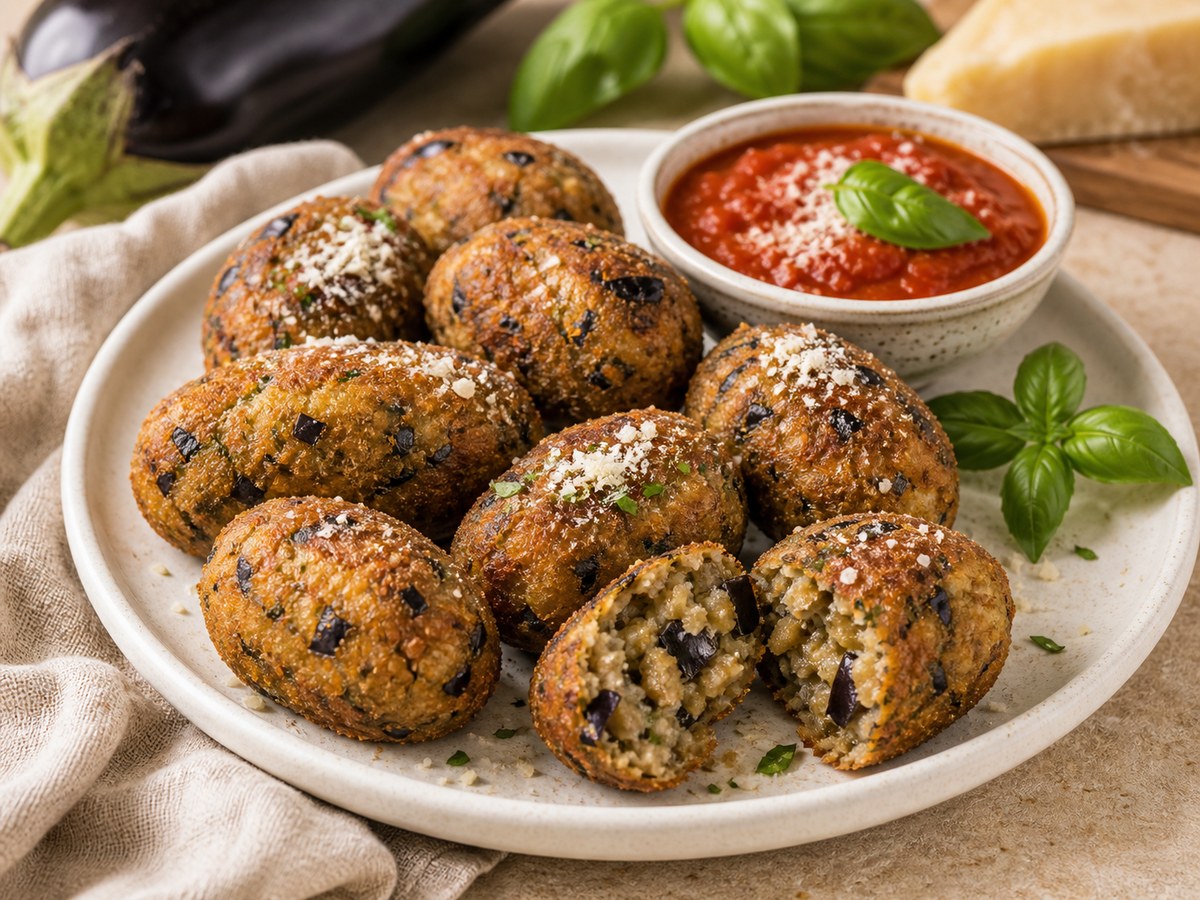
A healthier, vegetarian version of the classic Neapolitan meatball — all the satisfaction, none of the meat. My mother cooked them in the oven. You can air-fry them. Either way, the result is the same: crispy outside, soft inside, and gone very quickly.
In Naples, the polpetta is a serious thing. The classic version — meat, stale bread soaked in milk, Parmesan, egg, parsley — is a dish of the Sunday table, braised in tomato sauce, served as a second course after the pasta. It is rich and substantial and deeply embedded in the memory of anyone who grew up in a Campanian household. It is also, by design, a meat dish.
The polpetta di melanzane is the answer to the question: what if you kept everything that makes a meatball satisfying — the round shape, the breadcrumb crust, the savory interior, the herbs, the cheese — and replaced the meat with eggplant? The answer is: something very good. Not a substitute in the apologetic sense of the word, but a parallel tradition that has existed in southern Italian cooking for a long time, on those days when the household was meatless, when the fast demanded it, or simply when the eggplant was particularly good and needed no further excuse.
My mother made them in the oven — a tray brushed with olive oil, the polpette arranged in a single layer, baked until golden and the coating had crisped into a proper crust. No deep frying, no standing over a pot of hot oil. A healthier preparation, and also a more practical one: you put the tray in, you set a timer, you do other things. The air fryer, which I use now, is an even more streamlined version of the same result — hot circulating air producing a crust that is almost indistinguishable from the baked one, in half the time.
The critical step, the one that determines whether the polpette hold together or fall apart, is the draining of the eggplant. Eggplant is mostly water. After boiling and before mixing with anything else, it must be squeezed — properly, with your hands, over the colander, until no more liquid comes out. This is not a step that can be abbreviated. Too much water left in and the mixture will be too soft to shape, and no amount of extra breadcrumbs will rescue it. Squeeze, then squeeze again.
Eggplant nasunin, phenolics, and the antioxidant case for the meatless meatball
Eggplant — already discussed in the melanzane a funghetto post — is rich in nasunin (the anthocyanin antioxidant of the purple skin), chlorogenic acid, and a range of phenolic compounds with documented anti-inflammatory properties. Boiling, as used here, leaches some water-soluble vitamins (vitamin C, B vitamins) into the cooking water, which is then discarded; this is a trade-off with other cooking methods that preserve more nutrients. However, the thorough draining step that follows concentrates the remaining nutrients and phytochemicals considerably. The egg binder contributes choline and complete protein. Breadcrumbs provide the starch structure that holds the polpetta together during cooking and forms the Maillard-browned crust when baked or air-fried — the same chemical reaction responsible for the golden color and complex aromatic compounds of any well-cooked baked good. Parmesan or Pecorino adds calcium, glutamate (the amino acid that deepens the perception of savory flavor), and fat-soluble vitamins. Fresh mint or basil contribute volatile aromatics — menthol, linalool, eugenol — that elevate the flavor profile disproportionately to their quantity. Baking and air frying, as opposed to deep frying, dramatically reduce the total fat content of the finished dish: a baked polpetta di melanzane absorbs a fraction of the oil of its fried counterpart, while producing a nearly identical surface texture through the Maillard reaction at the dry-heat surface of the oven or air fryer. The result is a genuinely lighter dish that makes no sacrifice in flavor — which is, from a nutritional standpoint, exactly what you want.
The recipe
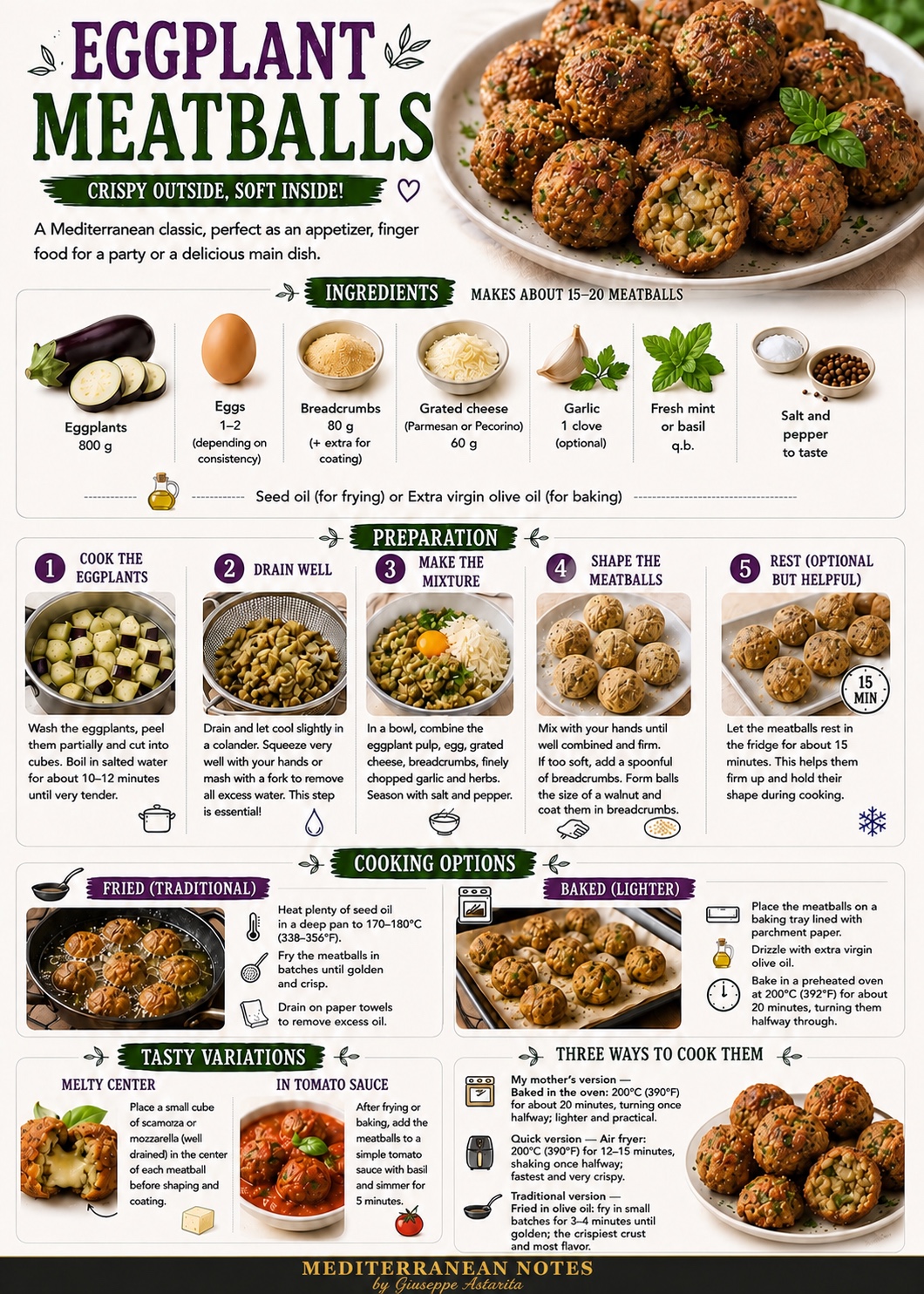
Ingredients · makes 15–20 polpette
Method
Cook the eggplant. Wash the eggplants, peel them partially (leave some skin for color and flavor), and cut into medium cubes. Bring a large pot of salted water to a boil and cook the eggplant for 10–12 minutes until completely tender — a fork should pass through without resistance. Drain.
Drain thoroughly — this step is essential. Transfer the cooked eggplant to a colander and let it cool slightly. Then, working in handfuls, squeeze the eggplant firmly with your hands to remove as much water as possible. The eggplant should feel dense and dry, not spongy or wet. Once squeezed, mash with a fork until the texture is uniform. Squeeze again if any moisture has accumulated. There is no shortcut here — insufficiently drained eggplant produces a mixture too soft to shape, and no amount of extra breadcrumbs will save it.
If after draining the mixture still feels too wet, spread it on a clean cloth or paper towels and press gently. Patience at this stage is what makes everything else easy.
Make the mixture. In a large bowl, combine the drained eggplant, egg, grated cheese, breadcrumbs, garlic (if using), and fresh herbs. Mix well with your hands until everything is evenly combined and the mixture holds together when pressed. Season with salt and pepper and taste — the mixture should be well seasoned, since the breadcrumb coating will mute the flavor slightly. If the mixture is still too soft, add a spoonful of breadcrumbs at a time until it firms up.
Shape and coat. With damp hands, form balls the size of a walnut — about 30–35 g each. Roll each one in breadcrumbs, pressing gently so the coating adheres evenly all around. Place the coated polpette on a tray. Refrigerate for 15 minutes before cooking — this firms them up considerably and helps the coating stay in place.
Cook. Choose your method below. All three produce good results — the main variable is the texture of the crust and the amount of oil involved.
Three ways to cook them
My mother's version
Baked in the oven
Line a baking tray with parchment paper. Arrange the polpette in a single layer, drizzle generously with olive oil. Bake at 200°C (390°F) for about 20 minutes, turning once halfway through, until deeply golden on both sides. Lighter than fried, no oil management required, and the oven does all the work.
The quick version
Air fryer
Spray or brush with olive oil. Air fry at 200°C (390°F) for 12–15 minutes, shaking the basket once halfway through. The crust is very even and genuinely crispy. Fastest method, least cleanup. Works particularly well when making a smaller batch — the hot circulating air reaches every surface equally.
The traditional version
Fried in olive oil
Heat a generous depth of olive oil in a pan over medium-high heat. Fry in small batches for 3–4 minutes, turning, until golden all over. Drain on paper towels. The crispiest crust and the most flavor — reserved, like most fried things in this kitchen, for when it matters. The occasion earns it.
Variations worth knowing
With a melty center
Press a small cube of scamorza or well-drained mozzarella into the center of each polpetta before shaping and coating. Seal the mixture around it. When baked, the cheese inside is fully melted. The cheese pull is entirely optional but very welcome.
In tomato sauce
After baking or frying, add the polpette to a simple tomato sauce — garlic, olive oil, passata, basil — and simmer gently for 5 minutes. The coating absorbs some sauce and softens slightly; the result is closer to the braised Sunday meatball in texture and entirely different in character from the crispy standalone version. Serve with bread or pasta alongside.
Mint instead of basil
Fresh mint gives the polpette a bright, slightly cool quality that works especially well in summer, or alongside a sharp tomato sauce. This is the older Sicilian-influenced version of the herb choice; in Campania basil is more common. Both are correct.
At room temperature
These hold up well at room temperature — which makes them ideal finger food for a gathering, an antipasto table, or a party where people eat standing up. Make them ahead, bake them, and serve at room temperature. They travel well too.
The polpetta di melanzane sits at the intersection of everything this blog is about: a vegetable transformed by technique into something more satisfying than the sum of its parts, using the simplest ingredients, in a tradition that never needed to label itself as healthy because it always just was. My mother made them in the oven because it was easier and lighter. I make them in the air fryer because it is faster. The result is the same — golden, fragrant, crispy outside, soft inside — and the eggplant underneath all of it is still the whole point.
Buon appetito.