Gattò di patate: a luxury dinner in a Neapolitan kitchen
A golden potato bake layered with melting provola and salami, rested until it slices cleanly, served with a sharp salad alongside. It was a luxury dinner for us. My young daughters don't like it yet — but they will.
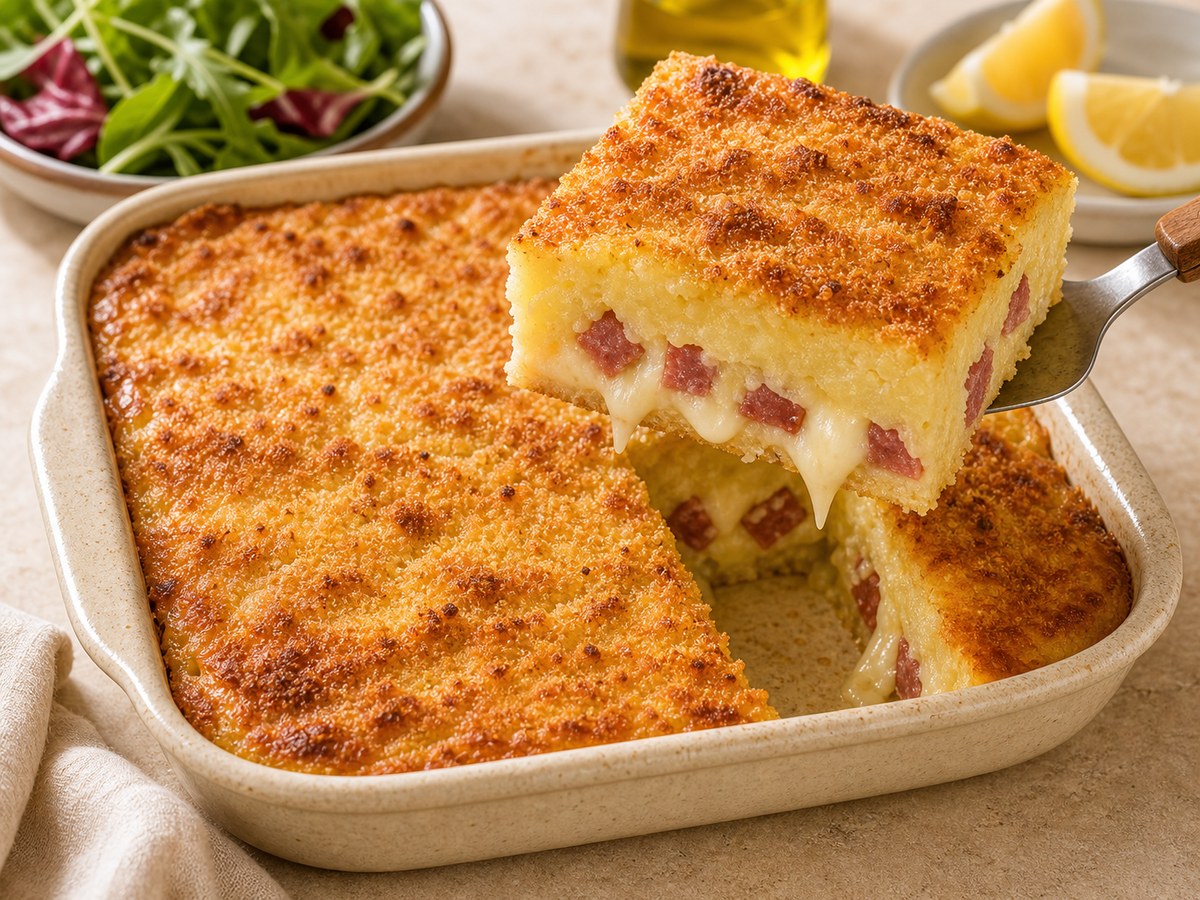
The name is French — gâteau, cake — and that tells you something about the ambitions of the dish. The Bourbons who ruled Naples in the eighteenth century brought with them French cooks and French vocabulary, and some of it stayed. The gattò di patate — also written gatò, depending on who you ask — is the most enduring of these inheritances: a potato bake so substantial, so layered with cheese and cured meat and butter, that calling it a cake is not entirely wrong. It has the architecture of something ceremonial.
In our house it was a luxury dinner. Not in the financial sense — potatoes and salami are not expensive — but in the sense of occasion. The gattò took time and attention: boiling and ricing a kilo of potatoes, making the mixture, assembling the layers, baking, resting. My mother did not make it on a Tuesday. It was a Sunday dish, a holiday dish, the kind of thing that made the kitchen smell like the whole afternoon had been spent on it, even when it hadn't.
I ate it with a simple salad — lattuga with olive oil and lemon, the same salad I had with the crocchè — or sometimes with melanzane sott'olio, the preserved eggplant in oil that my family kept in jars and that cuts through the richness of the gattò with exactly the right amount of sharpness. Both pairings work. The principle is the same: the gattò is dense and rich and needs something alongside it that is not.
The gattò is also — and this is one of its most useful qualities — considerably better the next day. Cold, from the refrigerator, sliced and eaten at room temperature, or reheated in a pan until the outside crisps again: all of these are good. The flavors deepen overnight in a way that is difficult to explain and easy to confirm. Make it the evening before if you can. The patience is rewarded.
Potato starch, scamorza fat, and the nutritional density of the gattò
The gattò di patate is nutritionally dense in ways that reflect its ingredients honestly. Potatoes, as discussed in the crocchè post, are a significant source of potassium, vitamin B6, and resistant starch — the latter increasing as the mash cools, which gives the rested, next-day gattò a marginally better prebiotic profile than the freshly baked one. Eggs contribute choline, fat-soluble vitamins, and complete protein with all essential amino acids. Smoked provola and similar semi-soft cheeses provide casein protein — a slow-digesting protein that sustains satiety — along with calcium and fat-soluble vitamins A and K2, the latter playing a role in calcium metabolism and arterial health. Parmesan or Pecorino, grated and mixed in and again on top, contributes additional glutamate (the compound responsible for the umami depth of aged cheese), more calcium, and CLA — conjugated linoleic acid, a naturally occurring trans fat in ruminant dairy with anti-inflammatory properties studied in multiple clinical contexts. The breadcrumb crust, baked at high temperature, undergoes the Maillard reaction to produce a deeply flavored, aromatic surface that is both textural and chemically complex. Paired with a lemon-dressed green salad, the meal delivers additional vitamin C (which improves iron absorption from the cured meats) and the polyphenols of extra-virgin olive oil. As comfort food goes, this one has a reasonable nutritional case to make.
The recipe
Ingredients · 6–8 serving baking dish
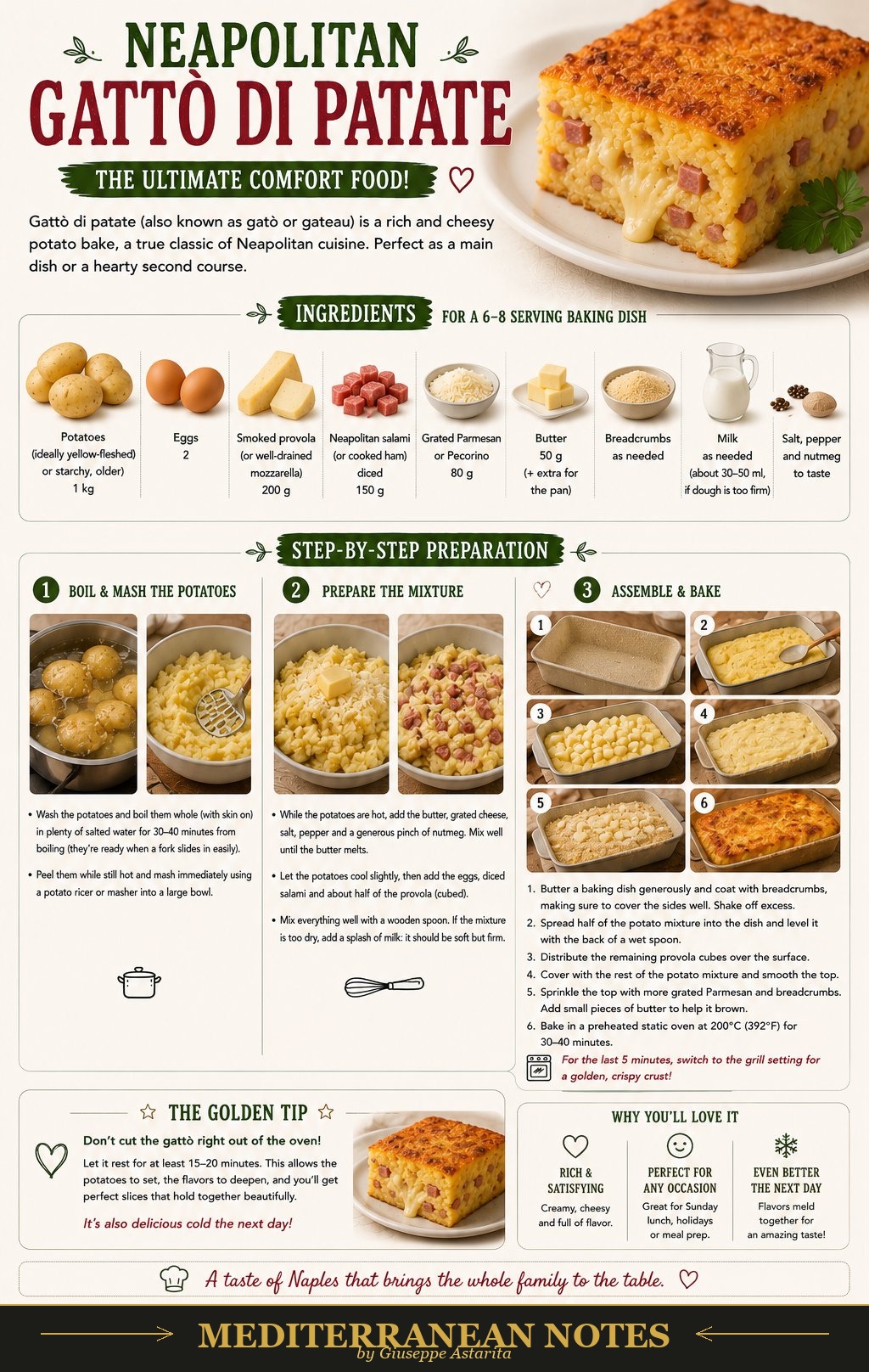
Method
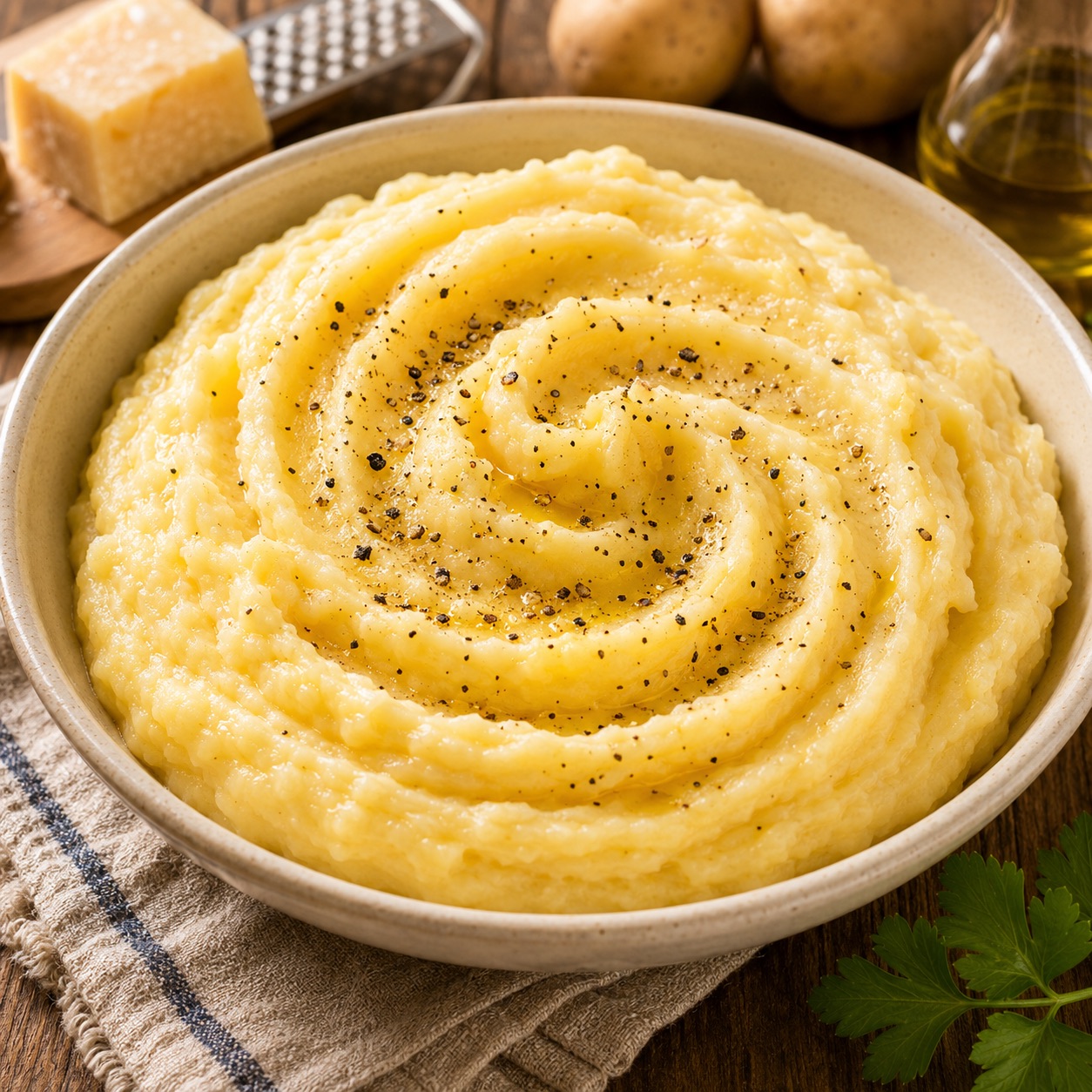
Boil and mash the potatoes. Wash the potatoes and boil them whole, skin on, in plenty of salted water for 30–40 minutes until completely tender — a fork should slide in with no resistance. Peel while still hot (the skin comes off easily; it sticks when cold) and pass immediately through a potato ricer or food mill into a large bowl. Do not use a blender or food processor.
Yellow-fleshed starchy potatoes give the best color and texture — the mash is naturally creamy and golden. Waxy potatoes produce a dense, gluey result.
Make the mixture. While the potatoes are still hot, add the butter, grated cheese, salt, pepper, and a generous grating of nutmeg. Mix well until the butter is fully melted and incorporated. Let the mixture cool until it is warm but no longer hot, then add the eggs and the diced salumi. Mix everything together thoroughly with a wooden spoon. The mixture should be soft, creamy, and firm enough to hold its shape — if it seems too stiff, add a splash of milk.
Let the potatoes cool before adding the eggs — adding them to very hot mash risks scrambling them. Warm is fine; steaming is not.
Prepare the baking dish. Butter a rectangular baking dish generously — sides included — and coat it with breadcrumbs, tapping out the excess. This coating becomes part of the crust and is essential for the gattò to release cleanly when served.
Assemble. Spread half the potato mixture into the dish, smoothing the surface with the back of a wet spoon. Distribute the provola cubes evenly over the surface — a dense, even layer that will melt into a molten stratum in the finished dish. Cover with the remaining potato mixture and smooth the top flat. Sprinkle generously with more grated Parmesan and a uniform coat of breadcrumbs. Dot the top with small pieces of butter.
Bake. Bake in a preheated static oven at 200°C (390°F) for 30–40 minutes, until the top is deep golden and the breadcrumb crust is fully set. For the last 5 minutes, switch to the grill setting to finish the crust — it should be dark gold, slightly crunchy, and fragrant.
Static oven (not fan) gives a more even heat and a better crust. Fan ovens work but dry the surface faster — check earlier.
Rest before cutting. Remove from the oven and let the gattò rest in the dish for at least 15–20 minutes before slicing. This is not optional and cannot be shortened. The interior needs time to set; cut too early and it collapses into a heap. After resting it slices cleanly, holds its shape, and looks like exactly what it is.
If making ahead: let it cool completely, refrigerate overnight, and reheat slices in a hot pan with a little olive oil until the outside is crisp again. This version is arguably better than fresh.
Choose your filling — one, not all
The provola layer stays constant. What varies is the salumi mixed into the potato itself. The rule is simple: choose one, use it well, do not combine. Each brings a different character to the dish. All of them work.
Salame napoletano
The classic. Slightly spiced, fatty, deeply savory. Holds its texture in the bake and seasons the potato from within.
Prosciutto cotto
Cooked ham — gentler, more delicate. The least assertive option; lets the provola and Parmesan speak. Good for younger palates.
Mortadella
Subtle sweetness, a little fat. Pairs particularly well with smoked provola. Dice it small so it distributes evenly through the potato.
Prosciutto crudo
Intense and salty — use it sparingly and adjust the salt in the mixture accordingly. The curing intensifies further in the oven.
No salumi at all
The vegetarian version: just potato, provola, Parmesan, butter, egg. Cleaner, lighter, and completely honest. Also what to make when the fridge offers nothing else.
What you have
The original spirit of the dish: use whatever good charcuterie is available, in reasonable quantity, without overthinking it. Naples always cooked this way.
What to serve alongside
The gattò is rich enough to be a main course on its own. What it needs alongside is something that cuts through that richness rather than adding to it. Two options that I grew up with and return to:
Lattuga salad with lemon. Loose-leaf lettuce, extra-virgin olive oil, fresh lemon juice, a pinch of salt. Cold. Simple. The sharpness of the lemon against the butter and cheese in the gattò is exactly the right counterpoint. The same salad that goes with the crocchè — because the same principle applies.
Melanzane sott'olio. Preserved eggplant in oil — the jarred kind that serious Campanian households keep in some quantity. A few slices alongside a portion of gattò is a deeply satisfying combination: the brininess and slight acidity of the preserved eggplant against the richness of the potato bake. If you make your own, even better.
Buon appetito — e buona domenica.