Campanian kitchen · Fish · Acqua pazza · Special occasion · Amalfi Coast
Pezzogna all'acqua pazza
Oggi ho comprato la pezzogna. She said it the way she said all the occasion fish — not as an announcement of what she had decided to cook but as a piece of news, something that had been discovered at the fishmonger and was worth reporting. The pezzogna was not an everyday fish. It was a particular fish, and when it appeared it meant something specific about the day.
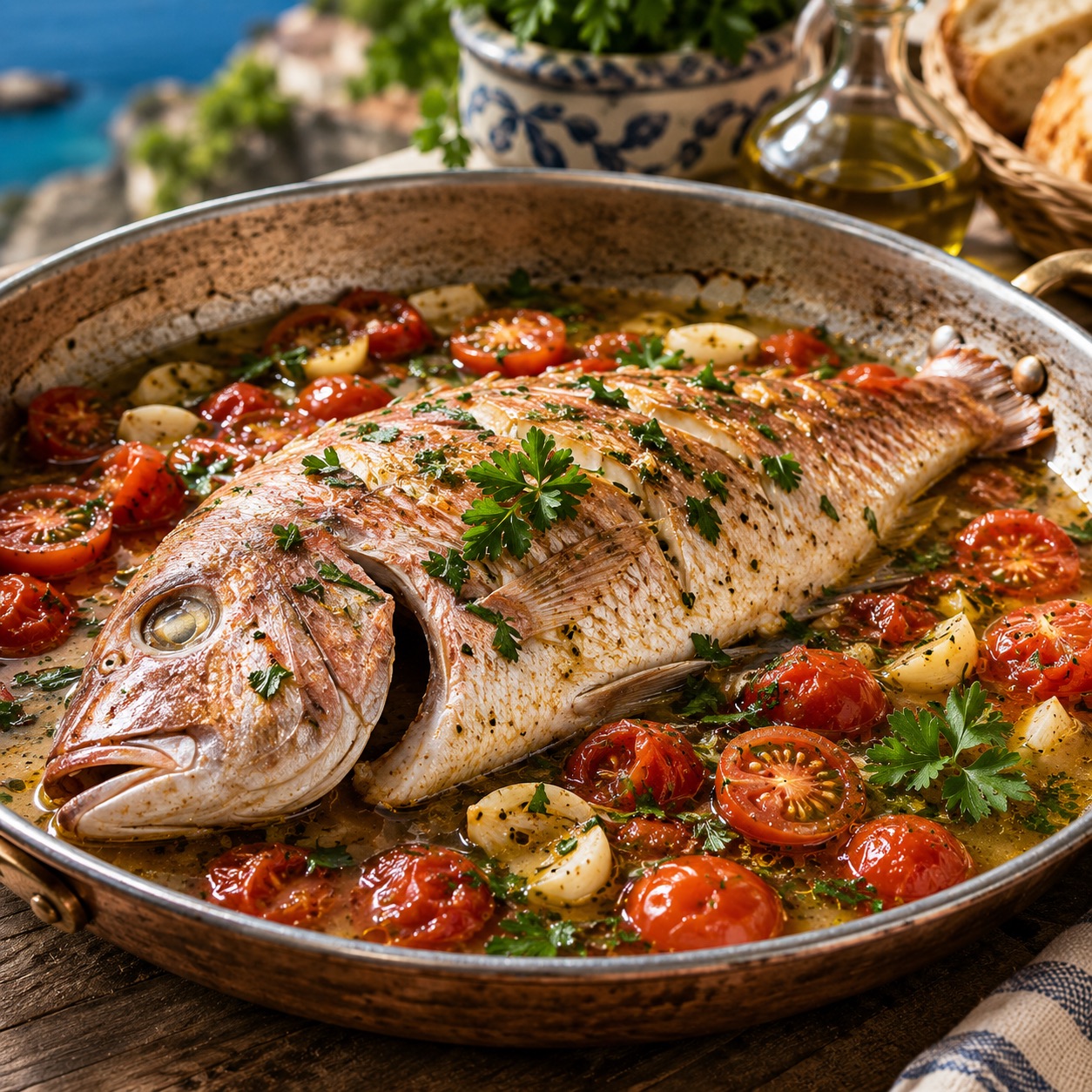
The pezzogna is the Neapolitan name for the red sea bream — Pagellus bogaraveo in scientific nomenclature, known elsewhere along the Italian coast as beryx or occhione for its distinctively large eyes. Along the Amalfi coast and in the markets of Naples, it has been pezzogna for as long as anyone records — a word whose etymology is disputed but whose identity is not: a fish with pink-red scales, large glassy eyes, firm white flesh with a sweetness that distinguishes it from the more common sea breams. It is a fish of depth, caught at 200–500 metres, which contributes to its relative scarcity and its status as a valued fish rather than an everyday one. When the fishmonger had good ones, my mother bought one. When she bought one, she announced it.
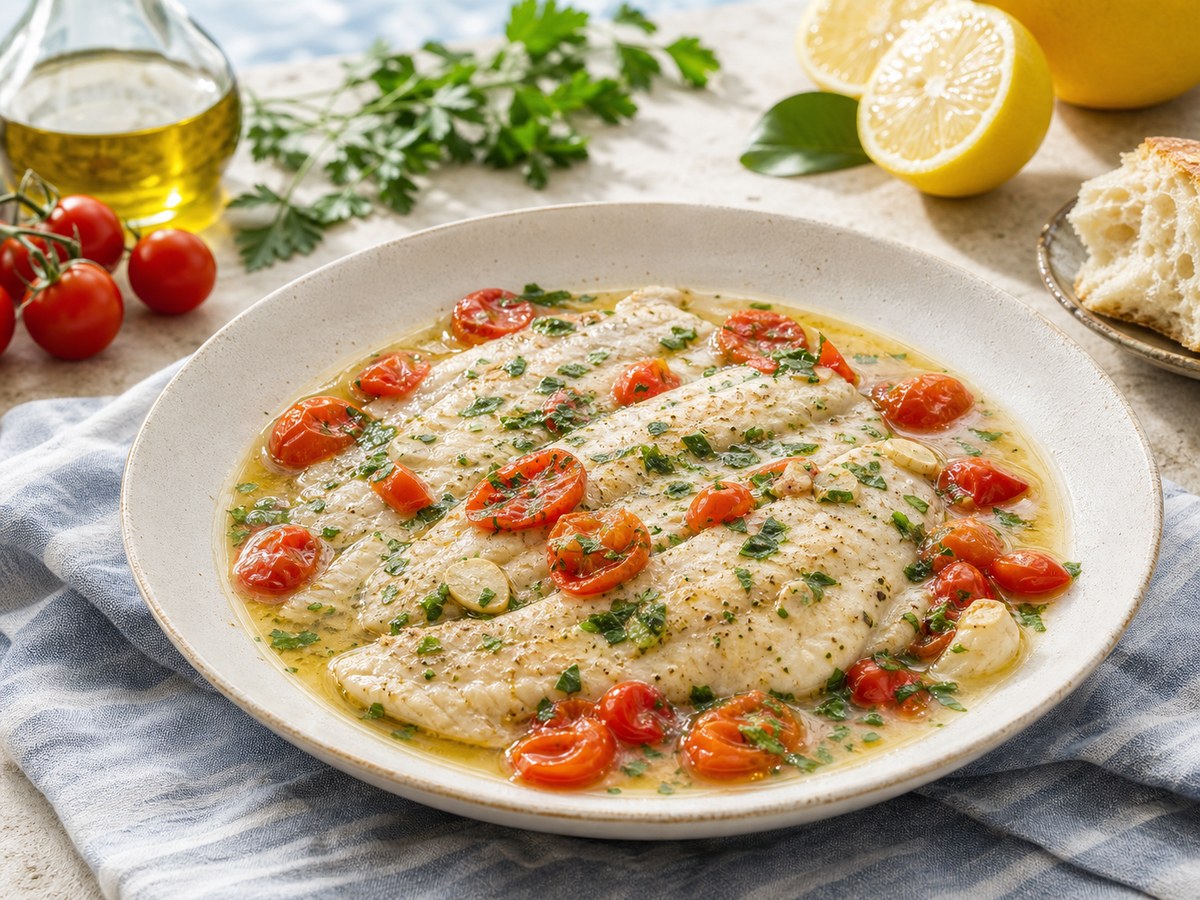
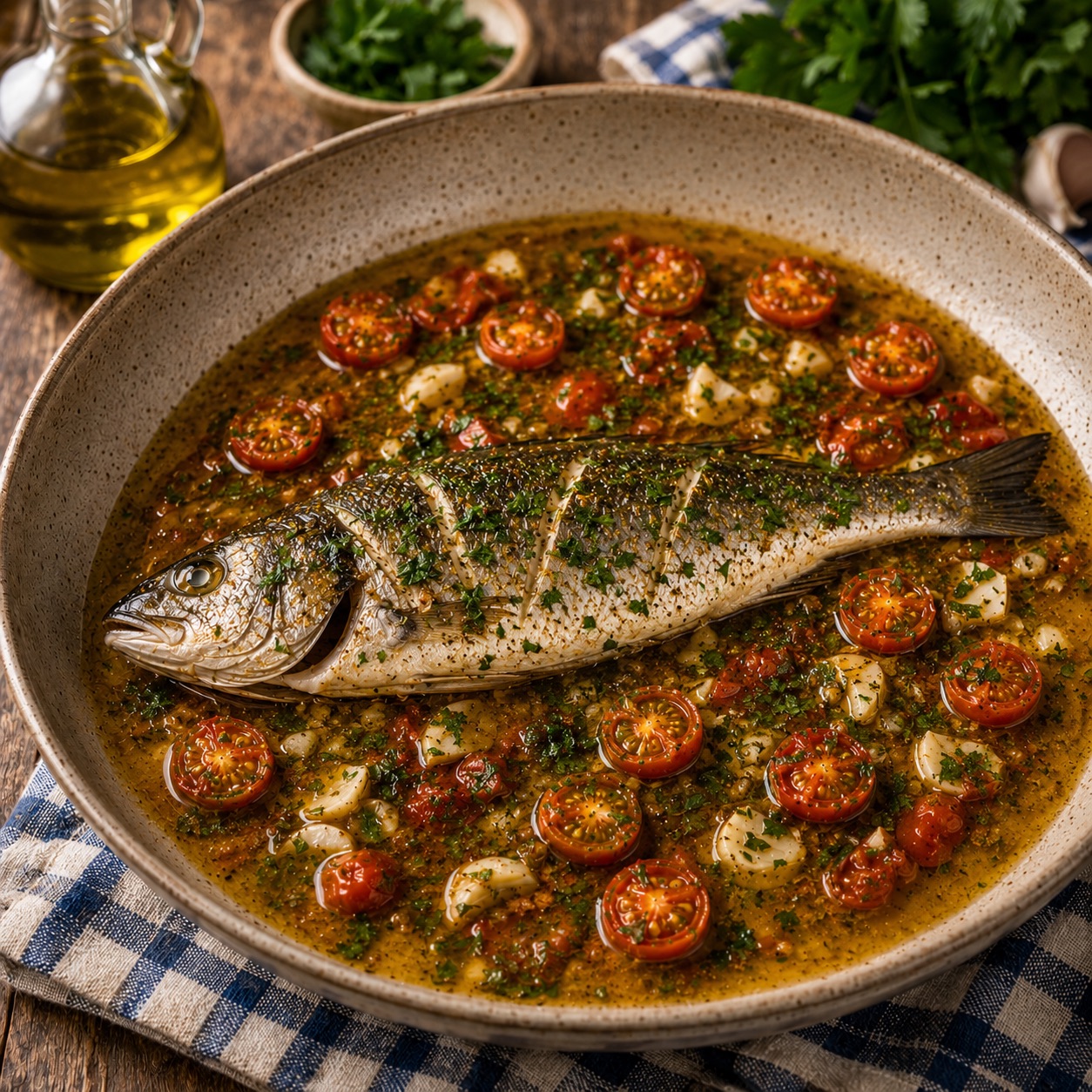
The acqua pazza — crazy water — is the preparation the Amalfi coast devised for fish it considered worthy of the simplest treatment. The name is Neapolitan dialect and the origin story is the one that attaches to many simple preparations: fishermen at sea, cooking their catch with what was available on the boat — olive oil, garlic, tomatoes, white wine, water. The water is not actually crazy; it is the broth that forms from these ingredients simmering together with the fish, acquiring the sweetness of the tomatoes and the fat of the olive oil and the flavor of the fish itself. You eat the fish and then you mop the broth with bread. The bread is not optional. It is the second course.
The pezzogna all'acqua pazza is one of those Neapolitan preparations that demonstrates a principle: the quality of the fish determines the quality of the dish more completely than any technique or additional ingredient could. A mediocre fish poached in the same broth produces a mediocre dish. A pezzogna of good quality poached in the same broth produces something that justifies the announcement she made when she bought it. This is not a recipe that benefits from elaboration. It benefits from a good fish and restraint.
Why acqua pazza works — poaching vs roasting, and the broth that forms
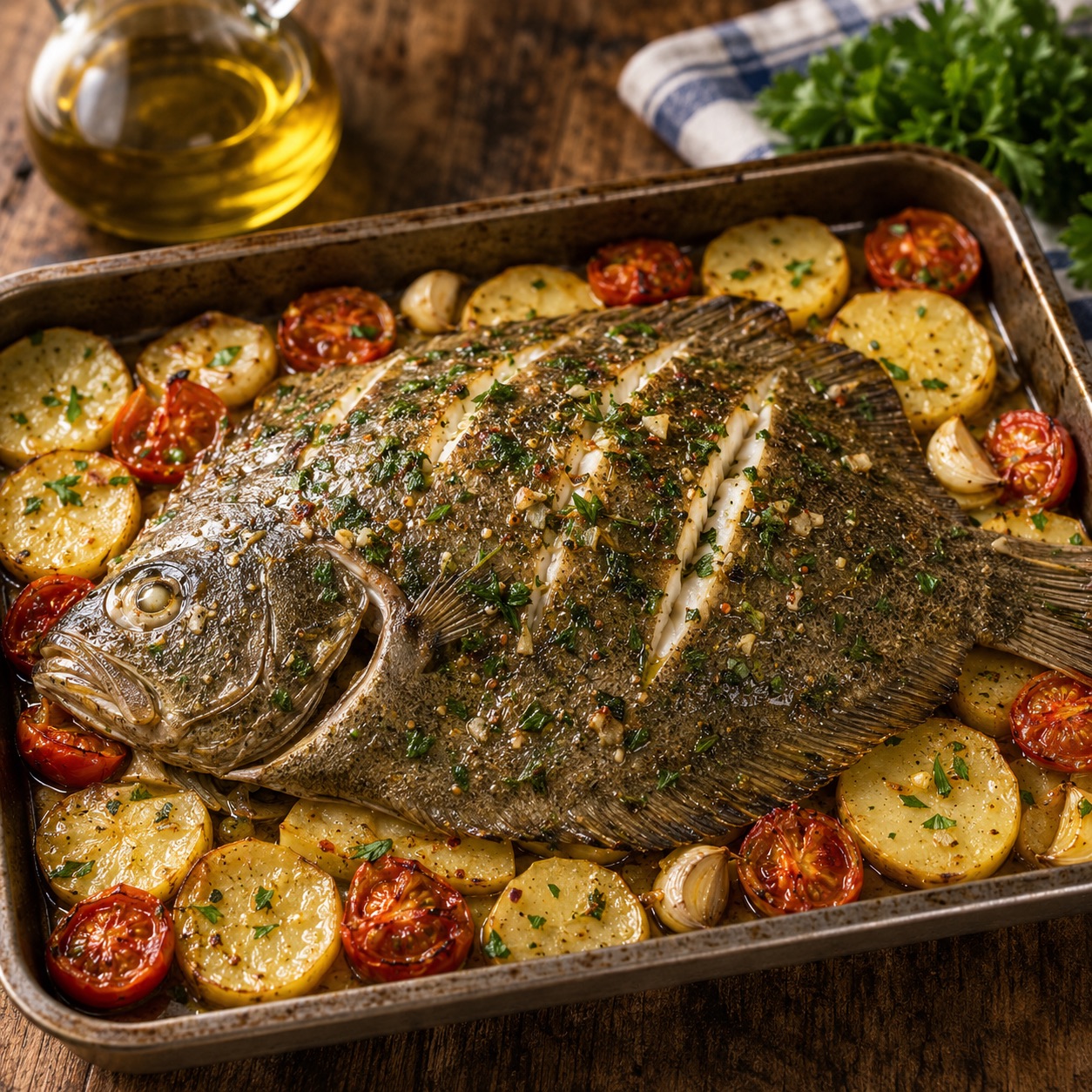
Poaching a whole fish in acqua pazza is fundamentally different from oven roasting in its heat transfer mechanism and its effect on the flesh. In oven roasting, heat reaches the fish primarily through dry convection and radiant heat from the pan, producing surface browning (Maillard reactions) and moisture loss through evaporation. In acqua pazza, the fish is surrounded by liquid at approximately 85–95°C — below boiling, which would toughen the proteins — and heat reaches the flesh primarily by conduction through the liquid. The result is that the collagen in the fish's connective tissue softens gradually without the surface proteins seizing and contracting, producing the characteristic tenderness of well-poached fish. Simultaneously, the fish releases its own gelatin and flavor compounds into the poaching liquid, while absorbing the aromatics from the tomatoes, garlic, wine and olive oil. This bidirectional exchange — fish into broth, broth into fish — is why the acqua pazza broth is so flavorful: it is essentially a very short fish stock made during the cooking of the fish itself. The cherry tomatoes contribute lycopene, glutamic acid (umami), and natural sugars that caramelize slightly in the olive oil before the liquid is added, giving the broth its characteristic sweet-acidic balance. The lid trapping steam during cooking maintains the liquid temperature and prevents excessive evaporation, concentrating the flavors without boiling the fish.
Recipe — serves 2–3
Ingredients
Method
Sauté the aromatics. Heat the olive oil in a wide, deep pan over medium heat. Add the sliced garlic and red pepper flakes if using. Sauté for 2–3 minutes until fragrant and lightly golden. Do not brown.
Build the acqua pazza. Add the halved cherry tomatoes. Cook for 5 minutes until they soften and release their juices. Add the white wine and let it evaporate for 1 minute. Add the water or broth. Season lightly with salt. Bring to a gentle simmer — not a boil. Add half the parsley and the basil if using.
Add the fish. Lower the pezzogna gently into the simmering liquid. The liquid should come about halfway up the fish. Spoon some of the broth over the top of the fish.
The fish should be at room temperature before it goes in — straight from the refrigerator means uneven cooking. Remove it 20 minutes before cooking.
Cover and simmer gently — 15–20 minutes. Reduce heat to low. Cover with a tight-fitting lid. Simmer undisturbed for 15–20 minutes depending on the size of the fish. The flesh is done when it is opaque throughout and flakes easily at the thickest point behind the head.
Do not open the lid in the first 15 minutes. The steam inside is cooking the top of the fish. Lifting the lid drops the temperature.
Serve in the pan with the broth. Transfer the fish carefully to a warm serving plate. Spoon the tomato-garlic broth generously over it. Scatter the remaining fresh parsley. Bring the rest of the broth to the table in a bowl. Have good bread ready — crusty Italian bread that can absorb the broth. This is not optional.
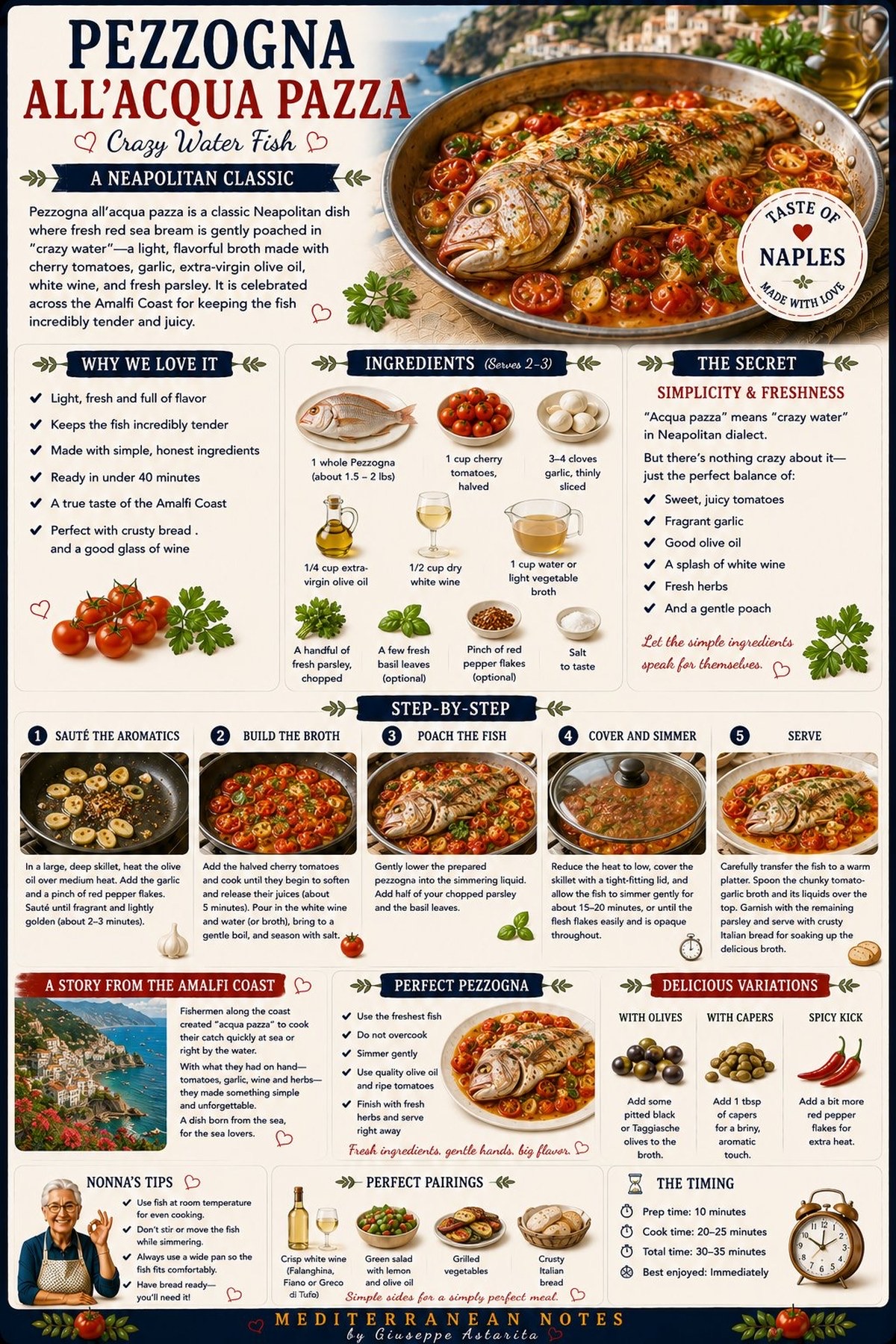
The broth is the part that makes the acqua pazza more than a method of cooking fish. It is a byproduct that becomes a protagonist — the liquid that has absorbed the fish's gelatin and the tomato sweetness and the wine and the garlic, concentrated slightly by the steam cooking, ready to be mopped up with bread while the fish is being eaten. You eat the fish and then you address the broth. The bread for the broth is as important as the fork for the fish. She knew this and always made sure there was enough bread.
Oggi ho comprato la pezzogna — e il pane è pronto per il sugo.