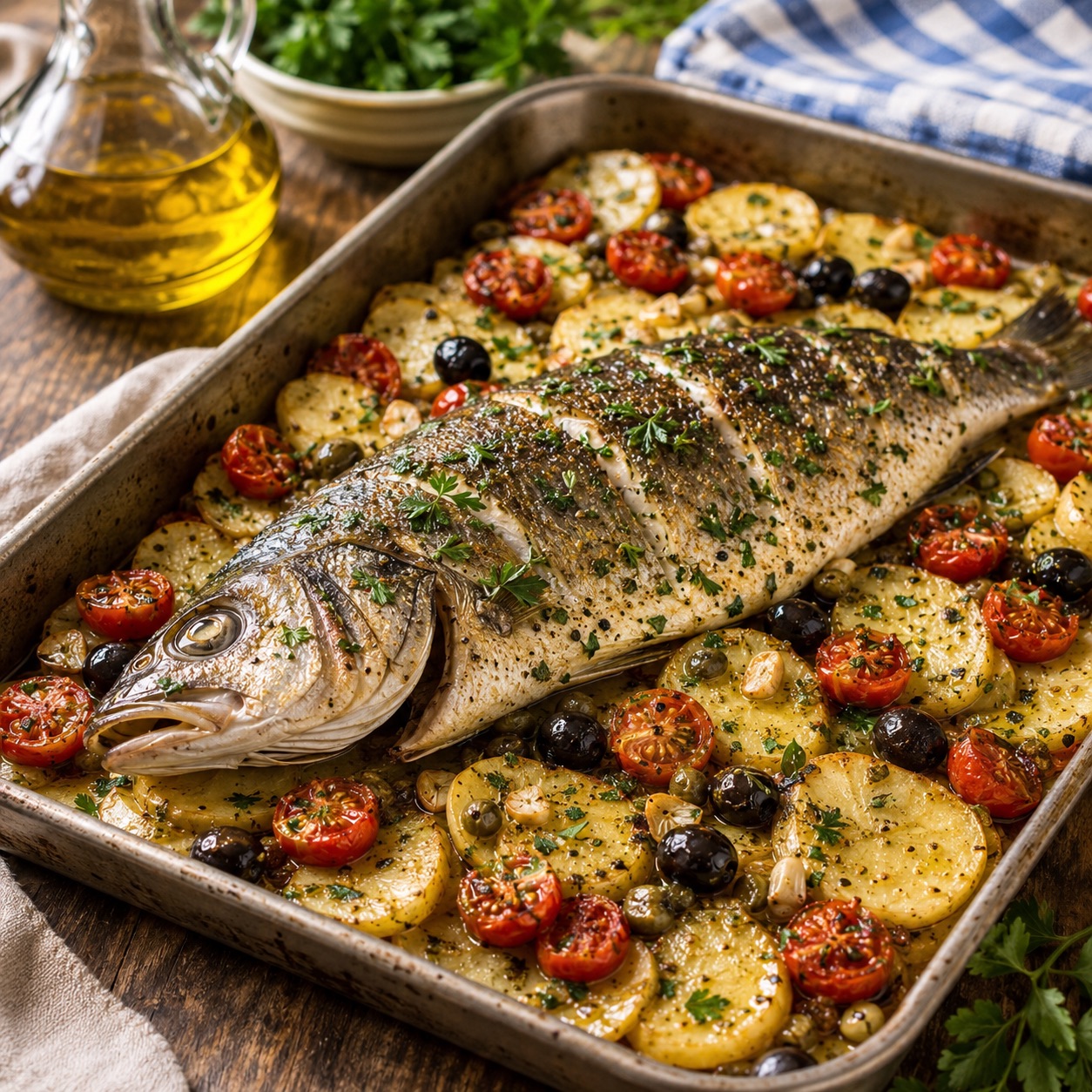
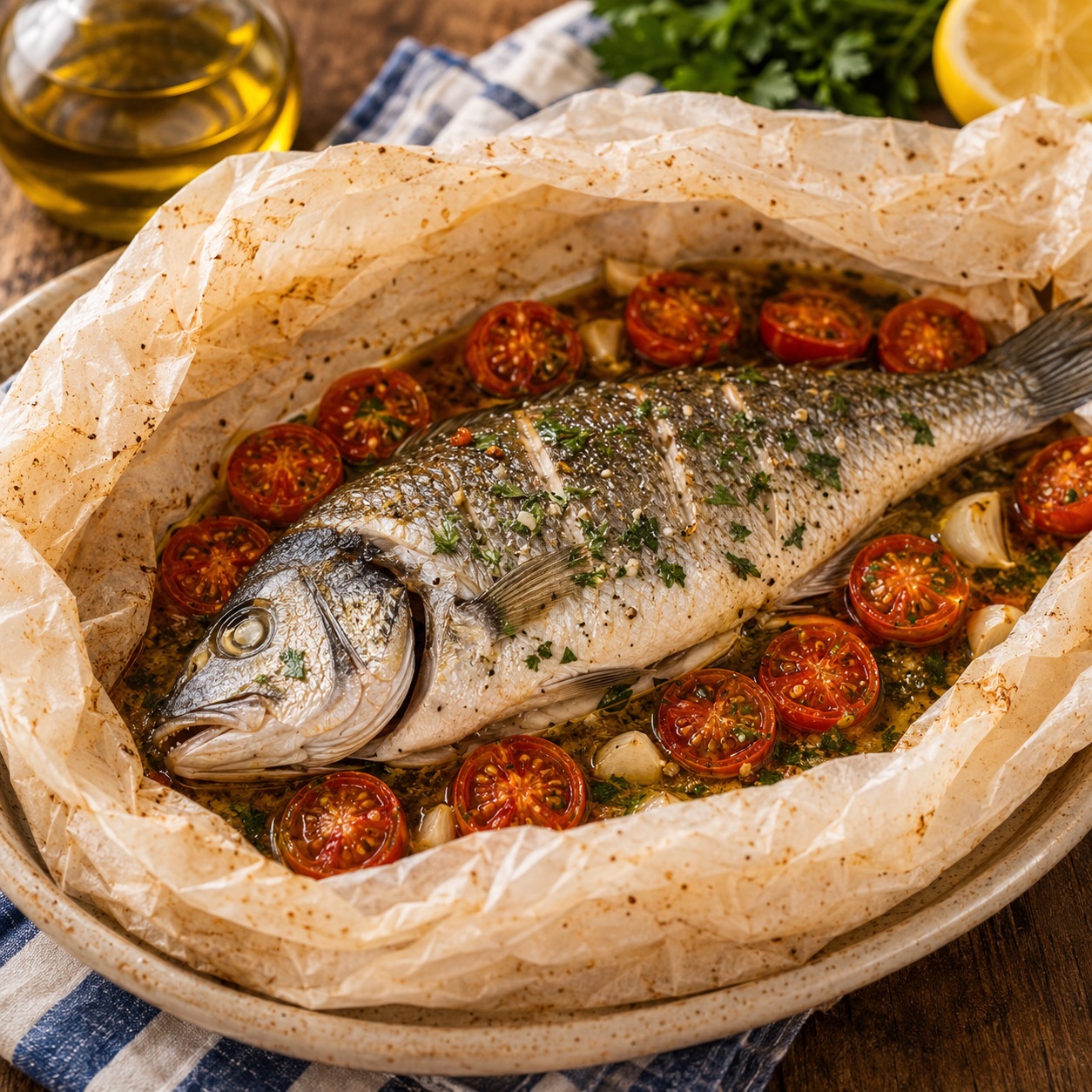
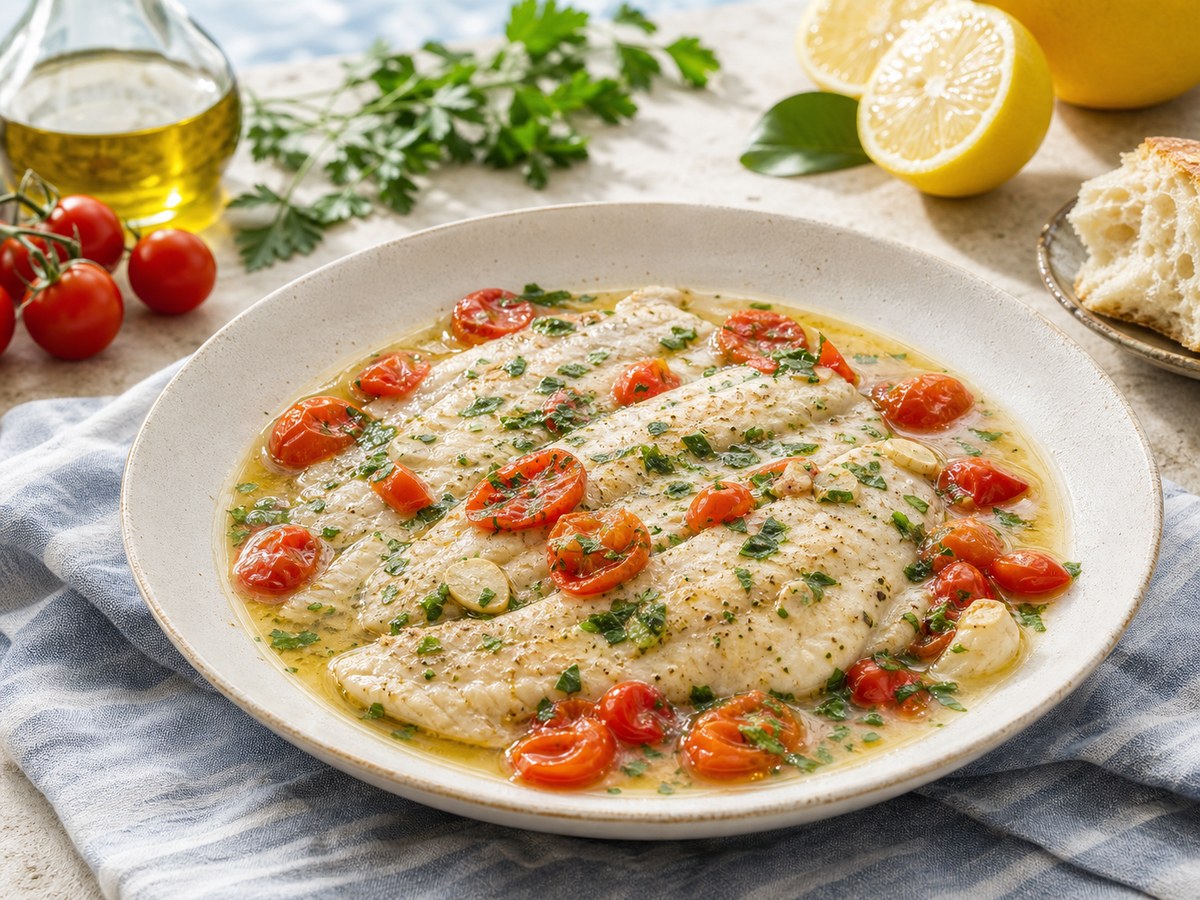
Spigola in guazzetto alla napoletana
The fish stews in its own juices with cherry tomatoes, garlic, white wine, and a little chili. The sauce builds in the pan while the fish cooks — fragrant, light, somewhere between a broth and a pan sauce. Done in thirty minutes. The bread at the end is not optional.
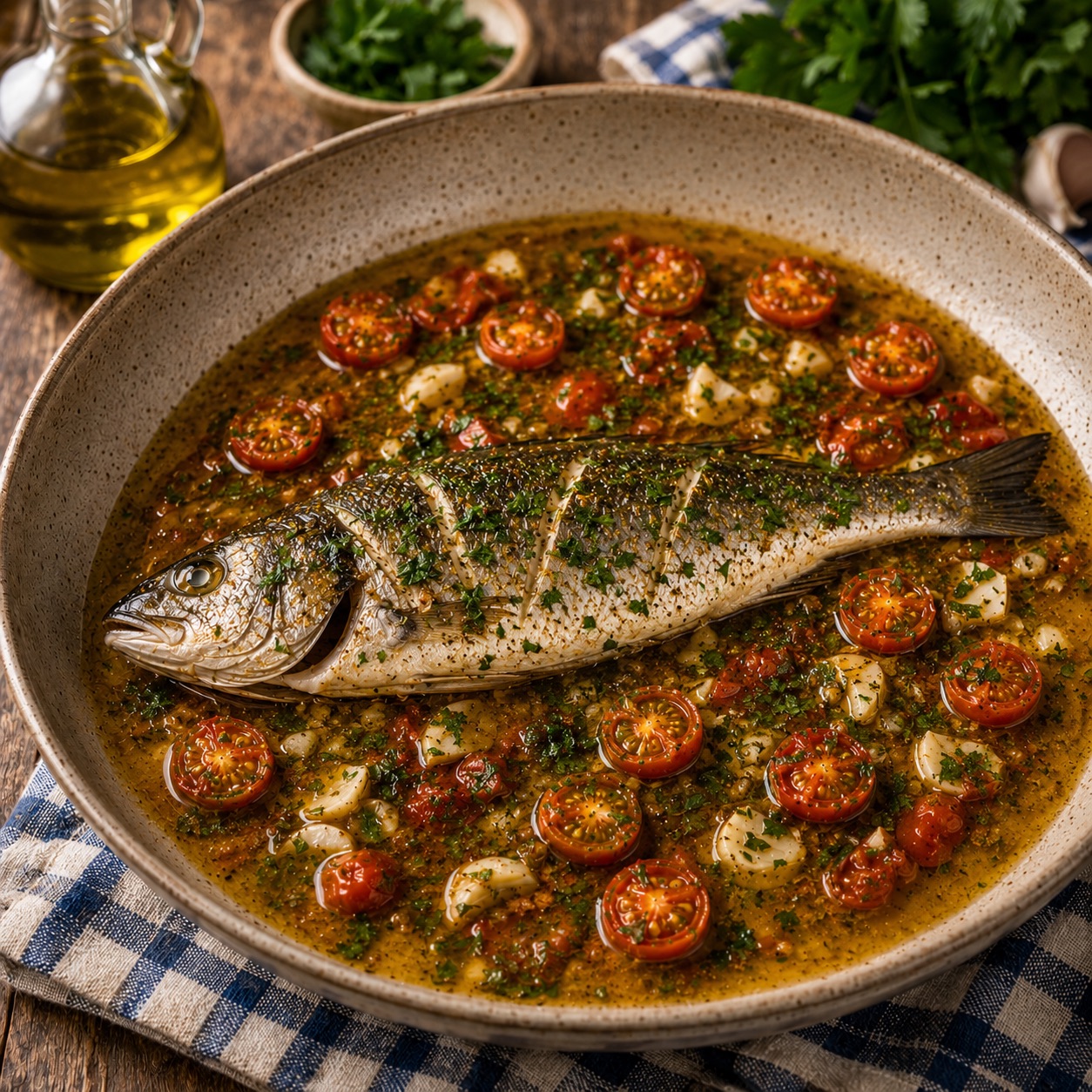
This is the lighter of the three spigola preparations — no potato bed, no sealed parcel, nothing between the fish and the sauce. The sea bass goes directly into the pan with the tomatoes and the wine, the lid goes on, and fifteen to twenty minutes later the flesh is cooked through in a fragrant liquid that is more than a cooking medium and not quite a finished sauce. It is something in between: a guazzetto, which in Neapolitan cooking names precisely this kind of shallow braising liquid that you eat alongside the fish rather than discarding.
The technique is essentially the same as acqua pazza — and if you have made the sogliola in acqua pazza on this blog, the method will be familiar. The difference is scale and presence. A sea bass is a larger fish with more flavor and more fat than a sole fillet, and it holds up better to the braising environment. The cherry tomatoes — preferably piennolo or datterini, which have more sweetness and less water than standard cherry tomatoes — break down into the liquid as the fish cooks, softening and releasing their juice into the wine and olive oil to form the sauce. A small amount of chili, optional but recommended, gives the sauce a background warmth that rounds rather than sharpens.
You can use whole fish or fillets. Whole fish produces a better sauce — the bones and skin release collagen and gelatin that give the braising liquid body. Fillets are faster and easier to serve. My mother used the whole fish when she had time; fillets on weeknights when she didn't.
Why the guazzetto builds flavor as the fish cooks — collagen, tomato chemistry, and wine
As the fish cooks in the shallow liquid, several simultaneous processes build the flavor of the sauce. The skin and bones of a whole fish release collagen at cooking temperature; in the presence of the acidic tomato liquid (pH ~4.2), this collagen partially hydrolyses to gelatin, giving the sauce a slight viscosity and body that pure tomato liquid would not have. The cherry tomatoes contribute glutamate — a primary umami compound — as well as volatile aromatic esters and aldehydes that form the characteristic bright tomato-fish aroma of this preparation. The white wine contributes ethanol, which acts as a solvent for fat-soluble aromatic compounds from the garlic, parsley, and chili that would not dissolve into the water-based tomato liquid alone. The ethanol evaporates as the sauce reduces, leaving behind the extracted aromatics. The result is a sauce with more aromatic complexity than any of its components would produce individually. This is the chemistry behind the specific satisfaction of mopping up guazzetto with bread: it contains the full extraction of everything that cooked in that pan.
Recipe — serves 2 (whole fish) or 4 (fillets)
Ingredients
Method
Build the base. Heat the olive oil in a large wide pan over medium heat. Add the garlic (unpeeled, slightly crushed) and the chili. Let them infuse for about 1 minute. Add the halved cherry tomatoes and cook over medium-high heat for 3–4 minutes, pressing them lightly with a spoon until they start to release their juice.
Sear the fish briefly. If using whole fish, score the skin with 2–3 shallow diagonal cuts on each side. Place the fish in the pan with the sauce. Increase the heat slightly and sear for about 1 minute on each side to get a little colour on the skin.
This step is optional but recommended — a brief sear on the skin adds flavour and helps it hold together during the covered cooking phase.
Add the wine, season, and cover. Pour the white wine over the fish. Let the alcohol evaporate for 1 minute — you will smell the sharp alcohol note fade. Add a good pinch of salt, a few parsley stalks, and cover the pan with a lid.
Cook covered over medium heat. Cook for 15–20 minutes (whole fish) or 12–15 minutes (fillets), until the flesh is opaque throughout. Check by pressing gently at the thickest point — it should give without being mushy. If the liquid reduces too much during cooking, add a small splash of water.
Finish and serve. Remove the lid. Turn off the heat. Remove the garlic. Scatter fresh chopped parsley generously over the fish and into the sauce. Serve directly from the pan — fish with the sauce spooned over it, and crusty bread to work through the guazzetto at the end.
Parsley only off the heat. It should be bright green and fragrant when it hits the plate.
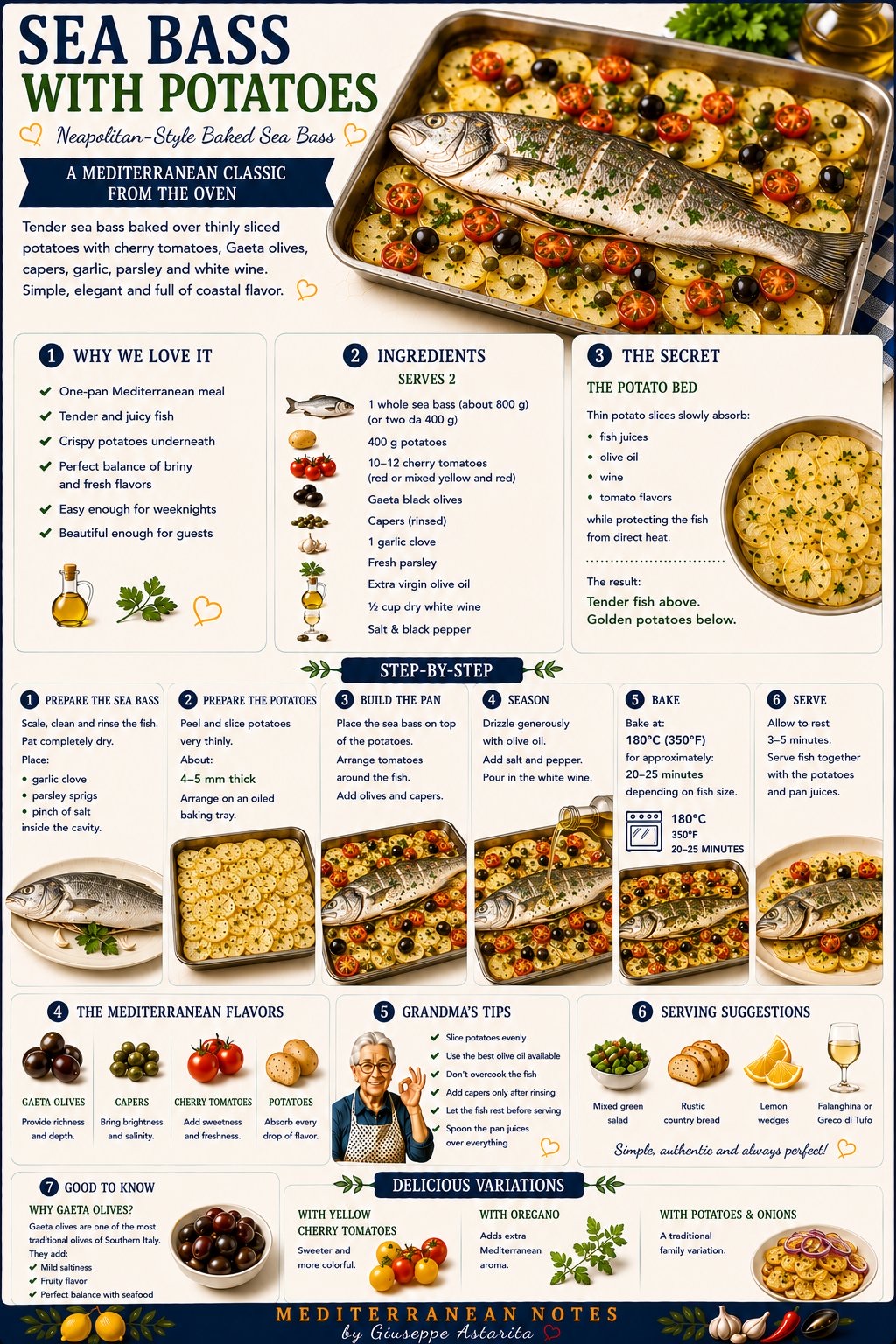
The guazzetto is at its best eaten immediately — the sauce is most vibrant when it is still moving in the pan and the fish is still hot. Unlike the alacciata preparation for sole, this dish does not improve overnight. The tomato acidity and the wine aromatics are at their peak in the first serving. What benefits from resting is the bread — it needs to be ready at the table when the fish arrives.
Il guazzetto si fa con il pane in mano — non c'è altro modo.