Campanian kitchen · Fish · Cartoccio · Oven · Special occasion · The sea
Coccio al cartoccio
Oggi ho fatto il coccio al cartoccio. The announcement had a particular weight — it named both the fish and the method, which meant she had made a considered choice at the market and a considered choice in the kitchen. The coccio, known elsewhere as red gurnard, was a fish she bought when the fishmonger had good ones and when she wanted something that would justify the preparation. The cartoccio was the preparation she chose when she wanted everything inside to stay inside.
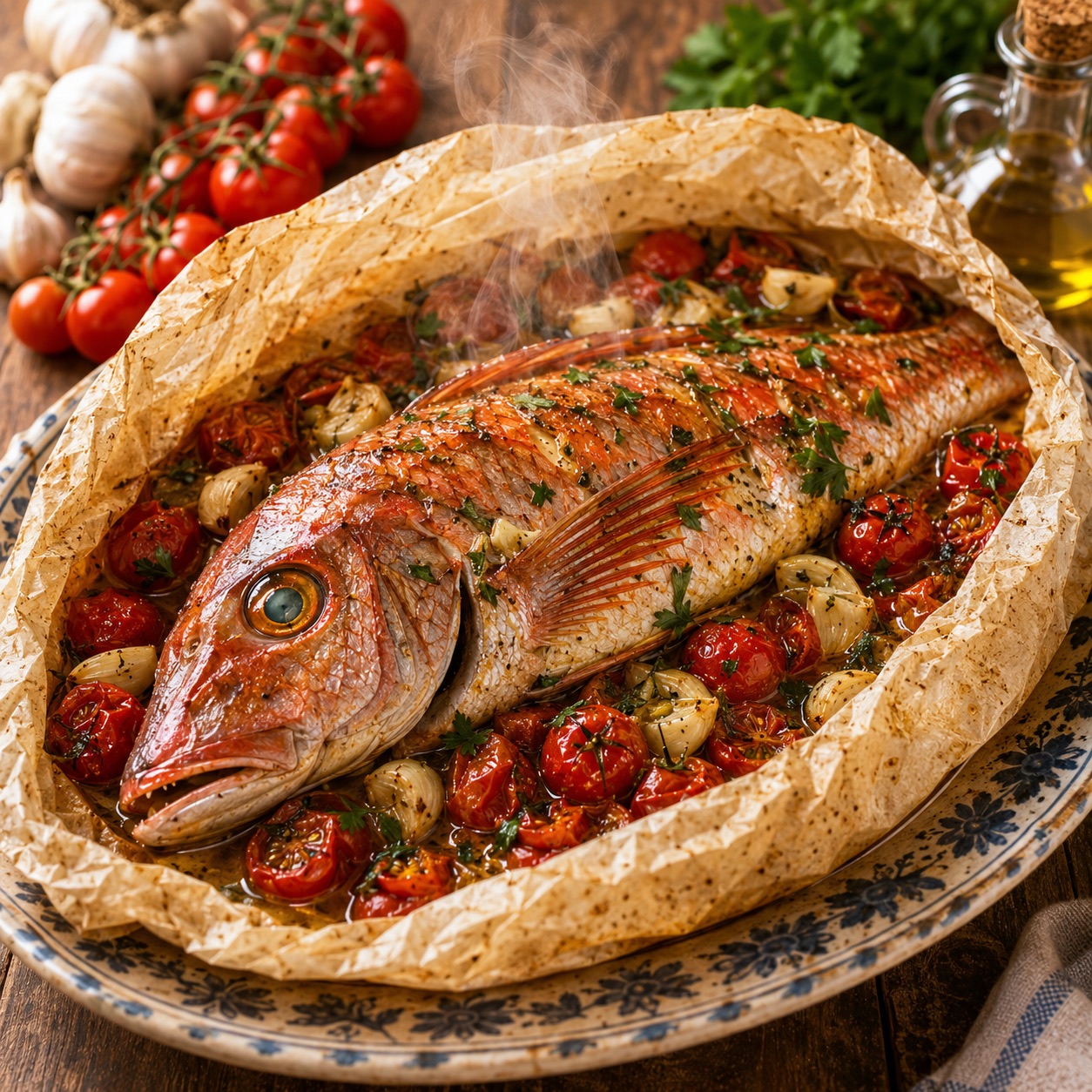
The coccio — 'o coccio in Neapolitan dialect — is the red gurnard, known scientifically as Chelidonichthys lucerna and recognized immediately by its large triangular head, its bright red and orange coloring, and the three separate pectoral fin rays it uses to walk along the seabed. In the Neapolitan fish markets it has been a prized fish for centuries — not for its size, which is modest, but for the quality of its flesh: firm, white, sweet, with a delicate flavor that holds up to both the acqua pazza and the cartoccio without being overwhelmed. Neapolitan fishermen valued it; Neapolitan kitchens valued it equally. Outside Campania it is less known, which is the case with many of the best regional fish of the southern Italian coast.
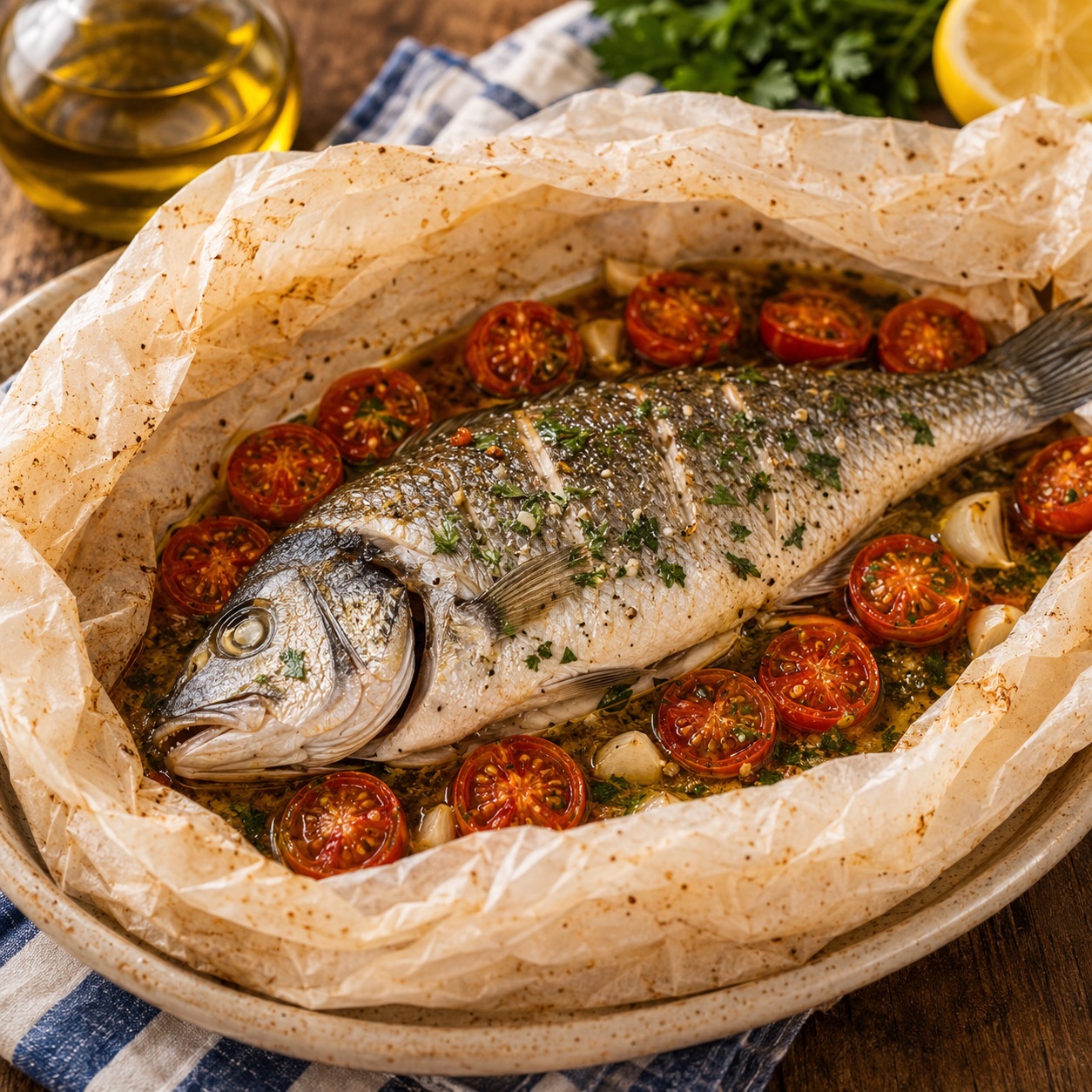
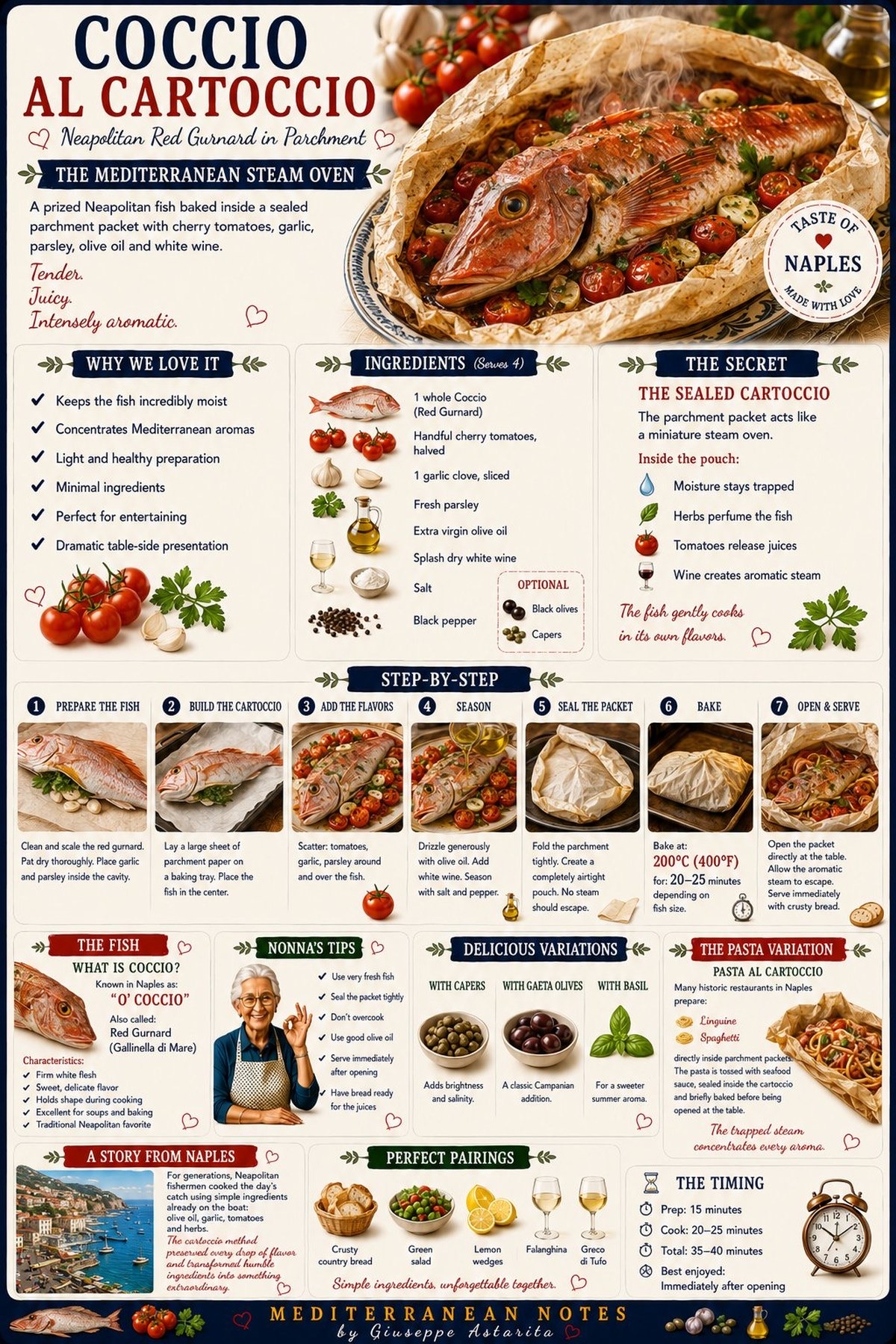
The cartoccio — parchment parcel — is the preparation that concentrates. Everything placed inside the sealed packet stays inside: the steam, the aromas of the herbs and tomatoes, the juices released by the fish as it cooks, the fragrance of the white wine. The parchment becomes a miniature oven within the oven, maintaining a humid environment that keeps the fish extraordinarily moist while the sealed aromatics penetrate the flesh from all sides simultaneously. When the parcel is opened at the table — which is the correct moment to open it, not in the kitchen — the steam and the smell arrive before the food does. This is the theatre of the cartoccio, and it is not empty theatre: the aromatics that have been building inside the sealed packet for twenty minutes are released at once, and the person at the table gets the full impact of them before the first bite.
My mother's announcement — oggi ho fatto il coccio al cartoccio — carried within it the two satisfactions of the dish: the satisfaction of having found a good coccio at the market, and the satisfaction of having assembled the cartoccio and trusted the oven with it. The cartoccio requires a certain confidence: you seal the fish inside and commit to not opening the parcel until it is done. You cannot check, cannot adjust, cannot taste the liquid building inside. You trust the time and the temperature and the seal. She trusted it, and it was always right.
Why the cartoccio works — sealed steam cooking and aroma concentration
The parchment cartoccio acts as a miniature steam oven with several specific advantages over open oven roasting. First, the sealed environment maintains near-100% relative humidity around the fish throughout cooking, preventing the surface drying that occurs during oven roasting and preserving the fish's moisture content more completely. Second, the steam pressure that builds inside the sealed packet (from the water in the wine, tomatoes, and the fish's own moisture evaporating as the oven heats the parcel) creates a positive pressure environment that drives aromatic compounds from the cherry tomatoes, garlic, parsley, and wine into the fish's surface tissue — a more intensive flavor absorption than in open cooking where aromatics disperse into the kitchen air. Third, the temperature inside the sealed parcel stabilizes at approximately 95–100°C (just at the condensation point of steam), which is a gentler maximum temperature than direct oven heat at 200°C and prevents the overcooking of the delicate white flesh that can occur in open roasting. The characteristic inflation of the cartoccio parchment during baking — visible through the oven window — is caused by this internal steam pressure accumulation and is a reliable visual indicator that the cooking environment is properly sealed and active. The coccio's firm flesh holds together well in this environment; its natural sweetness is amplified by the gentle heat and the concentrated tomato juices circulating around it.
Recipe — serves 2–4 depending on fish size
Ingredients
Method
Preheat oven to 200°C. Line a baking tray with a sheet of parchment large enough to wrap the fish completely and still have material to fold and seal the edges.
Prepare the fish. Clean and pat dry. Season inside the cavity generously with salt, pepper, and a few parsley sprigs and garlic slices. The cavity seasoning perfumes the flesh from the inside during cooking.
Build the cartoccio. Place the fish in the center of the parchment. Scatter the cherry tomatoes, remaining garlic slices, and olives or capers if using around and over the fish. Add more parsley. Drizzle generously with olive oil. Pour the white wine over everything. Season with salt and pepper.
Seal completely — no gaps. Bring the edges of the parchment up and fold them over the fish twice, pressing firmly at each fold to create a tight seal on all sides. The parcel should look like a well-sealed envelope. Check the ends especially — these are the most common points of leakage.
If the parchment is not cooperating, use a second sheet. Two layers are better than one inadequate seal.
Bake at 200°C for 20–25 minutes. Place the sealed parcel on the baking tray. Slide into the hot oven. You will see the parcel begin to inflate as the steam builds inside — this is correct and expected. Do not open the oven unnecessarily in the first 15 minutes.
Open at the table. Bring the parcel to the table sealed. Use scissors to cut the top open at the table — not in the kitchen. Let the steam and the smell come out at the table, in front of the people eating it. This is not presentation for its own sake; it is the moment the dish is complete.
Have bread ready for the juices inside the parcel. The liquid that has accumulated during cooking — tomato juice, wine, olive oil, fish gelatin — is the best part of the cartoccio and should not go to waste.
The coccio and the pezzogna were the two occasion fish of our kitchen — the ones she announced, the ones that required a specific preparation worth naming in the announcement. The spigola she said oggi ho fatto la spigola with satisfaction; the coccio she said oggi ho fatto il coccio al cartoccio with something slightly more — the pleasure of a preparation completed, a sealed parcel ready for the oven, the knowledge that when it opened at the table the smell would arrive first. She was right about that. The smell of the coccio al cartoccio opening at the table was, and remains, one of the best things a kitchen can produce.
Oggi ho fatto il coccio al cartoccio — aprilo a tavola, non in cucina.