Sogliola in acqua pazza
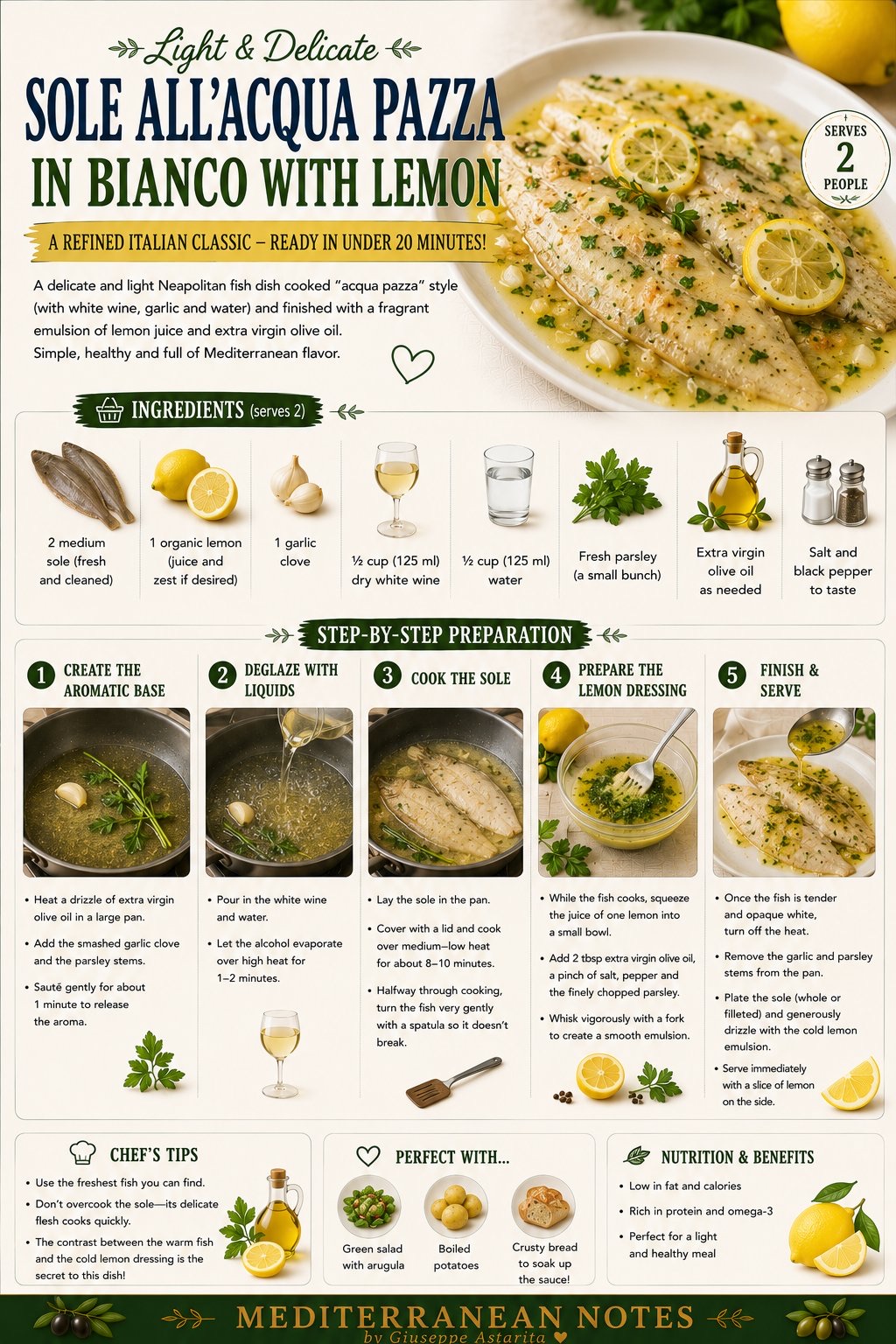
Ti faccio una sogliola — fa bene al cervello. My mother said this often. She was not wrong. The everyday version: garlic, white wine, a small amount of water, the fish in for two minutes per side, finished with cold olive oil and lemon off the heat. Twenty minutes from fridge to table.
Sole appeared on our table on Fridays, reliably. My mother had a word for it that I did not hear her use for any other fish — she called it leggera, light, which was both a description and a recommendation. It is light in the caloric sense, yes, but also in the way it sits in the stomach: you could eat it at lunch and feel clear-headed in the afternoon, which was the practical point. The phrase she used most — fa bene al cervello, it is good for the brain — I took as a piece of general maternal encouragement until I was old enough to look at the biochemistry of it and find that she was essentially correct. Sole is rich in phospholipids and omega-3 fatty acids, the same compounds I now spend my professional life studying.
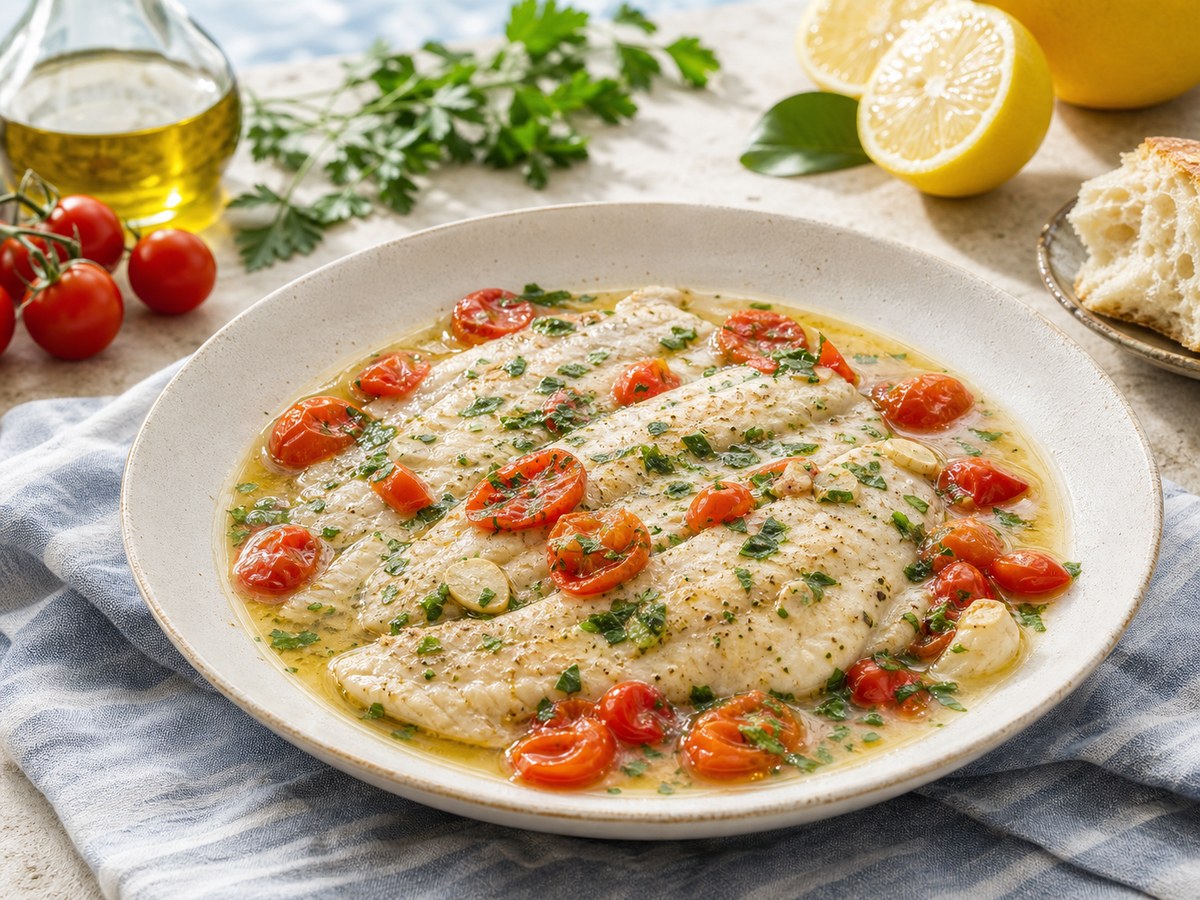
The version she made most was this one, in bianco — what Neapolitan cooking sometimes calls acqua pazza in the pure sense: garlic, olive oil, white wine, a little water, parsley. No tomatoes, no olives, nothing that competes with the clean mineral taste of the fish itself. She would lay the fillets in a pan already hot with garlic-infused oil, give them two minutes on the first side, turn them once, and finish with a squeeze of lemon and a thread of cold olive oil off the heat. The entire process took less time than it took to set the table.
The critical thing about sole is not adding but removing: removing it from the heat in time. The flesh is composed of very short muscle fiber bundles with almost no connective tissue — it goes from perfectly cooked to overcooked in under a minute. If you have eaten sole that was dry and rubbery, it was overcooked, not defective. At two minutes per side the flesh is just barely opaque all the way through. That is where you want it.
Why sole cooks in 2 minutes per side — and why my mother was right about the brain
Sole flesh is almost entirely fast-twitch white muscle with very short fiber bundles and minimal collagen. Unlike chicken or beef, there is almost no connective tissue to break down — the proteins denature rapidly and evenly as heat penetrates the thin fillets. This is why sole is ready in minutes and why overcooking it produces rubbery, dry results: once the myosin proteins denature (around 50–52°C internal temperature), continued cooking rapidly forces moisture out of the tissue. The solution is high brief heat: get the pan hot, add the fish, two minutes per side, off the heat. Regarding the brain: sole is a meaningful source of phosphatidylcholine and DHA (docosahexaenoic acid), an omega-3 fatty acid that constitutes roughly 40% of the polyunsaturated fat in the human brain and is continuously required for membrane maintenance in neurons. Regular consumption of DHA-rich fish is associated with preserved cognitive function across aging — which is exactly what my mother was claiming, in her own way.
Recipe — serves 4
Ingredients
Method
Prepare the pan. Heat 2 tbsp olive oil in a wide skillet over medium-high heat. Add the crushed garlic cloves. Let them turn golden and fragrant — about 90 seconds — then remove them. The oil is now infused.
Remove the garlic before it browns. Burned garlic makes the whole dish bitter.
Season and cook the fillets. Pat the sole fillets dry. Season lightly with salt and white pepper on both sides. Lay them in the hot garlicked oil. Cook for exactly 2 minutes without moving them. The edges will turn opaque and the fillets will begin to release easily from the pan.
Add wine and water, turn the fish. Pour the white wine and water into the pan — not over the fish but around it. It will sizzle and steam. Carefully turn the fillets. Cook for 1 more minute on the second side. The liquid should reduce by half. The fish should be just barely opaque all the way through.
Use a wide spatula and move gently — sole fillets are delicate and will break if handled roughly.
Finish off the heat. Turn off the flame. Squeeze the lemon over the fish. Drizzle the remaining 2 tbsp cold olive oil directly over the fillets. Scatter the chopped parsley. Let it rest 30 seconds in the pan — the residual heat does the rest.
Cold oil at the end, not more heat. This produces a cleaner, more fragrant result than adding oil earlier.
Serve immediately. Transfer carefully to warm plates. Spoon the pan juices over the top. Serve with plain boiled potatoes or crusty bread to absorb the broth. Nothing else is needed.
The other preparations
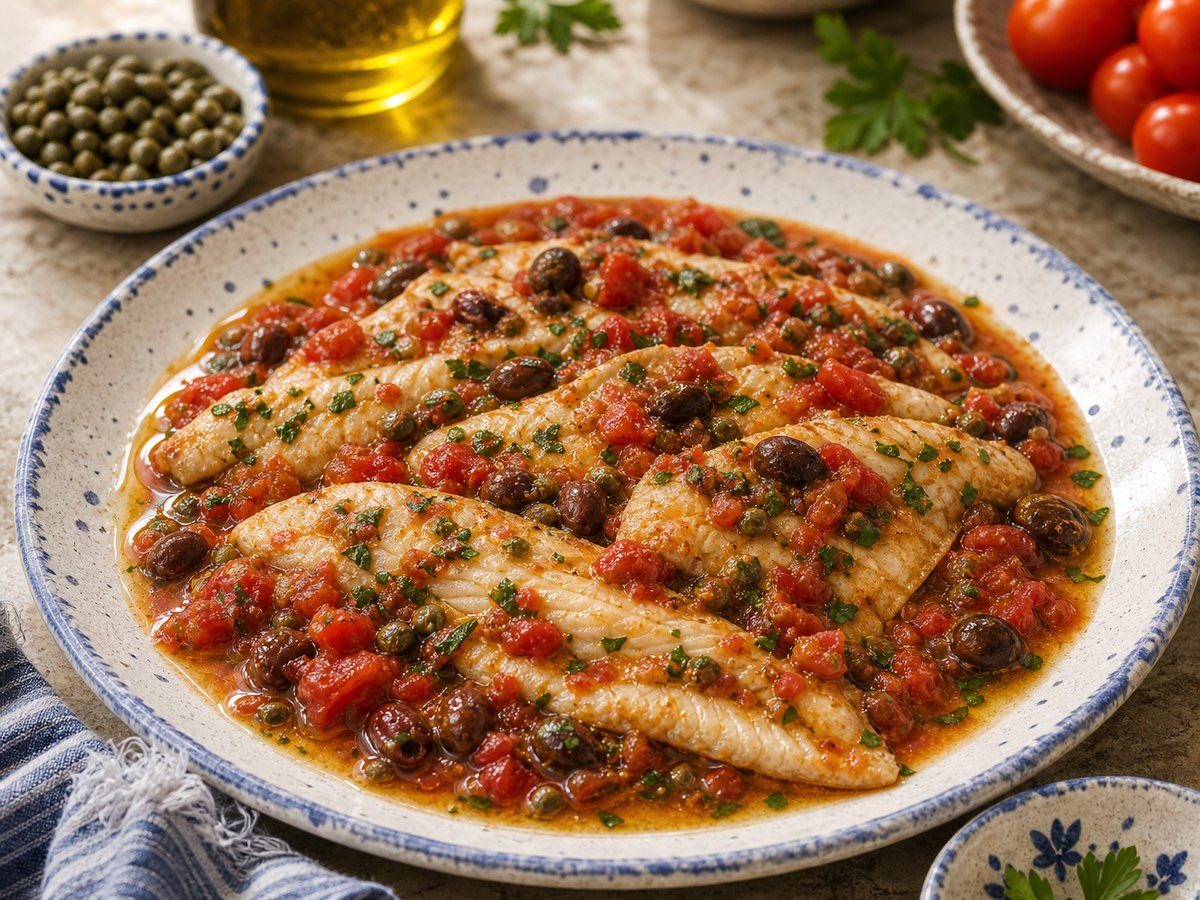
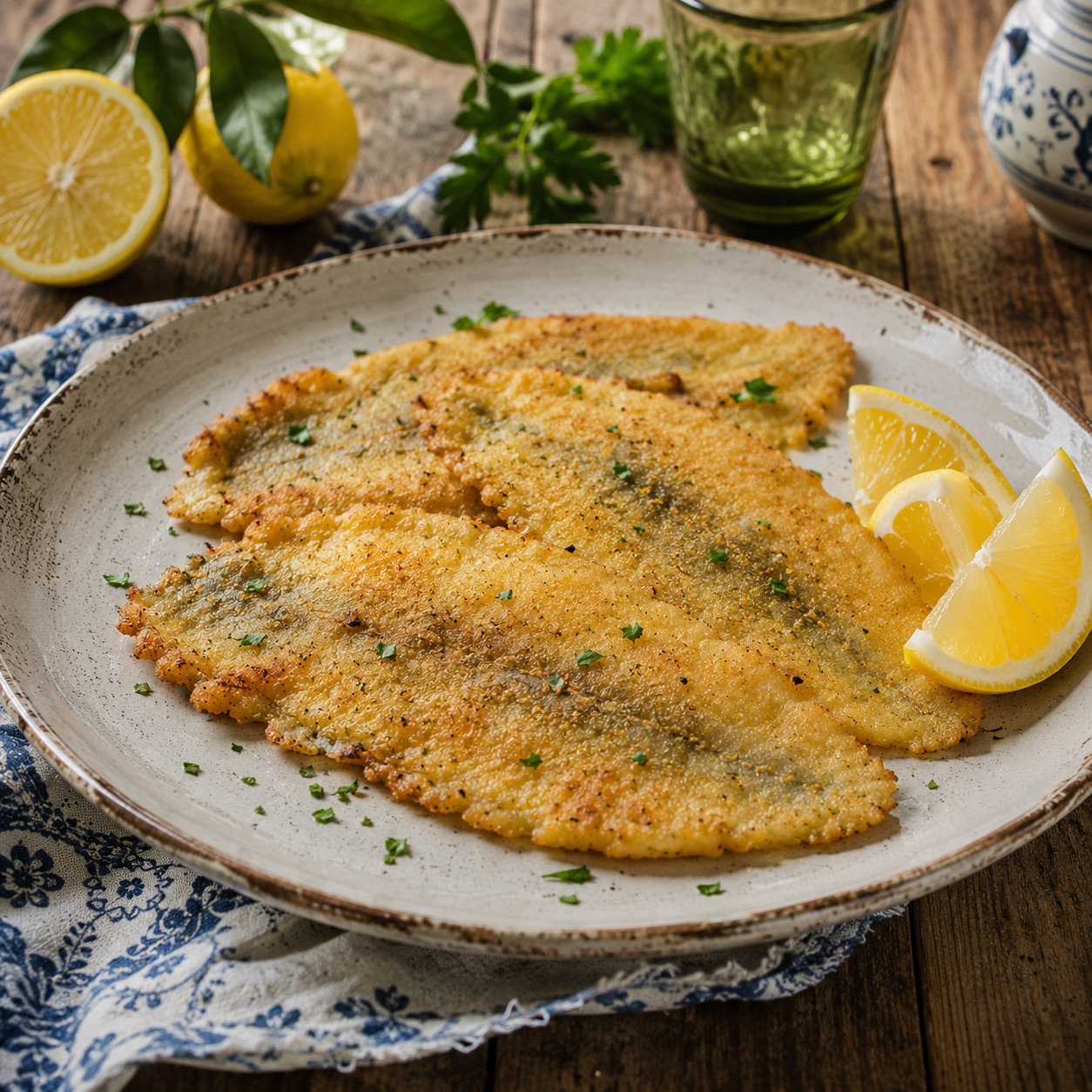
Two other ways my mother cooked sole — the alacciata for when you want the Neapolitan pantry asserting itself, the impanata for the version that pleased everyone without exception.
Buon venerdì — e che la sogliola non cuocia un secondo di più.