Pesce alla Griglia
Sapori Semplici, Fuoco Vero — Simple Flavors, True Fire
We rarely cooked much fish at home. The smell was strong, and my father didn't like it. But when we went out to eat — very rare — fish was one of the things that made my mother happy. And grilling fish with friends was fun. From the Amalfi Coast to the Cilento, the sea has always been on the table. The sea gives us everything. We just need to respect it.
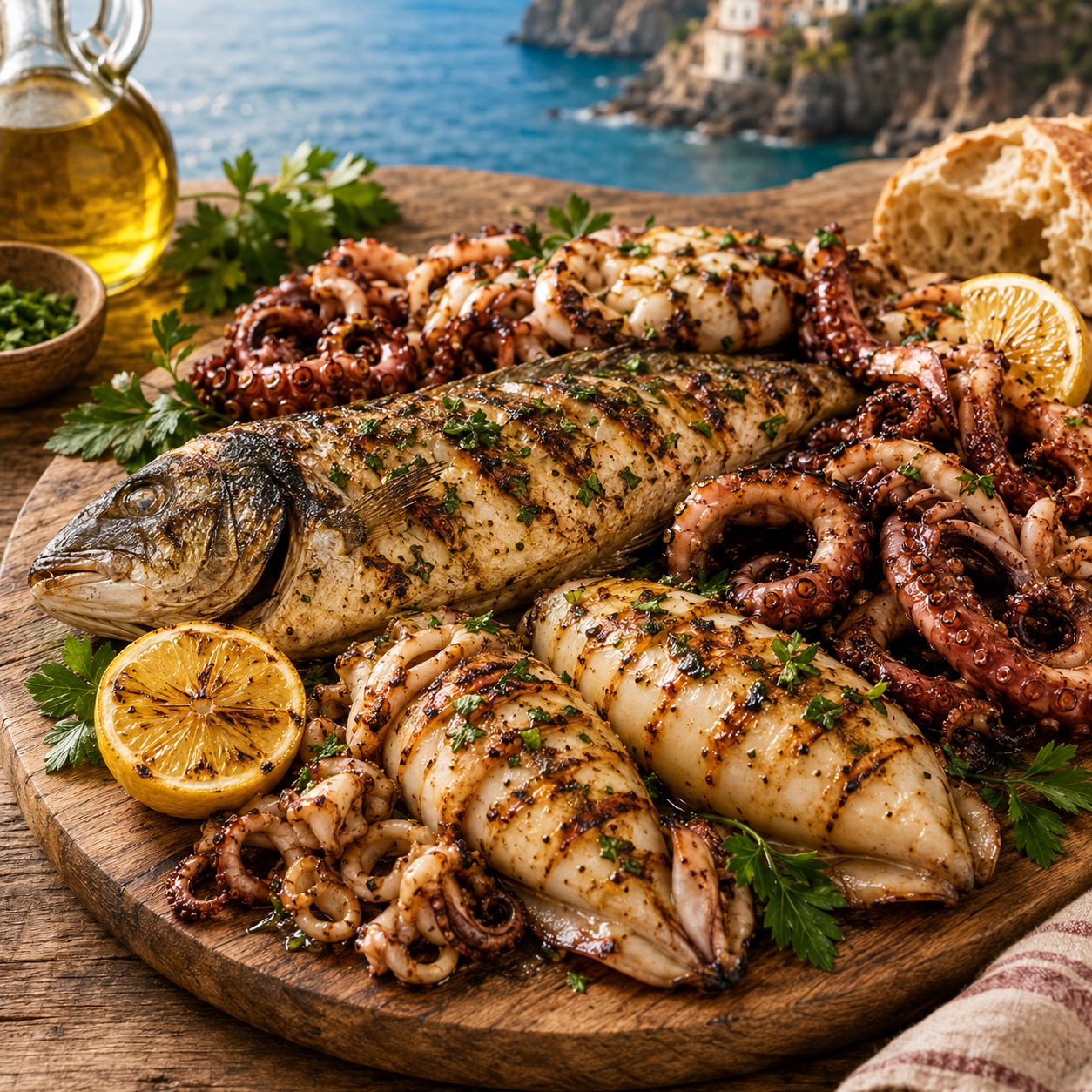
The fish question in our house was governed by my father's preferences, which are by now a recurring theme in this collection. He ate the alici — the anchovies — and the octopus salad and occasionally the sole in its simplest preparation. The full range of Campanian seafood — the clams, the mussels, the grilled branzino, the swordfish steaks, the calamari — mostly did not appear at our home table. The smell of fish cooking in a kitchen is a specific smell, strong and immediate, and a household where one person dislikes it has a practical reason to avoid the preparation at home.
The restaurant was therefore where grilled fish belonged for us — and going out to a seaside restaurant or a trattoria that served the catch of the day was an occasion, genuinely rare, associated with a particular kind of pleasure. My mother ordered the branzino or the spigola when it was available, or whatever the fisherman had brought in that morning. The whole fish, grilled simply with olive oil and lemon, served with a salad — this was what she wanted and what the occasion meant. The rarity of it made it more significant than a weekly habit would have been.
The other context for grilled fish was with friends — the summer gatherings described in the carne alla brace post, where the portable charcoal grill came out and the company decided collectively what to put on it. In mixed groups where some people ate fish and some didn't, the grill could accommodate both — the sausages on one side, the calamari or branzino on the other. This kind of communal grilling with its implicit negotiation of different preferences is one of the most socially functional uses of a grill and one of the more pleasurable ways to spend a summer evening in Campania.
We just need to respect it."
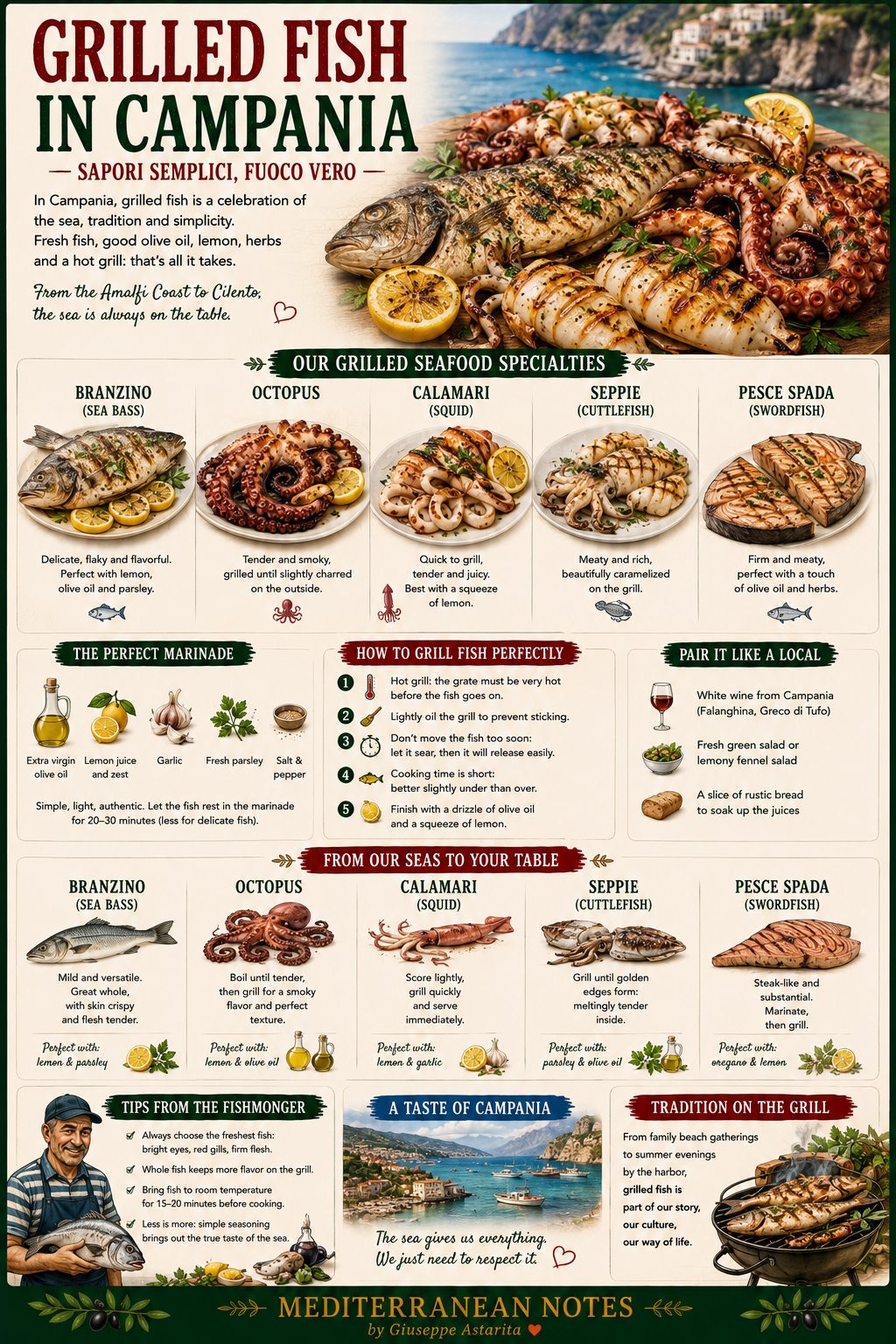
The grilled seafood of Campania
2. Oil the grill, not just the fish. Brush the grate with oil just before adding the fish. This prevents sticking more effectively than oiling the fish alone.
3. Don't move it. Let the fish sear without touching it. When it is ready to turn it will release from the grate without resistance — if it sticks, it is not ready. Another 30 seconds and try again.
4. Slightly undercooked is better than overcooked. Fish goes from perfect to dry in seconds. Remove it when it is just barely opaque at the thickest point — it will continue cooking from residual heat for a minute after coming off the fire.
5. Finish with raw olive oil and lemon. A drizzle of good olive oil and a squeeze of fresh lemon the moment the fish comes off the grill — the heat of the fish immediately releases the lemon's volatile aromatics and the oil coats the surface while it is still hot.
Grilled fish belongs to the sea more than to any specific kitchen. From the Amalfi coast to the Cilento, from the islands of Ischia and Procida to the harbor at Pozzuoli, the Campanian coast has been grilling the catch over fire for as long as there has been a catch and a fire. The simplicity of the preparation is not laziness — it is respect. The fish from the Tyrrhenian Sea, caught that morning, needs almost nothing done to it. The fire and the lemon and the olive oil are all it requires. Adding more would mean trusting the sea less.
My mother's grilled branzino at the restaurant, eaten on a rare occasion, tasted of exactly this: a place and a tradition that was present even in a single fish on a plate in a trattoria in Caserta, far enough from the coast that the fish had traveled a little to get there. It tasted of the Campanian sea. Grilled fish always does, when it is good. The sea is always on the table.
Buon appetito — e sempre il mare nel piatto.