Campanian kitchen · Fish · Friday · Light · Fast · Three preparations
La Sogliola
Sole alla Napoletana — In Bianco, All'Alacciata, Impanata
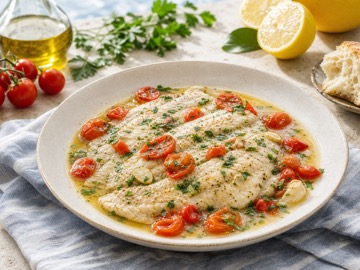
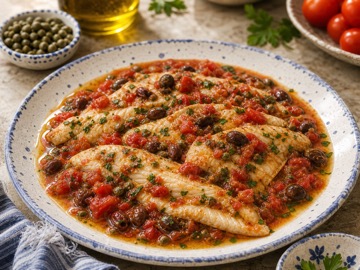
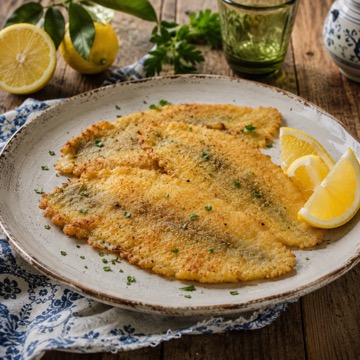
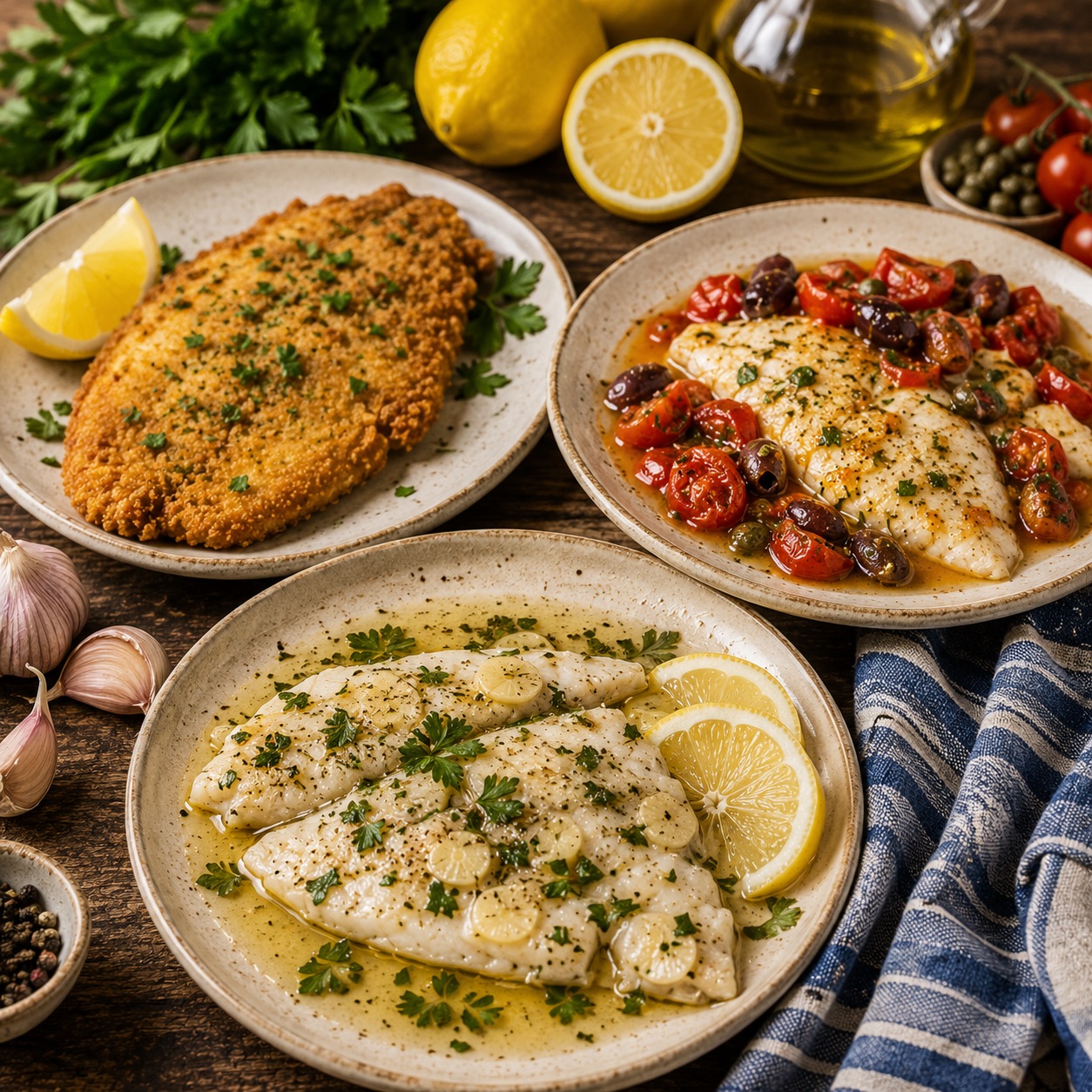
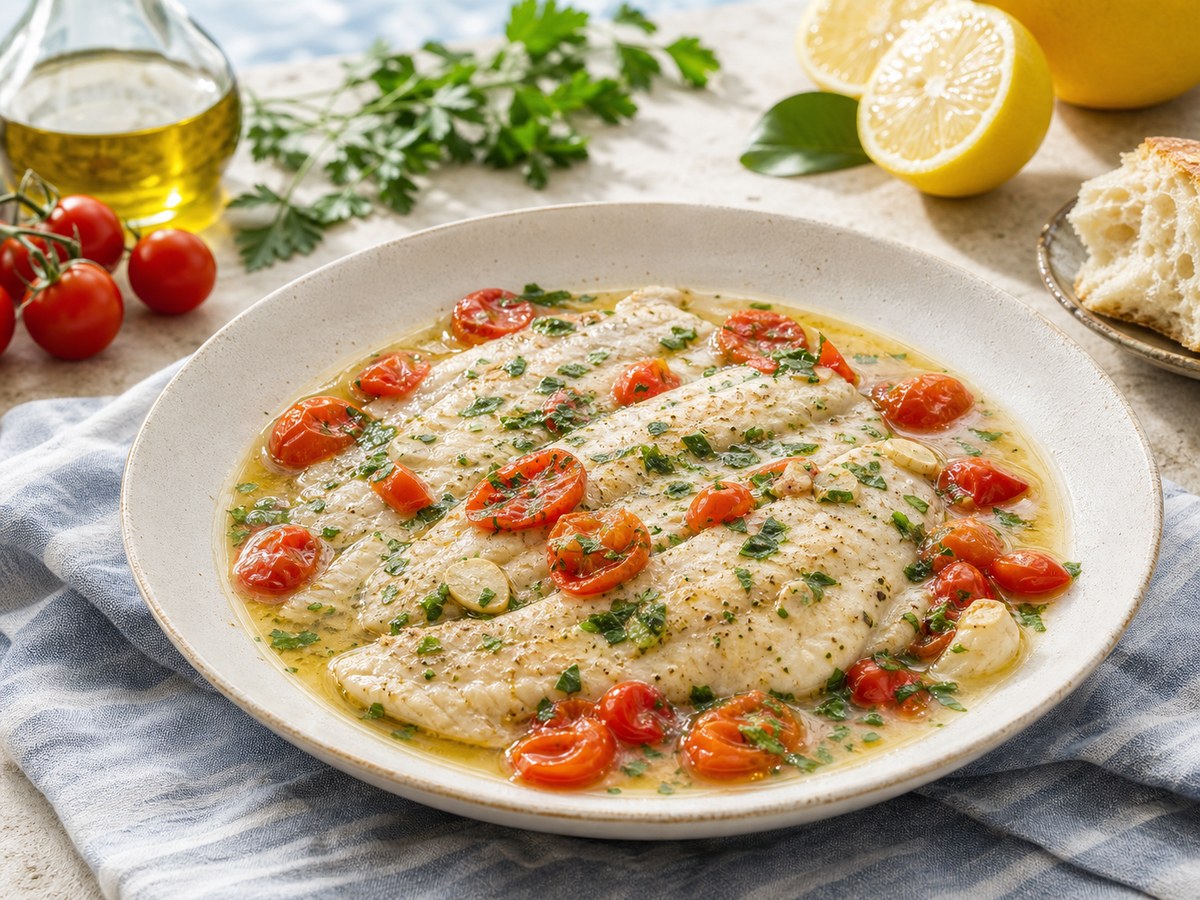
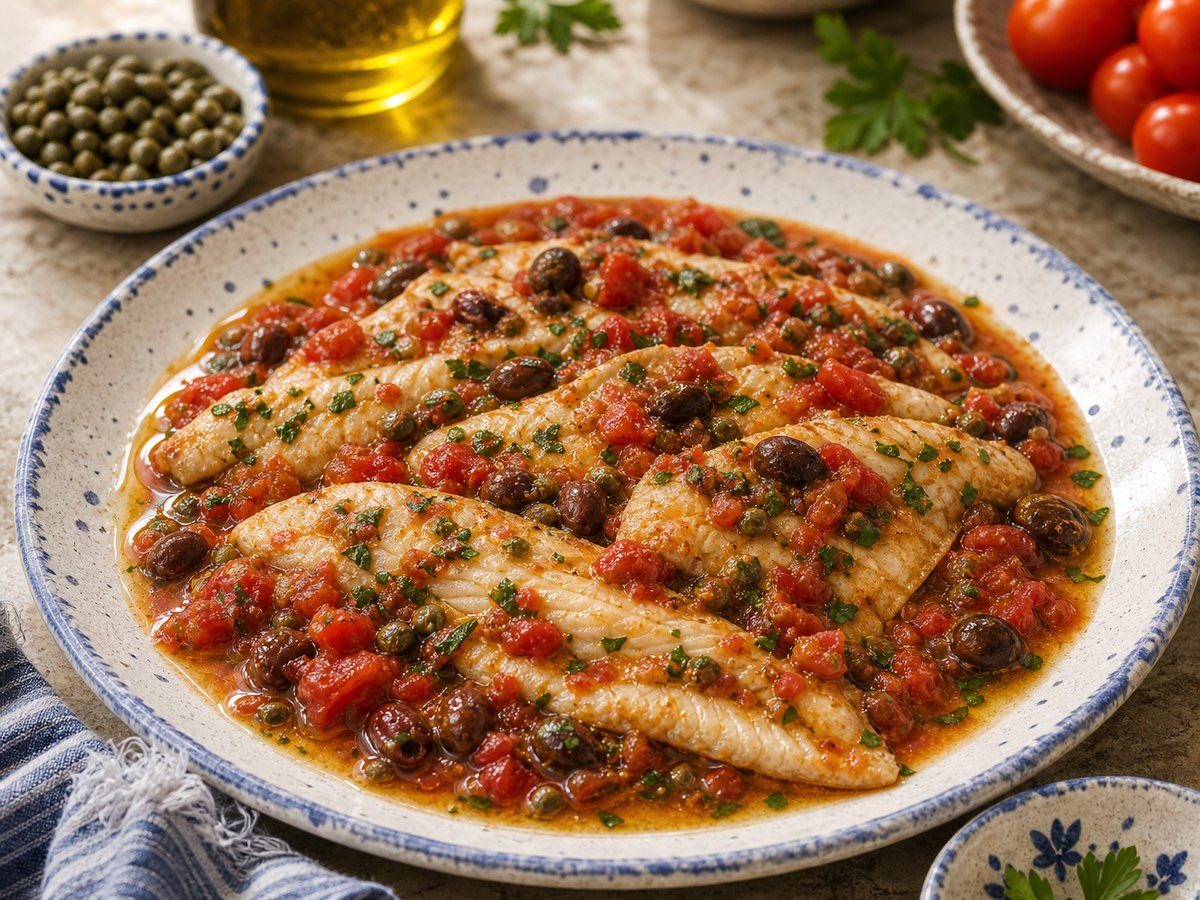
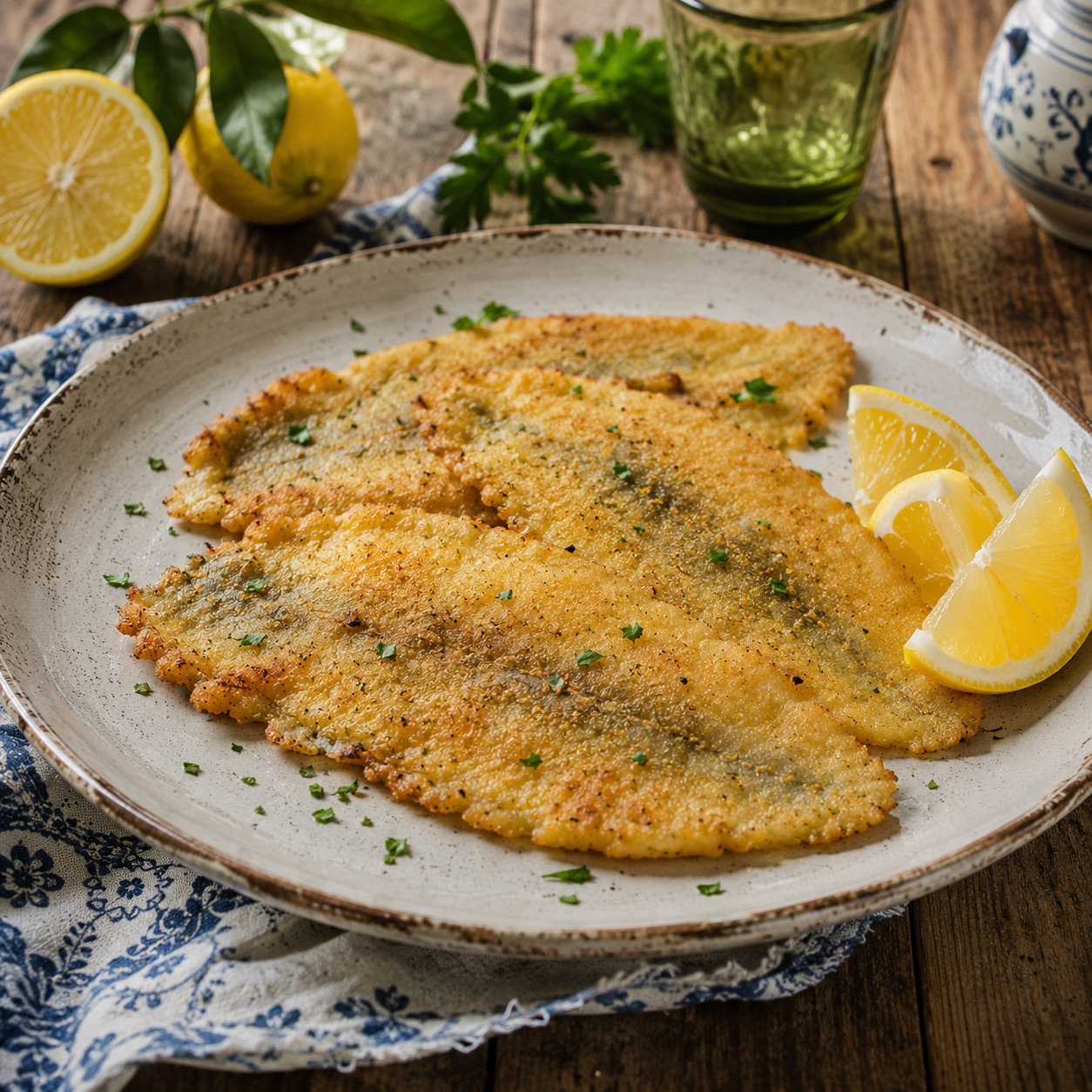
Ti faccio una sogliola — I'll make you a sole. It's good for you. Light, fast, Neapolitan. Three preparations: in acqua pazza with white wine and lemon, all'alacciata with cherry tomatoes and olives, and impanata in the oven with a golden breadcrumb crust. All in twenty minutes or less.
I'll make you a sole — it's good for you, it's good for your brain! — My mother, regularly
The sole in question was the European common sole — solea solea in Italian simply called sogliola — a flatfish with white, very delicate, fine-textured flesh and a mild flavor that absorbs the surrounding aromatics without being overwhelmed by them. It is one of the most prized table fish of the Mediterranean, and it was available fresh at the markets in Caserta close enough to the coast that quality was never a question. In the United States, genuine European sole is extremely difficult to find. What American markets sell as "sole" is almost always Pacific flounder or a related flatfish, which is acceptable but not the same thing — the flesh is slightly less fine, the flavor slightly blunter. If you are near a good fishmonger who imports European sole or can source it frozen, it is worth seeking. Dover sole, when available, is the closest equivalent.
The fish appeared on the table often because it was fast. My mother's justification — fa bene al cervello, it's good for your brain — was the folk version of a scientifically accurate claim, as the alici post discusses in detail: the omega-3 fatty acids in fish, particularly DHA and EPA, are essential components of brain tissue and are associated with cognitive function, cardiovascular health, and anti-inflammatory activity. My mother knew none of this terminology. She knew that fish was good for you and that it cooked quickly and that the family ate it without complaint. The rationale was delivered as maternal authority and accepted as such.
Sole flesh is extremely delicate because its muscle fiber bundles are short and fine, with very little connective tissue between them. This means heat penetrates rapidly and protein denaturation — the process that turns translucent flesh opaque and firm — happens in minutes rather than the longer times required for denser fish or meat. A sole fillet of average thickness is cooked in 2–3 minutes per side over medium heat; a whole sole in 4–5 minutes per side. The risk is exclusively overcooking: overdone sole becomes dry and slightly cotton-textured, losing the quality that makes it worth eating in the first place. The acqua pazza method — cooking the fish in a shallow liquid of wine and water with the lid on — creates a gentle, humid environment that cooks the fish from above and below simultaneously, reducing the window between underdone and overdone and producing a more forgiving result than dry-pan cooking.
On the brain claim: sole is a good source of DHA (docosahexaenoic acid) and EPA (eicosapentaenoic acid), the long-chain omega-3 fatty acids that constitute a significant portion of the brain's structural fat. DHA alone makes up roughly 15–20% of the total fat in the cerebral cortex. The human body cannot synthesize adequate quantities of DHA from shorter-chain omega-3 precursors alone — dietary intake from marine sources is the primary route. Regular fish consumption (2–3 servings per week) is associated in the literature with lower risk of cognitive decline and better cardiovascular outcomes. My mother said it was good for the brain. She was correct. The mechanism was more specific than she knew, but the conclusion was right.
Choose a preparation
Three preparations, all in twenty minutes or less. The acqua pazza is the lightest — nothing competes with the fish. The alacciata is more assertive and better the next day. The impanata is the one that pleased everyone — including people who were not sure about fish.
Buon venerdì — leggera, sempre.