Trota al Cartoccio
"Ho fatto la trota al cartoccio." My mother's freshwater fish, sealed in parchment with herbs, lemon and wine — sometimes indistinguishable from spigola. Eaten because it was good for the brain. She was right.
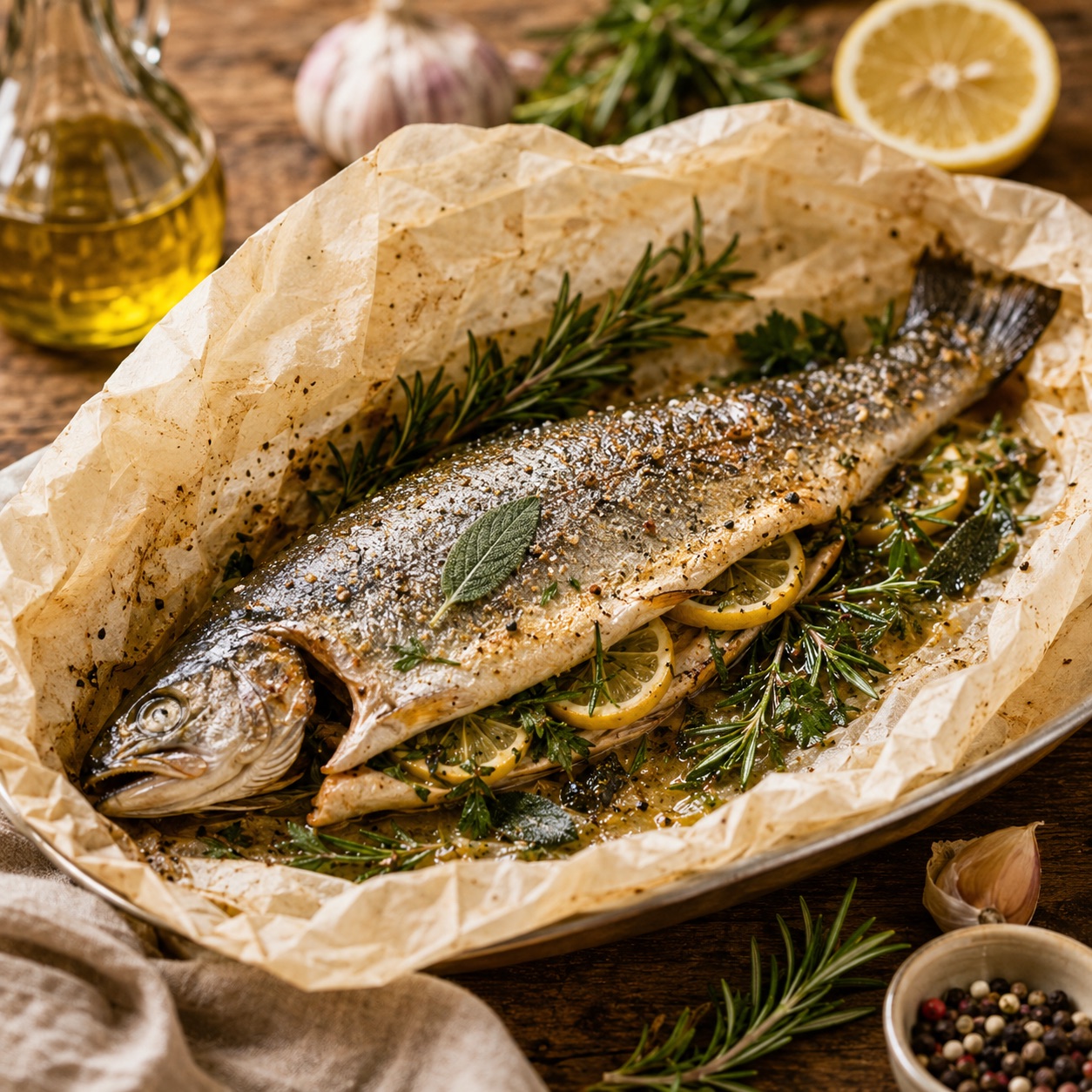
Ho fatto la trota al cartoccio — my mother announced it like that, and it meant a parcel was coming to the table. The trout was another of her fish dishes, the freshwater one in a repertoire that mostly came from the sea, and here is the strange truth: the way she made it, sealed in parchment with herbs and lemon and a splash of white wine, it was sometimes indistinguishable from spigola. Maybe it was the wine. Maybe it was the method, which flatters every fish the same way. Either way, nobody at the table filed a complaint.
And there was a reason we ate it — there was always a reason. Fish, because it is good for you, good for your brain — that is what my mother used to say, and she said something like it about nearly everything she served. In our house every food came with its justification: this one for the brain, that one for the blood, this one because it is the season. We ate well because the food was good, but we were told we ate well because the food was good for us — and of course the foods that were bad for us simply never appeared. Decades later I write about lipids for a living. Her epidemiology was ahead of its time.
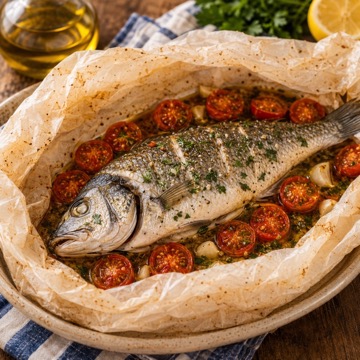
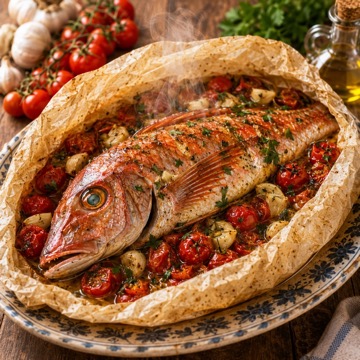
The cartoccio itself is the gentlest technique in the repertoire: the fish sealed in parchment with garlic, rosemary, sage, lemon and olive oil, baked twenty minutes, opened at the table in a cloud of herb-scented steam. Unlike the Neapolitan versions with tomatoes, olives and capers — the coccio, the spigola — this is the plain northern grammar of the method: herbs, lemon, wine, nothing else. The parcel does all the work.
Her reason, audited: trout and the brain
My mother was right. Trout — like its salmonid cousins — is a genuine source of the long-chain omega-3s EPA and DHA, the fatty acids most concentrated in neuronal membranes, along with B12, selenium and high-quality protein. And the cartoccio is the method that protects them best: sealed steaming keeps temperatures moderate and excludes air, minimizing the oxidation of those delicate fats that aggressive grilling invites. The parcel is not just theater — it is lipid chemistry on her side, decades before anyone in the family measured a fatty acid professionally.
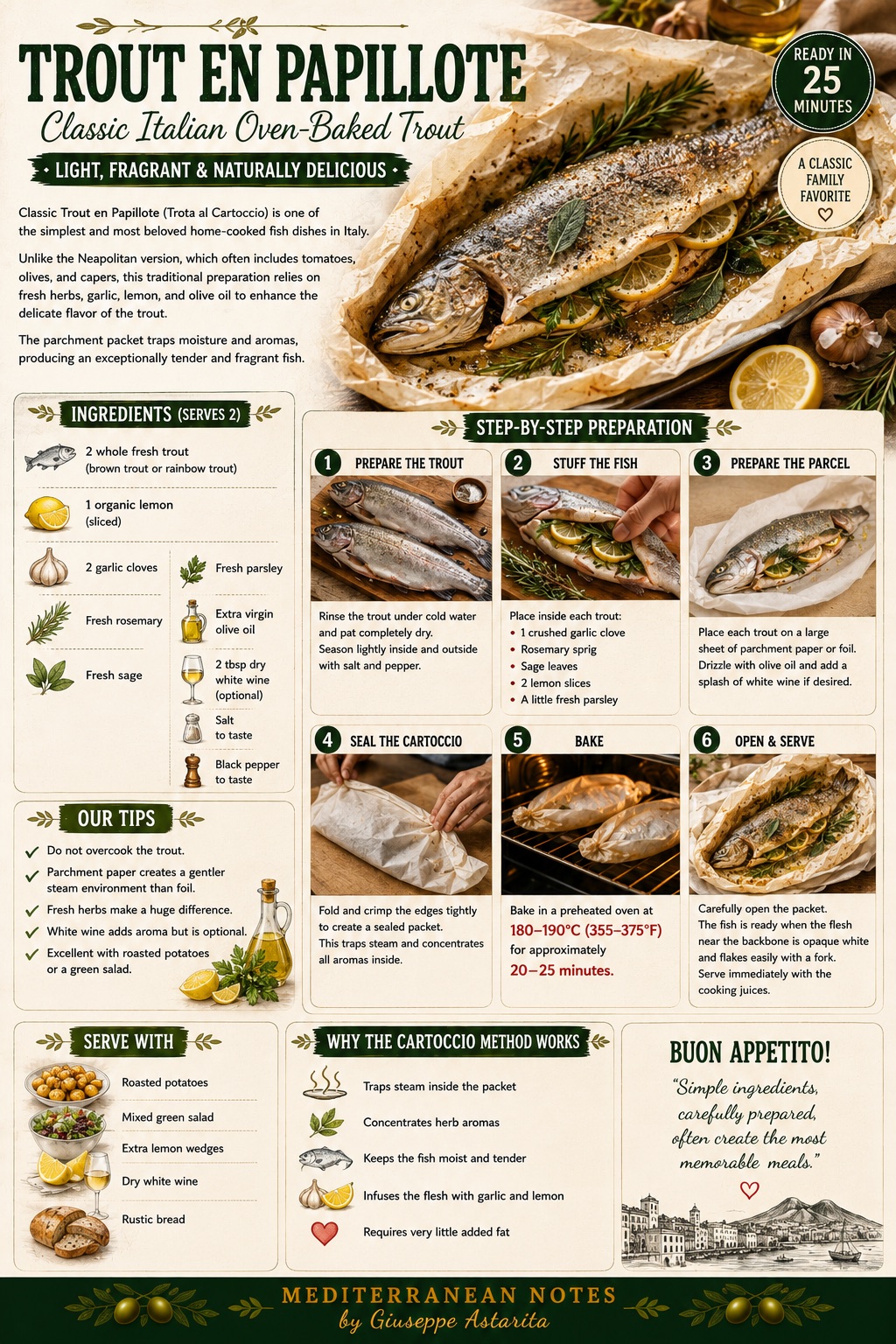
Tap to enlarge — Trota al cartoccio: the parcel method
Recipe — Trota al Cartoccio
Serves 2 · Ready in 25 minutes
- 2 whole fresh trout brown or rainbow
- 1 organic lemon sliced
- 2 garlic cloves crushed
- Fresh rosemary, sage and parsley
- Extra virgin olive oil
- 2 tbsp dry white wine optional — but see above
- Salt and black pepper
The cartoccio family on this blog now spans the sea and the lake — the spigola, the coccio with tomatoes, and my mother's trout. Same parcel, same opening of steam at the table, same reason offered with the serving spoon: it is good for your brain. She was right about that, too.