Pasta con melanzane: the summer pasta, when eggplants are at their best
Crispy fried eggplant, rich tomato sauce, abundant fresh basil, mozzarella melting into the hot pasta. Made when eggplants are actually in season — July through September — when the flesh is dense and sweet and the skin is taut and dark. One of the great summer pasta dishes of Campania.
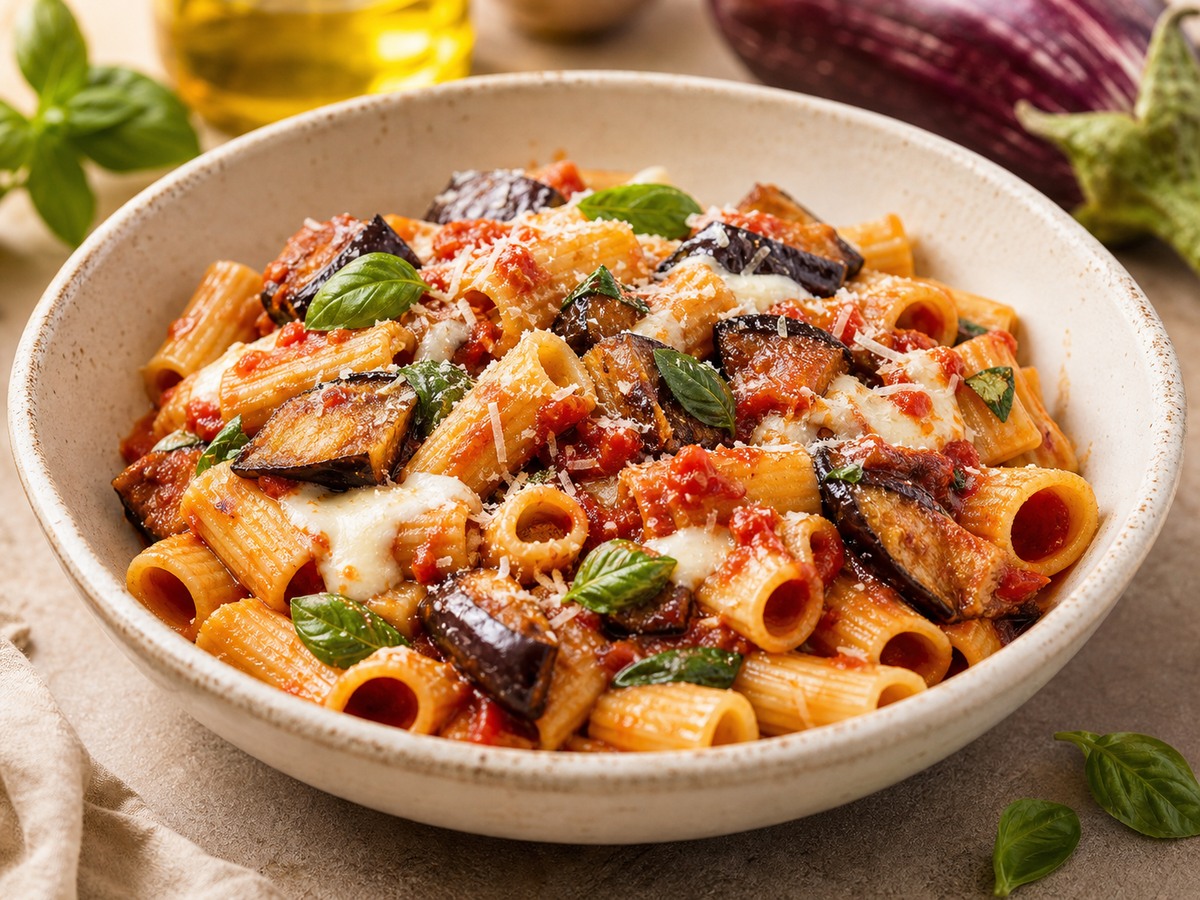
The eggplant dominates the Campanian summer kitchen in a way that no other vegetable does. It appears in three distinct registers that together constitute what might be called the summer eggplant trilogy: the melanzane a funghetto — fried in olive oil with tomatoes and basil, served cold as a side or panino filling — the parmigiana di melanzane — layered, baked, rested, eaten the next day — and this pasta, where the fried eggplant becomes the primary element of a tomato sauce that is finished with mozzarella in the pan. Each uses the same vegetable at the same moment of its season, and each produces a completely different result. The pasta version is the fastest and most direct: eggplant fried until golden and slightly caramelized, tomato sauce built separately in the same oil, pasta tossed in the combined sauce, mozzarella added off the heat for the creamy finish.
The season matters here as it does throughout this collection. An out-of-season eggplant — picked before maturity, stored for weeks, traveled a long distance — has a different texture and a different flavor from a summer eggplant at its peak: the flesh is denser and more yielding to the knife, the skin darker and more taut, the seeds smaller and less bitter, the flavor sweeter and more concentrated. The salting step — which draws out excess water and reduces the eggplant's natural bitterness — is less critical with a properly seasonal eggplant than with a watery supermarket one, but it is always worth doing for the texture improvement alone. Well-salted and well-dried eggplant fries more evenly, absorbs less oil, and produces a crispier result.
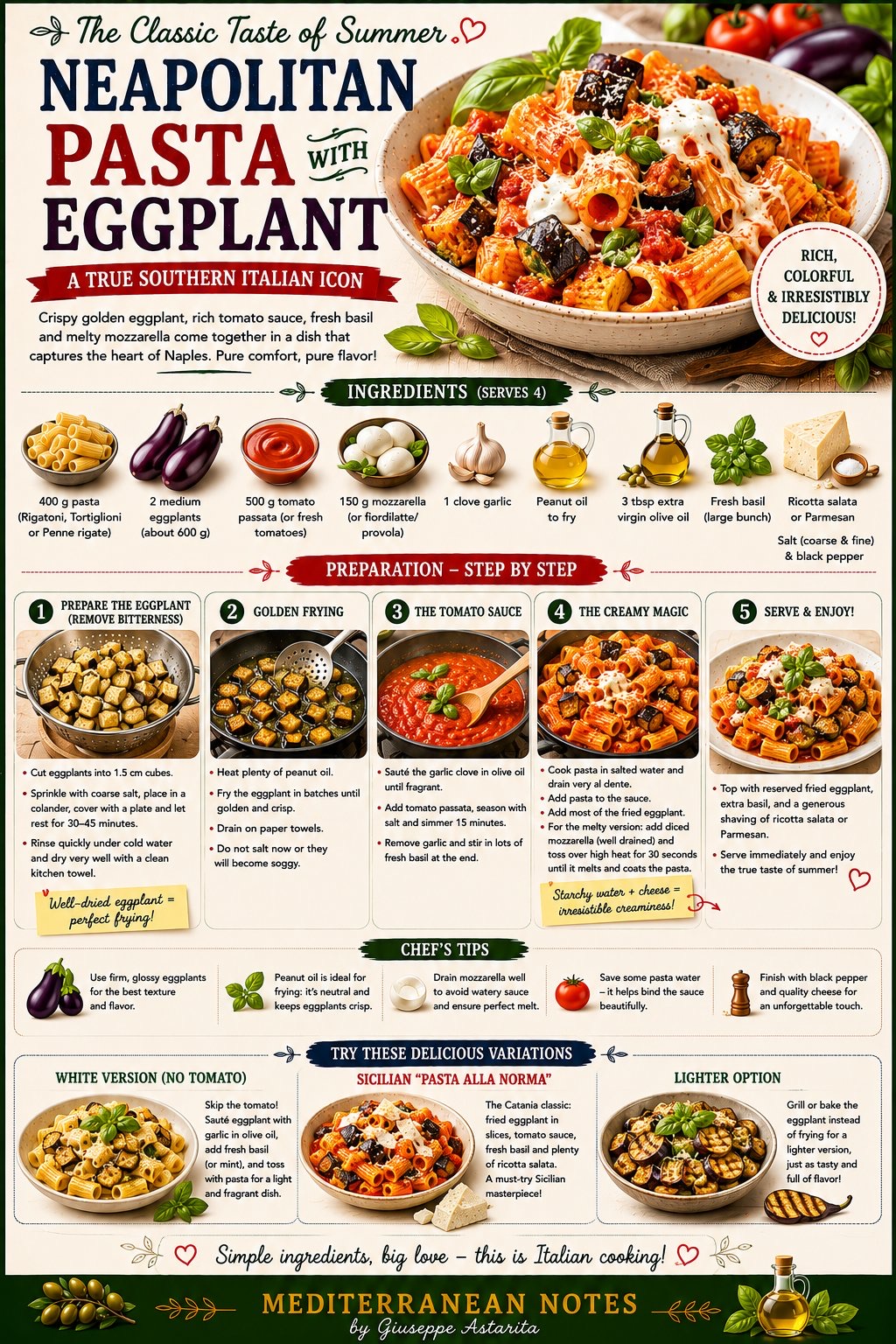
The connection to the pasta alla Norma is explicit — that Sicilian masterpiece from Catania is essentially this dish with ricotta salata instead of mozzarella and eggplant sliced rather than cubed. The Sicilian version is drier and more concentrated; the Neapolitan version is creamier, softer, the mozzarella producing long threads in the finished bowl. The infographic names both, correctly identifying them as related but distinct. The Campanian version here is the one that belongs to this kitchen and this collection — without the ricotta salata, without the Sicilian geometry of the Norma, and with the specific character of Neapolitan pasta: generous mozzarella, abundant basil, the creamy finish that the pasta water and cheese together produce.
Eggplant phenolics and how cooking method changes their bioavailability
Eggplant is discussed in the parmigiana and melanzane funghetto posts in terms of its oil absorption behavior during frying and its nasunin content. This pasta presents the same eggplant in a different context but with the same nutritional logic. The key addition here is the interaction between the fried eggplant, the tomato sauce, and the mozzarella in the finished dish. The lycopene from the cooked tomato sauce has its highest bioavailability in the presence of dietary fat — which the olive oil used for frying and the mozzarella both provide abundantly. A single serving of this pasta in tomato sauce provides approximately 5–8 mg of bioavailable lycopene, a concentration associated in epidemiological studies with reduced oxidative stress and cardiovascular benefit. The mozzarella (fior di latte or buffalo, as in the mozzarella e basilico post) contributes casein protein, calcium, and fat-soluble vitamins; the off-heat addition is again the technique that prevents the protein matrix from seizing and producing a rubbery rather than creamy texture. The eggplant skin's nasunin — the blue-purple anthocyanin antioxidant — is retained when eggplant is cubed rather than sliced, because a higher proportion of skin-to-flesh is preserved per piece and the nasunin is concentrated in the outer layer. The salting step, beyond its culinary function (drawing out water, reducing bitterness, improving frying texture), reduces the concentration of chlorogenic acid in the eggplant flesh — a phenolic compound that is not harmful at normal dietary concentrations but contributes to the bitterness of unsalted eggplant and whose partial removal improves palatability. Fresh basil's volatile aromatics (linalool, eugenol) are added at the end both to the sauce and as a raw finish — the two additions contribute different aromatic profiles: basil cooked briefly in the tomato sauce contributes deeper, slightly oxidized aromatic notes; raw basil added at serving contributes the sharp, bright top note that defines the dish's smell. Both are necessary for the complete aroma profile.
The recipe
Ingredients · serves 4
Method
Prepare the eggplant. Cut into 1.5 cm cubes. Sprinkle with coarse salt in a colander, toss to coat, cover with a plate, and let rest for 30–45 minutes. The salt draws out dark, slightly bitter liquid. Rinse quickly under cold water and dry very thoroughly with a clean kitchen towel — this step determines the quality of the frying. Wet eggplant steams in the oil rather than frying.
Fry the eggplant. Heat a generous amount of olive oil in a wide pan over high heat. Fry the eggplant in batches — do not crowd the pan — until golden and slightly caramelized on the outside, about 3–4 minutes per batch. Do not salt during frying or they will become soggy. Drain on paper towels. Reserve about a quarter of the fried eggplant separately — these will go on top at the end, keeping their crispness.
Crowded eggplant steams and turns pale and soft. The goal is golden and slightly caramelized — a result that requires hot oil and uncrowded batches. Take the time.
Make the tomato sauce. In a large pan (the pan you will finish the pasta in), heat 3 tablespoons of olive oil over medium heat. Add the garlic clove and let it become fragrant — 1–2 minutes — then remove. Add the tomato passata, a handful of basil leaves, and salt. Simmer for 15 minutes until the sauce is concentrated and glossy. Stir in most of the fried eggplant, keeping the reserved portion aside.
Cook the pasta and combine. Cook the pasta in well-salted boiling water until very al dente — 2 minutes before package time. Reserve a ladle of pasta water. Drain and add directly to the pan with the tomato-eggplant sauce. Toss over high heat for 1 minute with a splash of pasta water until the sauce clings to every piece. Turn the heat completely off.
Add the mozzarella — off the heat. Add the diced mozzarella and a generous handful of torn basil leaves. Toss quickly — 30 seconds — and the residual heat will melt the mozzarella into the sauce, creating the creamy, stretchy texture that defines the Neapolitan version. Plate immediately. Top each bowl with the reserved crispy fried eggplant, extra raw basil, a shaving of ricotta salata or Parmigiano, and a crack of black pepper.
The reserved fried eggplant on top stays crisp while the eggplant inside the sauce has softened and integrated. This contrast — crisp outside, creamy inside — is the textural point of reserving some.
The summer eggplant trilogy — and the Sicilian cousin
Melanzane a funghetto
Eggplant fried in olive oil with tomatoes and basil — no pasta, served cold as a side dish or panino filling. The simplest of the three. Better the next day. See the dedicated post in this collection.
Parmigiana di melanzane
Layered, baked, rested — the Sunday version made in the morning and eaten for dinner. More elaborate, more substantial, the one that requires the most time and produces the most complete result. See the dedicated post.
Pasta alla Norma — the Sicilian version
From Catania — eggplant sliced rather than cubed, tomato sauce, ricotta salata grated generously on top instead of fresh mozzarella. Drier, more concentrated, more austere. Named after Bellini's opera. The Sicilian masterpiece to which this Neapolitan version is the affectionate southern cousin.
White version — no tomato
Skip the tomato entirely. Sauté the fried eggplant with garlic in olive oil, add a large handful of fresh basil (or mint), toss with pasta and a generous amount of Parmigiano. Lighter, more fragrant, a version for when you want the eggplant flavor without the tomato. The basil or mint is the primary flavor note.
This pasta belongs to July, August, and September — when the eggplants in the market are dark and heavy and abundant and inexpensive. In winter, an eggplant pasta made with the watery, pale eggplants that travel from distant greenhouses is a different and less satisfying dish. The season is the flavor. When the window is open, this pasta is one of the best reasons to make use of it.
Buon appetito — e buona estate.