Risotto ai Carciofi
The slow version — the artichoke enters the rice from within
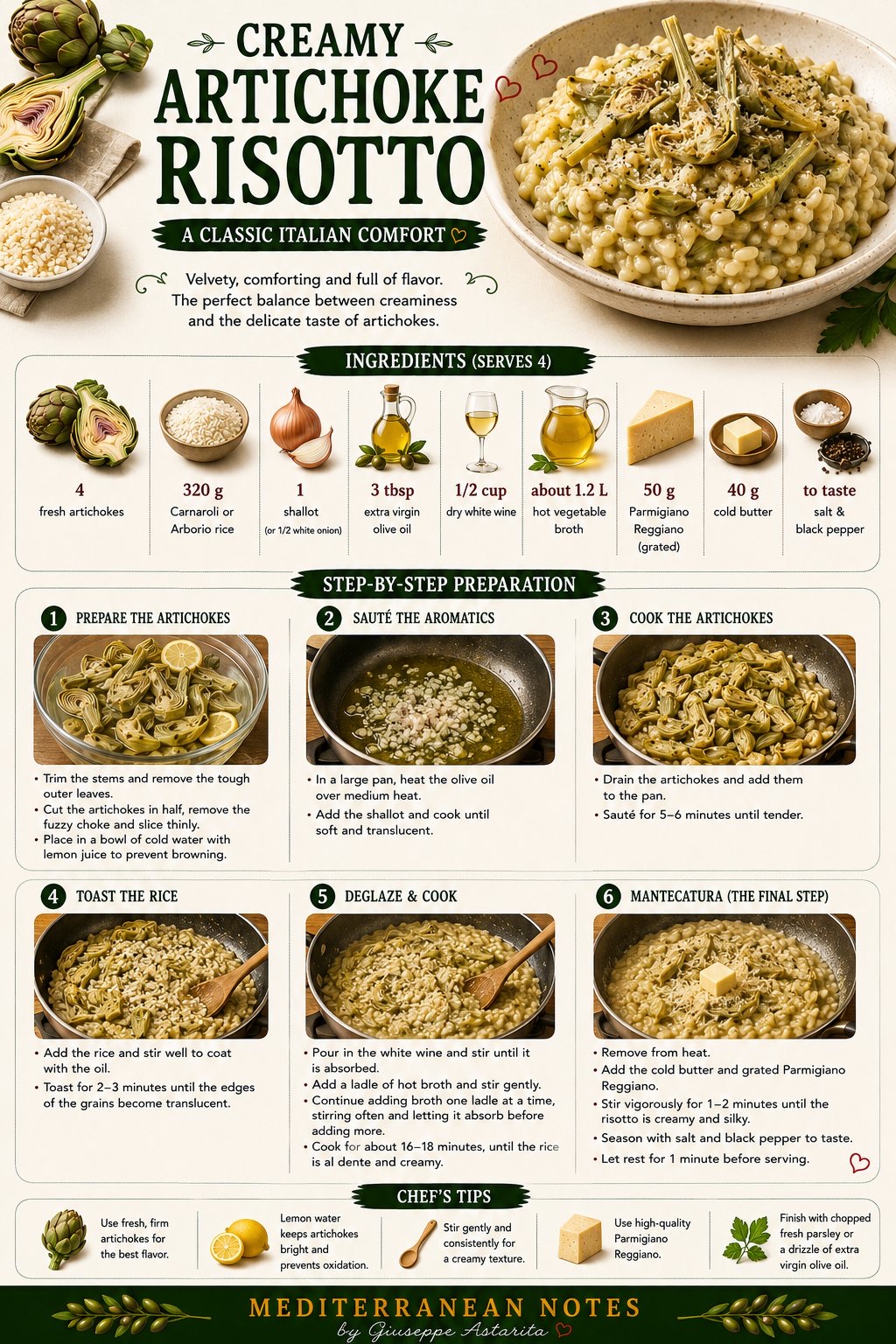
The artichoke is the most demanding vegetable of the spring kitchen. My mother cleaned them at the kitchen table, pulling the outer leaves back one by one, dropping each cleaned heart into cold water with lemon. The stems went in too. Nothing was wasted. She did it without hurrying, which is the correct speed.
In Campania the artichoke season runs from late winter through spring, and the arrival of the first good heads at the market is a specific event — not dramatic, but noticed. My mother pulled the outer leaves back one by one until the pale interior appeared, dropping each cleaned heart immediately into cold water with lemon so it would not darken while she worked on the next one. The stems went in too, peeled down to the white core. Nothing was wasted. She did it without hurrying, which is the correct speed for artichokes.
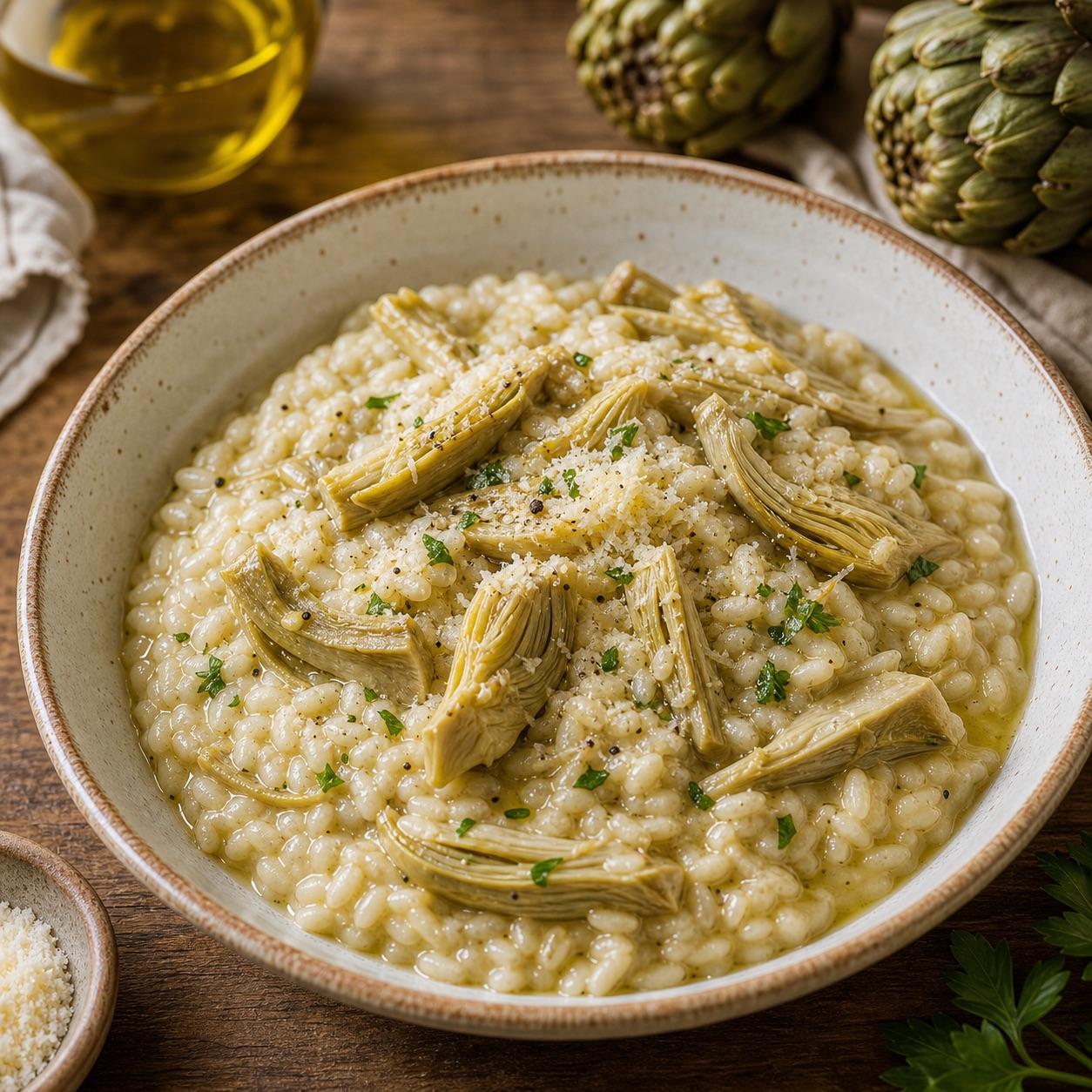
The risotto is the more patient of the two artichoke preparations. Half the cooked artichoke is blended into a cream — smooth, pale green, slightly bitter and sweet — which is added to the rice halfway through cooking and enters every grain as the starch absorbs it. The other half is left whole and goes in at the same moment, providing slices of artichoke that contrast with the surrounding creaminess. By the time the mantecatura is done — cold butter and Parmigiano stirred vigorously off the heat — the artichoke is present at every level of the dish: in the sauce that coats each grain, in the whole pieces that provide texture, and in the underlying vegetable broth that has been carrying the flavor from the very first ladle.
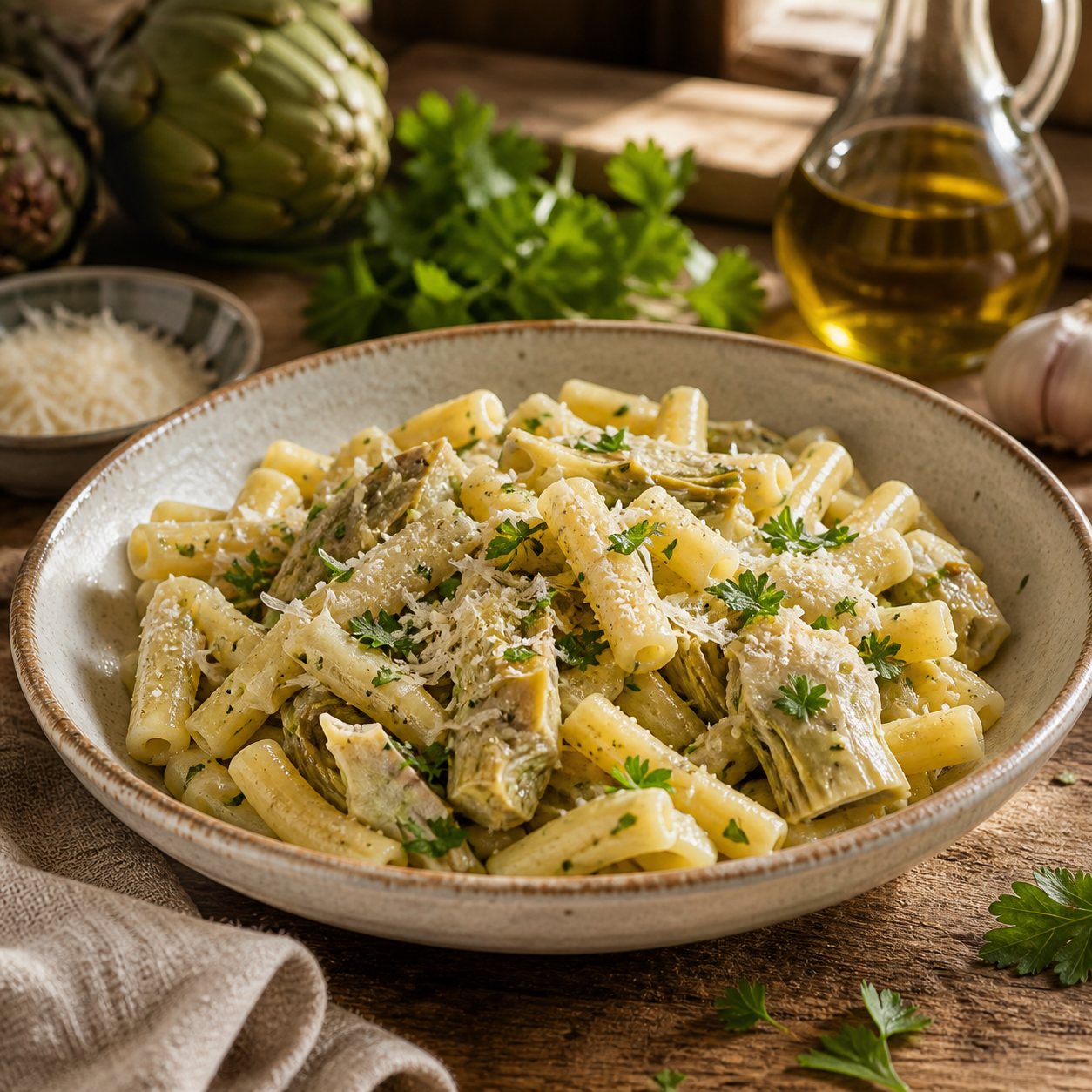
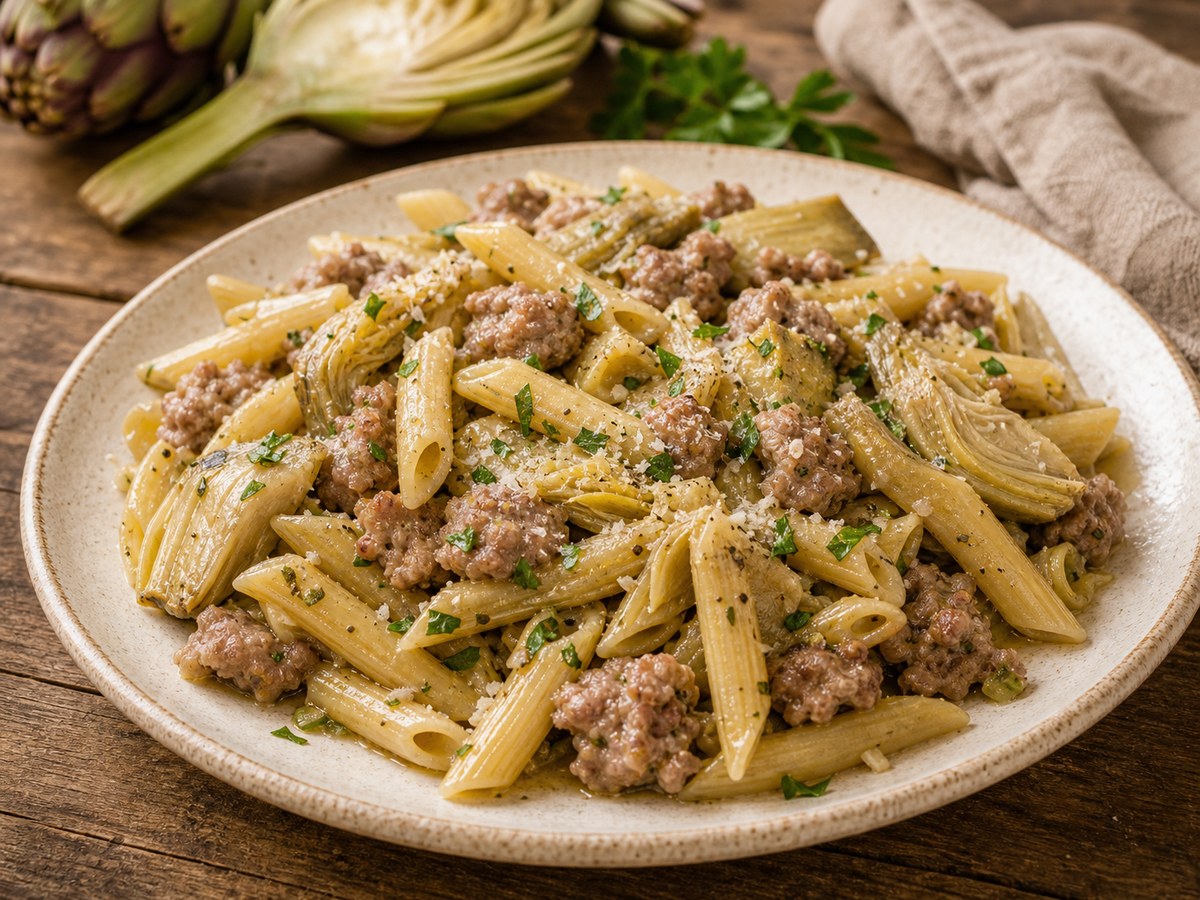
The choice between pasta and risotto determines the character of the meal more than any other decision with artichokes. The pasta is faster, lighter, more direct — the artichoke flavor is present but the dish moves quickly across the palate. The risotto is slower and more immersive: the same vegetable produces an entirely different eating experience. The artichoke's flavor — slightly bitter, slightly sweet, with a mineral quality that stays on the palate — is the point of both, and should not be buried under other things. The risotto makes that flavor more pervasive. It fills the kitchen with the smell of artichoke for the better part of an hour while it cooks, which is the correct atmosphere for a Sunday lunch in spring.
The lemon water used during preparation lowers the pH around the cut artichoke, slowing the action of polyphenol oxidase — the enzyme responsible for the rapid browning of exposed artichoke flesh. This preserves the phenolic compounds (cynarin, chlorogenic acid) responsible for the artichoke's distinctive flavor and its liver-supporting properties. Keeping the artichoke pale preserves more of these compounds for consumption.
The blended artichoke cream is added halfway through the risotto rather than at the beginning because the acidic and phenolic compounds in the artichoke, if present from the start, inhibit starch gelatinization slightly — the process by which the rice starch swells and creates the risotto's characteristic creamy consistency. Adding the cream midway allows the starch to develop normally in the first half of cooking, then absorb the artichoke flavor during the second half without losing texture. The inulin released by the blended artichoke — the prebiotic fiber that makes up a significant portion of artichoke dry weight — integrates with the starch and contributes to the creamy, slightly viscous texture of the finished risotto.
The mantecatura — cold butter and Parmigiano added off the heat with vigorous stirring — creates a stable emulsion between the starch released from the rice, the fat from the butter, the protein and calcium from the Parmigiano, and the artichoke fiber matrix. The cold butter is essential: the temperature difference between the hot risotto and the cold butter creates the physical conditions for the emulsion. Butter added warm melts immediately without emulsifying and produces a greasy result. Cold butter, stirred vigorously into the hot rice, creates the characteristic glossy, all'onda finish — the slow wave when you tilt the pot — without any cream.
The recipe
Serves 4. Use Carnaroli rice for the creamiest result — its higher starch content makes the mantecatura more forgiving. Keep the broth simmering on a separate burner throughout cooking; cold broth added to hot rice stops the cooking and produces an uneven texture. The cold butter for the mantecatura must be kept refrigerated until the last moment.
The risotto pairs with a dry, structured white — the artichoke's mineral sweetness needs something lean and cold to reset the palate between bites. Falanghina is the Campanian choice. Vermentino works equally well. Avoid anything oaked or heavily aromatic — the artichoke is already doing something complex with the palate and does not need competition from the glass.
Just writing about them makes me crave them. That is the artichoke — demanding to prepare, impossible to forget once you have eaten a good one in the right season.
Buon appetito — e non dimenticate il limone.