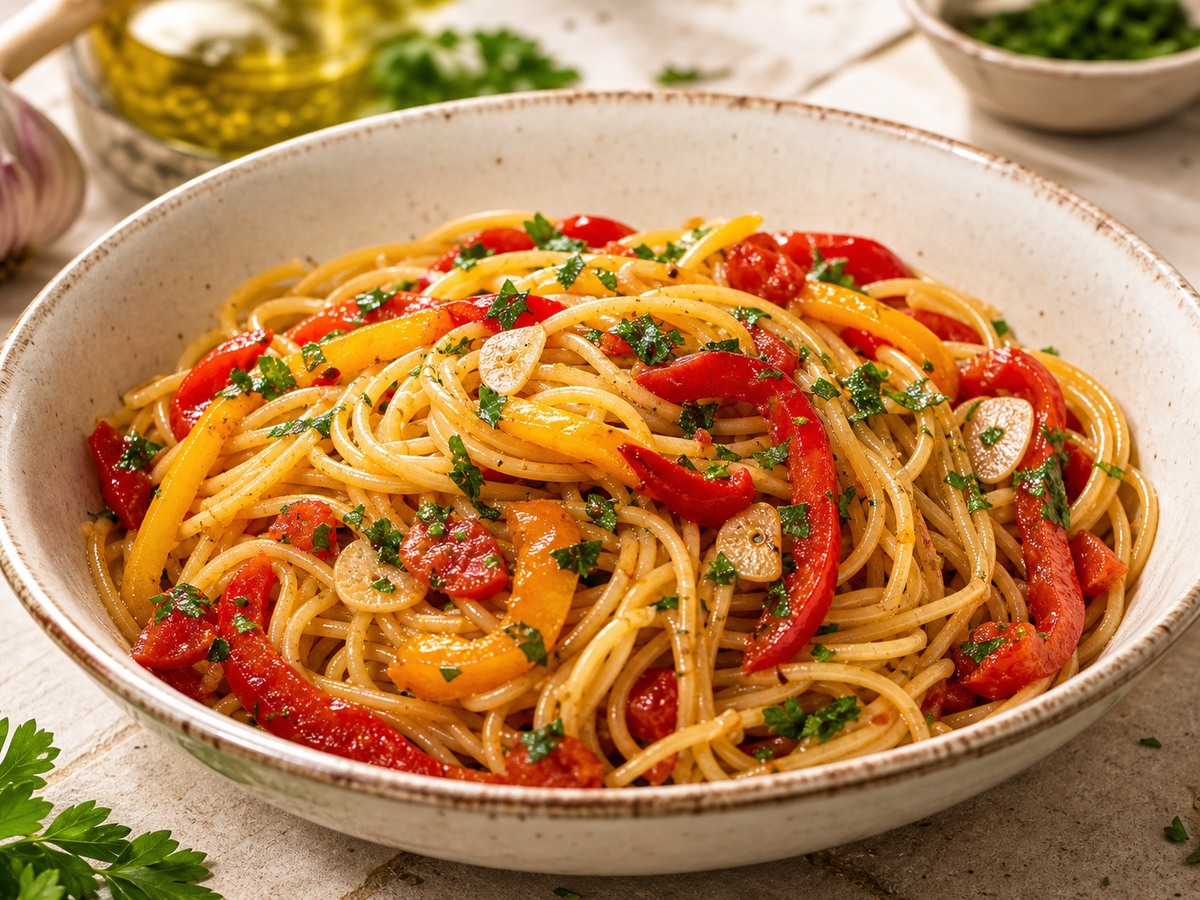
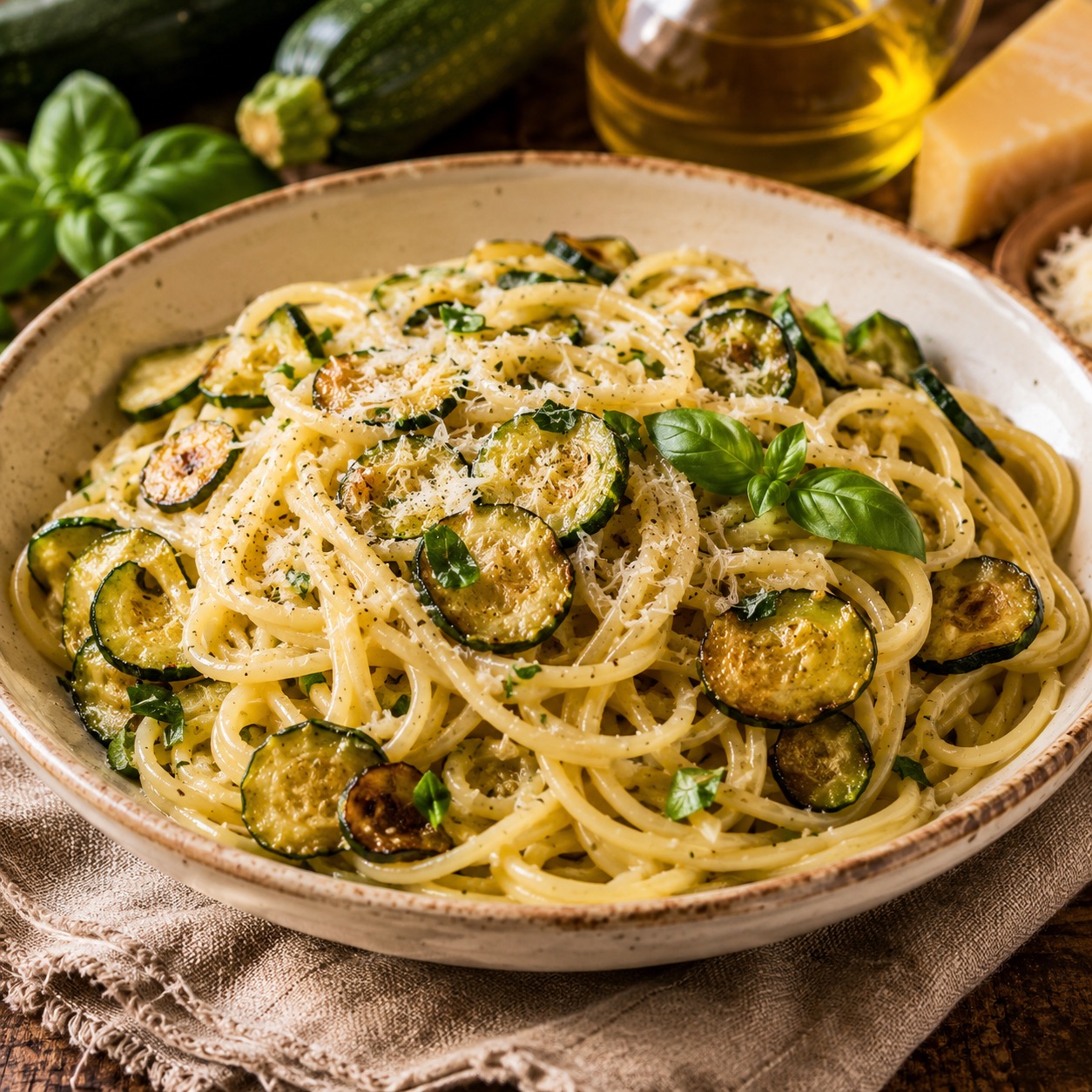
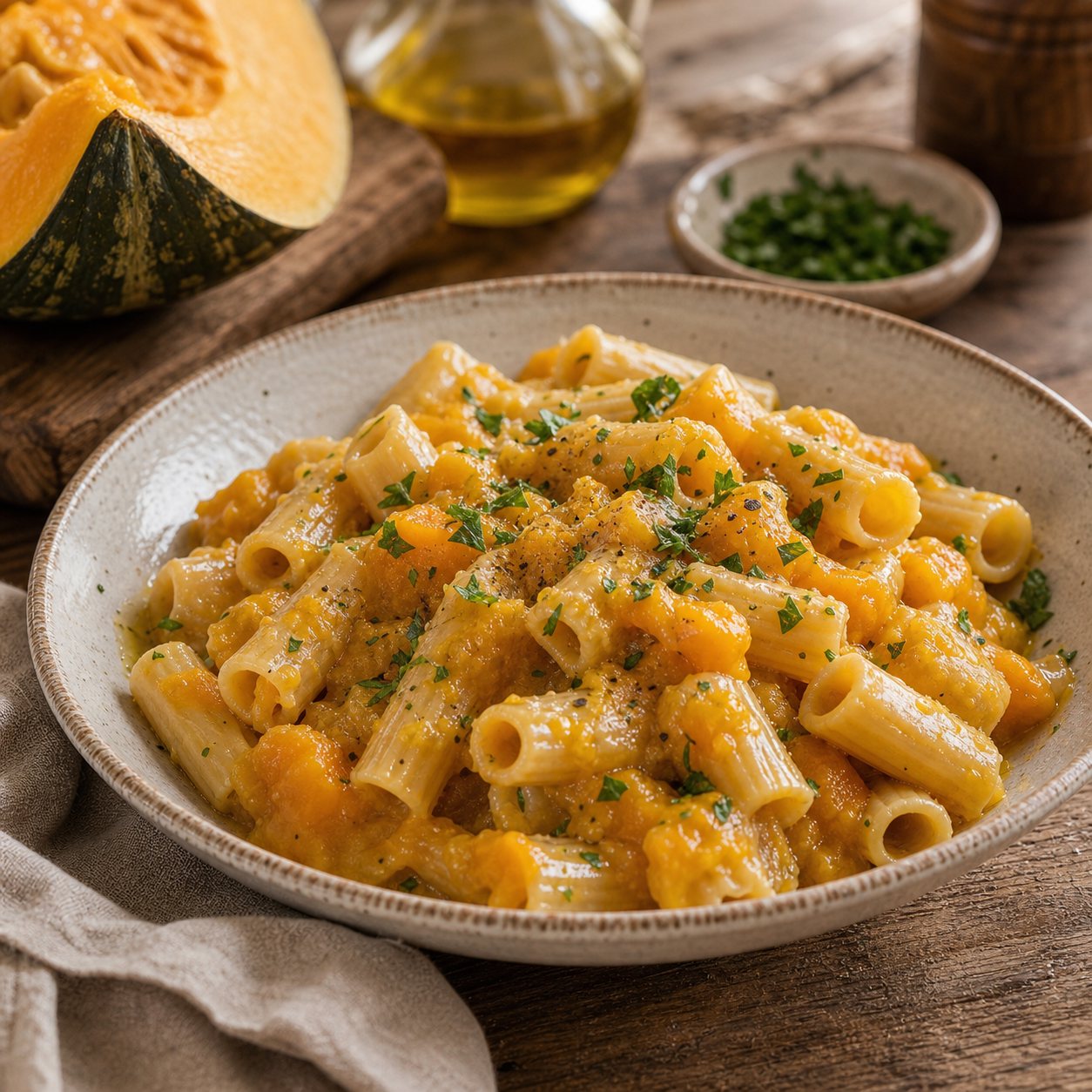
Pasta all'ortolana: the summer abundance dish
Summer produce in Campania was an abundance that organized itself into this dish. Zucchini, eggplant, bell pepper, cherry tomatoes, basil — everything at once, at its peak, in the same pan. An explosion of colors, flavors, and memories. We added mushrooms sometimes. I am not sure they strictly belonged there, but we added them anyway, and it was good.
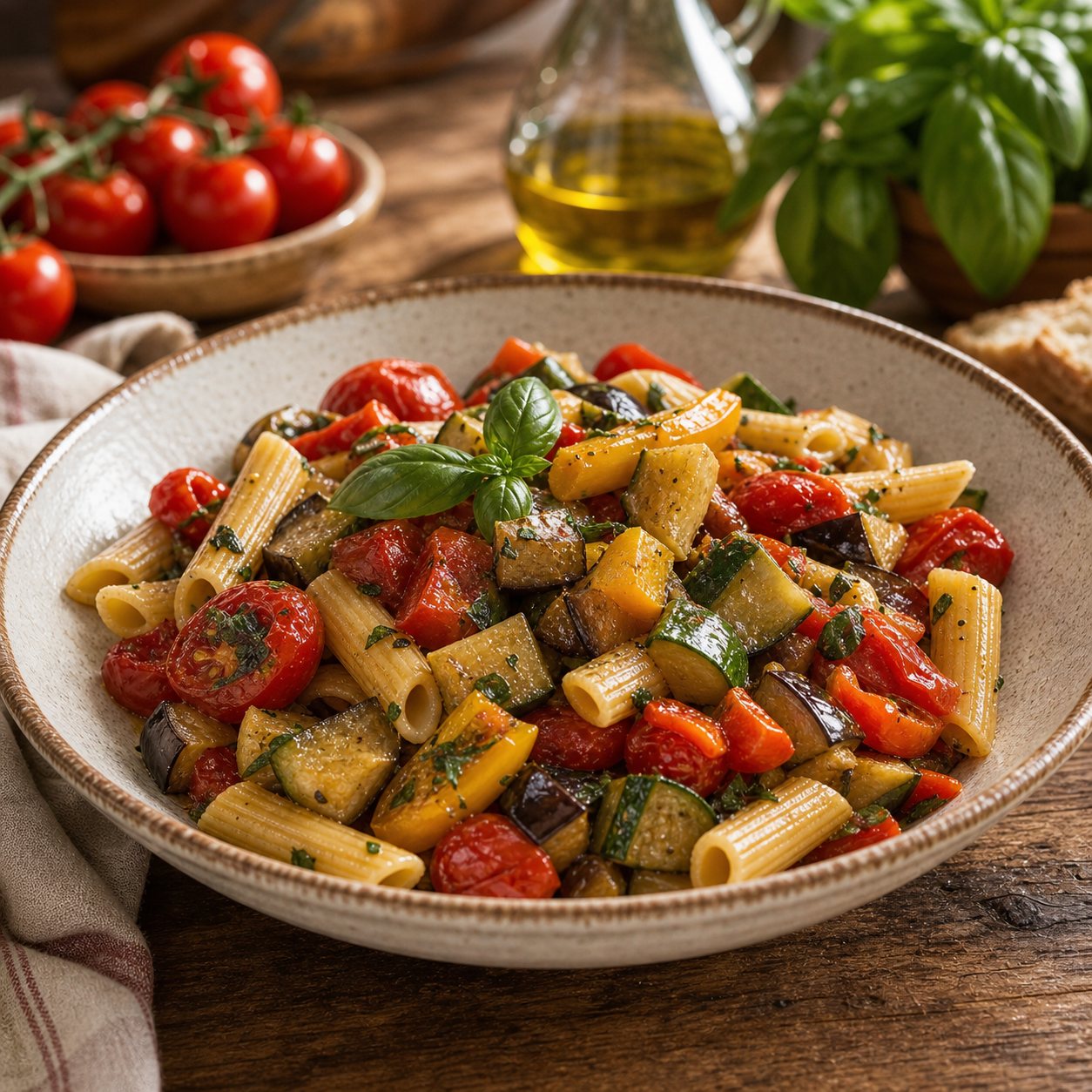
All'ortolana means from the vegetable garden, or more precisely from the greengrocer — the ortolano, who in an Italian neighborhood is a specific character with a specific stall and a specific relationship with the households that buy from him. The pasta all'ortolana is not a fixed recipe. It is a category: pasta with whatever vegetables are at their peak, cooked at high heat to keep them from going soft, finished with basil and olive oil and whatever cheese suits the day. The name describes the source rather than the contents, and the contents change with the season and the kitchen. In summer in Campania, when the market was a different thing from the winter market — fuller, louder, more fragrant, the tomatoes warm from the sun and the zucchini still with their flowers — the ortolana was a celebration of what was there.
The dish I remember from growing up was not exactly the recipe in the infographic and not exactly anything else — it was the version my family made with what the week had produced. Zucchini were almost always in it because they were always available through the summer and they were cheap and they cooked quickly. Eggplant appeared in different forms — sometimes fried separately and added at the end, sometimes cut small and cooked with the other vegetables. Bell pepper was there when it was there. Cherry tomatoes went in toward the end, barely cooked, so they blistered in the heat and released their liquid into the pan without dissolving. And sometimes, alongside all of this, mushrooms — champignons or whatever was available — which do not belong to the summer vegetable tradition in the way that eggplant and zucchini do, and which I suspect went in because someone liked them and the logic of the dish is inclusive enough to accommodate that kind of decision without protest.
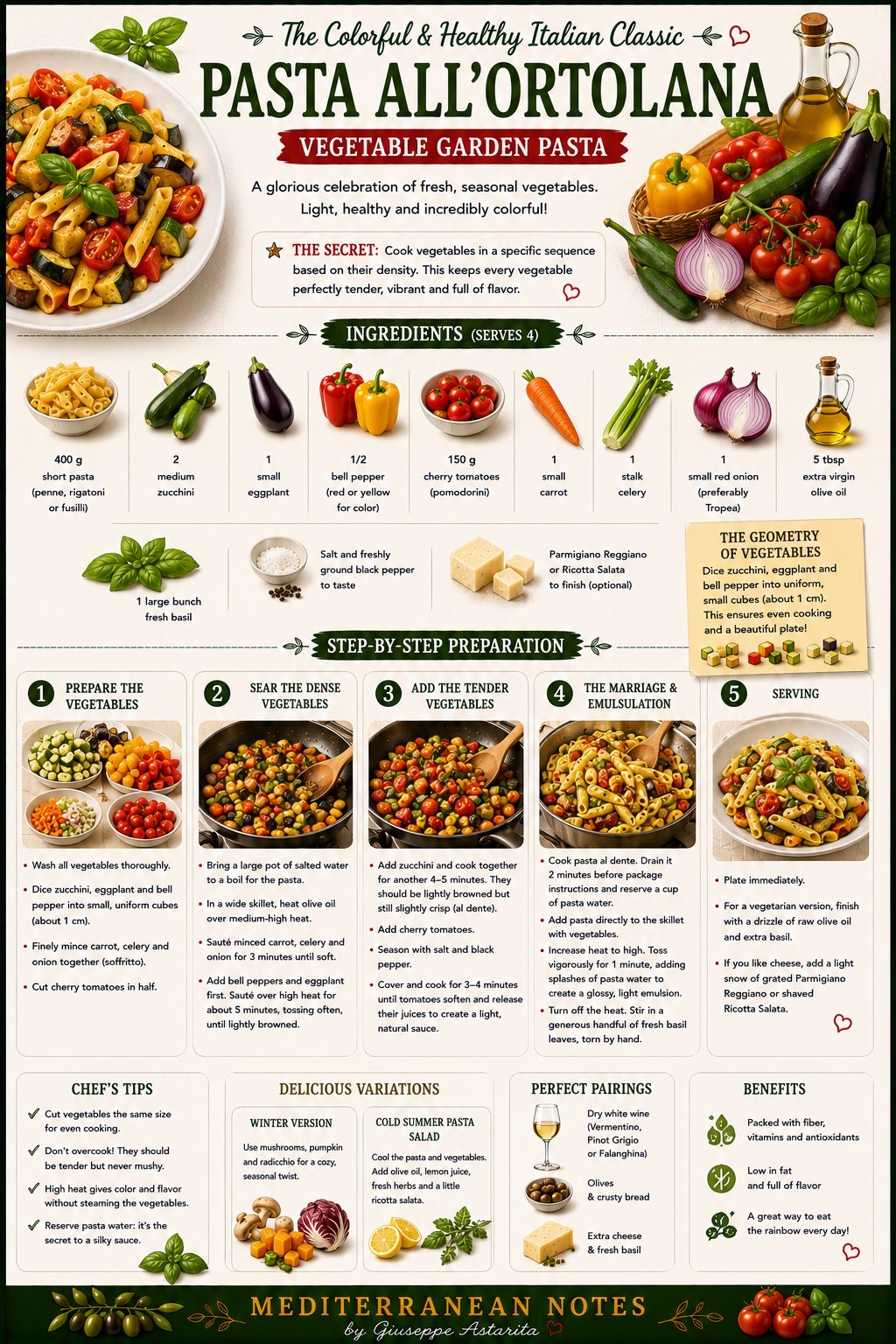
The technique matters more in this dish than the ingredient list. The vegetables are cooked in sequence by density — the eggplant and bell pepper first, over high heat, until they have color; then the zucchini, which is softer and cooks more quickly; then the cherry tomatoes last, barely touched, just long enough to blister and release their juice. Each vegetable cooked separately or in sequence produces a dish where each one is distinct and has its own texture and flavor. Everything cooked together from the start produces a stew where the vegetables have given up their individuality to the sauce. Both approaches have their place — the winter minestrone benefits from the long cook, the summer ortolana requires the sequence. The infographic calls this the geometry of vegetables: cut everything to the same size so it cooks evenly, and add it in the right order so each element arrives at the table in the right state.
The mushrooms, if you add them — sauté them separately in their own pan until golden, then combine with the other vegetables at the end. This is important: mushrooms cooked with other vegetables in a crowded pan steam rather than brown, releasing liquid that turns everything wet and dilutes the high-heat flavors the dish requires. A separate pan, high heat, no crowding, until golden. Then they belong. They did not strictly belong to the original summer vegetable tradition, but cooked this way they earn their place.
Summer vegetables and why this is one of the most micronutrient-dense pasta preparations
The pasta all'ortolana, made with the canonical summer vegetables — zucchini, eggplant, bell pepper, cherry tomatoes — is one of the most micronutrient-dense pasta preparations in this collection, and the high-heat cooking sequence is not only good technique but good nutritional practice. Each vegetable brings a distinct phytochemical profile. Eggplant (nasunin and other anthocyanins in the skin, chlorogenic acid) — the same polyphenols discussed in the melanzane funghetto and pasta con melanzane posts. Bell pepper — the richest vegetable source of vitamin C in this collection: one red bell pepper provides approximately 150% of the adult daily requirement, with vitamin C concentration declining significantly with heat, which is why the peppers should be cooked briefly at high heat rather than simmered long. Zucchini — lutein and zeaxanthin (two carotenoids with specific roles in macular pigment and eye health), potassium, and folate. Cherry tomatoes — lycopene, the carotenoid whose bioavailability increases significantly with cooking and with the presence of fat (the olive oil in the pan), explaining why briefly cooked tomatoes in olive oil produce a more nutritionally available lycopene source than raw tomatoes alone. The combination of these four vegetables in olive oil at high heat optimizes a specific aspect of the preparation: the fat-soluble carotenoids from the tomatoes and peppers dissolve into the olive oil during cooking, making them more absorbable when consumed. The water-soluble vitamin C from the peppers is best preserved by brief high-heat cooking rather than long simmering. The anthocyanins in the eggplant skin are reasonably heat-stable and survive the 5-minute sear. The basil, added raw at the very end, contributes its volatile aromatic compounds (linalool, eugenol) that would be destroyed by heat — this is the same principle as the mint in the fava bean soup and the parsley in the vongole. The dish, with its pasta, provides complete protein from the durum wheat combined with the varied amino acid profiles of the vegetables, complex carbohydrate, fiber, and a fat-soluble carotenoid delivery system built into the cooking method. Summer eating, in other words, is already the right way to eat in summer.
The recipe
Ingredients · serves 4
Method
Prepare all vegetables to the same size. Dice zucchini, eggplant, and bell pepper into uniform 1 cm cubes — the same size ensures they cook evenly and no single vegetable arrives at the table overcooked while another is still raw. Halve the cherry tomatoes. Finely mince the carrot, celery, and onion together for the soffritto base. Bring a large pot of salted water to a boil for the pasta.
Build the base and cook the dense vegetables first. In a wide skillet, heat the olive oil over medium heat. Sauté the minced carrot, celery, and onion for 3 minutes until soft. Raise the heat to high. Add the bell pepper and eggplant first — they are denser and need more time. Sauté over high heat for about 5 minutes, tossing often, until lightly browned at the edges but not collapsed.
High heat gives color and flavor without steaming the vegetables. A crowded pan lowers the temperature — cook in batches if the pan is too full.
Add the tender vegetables. Add the zucchini and cook together for another 4–5 minutes — they should be lightly browned but still slightly firm, never mushy. Add the cherry tomatoes. Season with salt and black pepper. Cover and cook for 3–4 minutes until the tomatoes blister and release their juice into the pan, creating a light natural sauce. If adding mushrooms, cook them separately in their own pan until golden, then combine here.
Toss with the pasta. Cook the pasta until very al dente, reserving a cup of pasta water. Drain and add directly to the skillet. Raise the heat to high and toss vigorously for 1 minute, adding splashes of pasta water to create a glossy, light emulsion. Turn off the heat. Tear in a generous handful of fresh basil by hand — never cut basil with a knife for a hot dish — and toss once more.
Serve immediately. Plate with a drizzle of raw extra-virgin olive oil over each bowl. Add a light snow of Parmigiano Reggiano or shaved Ricotta Salata if you like — the Ricotta Salata is the more summery, lighter option. Eat while the colors are still vivid.
Variations
Con i funghi — the version we made
Add 150 g of sliced champignons or mixed mushrooms, sautéed separately in their own pan at high heat until golden before combining with the other vegetables. They do not strictly belong to the summer vegetable tradition. We added them anyway. They were good. This is a sufficient reason.
Cold pasta salad — insalata di pasta
Cook the vegetables as written and let cool completely. Cook the pasta, drain, rinse with cold water. Combine with the cooled vegetables, raw olive oil, a squeeze of lemon juice, fresh basil and mint, a little Ricotta Salata. A summer lunch that travels well — to the beach, to a picnic, to wherever the day takes you.
Versione invernale
When summer vegetables are gone, replace with mushrooms, pumpkin cubed and roasted, and radicchio added in the last minute for bitterness. A completely different dish with the same structure — soffritto base, sequence of vegetables by density, pasta tossed in at the end. The winter version of the same generous impulse.
With mozzarella — the Neapolitan touch
Turn off the heat, let the pasta cool for 2 minutes, then tear fresh buffalo mozzarella into pieces directly into the bowl. The mozzarella softens against the residual heat without melting completely, producing pockets of cold creamy cheese against the warm pasta and vegetables. Best eaten immediately, before the mozzarella loses its temperature contrast.
This is the dish that most clearly expresses what summer cooking in Campania was about — not a specific recipe but a specific relationship with the season's produce, the willingness to put everything that was there into the same pan and let the abundance speak for itself. You make it when the tomatoes are warm from the sun and the zucchini are small and firm and the basil is in full leaf. You don't make it in January. You wait for it to be the right time, and when it is the right time, the right time is obvious.
Buon appetito — e viva l'estate.